What Is Peptide Therapy: How It Works and Its Limits
What is peptide therapy? Learn how peptides signal the body, which types are used in clinical care, and the safety screening that matters.

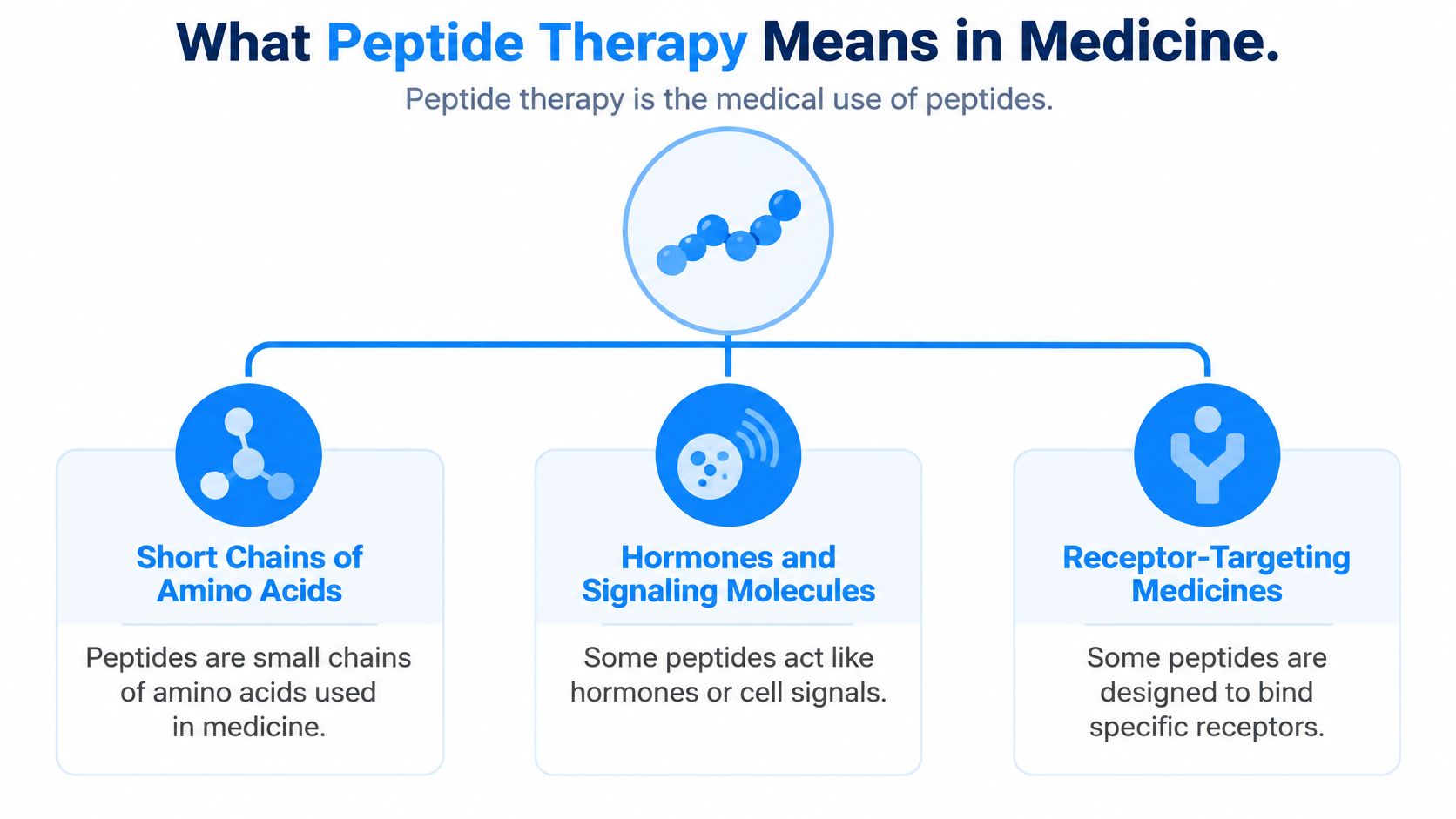
Peptide therapy is the medical use of short amino acid chains that act as hormones, signaling molecules, or receptor-targeting medicines, given under clinical dosing and supervision.
If the same label describes both established prescription medicines and experimental wellness injections, what does that label establish about safety? Much less than many patients assume. Peptide describes a molecule's structure, not its quality, approval status, or suitability for a particular person.
The Vials + Vitals Medical Board's educational approach separates those questions. Understanding the molecule comes first. Evaluating its evidence, formulation, dosing controls, and clinical purpose determines whether treatment makes medical sense.
What Peptide Therapy Means in Medicine
Peptide therapy uses biologically active amino acid chains to replace a missing signal or influence a disease pathway. Amino acids are building blocks; their sequence and arrangement help determine how a peptide interacts with the body. Changing that sequence can change what the medicine does and how long it remains active.
The category extends well beyond wellness injections. Peptide medicines have established roles in diabetes, endocrine disorders, infertility, osteoporosis, and some cancer-related conditions. A prescription for a peptide therefore needs a specific medical purpose, not just a general goal of feeling healthier.
Insulin, first isolated by Frederick Banting and collaborators in 1921 and commercially available in 1923, established the principle that a biological signal could become a medicine, as described in this peer-reviewed review of peptide therapeutics.
From natural hormones to engineered medicines
Early peptide drugs largely reproduced hormones already present in the body, including insulin, vasopressin, oxytocin, and glucagon. Pharmaceutical developers subsequently engineered analogues, modified versions intended to resist enzyme breakdown, remain active longer, or bind selected receptors more precisely.
Natural origin doesn't establish safety. A hormone that supports normal physiology can cause harm when administered at an inappropriate dose or to someone without a suitable indication. Likewise, a laboratory-engineered peptide isn't inferior to a naturally occurring molecule.
The relevant distinction is whether the particular medicine has evidence supporting its intended use and controls supporting reliable administration.
What makes a treatment a protocol
A clinical protocol specifies more than the contents of a vial:
- Molecule and formulation: The exact active ingredient and preparation.
- Indication: The condition or measurable clinical problem being treated.
- Route and dose: How the medicine enters the body and how much is administered.
- Monitoring: What the clinician reviews to assess benefit, tolerability, and continued suitability.
These details matter because many peptides are rapidly broken down, poorly absorbed by mouth, or sensitive to storage conditions. Two products sharing a peptide name aren't automatically interchangeable.
Practical rule: A meaningful answer to “What is peptide therapy?” must identify the actual medicine and treatment purpose, not just the molecule category.
How Peptides Signal Cells and Why Timing Matters
A receptor can be understood as a lock and a peptide as a key. A compatible molecule binds the receptor and initiates signals inside the cell. The analogy has limits, however: receptor activity depends on the molecule's concentration, its binding properties, and how long the body remains exposed.
Semaglutide provides a useful example. It's a modified glucagon-like peptide-1, or GLP-1, analogue that activates the GLP-1 receptor. Its effects connect appetite and glucose regulation rather than operating as a simple stimulant.

Following the signal through the body
After receptor activation, insulin secretion increases in a glucose-dependent manner, while glucagon secretion decreases. Semaglutide also slows early gastric emptying after a meal, affecting how quickly glucose enters circulation. These actions help explain both its therapeutic effects and some gastrointestinal symptoms.
The molecule's design also changes its persistence. Semaglutide has 94% sequence homology to native human GLP-1, and albumin binding helps produce an elimination half-life of approximately one week, according to the FDA semaglutide review document. Albumin is a circulating protein; binding to it helps protect the peptide from degradation and reduces clearance.
Half-life means the time required for the amount of medicine in the body to decrease by about half. It doesn't mean that all activity ends when that interval passes.
Absorption, breakdown, and clearance
Clinicians consider distinct pharmacokinetic processes when choosing a schedule:
- Absorption: How the formulation delivers the drug into circulation.
- Enzymatic breakdown: How the body's enzymes degrade the molecule.
- Clearance: How the body removes the drug and its breakdown products.
Subcutaneous semaglutide reaches maximum plasma concentration approximately one to three days after administration and has approximately 89% absolute bioavailability, according to FDA prescribing information. Those measurements describe drug exposure, not a promise about when an individual will notice appetite changes.
Consider a patient who misses a scheduled injection. Drug from previous injections can still be circulating, so effects don't switch off immediately. Taking an extra dose to compensate can create overlapping exposure rather than restore a simple on-off schedule.
The appropriate response follows the instructions for the exact prescribed product. Missed doses, dose increases, and formulation changes are clinical decisions, not opportunities to improvise.
Peptide Types for Metabolic, Hair, Sexual and Longevity Care
Peptide describes a chemical class, while a treatment plan may involve other kinds of medicines or compounds. The word alone says little about a product's regulatory status, dosing controls, or evidence. Semaglutide activates GLP-1 receptors; tirzepatide acts at both GLP-1 and glucose-dependent insulinotropic polypeptide, or GIP, receptors. Both have FDA-approved products for specific uses, as discussed in this review of peptide therapeutics and incretin development.
Peptide and related therapy categories
| Category | Example agents | Typical clinical use | Chemical class and status |
|---|---|---|---|
| Incretin receptor agonists | Semaglutide, tirzepatide | Weight management and glycemic control | Peptides; FDA-approved products exist |
| Growth hormone secretagogues | Sermorelin | Growth hormone stimulation in longevity care | Peptide; approval and evidence status limited for longevity use |
| Glutathione | Reduced glutathione | Antioxidant use in wellness care | Tripeptide; limited clinical evidence for wellness uses |
| PDE5 inhibitors | Sildenafil, tadalafil | Erectile dysfunction | Small molecules; FDA-approved |
| 5-alpha-reductase inhibitors | Finasteride, dutasteride | Male-pattern hair loss | Small molecules; finasteride FDA-approved for this use, dutasteride off-label in the United States |
| Topical vasodilator | Minoxidil | Hair retention and regrowth | Small molecule; FDA-approved topical treatment for hair loss |
| Coenzyme | NAD+ | Cellular energy metabolism research | Coenzyme; limited clinical evidence for supplementation benefits |
| Lipotropic injection | Methionine, inositol, choline with vitamin B12 | Metabolic support in wellness care | Compounded mixture; clinical evidence for weight-loss benefits is limited |
| Menopausal hormone therapy | Estradiol, progesterone | Vasomotor and genitourinary symptoms | Steroid hormones |
Different pathways require different questions
Hair treatments target follicular biology rather than incretin signaling. Finasteride inhibits the conversion of testosterone to dihydrotestosterone, or DHT, which contributes to follicular miniaturization in susceptible scalp regions. Its mechanism and clinical findings appear in FDA finasteride labeling. Dutasteride inhibits a broader set of relevant enzymes, while minoxidil acts through a separate follicular growth pathway.
Treatment choice depends on the cause of hair loss. A discussion of the best hair-loss treatment for women should distinguish female-pattern thinning from other causes rather than apply a male-pattern protocol unchanged.
Sildenafil and tadalafil are small-molecule PDE5 inhibitors that support erection-related blood-flow signaling. Their use concerns erectile function; it does not by itself address every possible cause of vascular disease.
Menopausal hormone therapy also requires attention to route and individual risk. The North American Menopause Society's 2022 position statement recommends individualized shared decision-making and periodic reassessment. It notes that transdermal routes and lower doses may reduce venous-thromboembolism and stroke risk compared with some oral regimens. That risk distinction matters when discussing hormone treatment.
NAD+ has a role in cellular metabolism, and glutathione participates in antioxidant pathways. Those biological roles alone do not establish that supplementation extends life. Compare treatments by their chemical class, intended purpose, regulatory status, and evidence for the specific formulation.
Benefits, Evidence Limits and Trial Results
What can a peptide medicine's trial results tell you about the benefits to expect? The answer depends on the specific medicine, who was studied, the dose, and the outcome measured. Receptor activity alone cannot establish a broad health benefit.
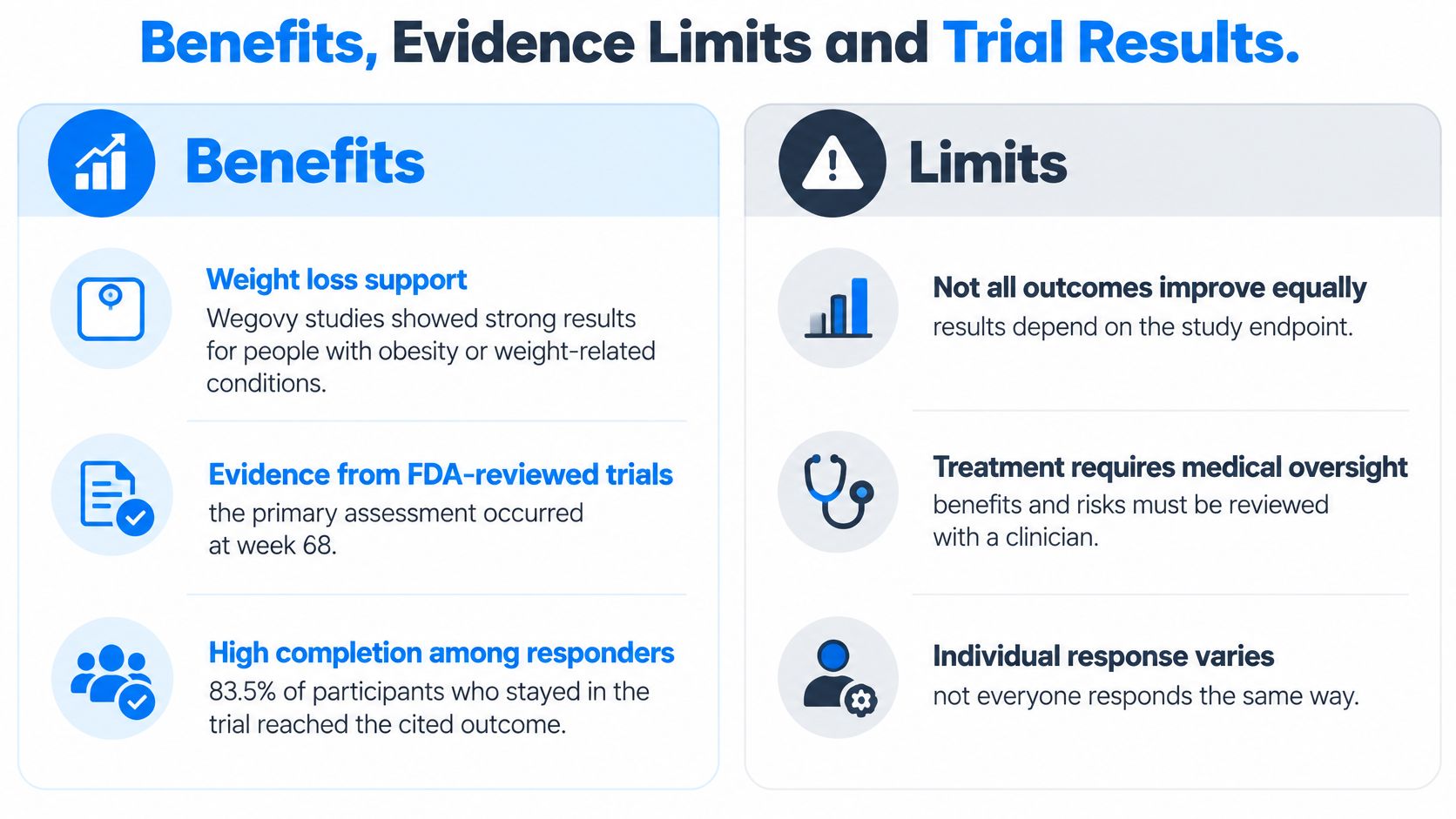
For semaglutide, GLP-1 receptor activation has evidence for weight management. In one study in the FDA Wegovy labeling, the primary assessment was at week 68. The table reports the share of participants who reached each weight-loss threshold.
Semaglutide weight outcomes at week 68 in one Wegovy study
| Outcome | Semaglutide | Placebo |
|---|---|---|
| At least 5% body weight loss | 83.5% | 31.1% |
| At least 15% body weight loss | 47.9% | 4.8% |
These percentages show how many participants crossed each threshold. They are not average weight loss, completion rates, or predictions for an individual.
Reading benefits and limits together
- Demonstrated benefit: More semaglutide-treated participants reached the listed weight-loss thresholds than placebo-treated participants. This supports a defined use for that medicine, not every product described as a peptide.
- Treatment context: A medication plan can include dose titration, nutrition, physical activity, and monitoring. An injection does not replace those behaviors.
- Individual variation: Some patients respond less strongly or cannot tolerate the intended regimen. Gastrointestinal effects may make it harder to continue treatment.
- Maintenance needs: Weight regain is common after stopping weight-management medication. Reaching a target therefore does not settle how to maintain progress.
- Evidence gaps: Many peptides marketed for wellness or longevity lack controlled human trials comparable to those supporting approved metabolic medicines.
“Metabolic reset” is not a defined clinical outcome. More specific measures include weight trajectory, glucose control, nutritional adequacy, function, and tolerability. A plateau also does not automatically mean treatment has failed. A clinician can review medication use, nutrition, activity, interacting medicines, diagnosis, and whether expectations were realistic.
The word peptide describes a type of molecule, not a shared level of safety or evidence. A benefit shown for one medicine does not automatically apply to another peptide, chemical class, route, compounded mixture, or patient population. Controlled studies are most relevant when their participants, formulation, and dose resemble the treatment being considered. Biological plausibility can support further study, but patient benefit must be demonstrated.
Approved Versus Compounded Peptides and Who Decides
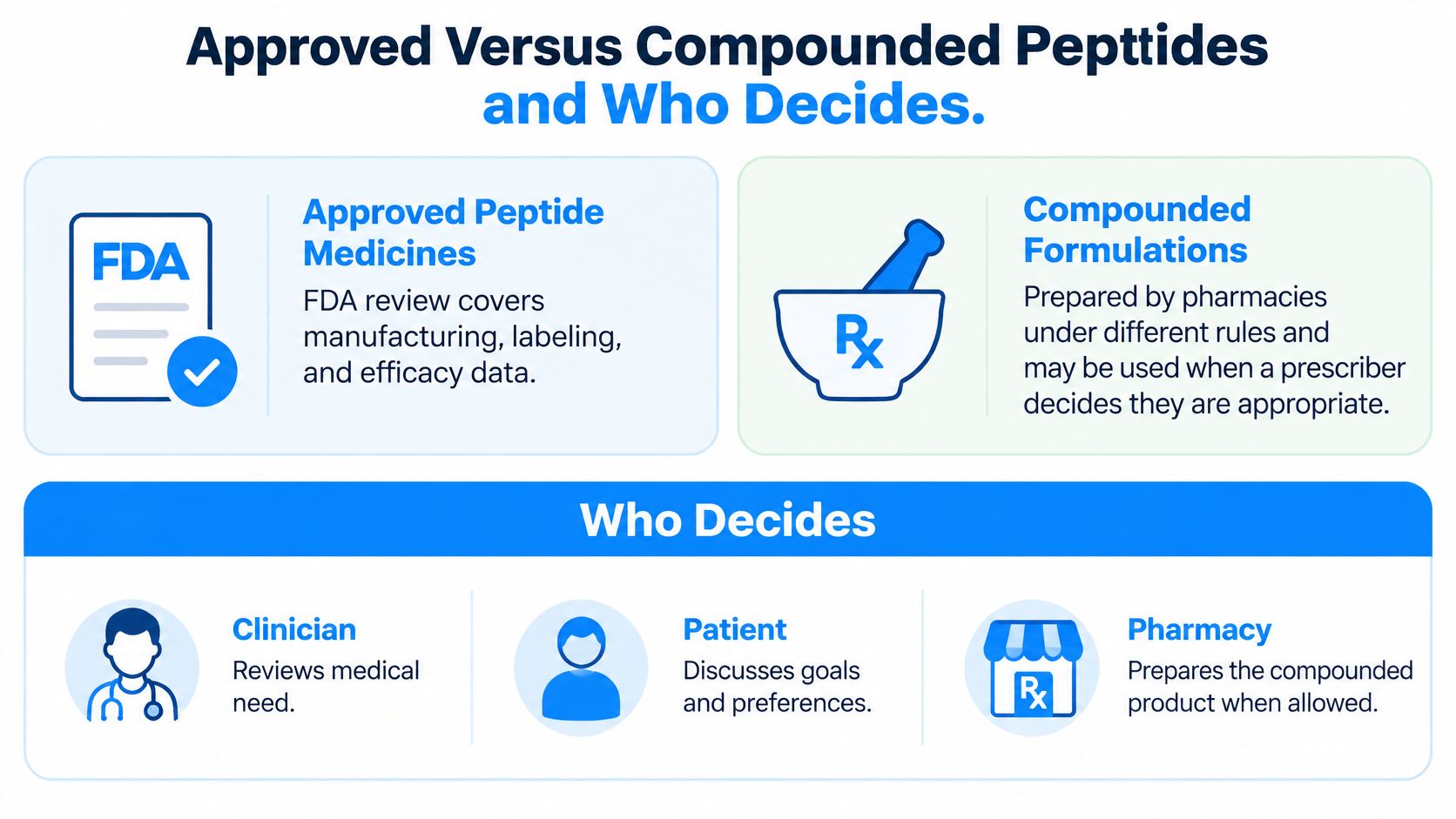
An FDA-approved medicine has undergone agency review for its manufacturing, labeling, safety, and effectiveness for specified uses. Compounded medicines follow a different regulatory framework, and the finished preparation is not itself FDA-approved.
Compounding may address an individual medical need when legally appropriate. It does not make a preparation an approved generic equivalent, and a prescription does not remove uncertainties specific to its formulation.
The FDA's communication on unapproved GLP-1 drugs describes dosing errors involving compounded semaglutide and doses beyond approved labeling. It also warns that adverse events are likely underreported and explains the compounding implications of shortage resolutions in late 2024 and early 2025. Some state-licensed pharmacies are not required to submit adverse-event reports, so reported events may not capture every problem.
A checklist for the treatment discussion
- Approval status: Is the proposed product FDA-approved, compounded, or otherwise unapproved?
- Active ingredient: What exact molecule and formulation will the pharmacy dispense?
- Dose expression: What amount is prescribed in milligrams, and how does it translate into milliliters or the markings on the supplied syringe?
- Concentration: Does the current container have the same concentration as the previous one?
- Quality controls: How are potency and sterility addressed, and what storage instructions accompany the preparation?
- Problem reporting: Who handles adverse effects, administration questions, and suspected product defects?
Milligrams describe the amount of drug; milliliters describe liquid volume. Syringe markings show volume, so the prescribed amount must be interpreted using the medication's concentration and the supplied syringe.
For example, if a refill has a different concentration, the volume drawn up may change even when the prescribed drug amount stays the same. Confirm the current label and directions rather than reusing an old syringe marking.
Clinical discretion determines suitability
Licensed U.S. healthcare providers decide whether prescription treatments and compounded formulations are appropriate after reviewing a patient's circumstances. Preferences can inform the discussion, but eligibility depends on clinical judgment.
At Vials + Vitals, independent licensed clinicians make care decisions, and pharmacy partners fulfill valid prescriptions. Treatment is provided only when clinically appropriate and permitted by applicable state and federal law.
A telehealth weight-loss doctor can assess the diagnosis, formulation, and proposed schedule, and determine when reassessment is needed.
Follow-up can consider changes in weight, waist circumference when useful, glucose when indicated, gastrointestinal symptoms, hydration, mood, and medication interactions. Decisions about maintenance, pausing, switching, or stopping should reflect the clinical picture rather than a purchase cycle.
Dose verification: Before treatment proceeds, the prescription, container label, and administration instructions should specify the same intended dose.
Safety Screening and Interactions to Review First
One potentially dangerous interaction belongs to a related, non-peptide treatment: nitrates must not be combined with PDE5 inhibitors because blood pressure can fall precipitously. The American Urological Association erectile dysfunction guideline identifies this restriction and supports individualized dose titration for efficacy and tolerability.
That distinction illustrates the central safety principle: risk follows the actual molecule, dose, route, and patient history, not the name of a treatment category.
Screening cases and clinical responses
| Factor or Medication | Why It Matters | Clinical Response |
|---|---|---|
| Nitrate medications | Combined with PDE5 inhibitors, can cause a precipitous fall in blood pressure | Combination should not be used; provider reviews all medications |
| Suspected pancreatitis | Acute pancreatitis has been observed with GLP-1 receptor agonists | Labeling instructs discontinuation when suspected |
| Insulin or sulfonylureas | Added hypoglycemia risk with GLP-1 therapy | Provider reviews other glucose-lowering medicines |
| Dehydration or GI intolerance | Vomiting or reduced intake can lead to dehydration and treatment interruption | Symptom-triggered escalation pause and provider contact |
| Pregnancy or planned pregnancy | Many peptide protocols are not recommended in pregnancy | Disclose before starting; provider sets an alternative plan |
Symptoms that require prompt action
Severe or persistent abdominal pain warrants urgent medical assessment because pancreatitis is among the possible causes. Repeated vomiting, inability to keep fluids down, markedly reduced urination, or significant dizziness also require prompt contact.
Swelling involving the face, lips, tongue, or throat, or breathing difficulty, calls for emergency care. Patients shouldn't wait for a routine telehealth message response when symptoms suggest a serious allergic reaction.
The intake should include current prescriptions and supplements, pancreatitis history, personal or family history of medullary thyroid carcinoma, kidney disease, and pregnancy plans. The clinician determines which findings exclude a particular medicine and which require additional evaluation.
Administration is part of safety
A Stanford summary of FDA data reported that 95% of GLP-1 adverse events in 2024 were related to dosing or administration rather than the drug itself. That summary doesn't establish that the medicines are otherwise risk-free or that every reported event was preventable.
It does reinforce the importance of practical instruction:
- Measurement: Confirm the medication concentration and the supplied administration device.
- Technique: Follow the demonstrated injection method and storage directions.
- Escalation: Contact the prescriber when symptoms persist rather than increasing the dose automatically.
- Reporting: Report suspected adverse effects to the prescriber and the FDA MedWatch program.
A clinician-directed pause in escalation can help address tolerability without improvising a replacement schedule. The question is semaglutide dangerous is therefore best answered through specific contraindications, interactions, and administration risks rather than a blanket reassurance.
Confirm Whether Peptide Therapy Fits Your Health Goals
What would count as a meaningful result for you? A clear goal, such as improved glucose control, a weight range, or relief from a specific symptom, gives a clinician a concrete basis for assessing whether treatment may fit. Bring a record of previous treatments and provide a complete account of your health history.
A legitimate care pathway
Vials + Vitals begins with a private online clinical assessment. A licensed clinician reviews the information and decides whether treatment is appropriate. If prescribed, a treatment is fulfilled by a pharmacy partner, with instructions for use and clear next steps.

Completing an assessment does not guarantee a prescription, and treatment outcomes are not promised. Visible changes are assessed over months rather than days. Treatment is provided only when clinically appropriate and permitted by applicable law.
Accurate disclosure matters. Withholding a medication, condition, or prior reaction can make a protocol unsafe and may be grounds for declining or ending care.
The right outcome may be a prescription, further evaluation, an alternative, or no medication. Compounded medications are considered individually by a licensed provider and, if prescribed, fulfilled by a pharmacy partner.
Adults considering peptide therapy can visit Vials + Vitals to complete a private assessment and have a licensed clinician determine whether treatment is appropriate.