High Cholesterol Hair Loss: What the Evidence Shows
Does high cholesterol hair loss mean lipids caused thinning? See the evidence, statin timing, and how treatment should split.

High cholesterol isn't established as a direct cause of hair loss, and lowering cholesterol isn't a stand-alone hair-regrowth treatment. An analysis of 19 observational studies found abnormal lipid patterns more often in people with androgenetic alopecia, but an association doesn't establish what caused an individual's thinning.
The popular advice to lower cholesterol and wait for hair to return skips the most important step: identifying the hair-loss disorder. The Vials + Vitals Medical Board approach separates the metabolic finding from the scalp diagnosis, then considers whether both need treatment.
High Cholesterol Hair Loss Is a Marker Not a Cause
High cholesterol can accompany patterned thinning without explaining it. A meta-analysis of 19 observational studies found higher total cholesterol, LDL cholesterol, and triglycerides, plus lower HDL cholesterol, in people with androgenetic alopecia than in controls. Other systematic-review findings have been inconsistent, with substantial differences between study populations and no consistent significant correlation in some analyses.
That distinction matters because a cholesterol panel measures circulating lipids, not follicular damage. The phrase high cholesterol hair loss can describe overlapping concerns, but it isn't a clinical diagnosis.
Hair-loss pattern, lipid signal, and first move
| Pattern | Lipid signal in current evidence | First clinical move |
|---|---|---|
| Androgenetic alopecia | Higher total cholesterol, LDL, and triglycerides and lower HDL in observational pools; a small-LDL genetic signal | Pattern exam and cardiovascular-risk review, not cholesterol drugs as hair therapy |
| Alopecia areata | Genetic models keep HDL cholesterol and triglycerides in view | Dermatology diagnosis; lipids aren't the treatment target |
| Telogen effluvium | No specific lipid-fraction pathway established | Time the shedding against illness, weight change, diet, and new medicines |
| Scarring or cicatricial alopecia | Local cholesterol homeostasis implicated in some primary scarring types | Prompt scalp exam; don't wait on a lipid panel |
Obesity, insulin resistance, inflammation, age, and androgen sensitivity can complicate the association. These factors may accompany abnormal lipids and thinning without a single laboratory result explaining the scalp.
A 2024 study in the Research Journal of Medical Sciences reported mean total cholesterol of 210.52 ± 51.16 mg/dL among male androgenetic alopecia participants classified as Norwood-Hamilton stage 4. That's a description of a study group, not a cholesterol threshold for baldness or a personal forecast.
A receding hairline, diffuse shedding, smooth patches, and a scarred scalp require different clinical reasoning. The first decision is to match the visible pattern to the appropriate diagnostic category before stopping medication or adding a hair drug.
How the Follicle Handles Cholesterol
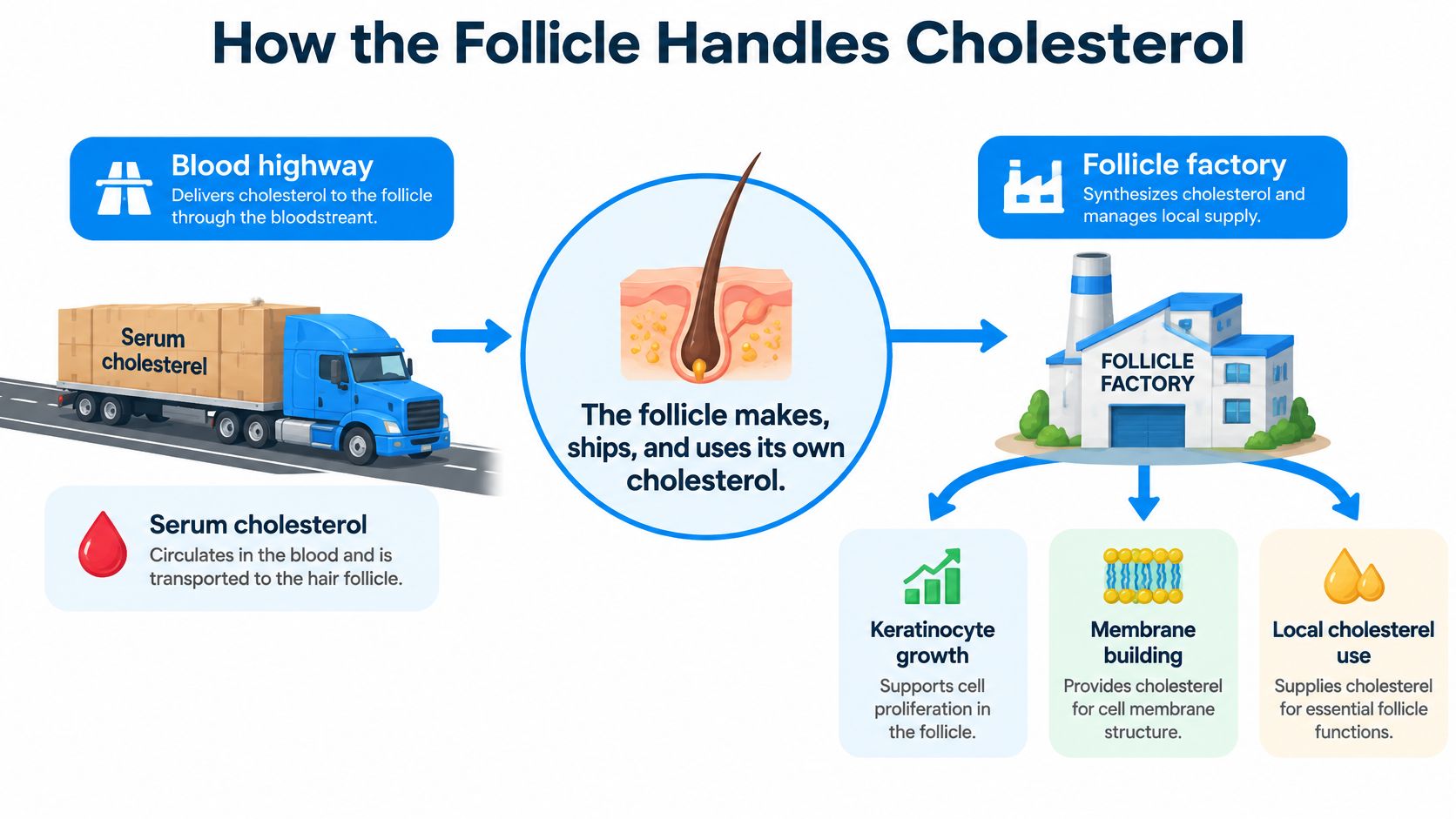
A useful analogy separates the blood highway from the follicle factory. Serum cholesterol is cargo transported through circulation; the follicle also makes, transports, and uses cholesterol locally.
A person can therefore have high blood cholesterol without knowing whether cholesterol handling inside the follicle is normal. A blood test and a tissue-level process are not interchangeable measurements.
Local cholesterol supports follicular work
Follicular keratinocytes need cholesterol for cell membranes, proliferation, differentiation, and cycling. Sebaceous-gland cells and nearby adipose cells also participate in local lipid handling, while cholesterol-derived molecules contribute to signaling.
A specialist review of cholesterol homeostasis and hair follicles describes disturbed cholesterol regulation in several hair disorders, including primary cicatricial alopecia and congenital hypertrichosis associated with a cholesterol-transporter mutation. Hypertrichosis means excessive hair growth, illustrating why disturbed cholesterol biology doesn't always produce the same hair outcome.
Two relevant signaling routes are Wnt-beta-catenin and Hedgehog. These cellular communication systems participate in follicle development, stem-cell activity, and movement between resting and growing phases.
What experimental disruption actually shows
Experimental work tests what happens when investigators change the follicle's biochemical environment. That differs from observing whether a person with high LDL cholesterol develops thinning.
A mechanistic review discussing a 2012 experimental study reports that blocking cholesterol biosynthesis or exposing cultured follicular cells to 7-dehydrocholesterol, a sterol precursor, increased pro-inflammatory chemokine gene expression. In mouse skin, both interventions inhibited hair growth and arrested the hair cycle.
Chemokines are signaling proteins involved in recruiting immune cells. These experiments support a connection between disrupted sterol handling, inflammatory signaling, and follicular cycling, but they don't establish that high blood cholesterol causes common human hair loss.
Medically supervised treatment of an abnormal blood lipid profile isn't equivalent to shutting down cholesterol production inside follicular tissue.
The distinction also prevents a misleading conclusion about treatment. Evidence that follicles require cholesterol doesn't mean high LDL should remain untreated, and evidence that local disruption affects growth doesn't establish a cholesterol-lowering prescription as the cause of shedding.
Human pathways remain incompletely mapped. Follicular biology makes cholesterol relevant context, not a diagnosis that can be read directly from a laboratory value.
Lipid Fractions That Point in Different Directions
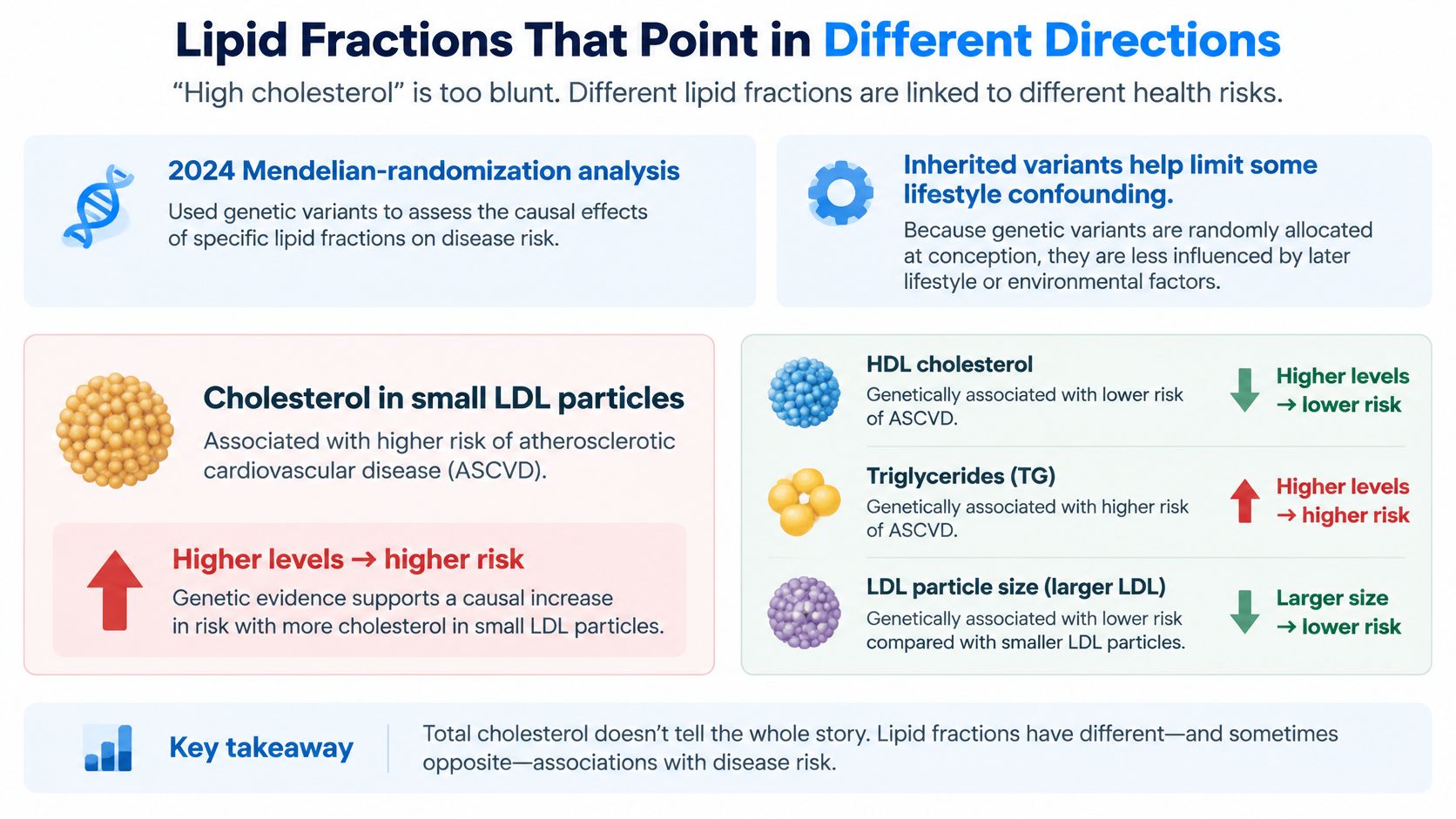
“High cholesterol” combines measurements that may have different biological associations. The most useful interpretation identifies which lipid trait, which hair disorder, and which study method produced the finding.
Lipid measures linked with hair-loss research signals
| Measure | Reported direction | Published figure | What it does not mean |
|---|---|---|---|
| Small LDL particles and androgenetic alopecia | Higher odds | 2024 Mendelian-randomization analysis: inverse-variance-weighted OR 1.566, 95% CI 1.054–2.326, p=0.026, approximately 57% higher odds per genetically predicted unit within the model | Not a person's percent risk and not a hair-drug indication |
| HDL cholesterol and alopecia areata | Higher HDL linked with higher risk in one model | 2025 human-genetic analysis: OR 5.764, 95% CI 1.184–28.065 | Wide interval; not a reason to push HDL down |
| HDL cholesterol and androgenetic alopecia | Appeared protective in the same analysis | Protective direction reported; no numerical estimate presented here | Not a treatment target by itself |
| Apolipoprotein B and androgenetic alopecia | Appeared to be a risk factor in the same analysis | Risk direction reported; no numerical estimate presented here | Doesn't replace a clinician reading the full panel |
| Female-pattern severity and abnormal LDL cholesterol | Greater severity in a small clinic series | Mean Sinclair scores 2.43 versus 1.91, P=.01, with abnormal versus normal LDL cholesterol | Small observational contrast, not proof of cause |
The female-pattern comparison describes severity rather than the likelihood of developing hair loss. Sinclair scoring grades the visible pattern of female-pattern thinning; it doesn't identify why that pattern developed.
Why genetic associations aren't prescription instructions
Mendelian randomization uses inherited genetic variants as instruments to investigate potential causal relationships. Because inherited variants precede many lifestyle exposures and diseases, the method can reduce some confounding that affects conventional observational comparisons.
It still doesn't reproduce a treatment trial. A lifelong genetic tendency toward a particular lipid measurement isn't equivalent to starting a medication in adulthood, and an odds ratio isn't an individual's probability of losing hair.
The small-LDL result therefore supports investigating lipid biology in androgenetic alopecia. It doesn't mean that every person with high LDL has the same increase in risk, or that reducing LDL produces an opposite-sized improvement in hair growth.
The differing HDL directions are especially important. Alopecia areata is an immune-mediated disorder, while androgenetic alopecia involves patterned follicular miniaturization. A lipid trait associated with one condition need not have the same relationship with another.
Likewise, an association seen when one lipid is analyzed alone may weaken when investigators account for related lipid measurements. The analyses retained independent HDL and triglyceride associations with alopecia areata more clearly than a simple LDL-to-patterned-baldness pathway.
The wide confidence interval around the alopecia areata estimate signals substantial uncertainty about effect size. It doesn't justify deliberately lowering HDL or changing cardiovascular treatment to pursue a scalp outcome.
These findings are hypothesis-generating. They don't justify diagnosing hair loss from a cholesterol panel or changing lipid therapy for the scalp.
When a Lipid Panel Belongs in the Hair Workup
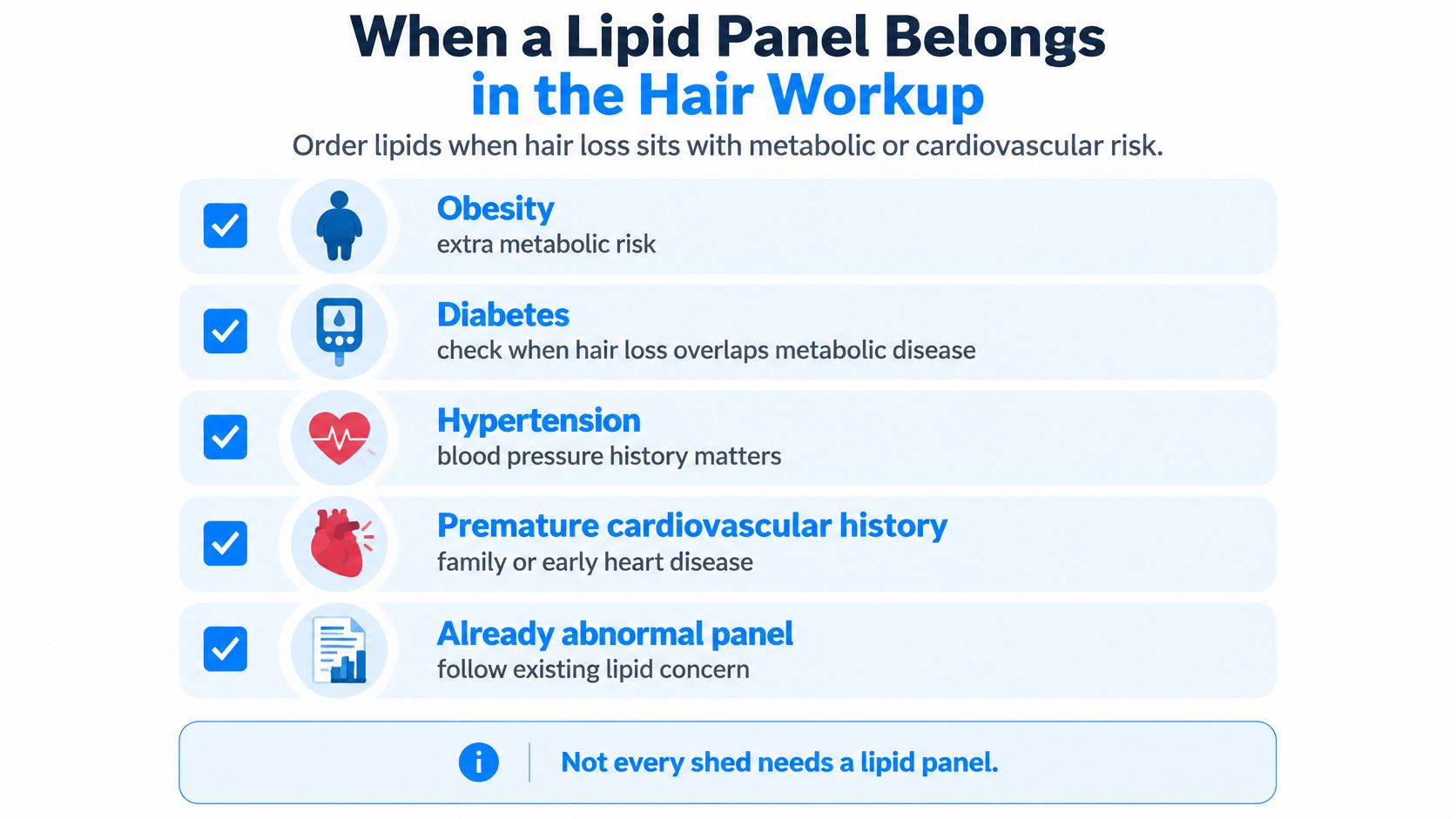
A lipid panel belongs in the discussion when hair loss coexists with obesity, diabetes, hypertension, premature cardiovascular disease, or an already abnormal panel. Hair shedding alone doesn't make cholesterol testing the first or only investigation.
The scale of genetic investigation shouldn't be mistaken for a ready-made treatment protocol: a 2025 Mendelian-randomization analysis examined 983 lipid variables and four hair-loss disorders, identifying 56 significant univariable associations, with HDL cholesterol and triglycerides retaining associations with alopecia areata in multivariable models. The same publication discusses the small female-pattern clinic comparison, where observational severity differences couldn't establish causation.
Start with the scalp and timeline
A focused assessment proceeds from visible findings to possible triggers:
- Document the pattern. Examine part width, temples, hairline, and crown, using Norwood-Hamilton or Sinclair grading when appropriate.
- Assess active shedding. A clinician may use a hair-pull test and compare current density with earlier photographs.
- Look for inflammation or scarring. Redness, scale, discomfort, and loss of follicular openings change the urgency and diagnostic approach.
- Build a medication and illness calendar. Include recent prescriptions, fever, surgery, childbirth, restrictive dieting, and substantial weight change.
The timing matters because shedding can occur after the initiating stress has passed. A person who changes medication during recovery from illness may incorrectly attribute all later hair loss to the new prescription.
A clinical overview of hair thinning in women can help patients describe a widening part or reduced density, but photographs and symptom descriptions don't replace a scalp examination.
Choose laboratory tests for a clinical question
A higher LDL result shouldn't end the investigation. Iron deficiency, thyroid disease, inadequate protein or other nutritional deficiencies, inflammatory scalp disease, and medication-related telogen effluvium still require consideration.
Targeted testing may include:
- Ferritin and iron studies, when iron depletion could explain shedding.
- TSH and a complete blood count, to investigate thyroid dysfunction or anemia when clinically indicated.
- Hemoglobin A1c or fasting glucose, to assess glycemic status and broader metabolic risk.
- Apolipoprotein B or lipoprotein(a), when a clinician needs a fuller cardiovascular assessment.
These aren't mandatory tests for every patient. Each should answer a specific question raised by the history, examination, or cardiovascular profile.
LDL goals are cardiovascular goals, not hair-loss thresholds. Correcting abnormal LDL may improve cardiometabolic risk, but cholesterol reduction alone hasn't been established as a regrowth treatment.
Scarring, sudden bald patches, or systemic symptoms warrant prompt clinical assessment rather than waiting for laboratory results.
Statins and Shedding That Starts After a New Prescription
A 2024 rosuvastatin-associated alopecia report described hair loss beginning one week after treatment started, with regrowth noticed one to two weeks after discontinuation. The same report described Japanese prescribing information listing alopecia at unknown frequency or in fewer than 1% of users for atorvastatin, pitavastatin, simvastatin, pravastatin, and fluvastatin, while rosuvastatin's Japanese insert didn't list that warning.
That's a case observation, not proof that rosuvastatin caused the loss or a schedule that other patients should expect. The report also notes that relatively large cohort studies found no significant overall association between statins and alopecia.
A review of cholesterol biology and hair follicles describes a comparison of 129,288 statin users with 600,241 controls that found no evidence linking statin use to alopecia. Taken together, isolated reports deserve attention, but they don't establish that statins explain most thinning among people treated for high cholesterol.

Shedding timing after a medicine or body stress
| Trigger | Typical timing | Usual pattern | Next step |
|---|---|---|---|
| New statin, rare case reports | Early onset documented in an isolated rosuvastatin report | Often described as diffuse; no established statin-specific pattern | Don't stop independently; prescriber reviews timing |
| Statin use in large cohorts | No overall alopecia association | Not a defined pattern | Don't assume the pill explains most thinning |
| Illness, surgery, crash diet, or childbirth | Delayed after the triggering event | Diffuse telogen effluvium | Investigate the earlier trigger |
| Longstanding patterned thinning | Gradual progression | Temples, crown, or widened part | Examine for androgenetic alopecia even if lipids are high |
Record the sequence before changing treatment
A useful medication note includes the start date, dose, onset of shedding, and distribution. It should also list other new drugs, fever, surgery, changes in food intake, and weight change.
A statin shouldn't be stopped independently because the cardiovascular reason for prescribing it still matters. A clinician can assess competing causes and decide whether observation, further investigation, or a supervised medication change is appropriate.
An overview of hair-loss treatment side effects can support that discussion, especially when several medicines were started close together. Stopping or reducing the statin without the prescriber's guidance isn't an appropriate diagnostic experiment.
Isolated reports of shedding also don't establish the reverse proposition. Cholesterol treatment isn't a general therapy for restoring lost hair.
Run Lipid Care and Hair Care on Separate Tracks
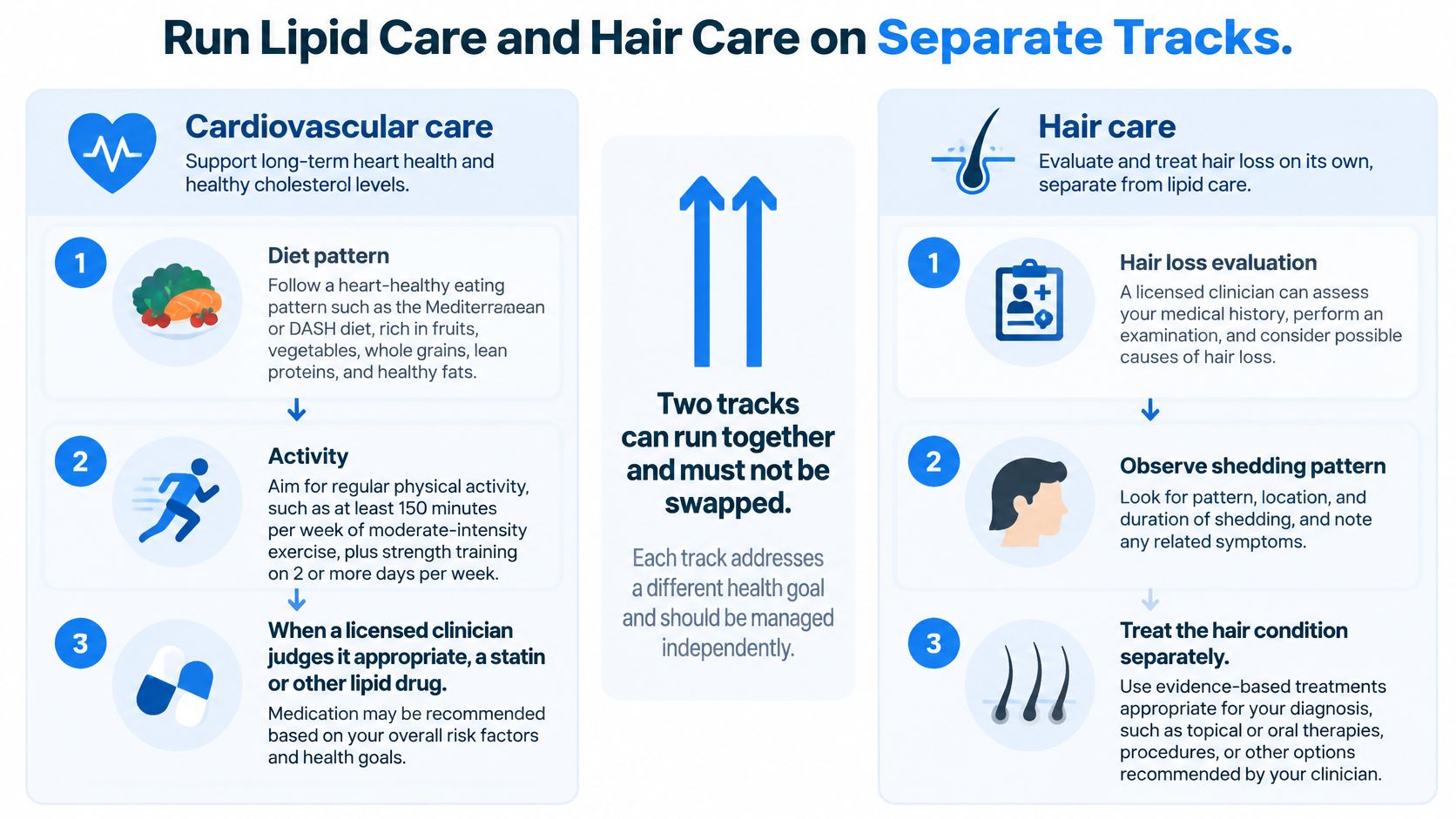
Cardiovascular care and hair care can proceed together without substituting for each other. The metabolic plan addresses vascular risk, appetite, weight, and glycemic concerns when present; the hair plan addresses the diagnosed follicular disorder.
A person with high LDL and androgenetic alopecia may need different medicines for different reasons. Improvement in one laboratory measurement shouldn't be used as the sole measure of whether the scalp treatment is working.
Cardiovascular treatment targets circulating risk
Dietary pattern, physical activity, and medication when indicated form the cardiovascular approach. Statins inhibit HMG-CoA reductase, an enzyme involved in hepatic cholesterol synthesis, and increase LDL-receptor-mediated clearance of circulating LDL.
When weight, appetite, or glycemia requires treatment, semaglutide activates GLP-1 receptors, while tirzepatide activates GIP and GLP-1 receptors. These incretin pathways influence appetite and glucose-dependent insulin responses; these are metabolic medicines, not hair medicines.
A structured plan to improve metabolic health also considers adequate nutrition during weight change. Restrictive eating shouldn't become the unintended consequence of a lipid or weight-management plan, particularly when shedding is already under evaluation.
Follicular treatment targets the diagnosed disorder
In androgenetic alopecia, genetically patterned androgen sensitivity contributes to progressive follicular miniaturization. Finasteride and dutasteride inhibit 5-alpha-reductase, reducing conversion of testosterone to dihydrotestosterone, or DHT.
Minoxidil is a vasodilator and potassium-channel opener used in topical or selected oral protocols to support the growing phase, called anagen. Its hair-growth effects aren't explained by lowering cholesterol or increasing scalp blood flow.
Treatment selection requires more than matching a drug name to thinning. Relevant considerations include diagnosis, pregnancy potential, cardiovascular history, other medicines, and whether the proposed formulation is appropriate for that individual.
Safety boundary: Oral minoxidil isn't FDA-approved for hair loss, and its cardiovascular effects require individualized clinical review.
Oral minoxidil can lower blood pressure, cause fluid retention, and increase heart rate. Swelling, palpitations, dizziness, or unwanted body hair can occur; a treatment plan should specify how adverse effects are reported and reviewed.
Chest pain, shortness of breath, fainting, or rapid unexplained weight gain require prompt medical attention when taking oral minoxidil. These symptoms aren't reasons to continue experimenting with the dose at home.
Prescription treatments and compounded formulations are prescribed strictly at the clinical discretion of licensed U.S. healthcare providers following an individualized telehealth intake and consultation. Vials + Vitals uses provider review to determine eligibility, formulation, and titration when treatment is appropriate.
The operational rule remains specific: optimize the lipid plan for cardiovascular risk, and choose the hair plan for the condition identified on the scalp.
Decide Whether Lipids the Scalp or Both Need Care
A widening part or receding hairline alongside abnormal lipids calls for evaluation of both concerns. The cardiovascular indication and the follicular diagnosis are separate, even when the appointments occur through the same clinical pathway.
Sudden diffuse shedding after illness, dietary restriction, weight change, or a prescription change calls for a documented calendar before another hair drug is added. Smooth bald patches or signs of scarring call for prompt scalp assessment; severe symptoms such as chest pain or fainting require urgent care rather than a routine telehealth adjustment.
A physician-directed next step
Vials + Vitals covers GLP-1 weight care, men's sexual wellness, women's hormone health, hair health, and peptide and wellness therapy. An individualized U.S. telehealth intake allows a licensed provider to review the relevant history, determine whether remote assessment is suitable, and decide eligibility, formulation, and titration after consultation.
Partner pharmacies dispense when a prescription is appropriate. That pathway doesn't replace emergency care, an indicated in-person scalp examination, or specialist assessment.
Lipid therapy addresses cardiovascular risk; hair therapy is selected for the diagnosed pattern. Neither should be presented as a substitute for the other.
Informational purposes only. Compounded medications are evaluated by a licensed provider for individual suitability and are fulfilled by state-licensed partner compounding pharmacies.
Vials + Vitals offers physician-directed telehealth evaluation for metabolic health and hair concerns, with individualized prescribing when clinically appropriate. Adults seeking a coordinated review can visit Vials + Vitals to begin an intake and provide recent lipid results, scalp photographs, and a medication-and-shedding timeline.