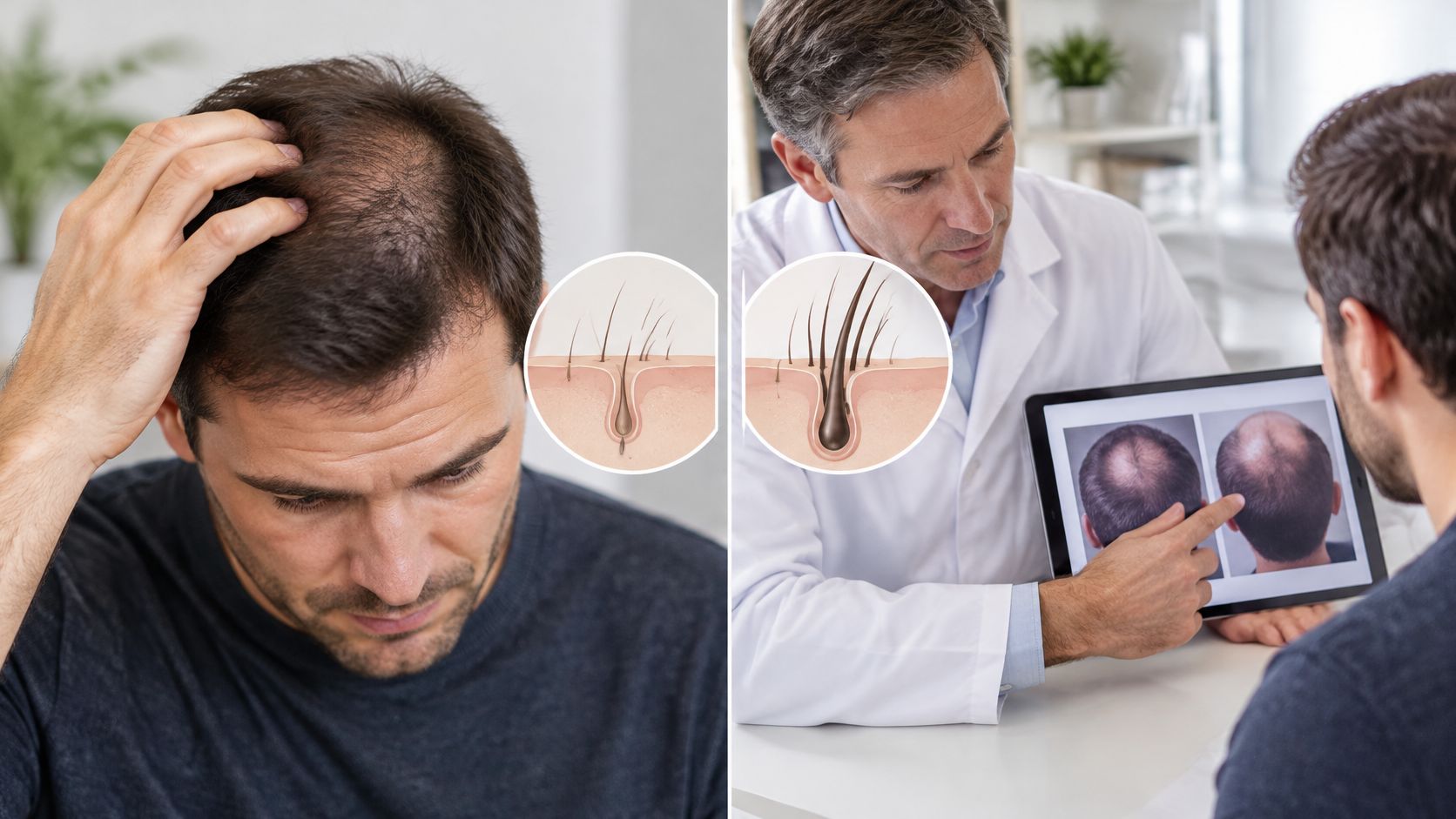
Hair Loss Treatment Side Effects: A Clinician's Safety Guide
Hair loss treatment side effects explained by clinicians. Compare minoxidil, finasteride, peptides, and GLP-1 risks with practical safety monitoring tips.
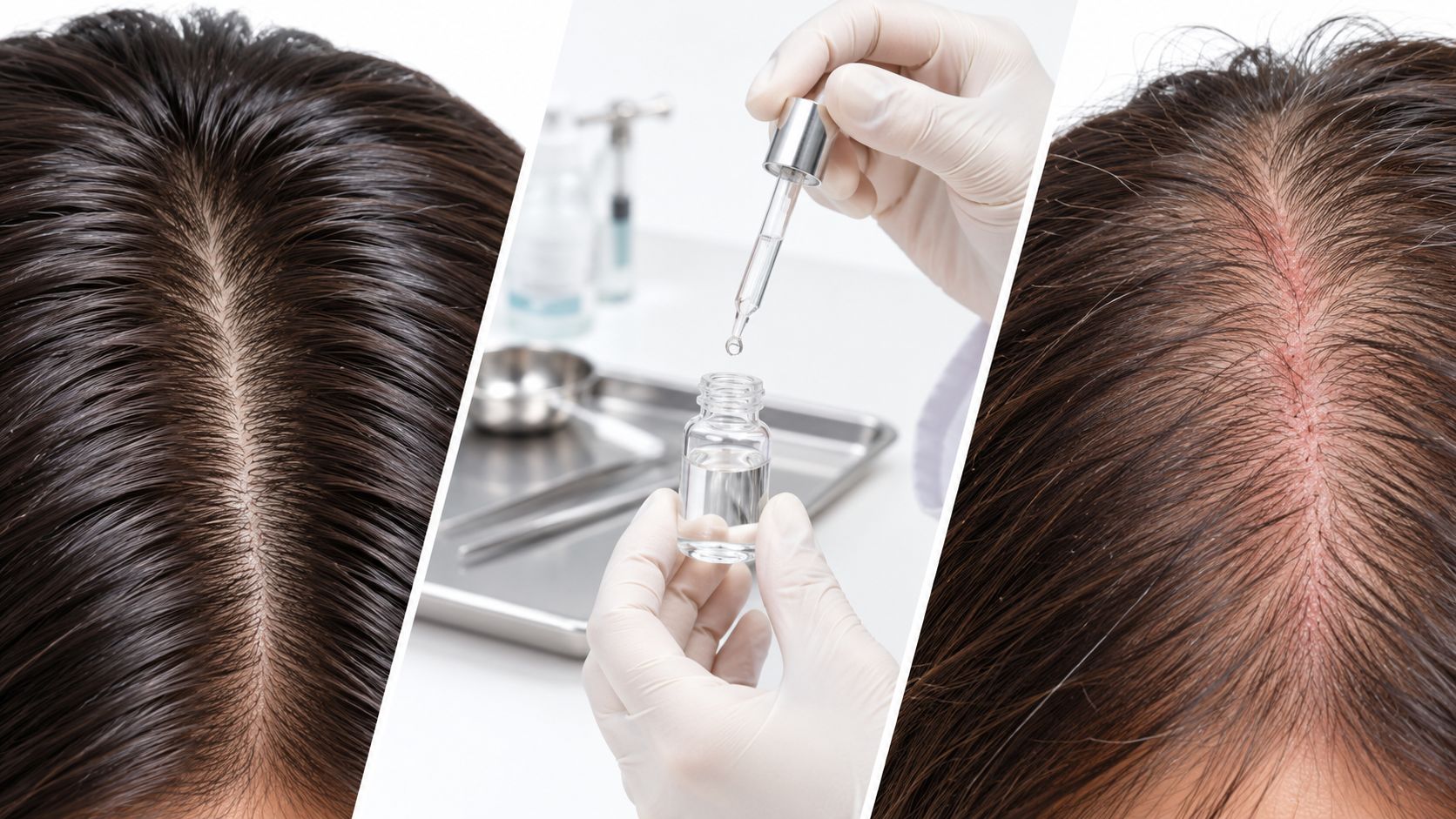
A patient starts a hair-loss treatment and, weeks later, notices a new problem. Reduced libido follows an oral prescription. Scalp itching begins after a topical product. Or hair appears to shed more diffusely while weight is coming off with a GLP-1 medication. These symptoms can be unsettling, but timing alone doesn't establish what caused them.
The practical task is to separate a treatment's known adverse effects from shedding related to rapid weight change, an underlying condition, or the original hair-loss pattern. That means looking at the medication, route, dose, symptom onset, and health history together, then deciding whether to monitor, investigate, adjust treatment, or seek urgent care. A Japanese tonic for hair thinning may be of interest to someone comparing hair-care approaches, but any product should be assessed for ingredients and evidence rather than assumed safe because it's topical or marketed as a tonic.
When Hair Treatment Goes Wrong
A new symptom after starting treatment deserves attention, not an automatic conclusion. A patient who develops reduced libido while taking finasteride has a different safety question from someone with scalp irritation after applying minoxidil. Diffuse shedding during substantial weight loss calls for another line of inquiry: the medication may be part of the timeline, but nutritional intake, illness, thyroid problems, and pre-existing hair loss can also matter.
The details help clinicians distinguish these possibilities. They'll ask when treatment began, whether the dose changed, when shedding or other symptoms appeared, and whether the pattern is diffuse or concentrated around the hairline or crown. They'll also consider associated changes, such as rapid weight loss, dietary restriction, mood symptoms, or signs of scalp inflammation.
A symptom is a signal, not a diagnosis
The phrase hair loss treatment side effects can cover very different experiences. A localized itchy rash may suggest irritation or contact dermatitis. Gradual patterned thinning is more consistent with androgenetic alopecia, while sudden diffuse shedding can fit telogen effluvium, a hair-cycle response to physical or emotional stress. These patterns require different decisions, so stopping an effective medication without review may not solve the actual problem.
Patients should report new sexual symptoms, significant mood changes, cardiovascular symptoms, or persistent scalp reactions instead of stopping or changing a prescription without guidance. A clinician can assess competing causes, review the risk–benefit balance, and decide whether testing or a treatment change is appropriate.
Practical rule: Record the treatment start date, dose changes, weight changes, illness, diet, and symptom onset. A clear timeline makes a safety assessment more useful than a general report that hair is falling out.
How Hair Loss Drugs Work and Why Side Effects Follow
Hair treatments affect different biological systems. Their benefits and adverse effects make more sense when the mechanism is clear: finasteride changes androgen signaling, minoxidil affects blood-vessel tone and hair growth, and substantial weight loss can stress the body's hair cycle.
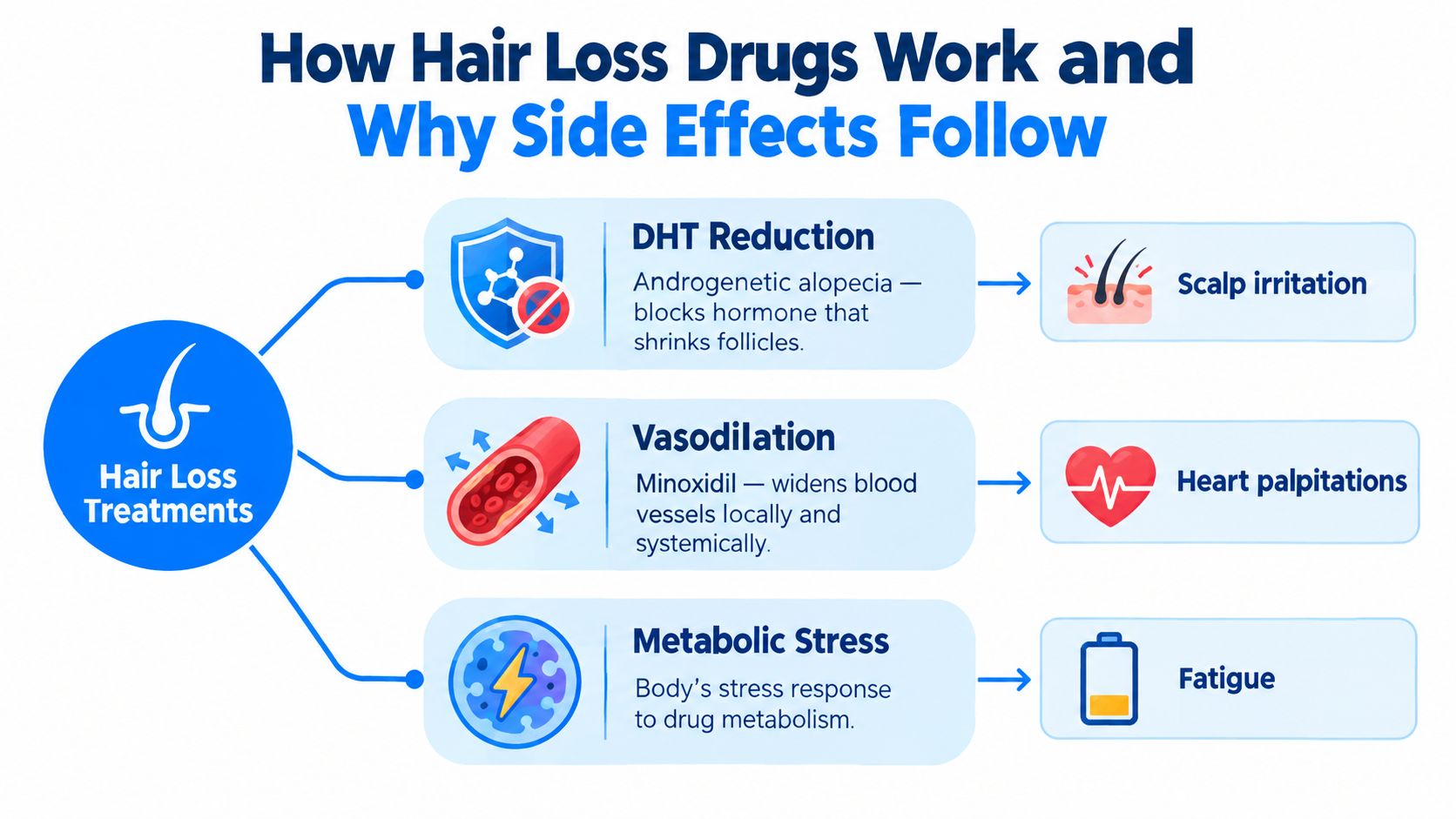
Three biological levers
DHT reduction: In androgenetic alopecia, dihydrotestosterone, or DHT, contributes to follicle miniaturization. Finasteride inhibits type II 5α-reductase, the enzyme that converts testosterone to DHT. The change can help limit androgen-driven follicle effects, but the same hormonal pathway is relevant to sexual function and other symptoms.
A thermostat analogy can help. Finasteride turns down a hormonal signal that affects susceptible follicles; it doesn't selectively act on hair alone. That's why a clinician should review sexual function and mood before treatment, and why new symptoms merit assessment.
Vasodilation: Minoxidil affects blood vessels. Think of widening a hose: blood flow can increase locally when the medication is applied to the scalp, while oral use exposes the whole body to the drug's effects. Route and dose therefore matter. Scalp irritation from topical treatment isn't the same safety issue as a change in heart rate or blood pressure with oral treatment.
Metabolic stress: GLP-1 medicines such as semaglutide and tirzepatide can support weight loss, but rapid weight change or reduced caloric intake can act as a physiologic stressor. In telogen effluvium, more follicles than usual shift into a resting phase, followed by shedding. That timing doesn't prove direct injury to follicles by the medication.
For people evaluating hair-retention options alongside metabolic care, a guide to hair-loss products for men can help frame questions about treatment type and route. When shedding accompanies symptoms that may have another medical cause, thyroid evaluation can also be part of a clinician's assessment; The Axelrad Clinic's thyroid-treatment information offers related context.
Finasteride Risks, Sexual Effects, and the Persistence Question
Finasteride's sexual adverse effects are documented in FDA clinical-trial data, but the figures need context. In trials of Propecia 1 mg, 36 of 945 men taking finasteride (3.8%) reported at least one sexual adverse experience, compared with 20 of 934 men taking placebo (2.1%). The difference was statistically significant, but these are reported trial events, not a prediction that any particular patient will develop symptoms (FDA Propecia labeling).
What the trial rates show
The label lists decreased libido, erectile dysfunction, and ejaculation disorder among the most common adverse reactions occurring in at least 1% of treated patients and more often than with placebo. In the trials, decreased libido was reported by 1.8% of finasteride recipients and 1.3% of placebo recipients; erectile dysfunction was reported by 1.3% and 0.7%, respectively. Reduced ejaculate volume is also described.
The higher 5-mg dose, used for prostate treatment, has different data: 3.7% of patients discontinued therapy because of sexual-function adverse reactions, compared with 2.1% of placebo recipients. The dose and treatment context shouldn't be conflated with the 1-mg hair-loss regimen.
Persistence and psychiatric symptoms
The FDA label includes postmarketing reports of sexual dysfunction that continued after discontinuation. These reports include erectile, libido, ejaculation, and orgasm disorders, but spontaneous reports can't establish frequency or prove causation in each case. The appropriate response is neither to dismiss persistent symptoms nor to treat a report as proof that finasteride caused them.
Before prescribing, clinicians should document baseline sexual function, fertility plans, mood history, and concurrent medications. The label also includes depression and suicidal ideation or behavior among psychiatric reports. New depressive symptoms or suicidal thoughts require prompt clinical evaluation; suicidal thoughts warrant urgent help. Patients who develop sexual symptoms should contact the prescriber so the clinician can assess other causes and reconsider the treatment plan.
Minoxidil by Route, Dose, and Risk
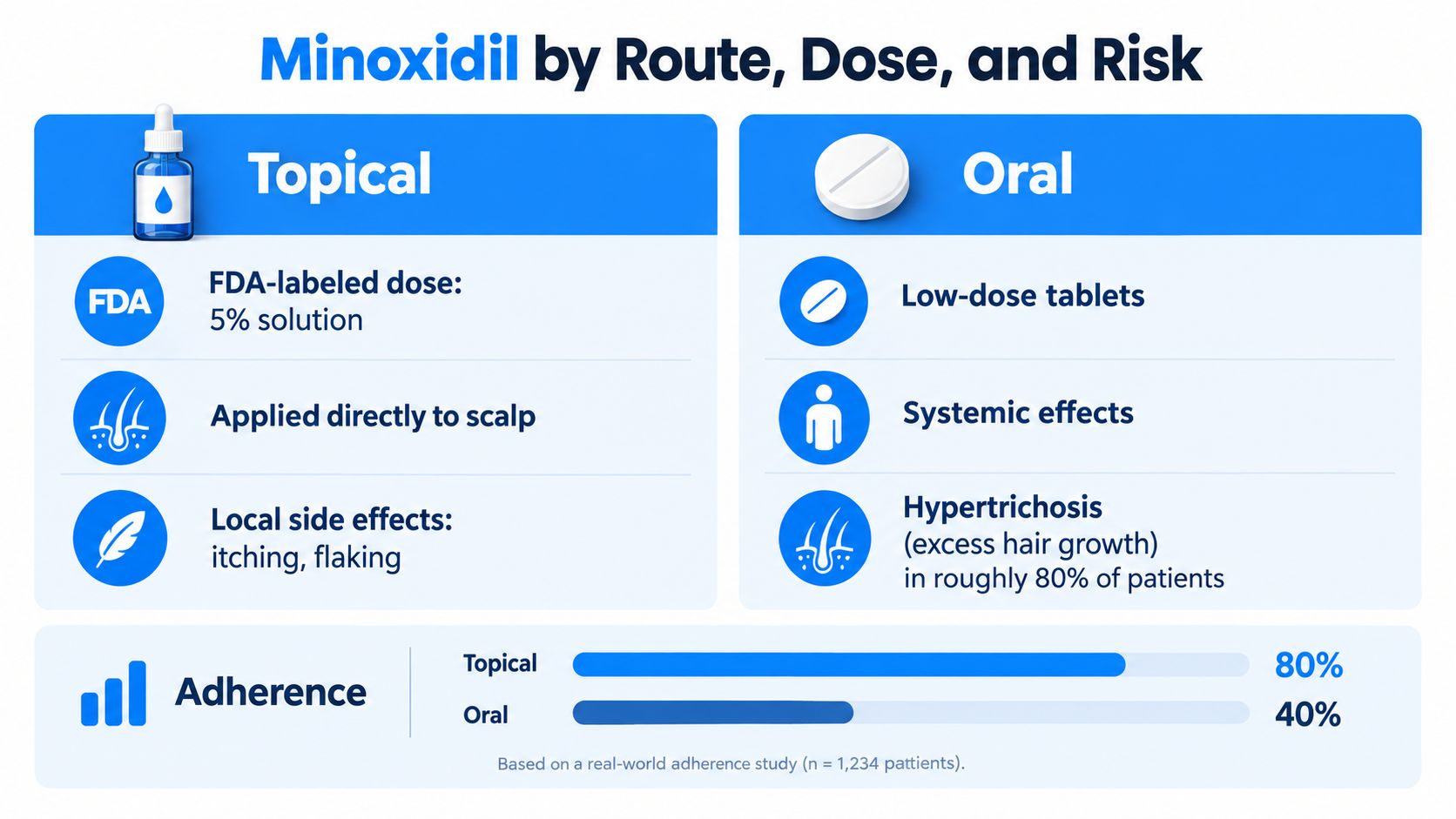
“Topical” and “oral” describe different exposure patterns, not a simple safe-versus-risky ranking. Topical minoxidil mainly causes local reactions, while oral minoxidil can produce systemic cardiovascular and hair-growth effects. The intended use and dose matter: oral Loniten labeling concerns a systemic drug historically used for severe hypertension, not routine hair-loss treatment.
Topical exposure is local, but not symptom-free
Topical minoxidil can cause scalp itching, irritation, and allergic or irritant contact dermatitis. Unwanted facial or ear hair is also possible, particularly if product spreads beyond the scalp or transfers through contact. In a clinical adherence study, 46.5% of participants reported at least one side effect; 13.8% reported scalp itching, 12.3% facial hair growth, and 9.8% increased hair loss (topical minoxidil adherence study).
Increased shedding needs interpretation rather than an automatic stop. It may occur during a hair-cycle transition, reflect progression of the underlying condition, or point to a different cause. Apply only the prescribed amount to the scalp, wash hands afterward, and seek clinical review for persistent dermatitis, severe irritation, palpitations, dizziness, or swelling.
Oral treatment changes the safety calculus
FDA labeling for oral minoxidil reports hypertrichosis, or lengthening, thickening, and darkening of fine body hair, in about 80% of patients receiving the antihypertensive treatment. It generally developed within 3 to 6 weeks and could affect areas beyond the scalp. Oral minoxidil can also raise heart rate; patient instructions advise contacting a clinician if resting pulse rises 20 beats per minute or more above baseline (FDA Loniten labeling).
Route matters: Oral and topical minoxidil aren't interchangeable. A clinician considering oral use should review cardiovascular history, blood pressure, heart rate, other medications, and a plan for monitoring.
Antiandrogens, Spironolactone, and Sex-Specific Monitoring
Spironolactone's hair-loss effects arise from endocrine activity, not from contact with the scalp. Its antiandrogen effects may be useful in selected patients, but they also make pregnancy status, kidney function, medications, and patient physiology central to prescribing.
Hair-loss evidence has associated spironolactone with scalp pruritus or dandruff, menstrual disturbances, facial hypertrichosis, and treatment discontinuation. A cited meta-analysis reported an overall adverse-event incidence of 3.69% (spironolactone evidence review). That overall figure doesn't describe an individual's risk or remove the need to screen for clinically important complications.
Screen for endocrine and kidney-related risks
Spironolactone can cause hyperkalemia or renal complications, particularly in people with kidney disease or those taking ACE inhibitors, ARBs, potassium supplements, or other potassium-retaining drugs. Before prescribing, the clinician should review renal function and interacting medications, and consider serum potassium monitoring in light of age, comorbidities, dose, and concomitant therapy.
For patients who could become pregnant, pregnancy status and contraception require discussion because antiandrogen exposure is inappropriate during pregnancy. Men should receive explicit counseling about possible gynecomastia, reduced libido, and erectile dysfunction. Menstruating patients should be told that cycle changes can occur.
Combinations need clearer follow-up
Combining spironolactone with minoxidil may be considered in some treatment plans, but adding medications makes symptom attribution harder. Dizziness, edema, or blood-pressure effects should be reviewed against the full regimen, rather than assumed to come from one drug or from hair loss itself.
Before treatment: Confirm pregnancy considerations where relevant, review kidney function and interacting drugs, and establish how new symptoms or abnormal monitoring results will be handled.
GLP-1 Hair Loss, Telogen Effluvium, and the Weight-Loss Link
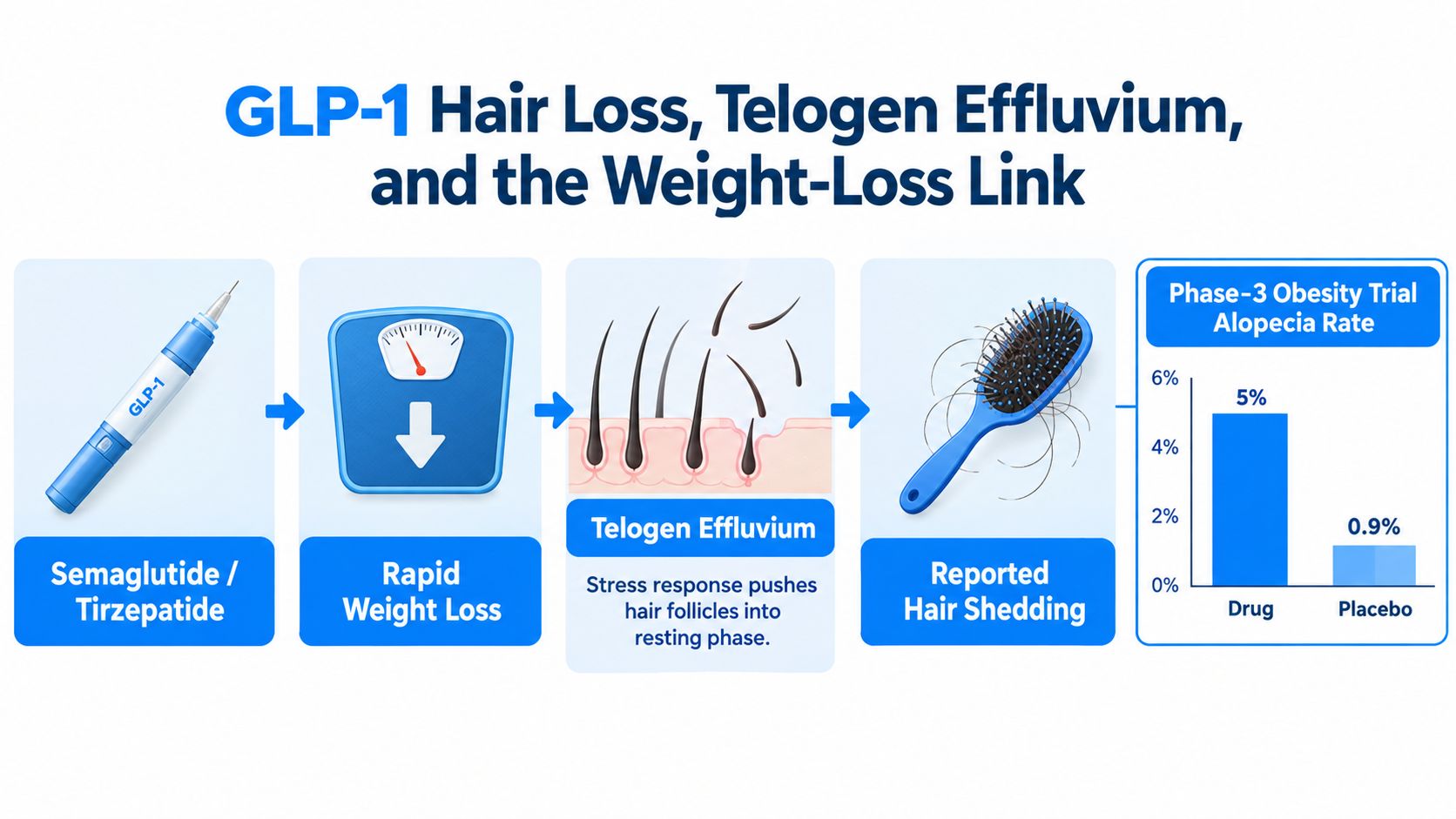
Hair shedding reported during GLP-1 treatment deserves attention, but reports don't establish that the medication directly damages follicles. A leading explanation is telogen effluvium: rapid weight loss or reduced caloric intake acts as physiologic stress, pushing more follicles into a resting phase before shedding becomes noticeable.
In a phase 3 trial of tirzepatide in adults with obesity who didn't have diabetes, alopecia occurred in approximately 5% of participants receiving tirzepatide, compared with 0.9% receiving placebo (tirzepatide trial report). The finding shows that alopecia was reported in the trial; it doesn't prove permanent follicle miniaturization or establish the biological mechanism.
Read pharmacovigilance signals carefully
A pharmacovigilance analysis recorded hair loss in 9,933 of 626,894 patients with reported hair outcomes, or 1.6%. Only 52 patients, or 0.008%, reported hair regrowth. Reporting-odds ratios were 1.24–2.46 for semaglutide and 0.83–1.73 for tirzepatide (GLP-1 hair-loss pharmacovigilance analysis). These are spontaneous reports, not incidence rates. Underreporting, increased attention to a potential reaction, and differences in follow-up can distort the signal; the analysis also can't fully separate medication effects from weight change, nutrition, menopause, illness, or baseline pattern loss.
Use the pattern and timeline to guide next steps
Diffuse shedding after substantial weight loss is different from gradual patterned thinning at the hairline or crown. Clinicians should document when treatment started, dose changes, weight-loss pace, illness, dietary intake, and the onset and distribution of shedding. That timeline can guide whether to observe, review nutrition and protein intake, or assess for iron deficiency, thyroid disease, medication effects, or another hair disorder.
A patient with sudden diffuse shedding and a clear weight-loss trigger may need nutritional and clinical review rather than an assumption of permanent baldness. Patchy loss, scalp changes, associated systemic symptoms, or ongoing shedding despite addressing likely triggers should prompt dermatology assessment. Patients exploring metabolic care alongside hair-retention questions can use metabolic reset guidance to prepare questions for a prescribing clinician.
Compounded Topicals, Peptides, and the Quality Question
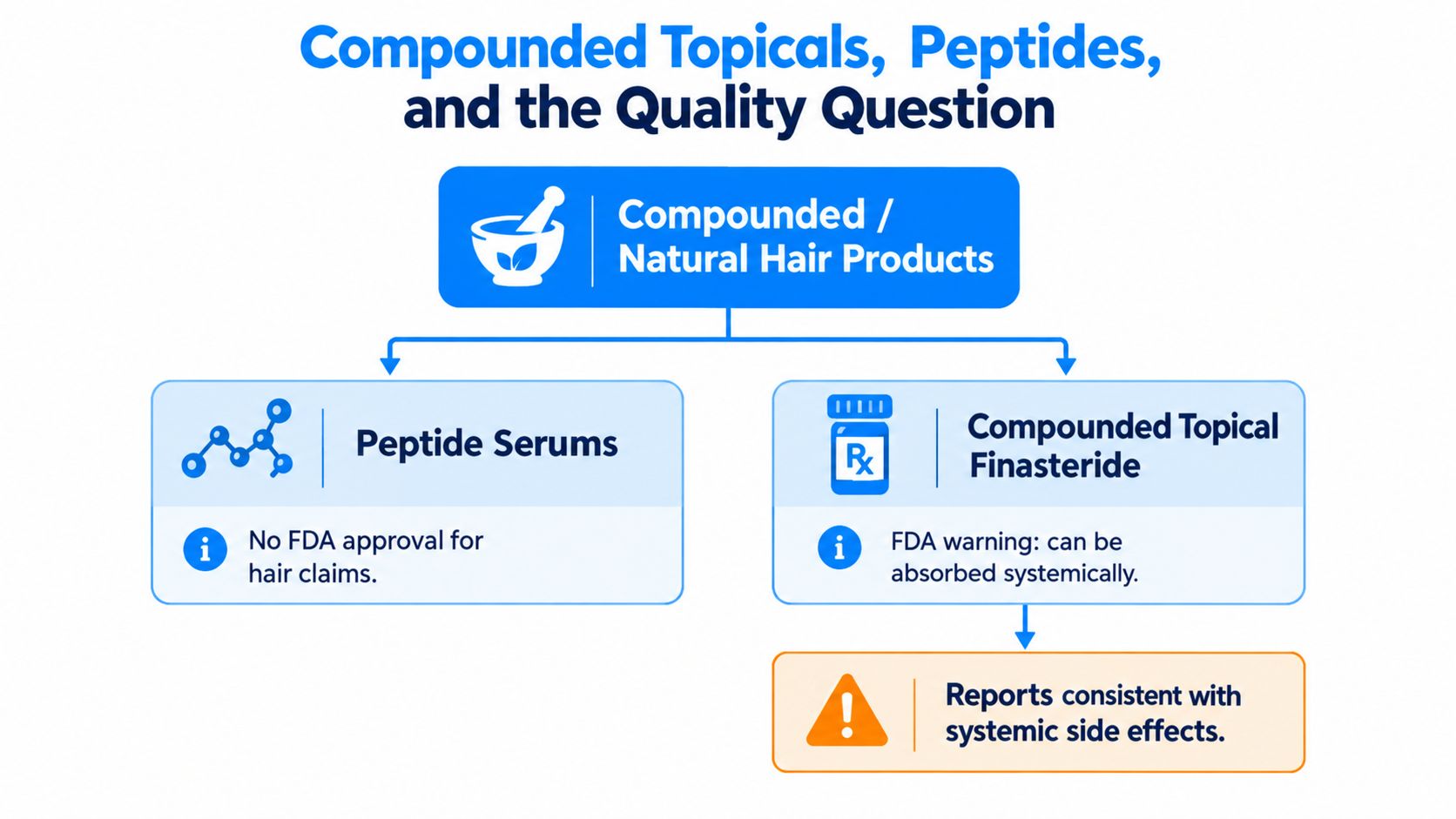
A compounded or “natural” label doesn't guarantee local action or lower risk. The FDA has warned that topical finasteride can be absorbed systemically and has received reports consistent with effects associated with oral finasteride, including erectile dysfunction, anxiety, depression, suicidal ideation, fatigue, insomnia, decreased libido, and testicular pain. Compounded topical use shouldn't be treated as a way to bypass systemic counseling.
Formulation and oversight matter
The word “peptide” doesn't establish that a product is approved or effective for hair loss. Patients should ask what the product contains, whether the intended use is supported, who prescribed it, and which pharmacy prepared it. For compounded therapies, quality safeguards can include preparation to applicable USP standards and analytical potency and sterility testing, alongside clinician review of whether the treatment is appropriate.
Oral minoxidil also illustrates why a formulation shouldn't be assumed safer because it's less familiar. A 2025 review reported adverse events in about 27% of participants, with a 95% confidence interval of 18%–36%, and identified hypertrichosis as a prominent concern (oral minoxidil review). The evidence included substantial heterogeneity, so the estimate should be interpreted cautiously, not applied as a personal prediction.
Ask before starting: What is known about systemic absorption, what monitoring matches this route and dose, and how will the prescriber respond if a new adverse effect appears?
A Practical Safety and Monitoring Checklist
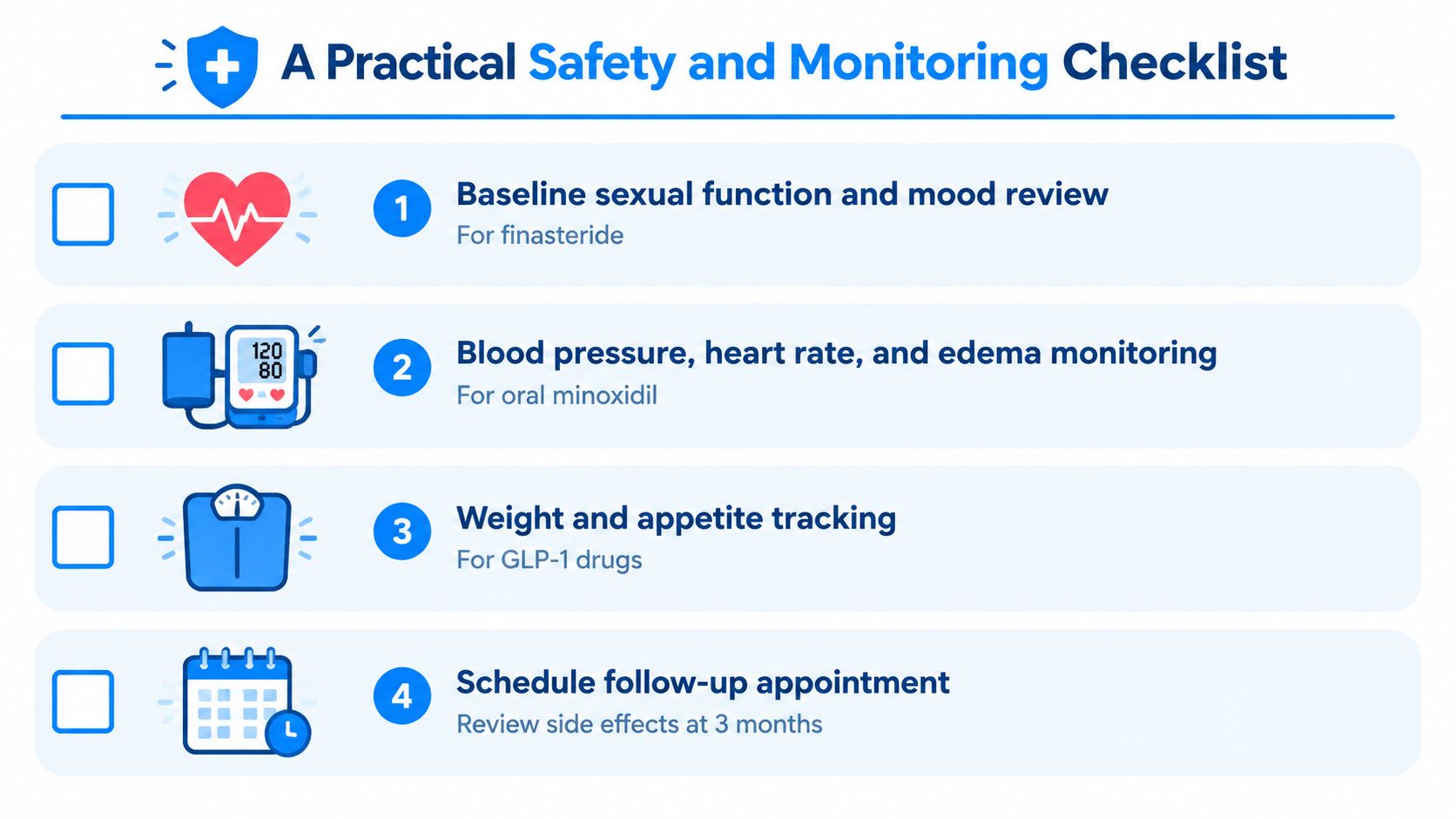
A useful monitoring plan begins before the first dose. The prescribing clinician should document baseline symptoms, relevant medical history, concurrent medications, and the treatment goal, then agree on when to check in and what symptoms require earlier contact. A patient-focused guide to hair growth for men can help organize questions, but it shouldn't replace an individual clinical assessment.
Bring these checks to the appointment
- Finasteride: Record baseline sexual function, fertility plans, mood history, and concurrent medications. Report new sexual symptoms or mood changes rather than stopping without notice.
- Oral minoxidil: Review blood pressure, heart rate, cardiovascular history, and swelling. Follow the prescriber's monitoring plan; contact a clinician if resting pulse rises 20 beats per minute or more above baseline, as directed in FDA patient instructions.
- Spironolactone: Review pregnancy status where relevant, kidney function, potassium-related risks, and interacting medicines. Ask whether serum potassium monitoring is appropriate.
- GLP-1 treatment: Track treatment changes, weight-loss pace, appetite, dietary intake, illness, and shedding pattern. A clinician may consider iron or thyroid evaluation when the history or symptoms support it.
Seek urgent medical assessment for chest pain, fainting, severe mood changes, suicidal thoughts, or a serious allergic reaction. Persistent shedding, patchy loss, scalp inflammation, or symptoms that don't improve after a suspected trigger is addressed also warrant clinical review.
Side Effects and Monitoring Triggers by Drug Class
| Drug Class | Most Common Side Effects | Baseline Screening | Escalation Trigger |
|---|---|---|---|
| Finasteride | Decreased libido, erectile dysfunction, ejaculation changes | Sexual function, fertility plans, mood, medications | New sexual symptoms, depression, or suicidal thoughts |
| Minoxidil, topical | Scalp itching or irritation, contact dermatitis, unwanted facial hair | Scalp condition, application method, other treatments | Persistent or severe irritation, palpitations, dizziness, or swelling |
| Minoxidil, oral | Unwanted body-hair growth, heart-rate changes, possible cardiovascular effects | Blood pressure, resting pulse, cardiovascular history, medications | Chest pain, fainting, or resting pulse rise of 20 beats per minute or more above baseline |
| Spironolactone | Menstrual changes, scalp symptoms, possible sexual or feminizing effects | Pregnancy considerations, renal function, potassium risks, medications | Concerning cycle changes, signs of hyperkalemia, or renal complications |
| GLP-1 medicines | Reported diffuse shedding during treatment, often assessed alongside weight change | Weight trend, intake, illness, hair-loss pattern | Persistent or patchy shedding, associated symptoms, or suspected deficiency |
Vials + Vitals offers physician-directed telehealth assessment and individualized treatment protocols for metabolic health and hair-related concerns, with U.S.-licensed providers determining eligibility and treatment plans. To discuss whether a monitored approach fits a patient's health history and goals, visit Vials + Vitals.