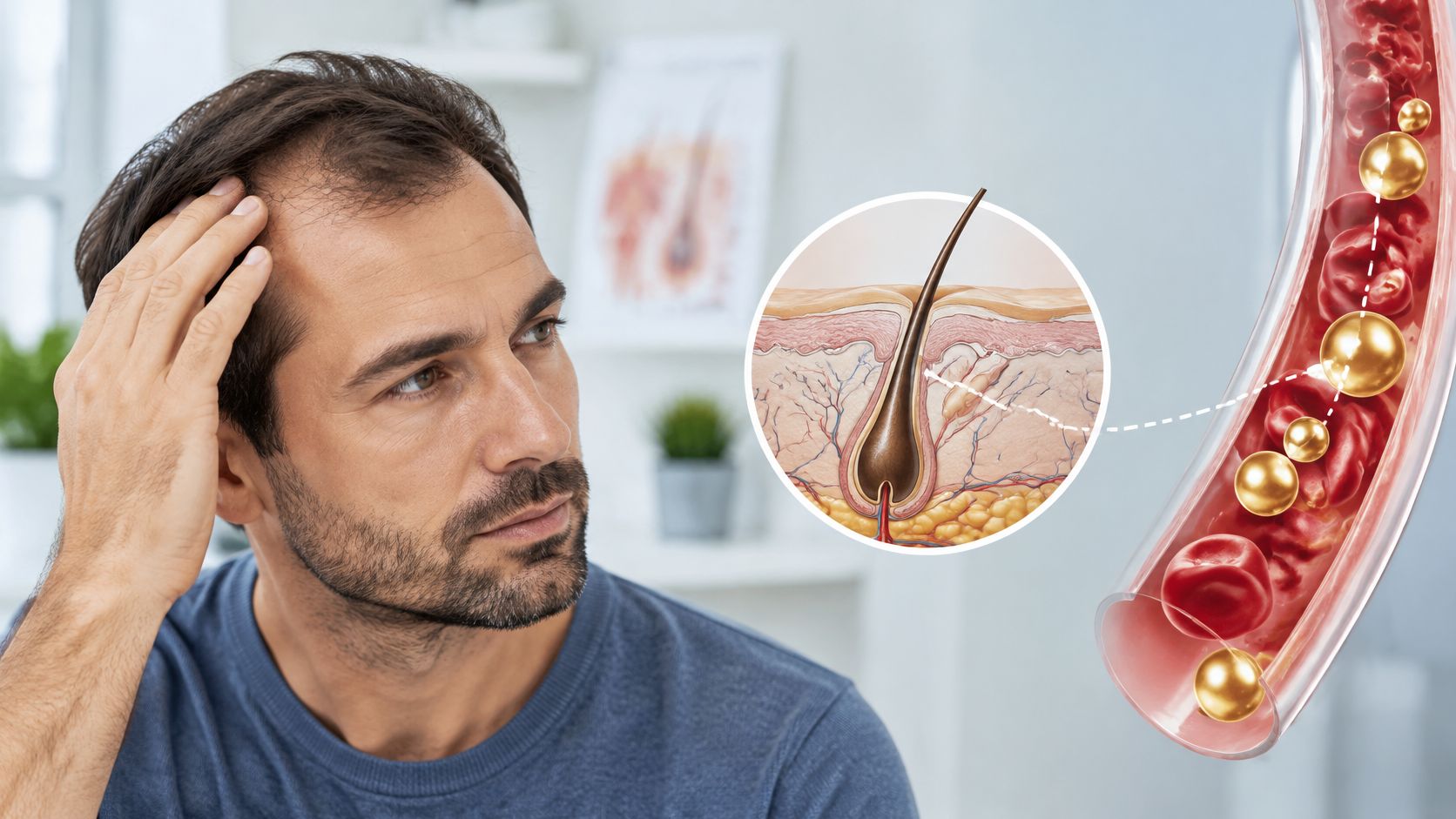
Hair Thinning for Women: Causes, Tests and Treatments
Hair thinning for women often has identifiable causes. Learn the pattern types, lab tests, evidence-based treatments and when to see a provider.

Could a hair-growth treatment be the wrong first step when the underlying problem is a thyroid disorder, iron deficiency, or shedding after weight loss? Hair thinning for women requires a diagnosis before a treatment choice, because similar-looking changes can arise from different follicle processes.
The Vials + Vitals Medical Board's educational approach starts with the pattern, timing, and accompanying symptoms. A wider central part, sudden shedding throughout the scalp, and painful bald patches shouldn't lead to the same protocol.
Which Type of Hair Thinning You May Have
Hair thinning patterns, triggers and first steps
| Pattern | What You Notice | Common Trigger | First Step |
|---|---|---|---|
| Female pattern hair loss | Gradual widening of the central part and reduced density over the crown | Genetic sensitivity of follicles to androgens | Dermatology review and trichoscopy |
| Telogen effluvium | Diffuse shedding that begins a few months after a change | Rapid weight loss, illness, stress, restrictive dieting | Timeline review and targeted labs |
| Thyroid or iron-related shedding | Diffuse thinning with fatigue, cold intolerance or heavy periods | Thyroid disease, low ferritin or anemia | Thyroid and iron testing |
| Androgen-related thinning | Thinning with acne, excess facial or body hair or irregular cycles | Hyperandrogenism | Hormonal evaluation for ovarian or adrenal causes |
| Patchy or scarring loss | Smooth bald areas, scalp pain, redness or scale | Alopecia areata or scarring or inflammatory scalp disease | Prompt dermatology referral |
This table is a screening aid, not a diagnosis. Its rows aren't mutually exclusive: a woman can have inherited patterned thinning and then develop additional shedding after illness or restrictive dieting.
Location helps, but it doesn't settle the diagnosis. Reduced coverage at the crown of the head deserves attention to both the distribution of thinning and the condition of the scalp underneath it.
A timeline can change the interpretation
Consider a hypothetical woman in her late thirties who notices a wider part after a crash diet. Her cycles remain regular, and she reports no burning, redness, or scalp pain.
The dietary change makes telogen effluvium a leading possibility, particularly if she also notices increased shedding throughout the scalp. However, a wider part alone doesn't establish that diagnosis; a clinician still needs to examine for miniaturization and review whether nutritional or thyroid testing is appropriate.
Regular cycles and an otherwise comfortable scalp help organize the assessment, but they don't exclude all hormonal or inflammatory conditions. A photograph can't substitute for the combination of history, examination, and selected laboratory results.
Practical rule: The most useful first question isn't which product promotes growth. It's whether the problem is increased shedding, progressively finer hairs, or an inflamed or damaged scalp.
Before a visit, the patient should record:
- When shedding started: Include whether the change was abrupt or gradual.
- What changed beforehand: Review illness, dietary restriction, weight changes, medications, and major stress during the preceding months.
- Whether scalp symptoms are present: Note itching, tenderness, burning, redness, scale, or distinct bald areas.
How Genes, Androgens and Age Drive Patterned Thinning
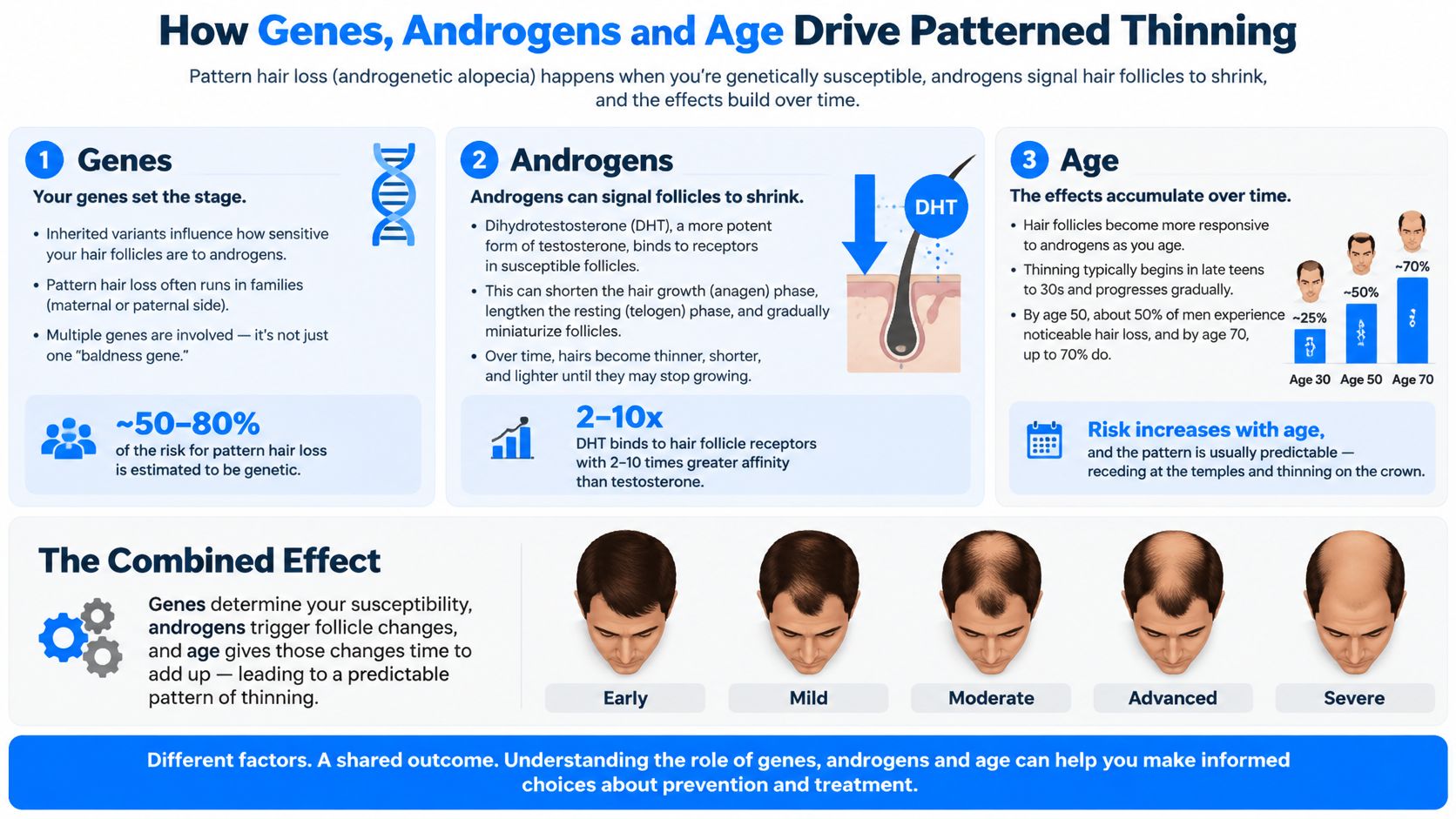
In a 2001 British Journal of Dermatology study, researchers examined 377 women aged 18–99 who were not seeking care for hair-growth problems. Clinically identifiable female pattern hair loss affected 6% of participants younger than 50 and 38% of those aged 70 and older. These figures describe that study group, not the likelihood that any one woman will develop patterned thinning.
Miniaturization changes the hair, not just the count
Female pattern hair loss, also called female androgenetic alopecia, involves progressive follicular miniaturization. Affected follicles produce finer, shorter hairs, reducing scalp coverage even when hairs remain across much of the scalp.
A garden offers a useful comparison: plants may still emerge across the same plot, but each season's plants grow smaller and provide less cover. Counting plants alone would miss the change.
Genetic susceptibility can influence how follicles respond to androgen signaling. The role of androgens varies among women, so patterned thinning does not by itself establish that circulating testosterone is high.
Pattern matters more than age alone
Age can increase the likelihood of patterned loss, while increased androgen activity may contribute in some patients, particularly when other signs suggest an underlying hormonal disorder. Neither factor explains every episode of shedding.
A gradual widening of the central part can fit a miniaturization process. Sudden, widespread shedding has a different pattern and may point to an additional cause. Some women experience longstanding patterned thinning alongside a newer increase in shedding, which can mean more than one process is affecting the hair.
Nutritional and Weight-Loss Triggers Worth Testing
Diffuse shedding can follow a change in nutrition or body weight, so a hair-loss pattern should be sorted before treatment begins. A retrospective study of women with telogen effluvium included 2,851 patients. Among the 2,413 patients tested, 1,123, or 46.5%, had low ferritin. That association makes iron status relevant to an appropriate evaluation, though it does not establish that iron deficiency caused every participant's shedding.
Ferritin reflects stored iron, but inflammation can raise the result. A clinician interprets it alongside symptoms, blood count, other iron measures, and medical history to decide whether iron depletion is likely and whether treatment is appropriate.
Why weight change can affect the hair cycle
In telogen effluvium, a trigger shifts follicles from anagen, the active growth phase, toward telogen, the resting and shedding phase. The resulting shedding may appear after a delay, like leaves falling after a tree has already responded to a change in conditions. That timing can make the original trigger easy to overlook.
Potential contributors include rapid weight loss, restrictive dieting, major illness, physiologic or psychological stress, anemia, thyroid abnormalities, and vitamin B12 or folate deficiencies. During weight management, review protein intake, dietary variety, appetite suppression, gastrointestinal symptoms, and the pace of weight change.
Semaglutide and tirzepatide are worth including in a medication review when shedding begins during treatment. Semaglutide activates GLP-1 receptors; tirzepatide activates both GIP and GLP-1 receptors. Their effects on appetite and glucose regulation may coincide with substantial changes in food intake and body weight.
Evidence about hair shedding during these treatments has limits. Observations made alongside weight loss cannot, on their own, establish whether a drug acts directly on follicles or whether changes in nutrition and body weight contribute.
Targeted testing rather than a universal panel
Laboratory tests for nutritional and metabolic contributors
| Test | What It Checks | Why It Matters for Thinning |
|---|---|---|
| Ferritin and serum iron | Stored and circulating iron measures | Helps identify iron depletion in the appropriate clinical context |
| Complete blood count | Anemia and red cell measures | Identifies anemia that can contribute to diffuse shedding |
| Thyroid testing, including TSH | Thyroid function | Thyroid abnormalities are recognized shedding triggers |
| Vitamin B12 and folate | Nutrient status | Deficiencies can contribute to telogen effluvium |
| Hormonal panel | Androgen and related hormone levels | Ordered when clinically indicated, especially with hyperandrogenism signs |
Autoimmune causes may also merit evaluation. Autoimmune thyroid disease can affect thyroid function, while alopecia areata may cause patchy loss. Thyroid antibody testing or dermatology assessment may be appropriate when the history and examination point in those directions.
Treating a documented deficiency or thyroid disorder does not restore visible density overnight. Follicles need time to resume growth and produce new hair shafts, so recovery unfolds gradually over months. Do not stop a medically important medication without advice from its prescriber.
How a Provider Works Through the Diagnosis
A structured examination separates a change in hair cycling from a change in follicle size. It also identifies patients whose symptoms require medical evaluation beyond a hair-growth prescription.
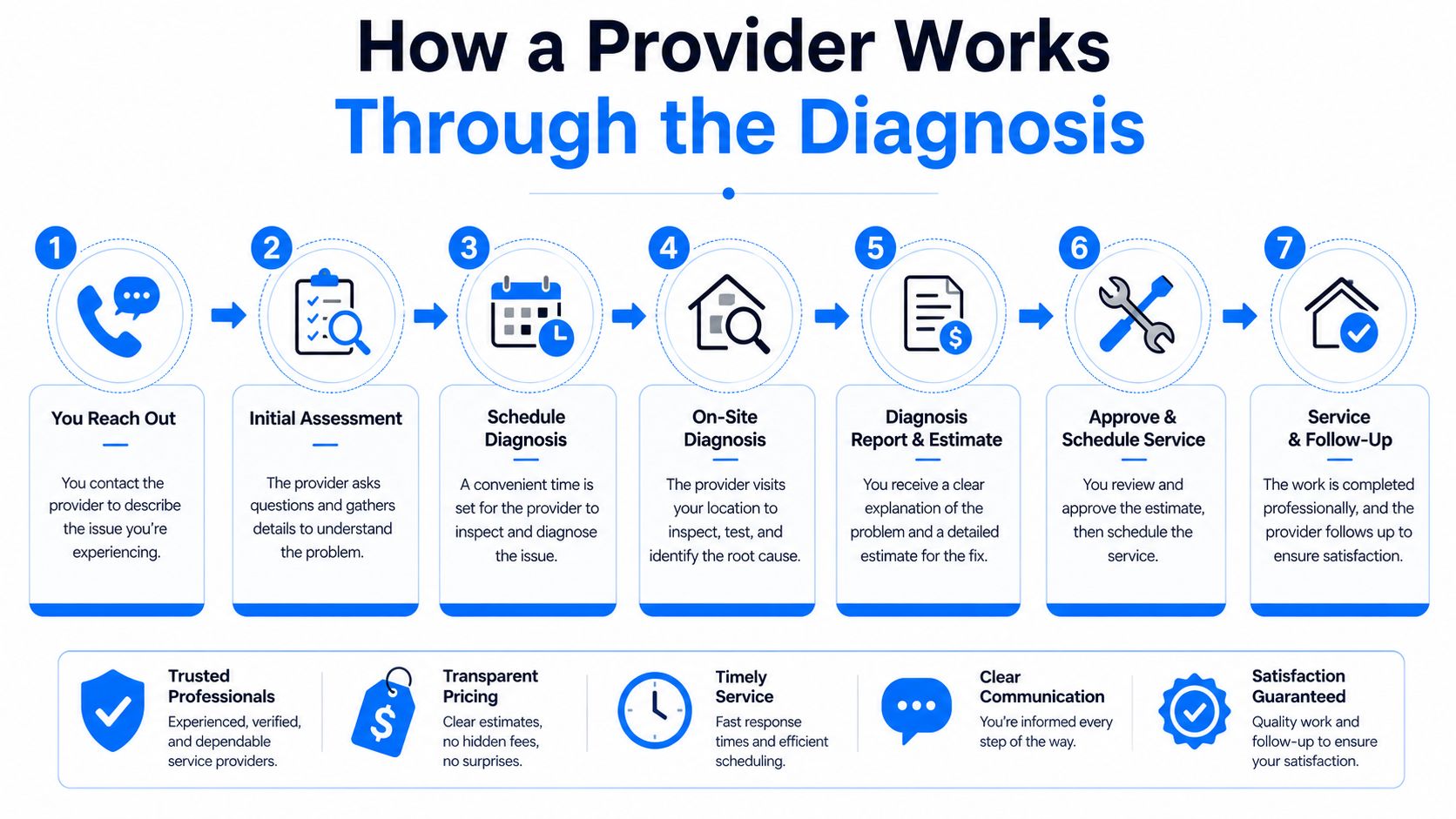
The diagnostic sequence
Build the timeline. Document onset, recent illness, dietary restriction, new medications, and weight change over the preceding months. Delayed shedding after a recognizable stressor supports a different pathway from slowly progressive thinning.
Take the relevant history. Family history, menstrual and reproductive factors, androgenic medications, and metabolic disease help narrow the possibilities. Acne and excess facial or body hair deserve explicit documentation rather than being treated as unrelated concerns.
Examine the distribution. Assess part width, crown density, and the central scalp compared with the occipital scalp at the back of the head. Also inspect for redness, scale, broken hairs, and loss of visible follicular openings.
Use trichoscopy when appropriate. This magnified scalp examination assesses differences between thicker terminal hairs and finer vellus-like hairs; a Cleveland Clinic clinical review identifies hair-shaft diameter variability greater than 20% as a reported marker of patterned miniaturization.
Order targeted laboratory tests. Choose tests based on symptoms, nutritional risk, and examination findings rather than ordering every available nutrient or hormone measurement. Existing results should be reviewed before duplicating testing.
Investigate hyperandrogenism when present. Acne, hirsutism, or menstrual abnormalities may warrant evaluation for ovarian or adrenal causes. Treating the scalp alone could leave the underlying disorder unaddressed.
Confirm the diagnosis before escalation. Antiandrogen selection requires consideration of pregnancy potential, menopausal status, other illnesses, and systemic contraindications. An uncertain diagnosis or possible scarring process calls for specialist assessment rather than a stronger empiric regimen.
What a completed assessment should establish
The clinician should distinguish new growth that feels finer from breakage or other causes of changing hair texture. These observations may look similar to a patient but point toward different next steps.
A completed work-up should contain a named working diagnosis, reviewed test results, a documented treatment plan, and the reason for any dermatology or endocrinology referral. It should also identify what will be measured at follow-up, such as standardized photographs, part width, shedding history, or treatment tolerance.
Diagnostic uncertainty should be documented plainly. A provisional diagnosis with a planned reassessment is more useful than presenting an unconfirmed explanation as settled fact.
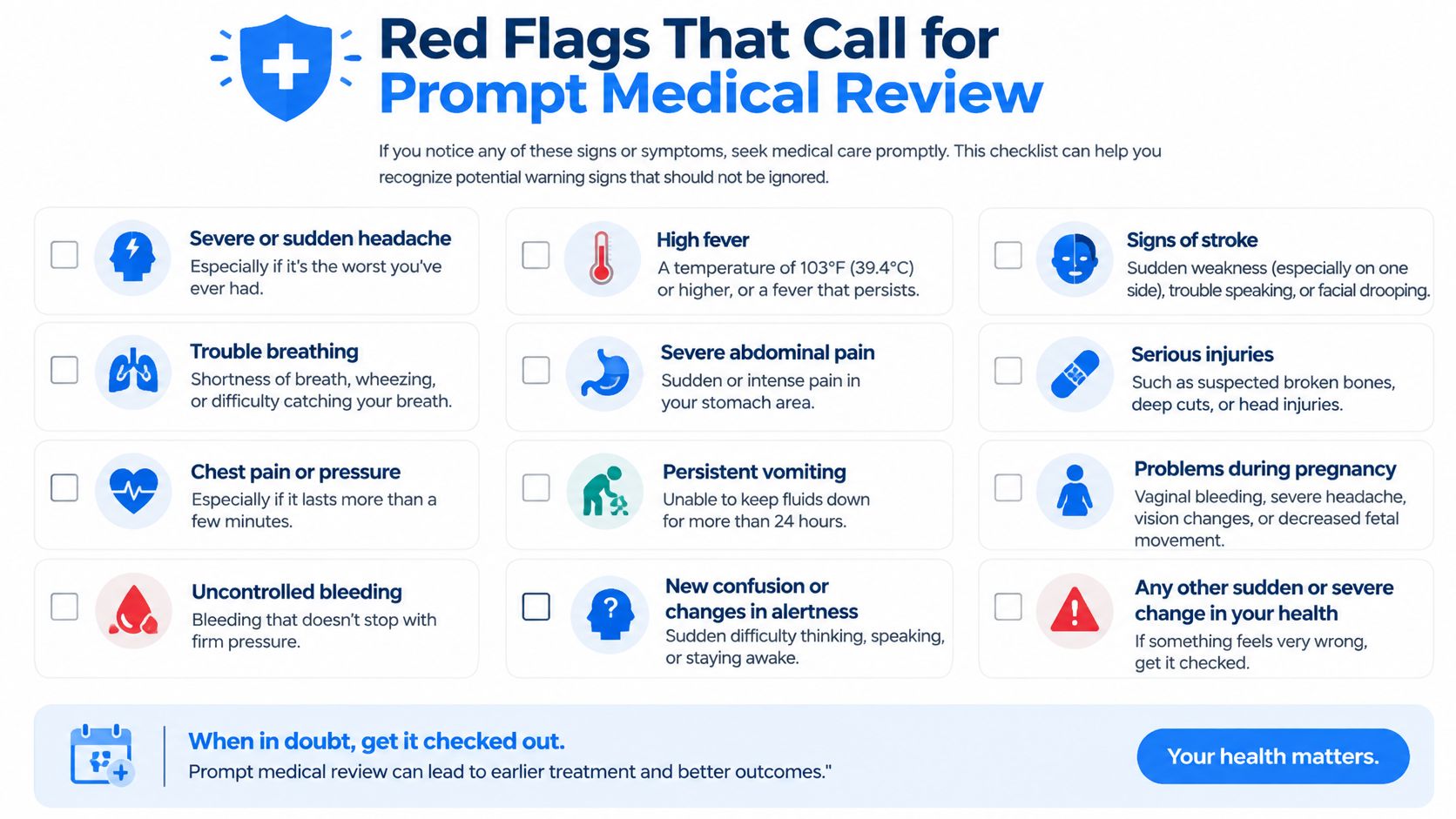
Red Flags That Call for Prompt Medical Review
The urgency of evaluation depends on accompanying symptoms, not how much hair appears in a brush. MedlinePlus guidance on female pattern baldness emphasizes assessment of the loss pattern and medical history, including consideration of thyroid disease and iron deficiency.
Arrange a medical visit within a few weeks
- Persistent heavy shedding: Abrupt diffuse shedding that continues beyond a few months deserves assessment rather than indefinite observation.
- A weight-treatment connection: Thinning after starting a weight-loss medicine or after rapid weight loss warrants a documented review of baseline density, intake, and medication timing.
- New androgen-related signs: Acne, increased facial or body hair, irregular periods, or a deepening voice calls for hormonal assessment. Rapidly progressing changes merit expedited review.
- Systemic symptoms: Fatigue, cold intolerance, or heavy periods can support investigation for thyroid dysfunction, iron depletion, or anemia.
A possible weight-loss association doesn't establish medication toxicity. The useful response is a clinical review that weighs the benefits of treatment against the patient's nutritional status, symptoms, and hair findings.
Seek prompt dermatology assessment
- Distinct bald patches: Smooth areas of loss or patches with broken hairs require a different differential diagnosis from gradual central thinning.
- An uncomfortable scalp: Pain, burning, tenderness, redness, scale, or pustules can indicate an inflammatory process.
- Possible scarring: Shiny areas with fewer visible follicular openings need specialist examination because the treatment objective may include preventing additional permanent loss.
Smooth patches aren't automatically scarring alopecia. A dermatologist can distinguish potentially reversible patchy loss from conditions that damage the follicle itself.
Seek immediate care for concerning symptoms during oral minoxidil use
Chest pain, shortness of breath, fainting, or rapid unexplained weight gain require prompt medical attention when taking oral minoxidil. These aren't symptoms to defer until a routine hair follow-up; severe chest pain, breathing difficulty, or collapse warrants emergency evaluation.
Medication safety: A change in hair density shouldn't prompt unsupervised discontinuation of an important prescription.
The prescriber should direct medication changes after reviewing the clinical situation. Anyone who is pregnant or planning pregnancy shouldn't take or handle finasteride without medical guidance, particularly broken or crushed tablets.
Medical Treatment Options and the Evidence Behind Them
Topical minoxidil is the best-supported first-line medication for female pattern hair loss. The American Academy of Dermatology's guidance describes FDA-approved 2% and 5% topical products, with benefits generally becoming assessable after approximately 6 to 12 months of continuous use.
The FDA-hosted labeling for 2% minoxidil solution describes 8-month studies involving mostly White women aged 18–45 with mild-to-moderate hair loss: 19% reported moderate regrowth versus 7% with placebo, while 40% reported minimal regrowth versus 33% with placebo. Moderate improvement occurred in a minority, so treatment counseling should distinguish possible benefit from an expectation of full restoration.
How the options differ
Medical options for female hair thinning compared
| Option | Mechanism | Evidence Summary | Key Considerations |
|---|---|---|---|
| Topical minoxidil | Supports follicular growth and helps preserve existing hair | Best-supported first-line medication for patterned thinning | Application frequency is formulation-specific; early shedding is possible; ongoing use is needed |
| Oral minoxidil | Systemic vasodilation with effects on blood pressure and heart rate | Used off-label; not FDA-approved for hair loss; evidence shouldn't be treated as interchangeable with topical trials | Can lower blood pressure, cause fluid retention, and increase heart rate; requires prescriber monitoring |
| Finasteride | Inhibits type II 5-alpha-reductase, reducing conversion of testosterone to DHT | Off-label for women; evidence is less established than for topical minoxidil | Contraindicated in pregnancy and lactation; requires assessment of pregnancy potential and menopausal status |
Minoxidil's hair-growth effects aren't fully explained by increased blood flow alone. Its active metabolite influences potassium-channel signaling and supports changes in follicular cycling, but the complete mechanism in human scalp follicles remains incompletely understood.
Topical application should reach the scalp rather than merely coat the hair. Frequency differs between solutions and foams, so a universal twice-daily instruction isn't appropriate for every formulation.
Temporary early shedding can occur, and discontinuation can lead to loss of treatment-related benefit. Consistent use and comparable photographs provide a more useful assessment than frequent checks under changing lighting.
Systemic treatment needs a separate safety decision
Oral minoxidil exposes the body systemically rather than limiting application to the scalp. A prescriber should review blood pressure, cardiovascular history, concurrent medications, and the potential for edema or palpitations before selecting it.
Finasteride targets androgen metabolism rather than acting through the same pathway as minoxidil. A clinical review of female pattern hair loss reports that 2.5 to 5 mg daily may be more effective than 1 mg in selected women, particularly those with hyperandrogenism; these findings don't establish a standard dose for every patient.
Pregnancy and lactation contraindications substantially affect finasteride eligibility. Combining therapies also requires an individualized rationale, not an assumption that additional ingredients necessarily improve outcomes.
A review of hair-loss treatment side effects should accompany treatment selection. Follow-up should assess tolerance, adherence, and whether the original diagnosis still fits before escalating therapy.
The strongest topical evidence applies to adult women with mild-to-moderate patterned thinning. It shouldn't be generalized to scarring alopecia, sudden illness-related shedding, or an untreated underlying disorder.
Confirm Your Next Step With a Licensed Provider
Choose one assessed plan and agree on how progress will be reviewed. A practical plan identifies the likely pattern, checks for relevant contributors, and sets clear treatment goals.
Prepare for a decision-focused consultation
Choose the appropriate clinical pathway. Primary care can assess systemic contributors. Dermatology is appropriate for uncertain patterned loss, patchy loss, or suspected scarring. Endocrine evaluation may be needed when signs of hyperandrogenism are present.
Prepare the record. Bring the shedding timeline, medication and supplement list, recent weight history, and any available laboratory results. Photographs taken under consistent conditions can help show whether the distribution has changed.
Bring specific questions. Ask which pattern fits, which tests are justified, whether topical treatment is appropriate, and how pregnancy potential affects the options. Agree on when to reassess and what findings would prompt a referral.
Understand the telehealth process and product limits
An online clinical assessment can begin a telehealth evaluation, but remote care may still lead to laboratory testing or an in-person scalp examination. U.S.-licensed providers review the information and decide whether a prescription is appropriate.
Re-Grow is prescription-only, and eligibility and availability vary. Its ingredient list does not include finasteride or dutasteride, so it is not a DHT-blocking formula. No hair-growth benefit is established for the copper peptide complex, apigenin, and fisetin when combined in the Re-Grow oral product.
A sound treatment discussion explains the purpose of each ingredient and distinguishes established effects from unproven additions. Your diagnosis, medical risks, and preferences should guide the decision.
Vials + Vitals offers physician-directed telehealth assessment for hair health, including review of prescription options when clinically appropriate. Adults seeking evaluation for thinning can visit Vials + Vitals to begin an online clinical assessment and submit symptoms, medication history, and recent weight changes for licensed-provider review.
Informational purposes only. A licensed provider assesses compounded medications for individual suitability, and state-licensed partner compounding pharmacies fulfill them.