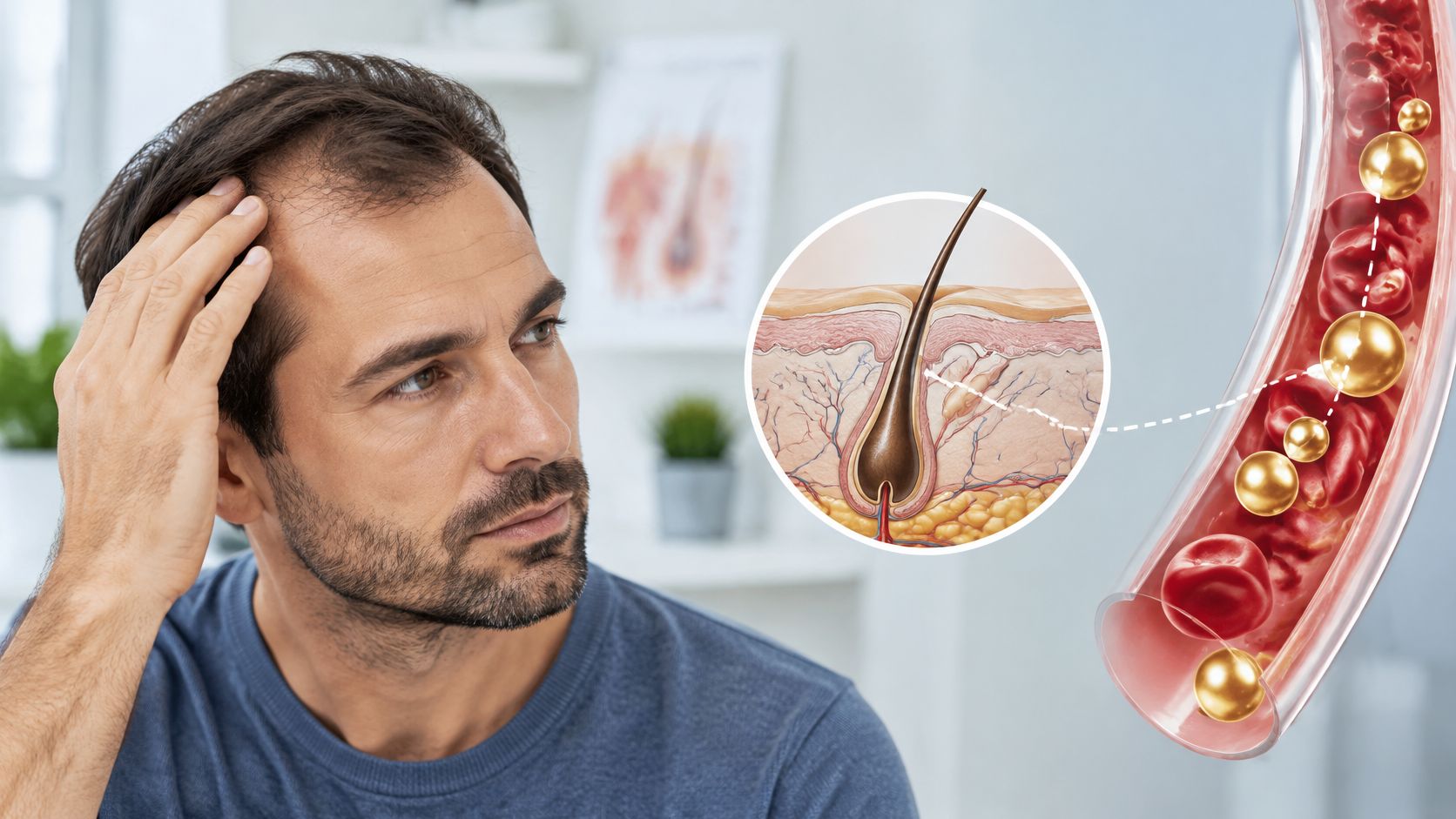
Changing Hair Texture Causes and What to Do
Learn why changing hair texture happens with age, hormones, medicine, or damage, how to tell follicle change from breakage, and when to see a clinician.
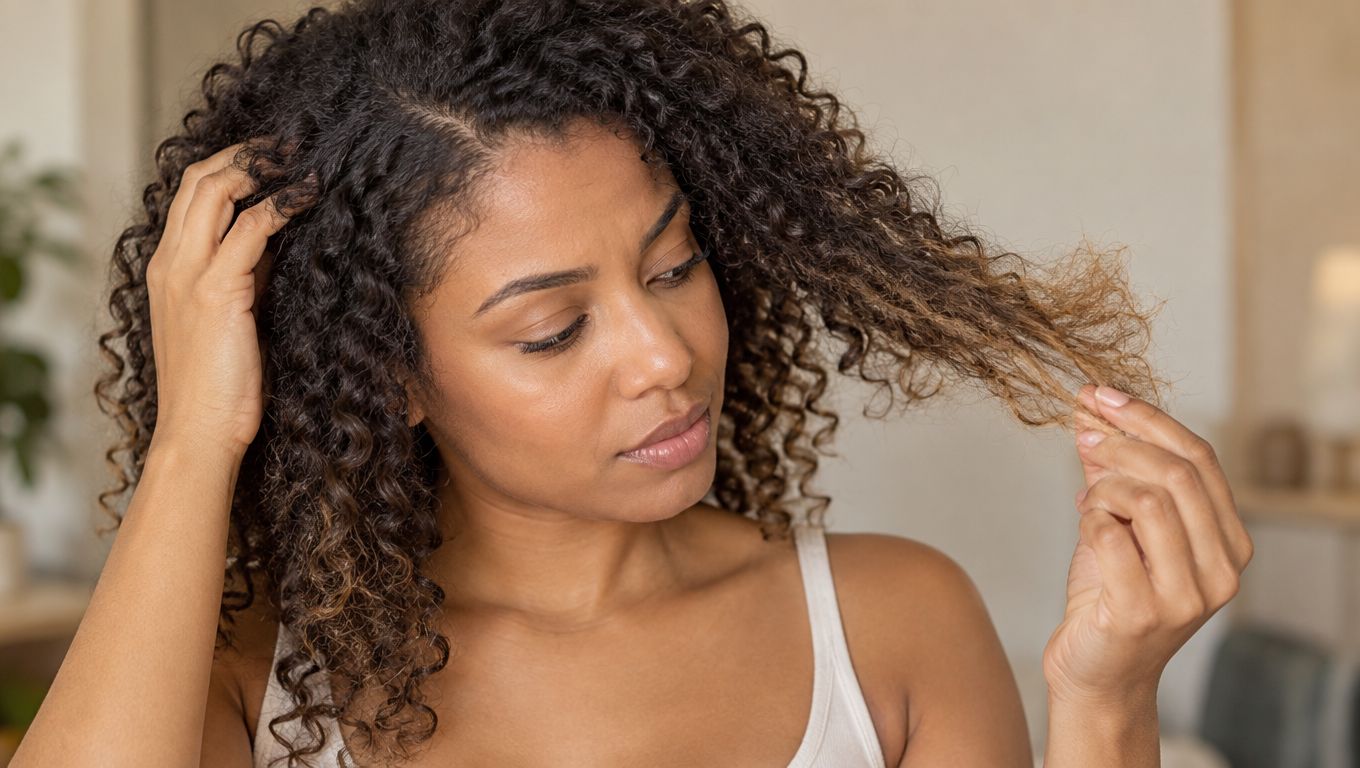
Another conditioner isn't always the right response to changing hair texture. When hair becomes rougher, softer, frizzier, or less defined, adding products before identifying the cause can obscure the distinction that matters most: whether the follicle is producing different hair or existing strands have been damaged.
Those pathways require different decisions. A clinical assessment starts with where the change appears, what happened around its onset, and whether shedding, reduced density, or scalp symptoms accompany it.
How to Tell a Real Texture Change
Texture pattern, likely pathway, and next step
| Pattern | Where it shows | Likely pathway | Next step |
|---|---|---|---|
| New growth feels finer, softer, curlier, or straighter | Scalp outward into recent growth | Follicle change from age, hormones, medicine, or miniaturization | Note timing with shedding or density loss and seek clinical review if either is present |
| Rough, dull, or overly porous lengths | Mid-lengths and ends with a chemical or heat history | Cuticle lift, lipid loss, and higher porosity | Space chemical services, lower heat, and condition to reduce friction |
| Short, uneven fragments and a thinner-looking style | Broken pieces along processed or tightly styled hair | Mechanical breakage, not a new curl pattern | Stop aggressive detangling and traction and trim split ends |
| Sudden feel change plus shedding, itch, scale, or pain | Diffuse or patchy, often with scalp symptoms | Telogen effluvium, medication effect, or scalp disease | Medical evaluation rather than a cosmetic routine |
| Coarse or dry feel that clears after a thorough wash | Surface coating | Product buildup | Clarify once, then reassess the clean fiber |
The rows describe working clues, not home diagnoses. Genetics contributes substantially to baseline hair texture, while hormones, medications, and chemical treatments can influence it, as explained by MedlinePlus Genetics.
A change that begins in recent growth deserves attention to follicle biology. For example, newly emerging hair that feels finer while older lengths remain thicker suggests a different process than rough ends beneath unchanged roots.
Processed lengths require a different interpretation. Bleaching, relaxing, perming, and repeated high heat can disturb the strand's surface, producing a rough feel that may be mistaken for naturally coarse hair. Short fragments suggest breakage, which can change a hairstyle's outline without changing its underlying curl pattern.
A surface coating is another possibility. If a thorough wash removes the unfamiliar feel, the apparent texture change may have reflected buildup rather than altered growth. Persistent roughness shouldn't prompt repeated harsh cleansing.
Checks that clarify the pattern
- Locate the starting point. Compare clean recent growth with the mid-lengths and ends under similar lighting, without stretching the strands into a different shape.
- Look beyond feel. A widening part, reduced ponytail fullness, or increased shedding changes the clinical significance of a texture complaint.
- Match exposure to length. Identify which portions underwent bleach, straightening, repeated heat, or tension, rather than labeling the entire head as damaged.
Scalp itch, scale, pain, or a sudden shed belongs in a medical assessment rather than an escalating oil routine. Several pathways can coexist, so a person may have both processed ends and a new follicular change.
Practical rule: The location of the change is usually more useful than the label frizzy, coarse, or dry.
Conditioners can reduce friction and improve handling. They can't rebuild severed keratin, correct an inherited shaft disorder, or resize a miniaturizing follicle.
What Aging Does to the Hair Fiber
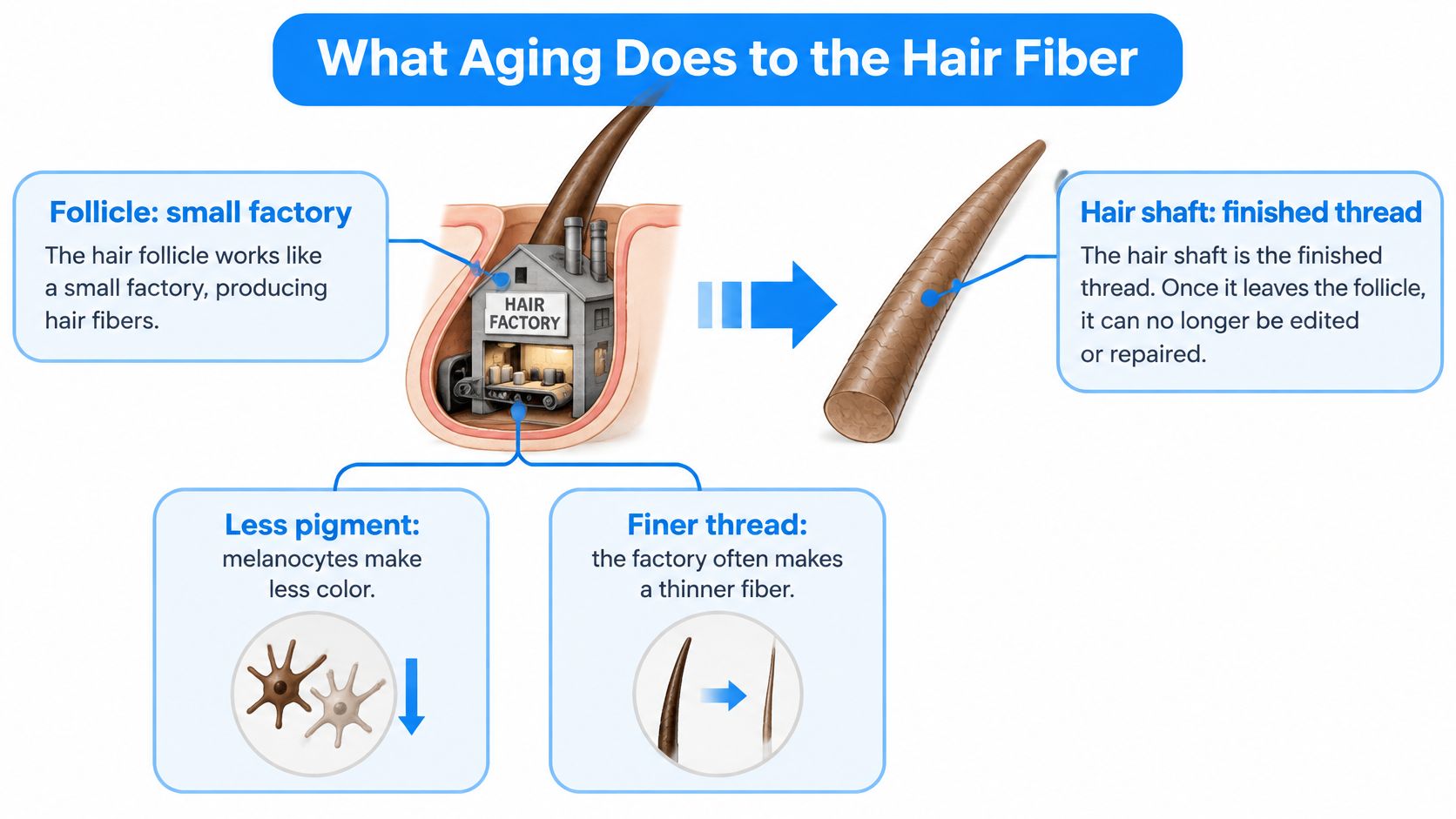
Hair can feel coarser even as its strands grow finer. Aging can affect the follicle, which makes new hair, and the shaft, which accumulates wear after it emerges. The follicle may produce thinner strands while pigment-producing melanocytes become less active; older lengths continue to experience environmental and grooming exposure.
An adult whose hair gradually looks less full and becomes harder to comb may have changes in strand diameter, growth cycling, pigmentation, and surface condition at the same time. Assess these features together rather than treating texture as a separate problem.
A 2020 review in Experimental Dermatology describes gradual diffuse scalp thinning in women beginning around age 50, alongside changes in growth, diameter, pigmentation, and texture. This timing overlaps with menopause, but it does not establish a universal starting age or show that hormones explain every change.
Why finer hair can feel rougher
Fine describes strand diameter; rough describes how the surface feels. A strand can become finer while feeling less smooth.
An expert review of age-related hair changes places typical maximum female scalp-hair diameter at approximately age 40, followed by progressive decline, with timing differing by sex and population. The review also describes changes in curvature, growth cycling, fiber lipids, and keratin-associated structure. These can affect friction, elasticity, strength, luster, and water movement.
The result can seem contradictory: hair feels less substantial yet becomes harder to manage. Increased curvature and surface irregularity can raise combing resistance, while changes in structural integrity can make strands less resilient during routine handling.
What color doesn't establish
Gray hair reflects reduced pigment production. It does not, by itself, establish that a strand is coarser or thicker.
- Color change reflects reduced pigment production.
- Diffuse thinning involves a broader change in scalp coverage rather than necessarily following a classic pattern.
- Weathering adds the effects of ultraviolet exposure, humidity, wind, chemicals, and grooming to biological changes.
For the adult in this example, assess density, shedding, scalp comfort, medications, hormonal history, and handling practices together. Aging provides context, while the pattern and combination of changes help determine their clinical significance.
Hormones and the Menopausal Shift
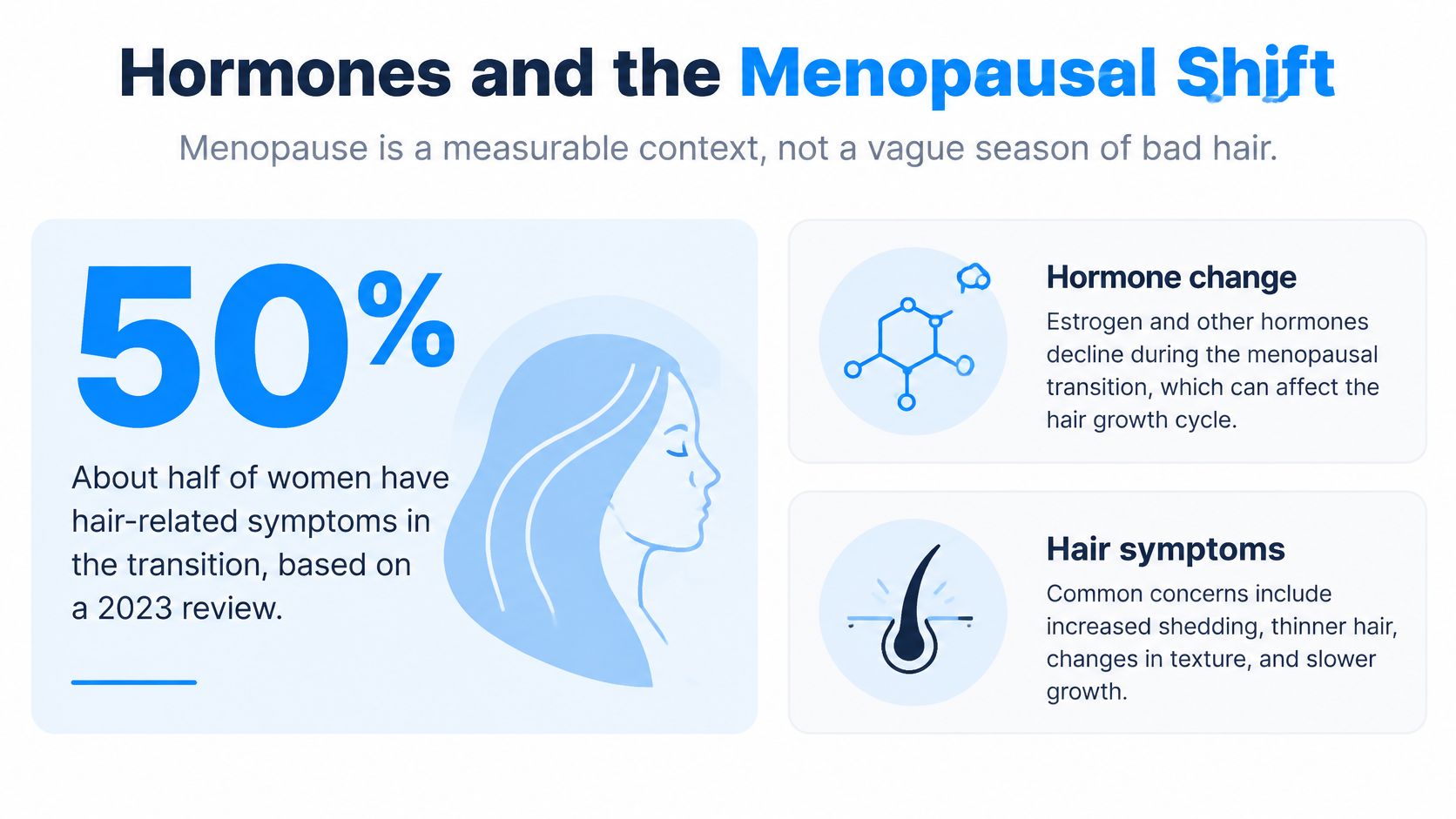
A change in hair texture during menopause can have more than one cause. Approximately 50% of women are estimated to experience hair-related symptoms during the menopausal transition, including thinning, loss of volume, and texture changes, according to a 2023 review of menopause and hair health. The review associates these changes primarily with declining estrogen and describes more thinning and hair loss after menopause than before it.
Menopausal changes may include drier strands, reduced scalp growth and density, altered fiber quality, and increased facial terminal hair. The useful pattern to track is feel, volume, growth, and distribution. A curl shift by itself cannot identify an estrogen-related cause.
Estrogen Interacts With Genetics, Androgens, and Medication
Hormones affect follicular activity through cellular signaling. The resulting hair changes also reflect genetic susceptibility, androgen activity, aging, concurrent disease, medication exposure, and environmental effects. A texture complaint alone cannot separate these influences.
For example, someone entering perimenopause may notice a less substantial ponytail while continuing to bleach the ends. Reduced fullness and rough lengths may have different contributors, even when they appear at the same time.
Useful history includes:
- Timing relative to menopause: whether the change began during perimenopause, after menopause, or well before either.
- Associated changes: whether increased shedding, reduced fullness, or facial-hair growth appeared during the same period.
- Treatment history: which medications or hormone therapies were started, stopped, or adjusted around the time symptoms began.
Hormone treatment requires its own indication
Hormone therapy decisions depend on menopausal symptoms, medical history, contraindications, and treatment goals. A licensed clinician weighs these factors before recommending treatment.
Systemic and topical routes deliver hormones differently, so they are not interchangeable. The choice depends on the symptoms being treated, the intended site of action, and the person's risk profile. Treatment should not be expected to restore a previous hairstyle.
A menopausal timeline can strengthen a clinical hypothesis, but it cannot establish the cause or predict a particular cosmetic response. Recording when the change began and what accompanied it gives a clinician more useful context than assuming the hair change calls for hormone treatment.
Miniaturization Medications and Illness
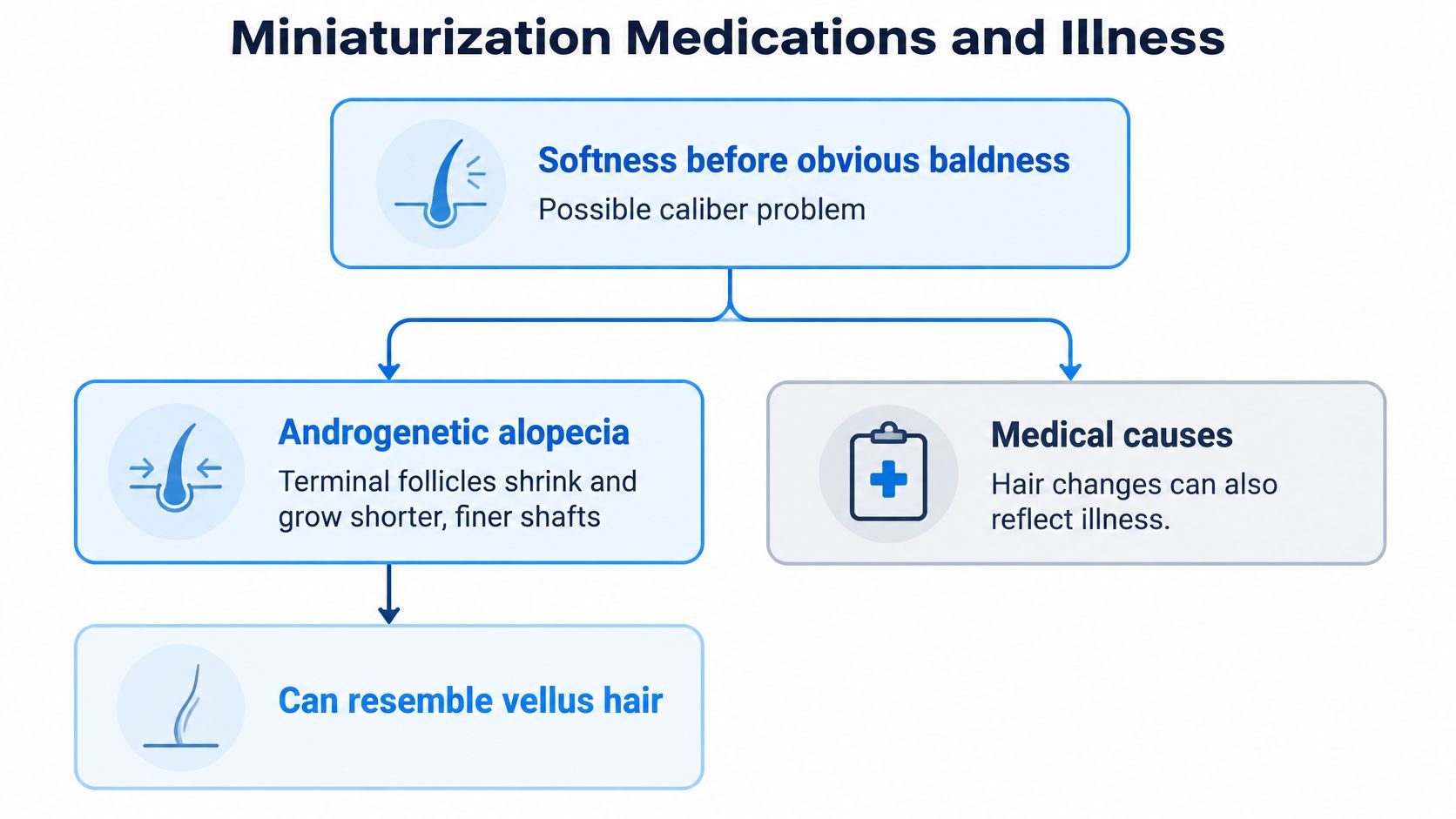
Softness that develops before obvious baldness can represent a caliber change, not improved hair condition. In androgenetic alopecia, progressively smaller follicles produce shorter, finer shafts that can resemble vellus hair.
A review of follicular miniaturization describes miniaturized shafts measuring less than 0.03 mm in diameter. The size of the dermal papilla, a signaling structure at the follicle's base, substantially influences shaft diameter, so a smaller papilla can produce finer, less uniform hair.
Follicular cycling also matters. Regulatory influences around the transition from catagen, the regression phase, into a new anagen, the growth phase, can contribute to the production of a smaller subsequent shaft.
What an examination can distinguish
Trichoscopy, magnified examination of the scalp and hair, can reveal diameter variability and the replacement of larger terminal hairs with finer, shorter ones. Standardized photographs help document distribution and progression without relying entirely on memory.
These findings can support evaluation for androgen-sensitive hair loss. They don't, by themselves, determine whether finasteride, dutasteride, minoxidil, or no medication is appropriate.
Age doesn't settle the question either. The discussion of hair loss in young men is relevant when early caliber changes appear before substantial scalp visibility.
Medical contexts that warrant review
Clinicians also consider thyroid disease, iron deficiency, and telogen effluvium, a shedding response that can follow illness, fever, childbirth, or rapid weight loss. Medication history may include retinoids, chemotherapy, and certain hormonal agents.
These possibilities aren't a checklist for self-diagnosis. Testing should follow the history and examination rather than an assumption that every texture change indicates a deficiency or endocrine disorder.
- Sudden diffuse shedding warrants a review of recent health events, medications, and the shedding timeline.
- Patchy loss or suspected scarring requires assessment beyond routine cosmetic care.
- Scalp pain or inflammation makes examination particularly important.
A useful visit includes a medication list, the timing of illness or weight change, and a description of whether whole strands are shedding or short pieces are breaking. A clinician may add a hair-pull assessment or targeted testing when indicated.
Stopping a prescribed medicine without guidance can create a separate health problem. Prescription hair treatment remains a decision for a licensed U.S. healthcare provider after the cause and relevant safety factors have been assessed.
When Styling Damage Mimics a New Texture
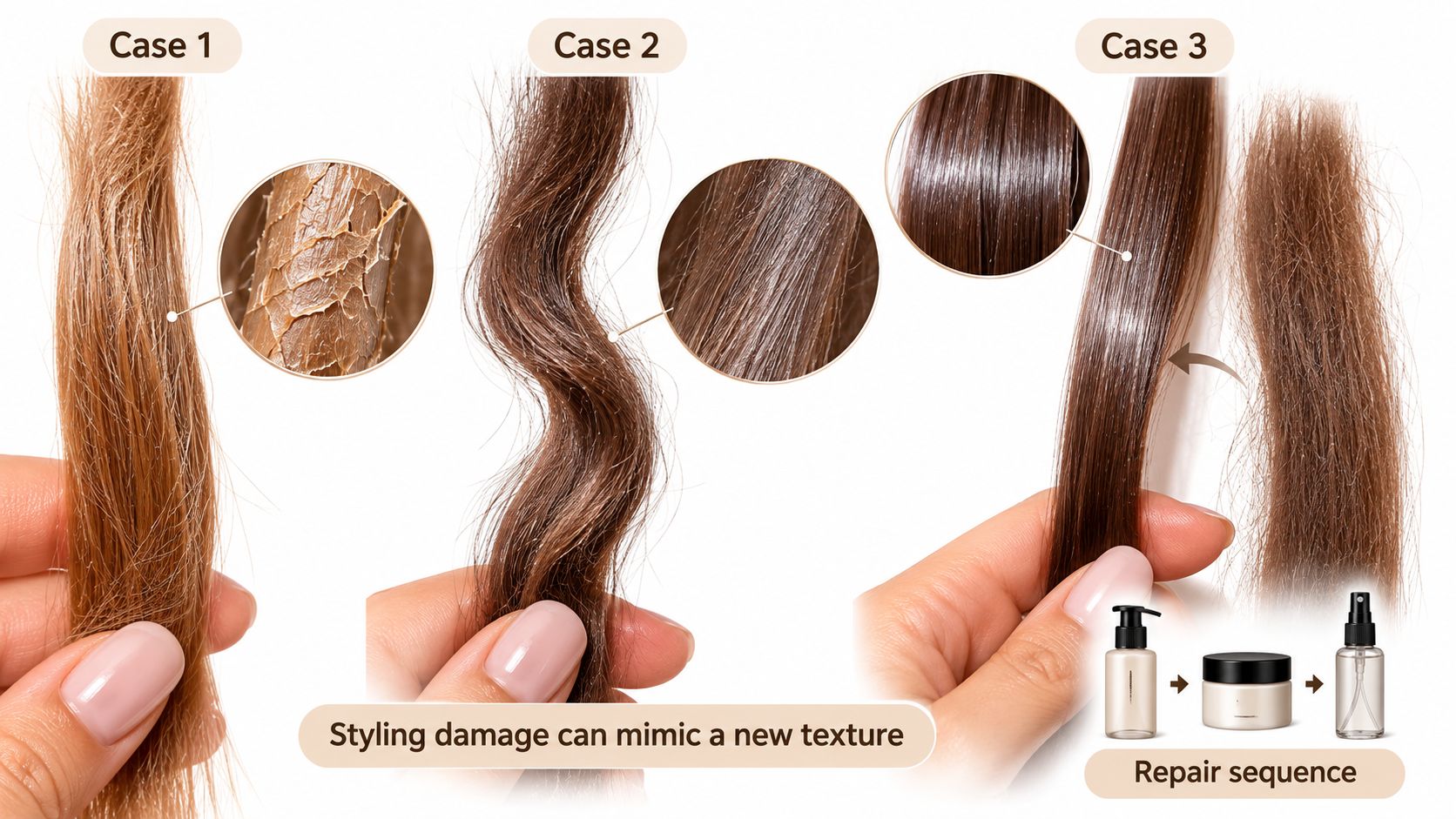
Consider a bleach or relaxer service applied over previously processed lengths. The roots retain their familiar behavior, but the ends become rough and poorly defined. A clinical review of hair-fiber evaluation describes the cuticle as roughly six to eight overlapping keratinized layers and explains how chemical processing can disrupt this protective surface.
With greater porosity, water enters the fiber more readily. Repeated swelling and drying can contribute to brittleness, making a formerly defined curl look frizzy rather than indicating that the follicle has adopted a new pattern.
Different routines, similar-looking damage
In another scenario, repeated high heat combines with aggressive brushing. Surface lipid loss and reduced tensile strength leave dull lengths, split ends, and snapping strands. The hairstyle looks thinner even when follicular production hasn't changed.
A tightly pulled style can produce a different pattern of mechanical stress. Broken strands alter the curl outline and create uneven lengths; sustained traction also deserves attention rather than being treated as harmless styling.
The image's treatment sequence shouldn't be interpreted as biological restoration of damaged tissue. Improved appearance and lubrication aren't equivalent to rebuilding a living structure.
A lower-damage handling sequence
- Stop chemical overlap. Previously bleached or relaxed lengths shouldn't repeatedly receive the same processing, and intervals between services should be extended.
- Reduce heat exposure. Use a lower effective setting, limit repeated passes, and apply a heat protectant without treating it as permission for unlimited heat.
- Detangle with slip. For curly or coily hair, work gently from the ends upward with conditioner on wet hair. A suitable hair-comb selection and handling approach can reduce unnecessary pulling.
- Release tension. Loosen styles that tug at the scalp or repeatedly stress the same strands.
- Trim split fibers. Reassess the condition of emerging growth after the damaging routine has changed, rather than judging progress solely from old ends.
Oils and conditioners can improve slip and mechanical performance, but the shaft is nonliving tissue. Permanently severed keratin structures aren't biologically repaired by a cosmetic routine.
For relaxed or otherwise chemically treated hair, comparing the processed portion with untreated growth helps avoid unnecessary additional straightening or other corrective services.
Prescription Protocols That Preserve Caliber
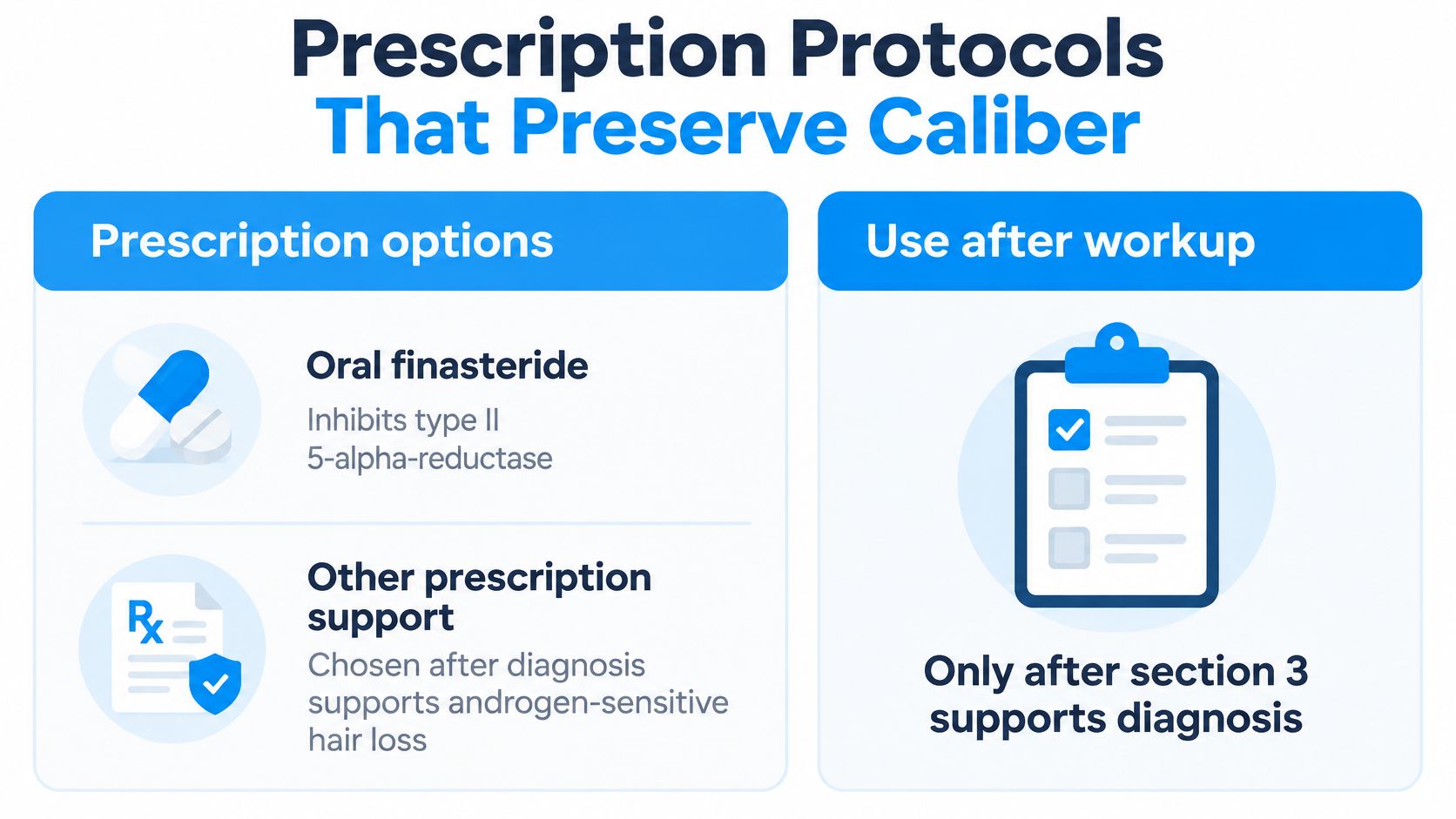
Prescription treatment makes sense when a diagnosis points to follicle miniaturization. Options may reduce androgen signaling, support follicular growth, or address both processes. Their effects and timelines differ, so a result in hair density should not be confused with a guaranteed change in texture.
Hair-retention options, mechanisms, and timing
| Option | Mechanism | What the evidence times | Appropriate use |
|---|---|---|---|
| Topical minoxidil | Supports follicular growth; it does not lower DHT | An evidence synthesis reported about 21 hairs/cm² versus about 5 to 9 with placebo at 16 to 48 weeks, with about 8 to 15 additional hairs/cm² versus placebo in men | Men or women when diagnosis and safety review support treatment |
| Oral finasteride 1 mg daily | Inhibits type II 5-alpha-reductase; the FDA prescribing information reports approximately 65% serum DHT suppression within 24 hours and generally at least 3 months before benefit | In FDA-reviewed five-year results, hair-loss categorization occurred in 35% of treated men versus 100% receiving placebo | FDA-indicated for male pattern hair loss in men |
| Dutasteride | Inhibits type I and type II 5-alpha-reductase | An individualized assessment interval is required; no comparable timing estimate is established here | Only after a separate clinician risk-benefit review |
| Shaft care | Lubrication and reduced heat, chemical, and friction damage | Feel and breakage may improve; severed keratin and miniaturization are not reversed | When assessment points to processed lengths rather than altered growth |
Mechanism and expected outcomes
Finasteride blocks the conversion of testosterone to dihydrotestosterone, or DHT, leaving testosterone itself largely unchanged. Its FDA prescribing information describes mean circulating testosterone and estradiol increases of approximately 15%, remaining within the physiologic range.
The table's long-term endpoint measures hair-loss classification under a study assessment. It does not establish complete regrowth, normalized texture, or an individual outcome. Dutasteride acts on both type I and type II 5-alpha-reductase, so its regulatory status and systemic exposure warrant a separate clinician risk-benefit review.
Route and safety change the decision
Minoxidil supports follicular growth through a pathway distinct from DHT suppression. Evidence for topical use does not establish that oral minoxidil has the same exposure, safety profile, or expected result.
Oral minoxidil is not FDA-approved for hair loss. Cardiovascular history, blood-pressure effects, scalp sensitivity, adherence, and reproductive considerations all factor into treatment selection.
Vials + Vitals' Re-Grow is an oral minoxidil tablet with a copper peptide complex, apigenin, and fisetin as additional ingredients. Minoxidil-related swelling, palpitations, dizziness, or unwanted body hair can occur. Symptoms during treatment warrant provider review; severe or acute cardiovascular symptoms need urgent assessment.
A guide to hair-loss treatment side effects can help frame questions for a provider. Visible change is assessed over months rather than days, and a response is not guaranteed.
Prescribing boundary: Prescription treatments and compounded formulations are prescribed strictly at the clinical discretion of licensed U.S. healthcare providers following an individualized telehealth intake and consultation.
Combination protocols require the same scrutiny as individual medicines. A compounded preparation is not automatically interchangeable with an FDA-approved product.
Decide Whether You Need a Clinician
A texture change limited to processed lengths may call for shaft-focused care: space out chemical treatments, reduce heat, detangle gently, and trim damaged ends. If newly grown hair becomes finer or uneven, the part widens, shedding increases, or the scalp itches, scales, or hurts, arrange a clinical review.
Changes that follow menopause, a new medicine, illness, or substantial weight loss also deserve discussion. The timing can help a clinician assess possible causes.
What a useful consultation includes
- A clear timeline. Record when the change began, alongside medication changes, health events, and hair-processing history.
- Relevant observations. Note where texture or density has changed, how much hair is shedding, and whether the scalp has symptoms.
- A diagnosis-led discussion. Review what the findings may indicate and which next steps fit the concern.
Vials + Vitals offers an online clinical assessment for hair concerns. Its hair health area offers three oral hair options, each with its listed ingredients. A consultation can help clarify whether further evaluation is appropriate.
Informational purposes only. Compounded medications are evaluated by a licensed provider for individual suitability and are fulfilled by state-licensed partner compounding pharmacies.
Adults concerned about texture changes alongside thinning or shedding can begin an online clinical assessment through Vials + Vitals.