Metabolic Weight Loss: How It Works and What to Expect
Learn how metabolic weight loss works, from insulin resistance and appetite hormones to GLP-1 therapies, trial results and individualized care planning.

In 2022, approximately 2.5 billion adults worldwide were overweight, including 890 million living with obesity, among people aged 18 and older, according to World Health Organization figures, representing about 43% of the global adult population. That scale reframes metabolic weight loss as chronic-disease care, not a test of personal discipline.
What Metabolic Weight Loss Means and Why It Matters
Metabolic weight loss addresses the biological systems that influence appetite, glucose handling, energy use, and fat storage. It isn't a separate law of weight loss: energy balance still matters. The distinction is that treatment considers why maintaining an appropriate intake may be difficult and which biological or practical barriers need attention.
Metabolic health describes the combined picture of blood sugar, blood pressure, blood lipids, and waist measurement. Weight contributes to that picture, but it doesn't describe it completely. A person can experience meaningful improvements in glucose regulation or blood pressure without a dramatic visible change.

The Terms Behind the Treatment
- Insulin resistance: Cells respond less efficiently to insulin, the hormone that helps regulate glucose movement from blood into tissues.
- Incretins: Gut hormones released around eating that help coordinate glucose-dependent insulin release; some also influence appetite and fullness.
- Metabolic reset: A conversational description of changing metabolic patterns, not a formal diagnosis or evidence that treatment permanently resets metabolism.
A thermostat offers a useful, imperfect analogy. Food intake is an input, but the body also adjusts hunger and energy expenditure in response to changing conditions. Hormonal treatment can influence those signals without permanently fixing a single body-weight set point.
Health Beyond the Scale
Excess adiposity can increase the risk of diabetes, cardiovascular disease, and other chronic conditions. Its effects aren't confined to affluent countries, so effective care must account for food access, affordability, transportation, and continuity across different communities.
The Vials + Vitals Medical Board's educational approach connects physiology with practical treatment decisions. Clinicians consider metabolic drivers, medication mechanisms, evidence from controlled trials, and maintenance needs together rather than treating an initial prescription as the entire plan.
Metabolic Drivers Behind Weight Gain and Plateaus
Metabolic drivers, their role and how clinicians assess them
| Driver | Role in Weight Regulation | Clinical Assessment |
|---|---|---|
| Insulin resistance | Cells respond less efficiently to insulin, potentially raising circulating glucose and insulin | Fasting glucose, HbA1c, and fasting insulin when clinically appropriate |
| GLP-1 signaling | Gut hormone that slows gastric emptying and reduces appetite through brain signaling | Meal size, fullness, and tolerability tracked over weeks |
| GIP signaling | Incretin that supports glucose-dependent insulin release and interacts with appetite pathways | Glycemic markers and tolerability |
| Leptin and satiety signaling | Adipose-derived hormone that informs the brain about energy stores; resistance can blunt satiety | Waist circumference and patient-reported satiety |
| Ghrelin | Hunger hormone that rises before meals | Patient-reported hunger pattern and meal timing |
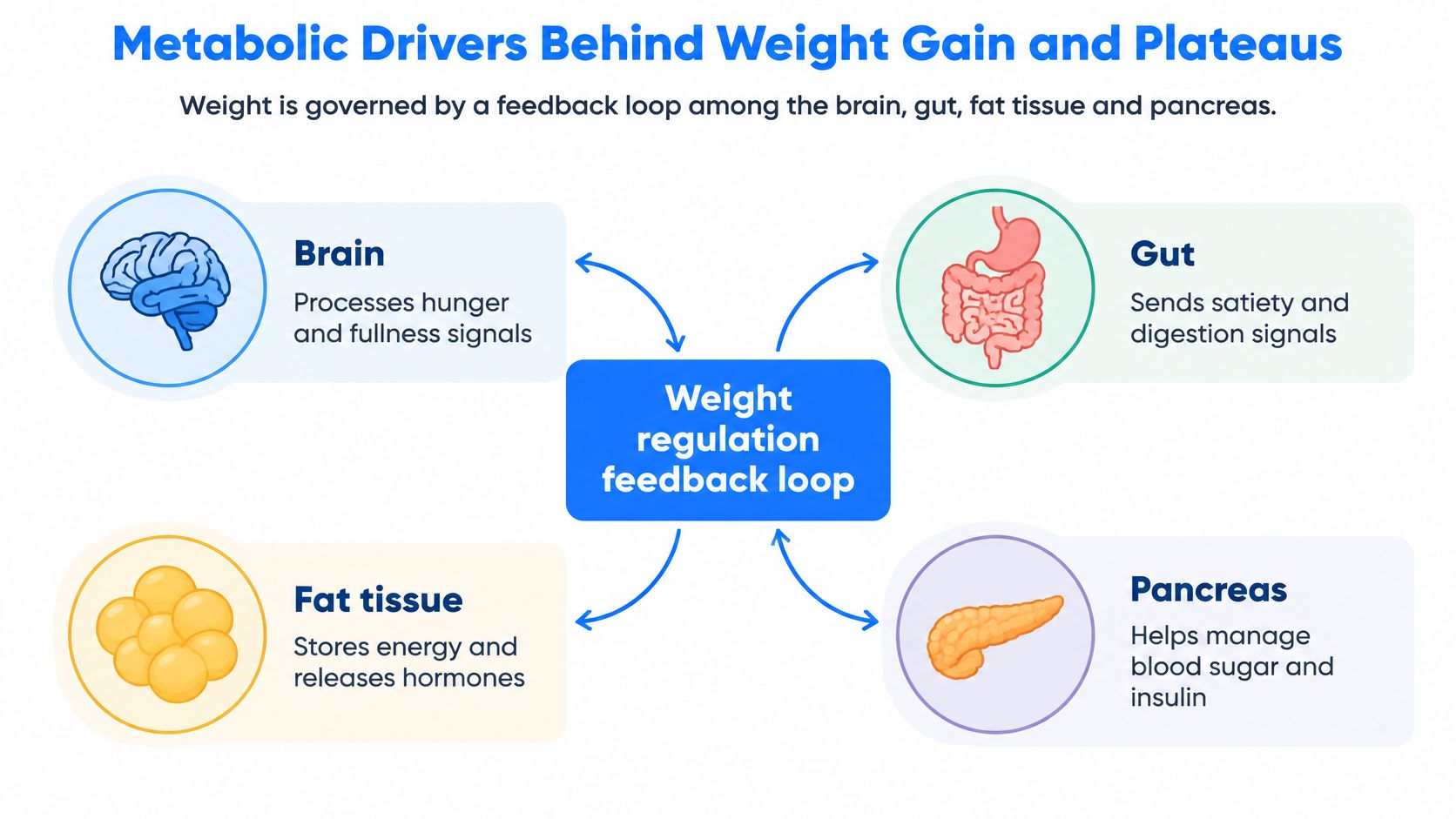
Weight regulation involves feedback among the brain, gut, fat tissue, and pancreas. These organs exchange signals about available energy, recent meals, and stored fuel. Clinical assessment combines those biological principles with what the patient experiences.
What the Markers Can and Can't Reveal
Insulin resistance can develop before fasting glucose becomes clearly abnormal because the pancreas may compensate by releasing more insulin. HbA1c helps describe longer-term glucose exposure. Fasting insulin can add context in selected cases, but it isn't a standalone diagnosis or a routine requirement for every patient.
GLP-1 signaling is assessed clinically through appetite, portion size, fullness, and gastrointestinal symptoms rather than a routine hormone measurement. Early fullness accompanied by inadequate nutrition isn't automatically a desirable response.
GIP signaling supports meal-related insulin release when glucose is high. Clinicians evaluate glucose patterns and treatment tolerability, not a commercial hormone score intended to predict medication success.
Leptin and satiety signaling connect stored energy with the brain's regulation of eating. Waist circumference helps assess central adiposity, but neither waist measurement nor a hunger questionnaire directly diagnoses leptin resistance.
Ghrelin contributes to meal-related hunger. A log showing hunger before meals, late-night eating, or long gaps without food can be more useful for planning than an isolated hormone test.
Why Progress Can Slow
As body weight decreases, a smaller body generally requires less energy. Adaptive responses can also reduce energy expenditure and strengthen appetite, narrowing the gap between intake and expenditure. A plateau can therefore occur without a sudden loss of effort.
Say adults eat similar meals but differ in insulin sensitivity, sleep, medications, and activity. Their glucose responses, hunger, and weight trajectories may differ even when their plates look alike. That doesn't mean insulin resistance overrides energy balance; it means the conditions shaping that balance aren't identical.
Clinical perspective: A plateau calls for reassessment, not a judgment about character.
No single marker defines metabolic status. A useful preparation step is gathering recent laboratory results alongside an appetite and meal-timing log; the guide to improving metabolic health provides additional context for that discussion.
How GLP-1 and Dual Incretin Therapies Act in the Body
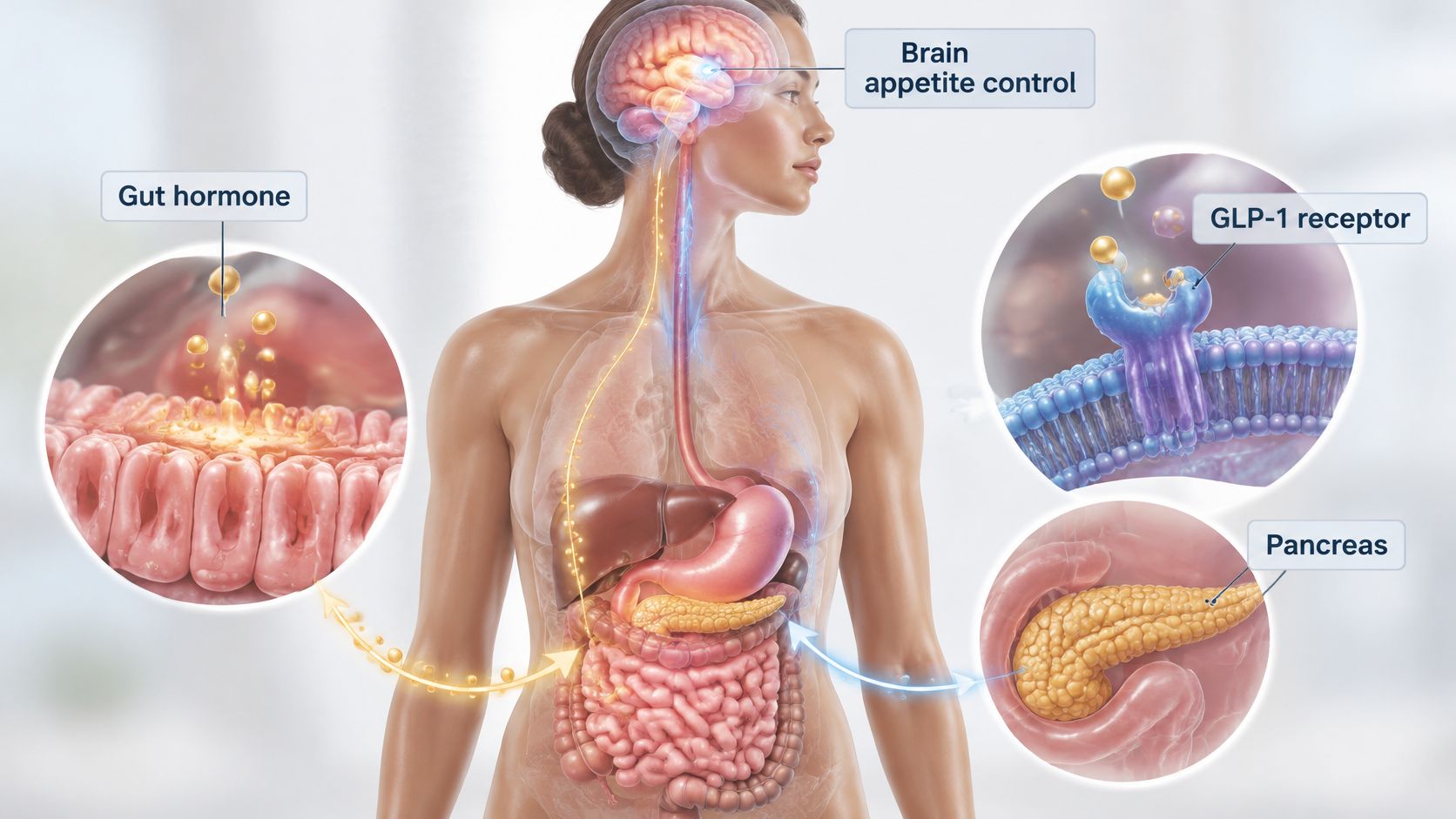
GLP-1 is a naturally occurring gut hormone. A receptor agonist activates a receptor that ordinarily responds to the body's own signaling molecule, allowing treatment to influence an existing biological pathway.
The FDA prescribing information for semaglutide describes it as a GLP-1 analogue with 94% sequence homology to human GLP-1 that selectively binds and activates the GLP-1 receptor. Sequence homology describes molecular similarity, not the percentage of weight a person might lose.
From Receptor Binding to Appetite Effects
Activation of GLP-1 receptors in appetite-related brain pathways can reduce hunger and energy intake. GLP-1 activity also slows gastric emptying and supports glucose-dependent insulin secretion. These effects help explain both increased fullness and gastrointestinal adverse effects.
Tirzepatide activates both GIP and GLP-1 receptors. Its dual action combines incretin-mediated glucose regulation with effects on appetite pathways; it isn't semaglutide at a different strength.
For the studied injectable agents, absorption and clearance occur over days rather than resembling a short-acting stimulant. This pharmacokinetic profile helps determine the dosing interval and explains why a missed dose shouldn't prompt improvised extra dosing. Alternative routes can have different absorption characteristics.
Formulation Is Part of the Clinical Decision
| Format | Clinical Consideration |
|---|---|
| Injectable semaglutide | GLP-1 receptor agonist; administration technique and formulation-specific dosing require instruction |
| Injectable tirzepatide | Dual GIP/GLP-1 receptor agonist; tolerability helps guide escalation |
| Needle-free sublingual tablets | Absorption and clinical evidence are formulation-specific; injectable outcomes can't be assumed |
| Combination tablet options | Multiple ingredients require separate consideration of exposure, interactions, and supporting evidence |
A needle-free format may address needle aversion, but convenience doesn't establish equivalent absorption or effectiveness. Compounded preparations aren't FDA-approved, and the evidence for an approved injectable product doesn't validate a compounded sublingual or combination tablet.
Before prescribing or increasing a dose, clinicians assess contraindications, concurrent medications, glycemic status, and gastrointestinal history. Screening includes relevant thyroid cancer history, pregnancy considerations, and conditions that could make delayed gastric emptying problematic.
Gradual escalation allows tolerability assessment. Persistent vomiting, inability to maintain hydration, or severe abdominal pain requires clinical evaluation rather than an automatic dose increase. Treatment remains an adjunct to nutrition, physical activity, and behavioral support, with formulation and dose decisions made by a licensed U.S. healthcare provider.
Expected Results in Major Clinical Trials
Share of STEP 1 participants reaching weight-loss thresholds
| Weight-Loss Threshold | Semaglutide 2.4 mg | Placebo |
|---|---|---|
| At least 5% | 86.4% | 31.5% |
| At least 10% | 69.1% | 12.0% |
| At least 15% | 50.5% | 4.9% |
These thresholds, reported in the American Journal of Managed Care's STEP 1 summary, describe outcomes among 1,961 adults with overweight or obesity treated for 68 weeks with once-weekly semaglutide 2.4 mg or placebo alongside lifestyle intervention; mean weight change was −14.9% versus −2.4%, with an estimated treatment difference of −12.4 percentage points.
Thresholds and averages answer different questions. The table describes how frequently participants reached specified levels of weight loss. The mean describes the group's average change, not the outcome every participant experienced.
Tirzepatide and Dose Response
In the 72-week SURMOUNT-1 randomized trial, mean weight loss with tirzepatide was 15.0% at 5 mg, 19.5% at 10 mg, and 20.9% at 15 mg, compared with 3.1% with placebo, with lifestyle counseling included.
A New England Journal of Medicine follow-up report describes the proportion reaching at least 25% weight loss at week 72 as approximately 15%, 32%, and 36% at the respective tirzepatide doses, compared with about 1.5% with placebo.
Higher doses were associated with greater average reductions, but that doesn't make the highest dose appropriate for every patient. A clinician weighs benefit against nausea, vomiting, inadequate intake, dehydration, and other patient-specific concerns. Escalation is individualized rather than automatic.
How to Interpret the Results
- Check the population: Eligibility criteria and health conditions determine how closely the trial resembles a particular patient.
- Identify the regimen: Route, dose, formulation, and accompanying lifestyle intervention matter.
- Compare percentage change: Percentage weight change provides a clearer comparison across different starting weights than pounds alone.
- Read the placebo arm: The treatment group's total loss and the difference attributable to treatment aren't the same measure.
- Check the timeframe: A long-term trial result isn't an early-treatment forecast.
Trial averages describe outcomes under controlled conditions. They aren't a promised result for an individual prescription.
Separate trials also aren't a direct head-to-head comparison. Differences in participant selection, follow-up, and analysis can affect the apparent gap between treatments. A discussion of weight-loss injection options should account for those limitations rather than rank treatments by headline results alone.
Visible change is assessed over months rather than days, and a response isn't guaranteed. Early treatment often includes dose adjustment and learning how appetite changes affect meals. Clinical review should also consider glucose regulation, blood pressure, physical function, and nutritional adequacy rather than appearance alone.
Keeping Weight Off After Treatment Changes
In a follow-up analysis of 228 participants, the American College of Cardiology's STEP 1 summary reports that participants who had lost an average of 17.3% by week 68 regained approximately two-thirds of that loss, averaging 11.6 percentage points, during the year after semaglutide stopped. Regain after withdrawal doesn't erase the benefit experienced during treatment or establish that the patient failed.
A 2025 preprint modeling post-treatment trajectories estimated regain of 75.6% after discontinuation and separately reported retention of 40.2% of on-treatment weight loss at one year. Those estimates shouldn't be combined as complementary percentages from an identical endpoint; they are preprint modeling results, not definitive randomized-trial findings.
A Transition Requires a Decision, Not Just a Stop Date
Obesity can involve persistent biological drivers after weight decreases. Treatment changes therefore require a discussion of health goals, adverse effects, affordability, pregnancy plans, and the likelihood that appetite will return.
Options may include continued treatment, a provider-supervised dose reduction or taper, or a nonmedication maintenance plan. Tapering isn't an established method for preventing regain in every patient, and a lower maintenance dose isn't automatically appropriate. Patients shouldn't stretch doses or restart a previous dose without clinical review.
Maintenance principle: Medication changes deserve a monitoring plan before appetite or weight begins to shift.
Practical Maintenance and Reassessment
- Preserve muscle: Adequate protein and resistance exercise support muscle maintenance. Meals can include eggs, fish, poultry, beans, tofu, or other suitable protein sources, with intake individualized for medical conditions.
- Track trends consistently: Weight and waist measurements taken under similar conditions are more useful than reactions to isolated readings.
- Recognize returning appetite: Renewed hunger, larger portions, or persistent food preoccupation can prompt review before substantial regain occurs.
- Keep meals nutritionally complete: Reduced appetite shouldn't crowd out fluids, fiber-containing foods, or essential nutrients.
A plateau review should examine medication adherence, dose timing, food intake, activity, sleep, constipation, and relevant laboratory markers before the regimen changes. The aim is to identify a correctable problem without reflexively increasing medication or sharply restricting food.
Rapid regain, new symptoms, loss of tolerability, or worsening metabolic markers should trigger reassessment. Severe symptoms or inability to maintain hydration warrant prompt care, not a routine progress message. A coverage interruption also merits an early transition discussion because an unplanned gap can complicate safe restarting.
How an Individualized Care Plan Is Built
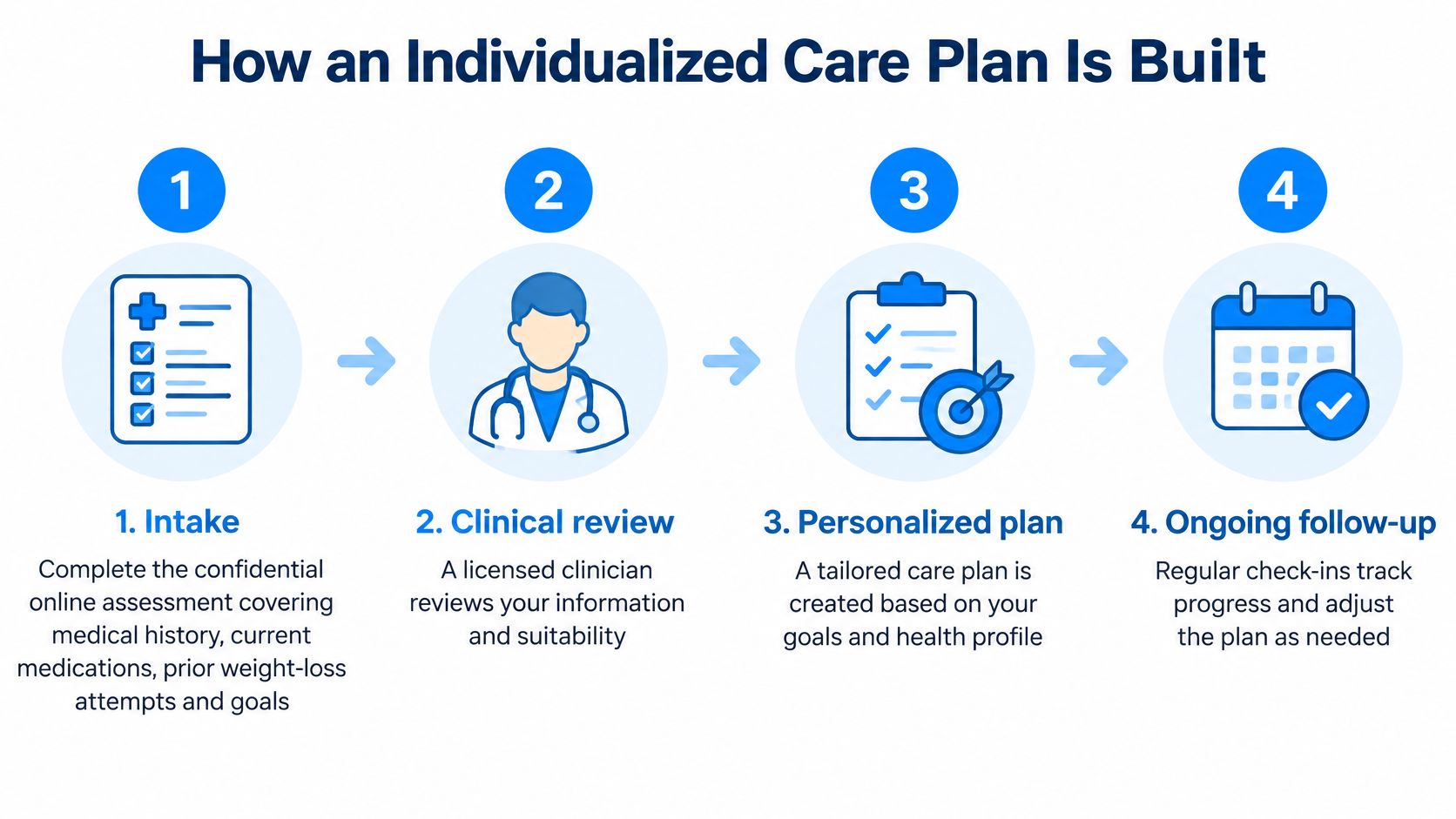
A sound care pathway separates assessment, prescribing, dispensing, and follow-up. Each step exists to resolve a different safety or continuity question.
From Intake to Ongoing Review
- Confidential intake: The online assessment records medical history, current medications, prior weight-loss attempts, and goals. Complete information helps distinguish a treatment preference from a clinically appropriate option.
- Clinical review: A U.S.-licensed provider evaluates eligibility, contraindications, and concurrent medications. This review can identify reasons to delay, modify, or decline treatment.
- Consultation: Asynchronous or live consultation proceeds according to applicable state requirements. The provider clarifies missing information and evaluates concerns that a questionnaire alone can't resolve.
- Prescription decision: The provider determines whether treatment is appropriate and selects the formulation. Submitting an intake requests a clinical evaluation and doesn't purchase a specific medication.
- Titration checkpoints: The plan includes review of weight change, glucose markers when indicated, adverse effects, hydration, and nutritional adequacy. Checkpoints allow adjustment before a tolerability problem becomes a safety issue.
- Pharmacy dispensing: A licensed U.S. partner pharmacy fills the prescription with tracked delivery. Formulation-specific storage and administration instructions help reduce handling errors.
- Continued review: Follow-up reassesses benefit, risk, and feasibility. A plan that was appropriate initially may need revision when health status or access changes.
Access Is a Clinical Consideration
An Institute for Clinical and Economic Review policy analysis reports that fewer than one-quarter of potentially eligible U.S. adults use GLP-1 therapy, usage is below 10% among adults aged 65 and older, and fewer than two-thirds of prescribed patients remain on treatment after one year. Cost, coverage, availability, and continuity belong in treatment planning, not in a discussion of motivation.
Vials + Vitals requires accurate disclosure: withholding a medication, condition, or prior reaction can make a protocol unsafe and is grounds for declining or terminating care. Relevant information includes therapies prescribed outside weight management.
That broader medication review may include finasteride or dutasteride for DHT inhibition, topical or oral minoxidil for follicular biology, and tadalafil or sildenafil, which inhibit PDE5 to support endothelial nitric-oxide signaling. It also includes NAD+, the GH secretagogue sermorelin, glutathione, MIC + B12 lipotropic injections, and bio-identical hormone replacement used for menopause symptom management through systemic or topical approaches. These aren't interchangeable weight-loss treatments, and each requires its own assessment of indication, evidence, and safety.
Next Steps With a Licensed Provider
Suitability for metabolic therapy depends on an individualized evaluation, not general eligibility alone. Preparation for a telehealth weight-loss consultation can include:
- Health inventory: Current diagnoses, medications, and supplements.
- Baseline measurements: Weight and waist circumference.
- Treatment history: Previous attempts, their duration, and adverse reactions.
- Recent results: Available laboratory reports.
- Nutrition context: A Metabolic Calorie Tool estimate as a discussion starter, not a prescribing input.
Identifying medical information belongs only in the confidential intake, not on Vials + Vitals marketing pages. An intake doesn't establish eligibility or select a product.
For affordability planning, Vials + Vitals lists semaglutide from $199 per month for a 1-month supply and tirzepatide from $299 per month for a 1-month supply. Prescription treatments and compounded formulations are prescribed strictly at the clinical discretion of licensed U.S. healthcare providers following an individualized telehealth intake and consultation.
Vials + Vitals offers physician-directed telehealth weight-management evaluation, individualized titration, and ongoing monitoring. Adults considering metabolic weight loss can visit Vials + Vitals to begin a confidential clinical assessment focused on suitability, safety, and continuity.
Informational purposes only. Compounded medications are evaluated by a licensed provider for individual suitability and are fulfilled by state-licensed partner compounding pharmacies.