How to Improve Metabolic Health: A Clinical Guide
Learn how to improve metabolic health with clinician-informed steps on diet, exercise, sleep, monitoring and GLP-1 therapy when clinically appropriate.

A structured lifestyle program reduced progression to type 2 diabetes by 58% compared with placebo among adults with prediabetes in the U.S. Diabetes Prevention Program, according to the Centers for Disease Control and Prevention. The intervention combined achievable weight loss with regular physical activity, not an extreme diet or a rapid transformation.
That finding reframes how to improve metabolic health. The meaningful outcome isn't just a smaller number on the scale. It's a pattern of improving glucose regulation, blood pressure, waist circumference, physical function, and habits that remain workable when motivation fades. Medication can support that process, but it doesn't replace measurement or maintenance.
Metabolic Markers to Track and Their Targets
Recorded numbers decide whether progress is real. A looser waistband or a good week of energy can hint at change, but waist circumference, labs, and blood pressure are what confirm it. I treat the scale as one signal among several: weight can fall while muscle falls with it, or hold steady while fasting glucose slowly worsens.
The following values are general adult reference points, not individualized treatment goals or a diagnosis. The glucose and HbA1c thresholds reflect the American Diabetes Association's diagnostic criteria, and the blood pressure and lipid ranges align with American Heart Association guidance. A clinician may select different goals based on age, medical history, medications, pregnancy status, and overall cardiovascular risk.
Metabolic markers, reference targets and check frequency
| Marker | Reference target | How often to check |
|---|---|---|
| Waist circumference | Below 102 cm (40 in) for men; below 88 cm (35 in) for women, with ethnicity-specific interpretation | Monthly, same time of day |
| Fasting glucose | Under 100 mg/dL | With scheduled labs, typically every 3–6 months during active change |
| HbA1c | Below 5.7% for someone without diabetes | Every 3–6 months during active change |
| Triglycerides | Below 150 mg/dL | With lipid panel, typically annually or as advised |
| HDL cholesterol | 40 mg/dL or higher for men; 50 mg/dL or higher for women | With lipid panel |
| Blood pressure | Below 130/80 mmHg when appropriate for the individual | Each clinical visit, plus home readings weekly if advised |
| Body weight | Initial reduction of 5–7% when weight loss is clinically appropriate | Weekly trend, not isolated daily readings |
Interpret the pattern, not an isolated result
HbA1c reflects average glucose over roughly three months, which explains the usual reassessment interval. A fasting glucose measurement provides a narrower snapshot and can shift with illness, disrupted sleep, or stress. Neither should be interpreted without clinical context.
Waist circumference adds information about central adiposity, while strength and walking tolerance help identify whether weight loss is compromising function. HDL is a risk marker, not a number to pursue independently with supplements or medication.
Conflicting markers call for different responses. When waist stays stable but HbA1c rises, the problem sits with glucose regulation, so the next step is a dietary or medication review rather than a tighter calorie target. When weight and waist fall but triglycerides and blood pressure refuse to move, I look for drivers the scale can't show, such as alcohol intake, sleep disruption, or a medication effect worth raising with the clinician.
Adding a GLP-1 typically moves weight and waist first, and HbA1c and lipids need a full lab cycle to show whether the benefit carried through. Stopping one reverses that sequence, and the follow-up markers reveal how much of the improvement was medication and how much was habit.
Baseline rule: Record every measurement, its date, and the circumstances before changing treatment. An undocumented starting point can't establish later progress.
How to Build Your Starting Plan in Five Steps
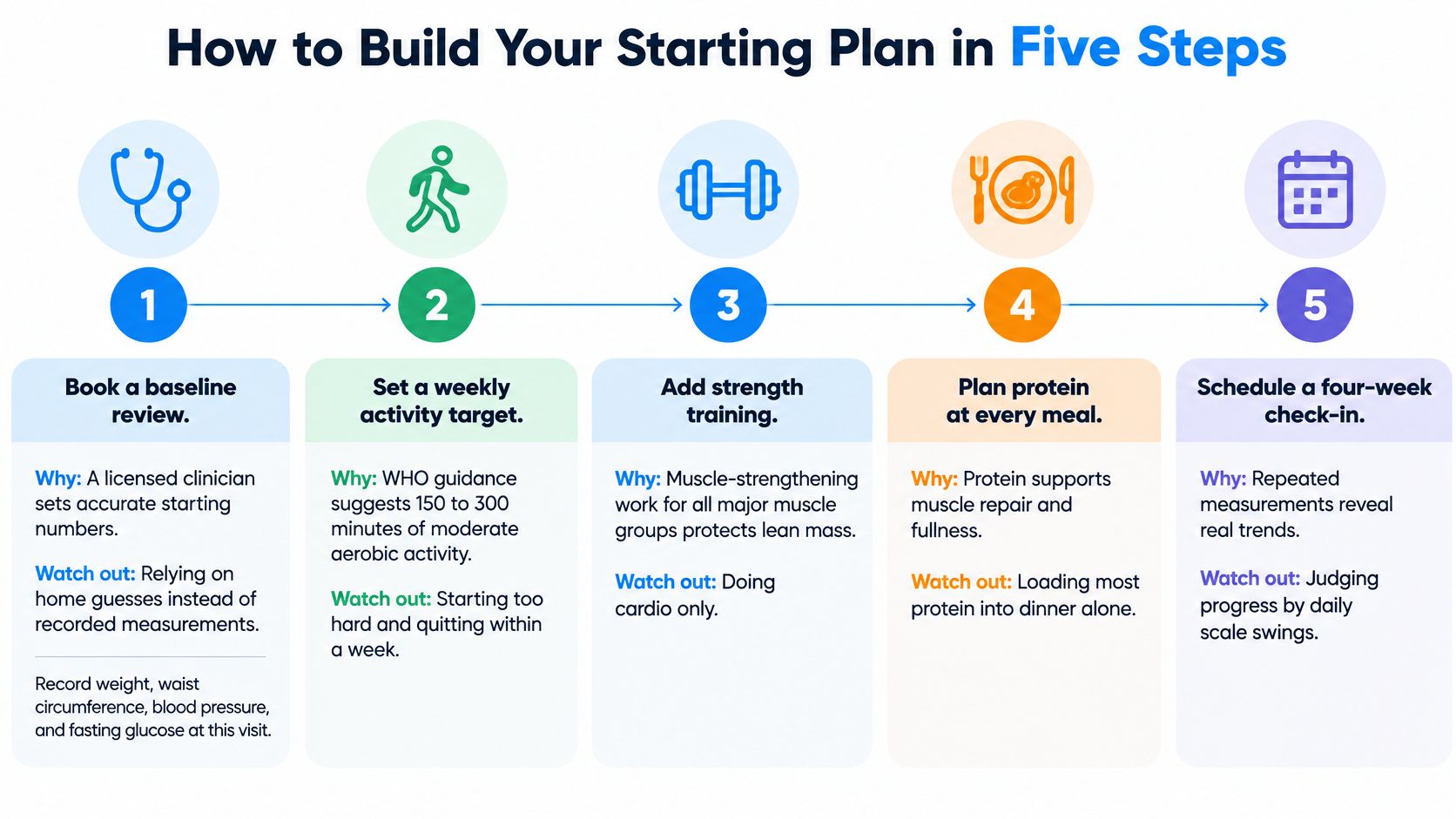
A starting plan works when it fits the person's schedule, food access, mobility, and medication needs. Define one action to take, why it matters, and what could get in the way.
Book a baseline review with a licensed clinician. Record current medications, weekly activity, and the measurements and lab results already available. Bring records rather than relying on memory, and review prescriptions as eating and activity change.
Choose a practical first goal. If weight reduction is appropriate, use a percentage of starting weight rather than an arbitrary final size. Keep the goal separate from a deadline that could encourage severe restriction.
Build activity gradually. Brisk walking can be a practical starting point. A sedentary adult can begin with short bouts and add time as tolerance improves; exhausting workouts may create soreness and scheduling demands that undermine consistency.
Review food, activity, and weight weekly. Brief notes during the week can reveal missed meals, liquid calories, limited protein, or an exercise plan that does not fit real life. Use the record to choose one adjustment, not to reconstruct a perfect week.
Set the follow-up date before leaving the initial consultation. A review at about twelve weeks gives the clinician a chance to assess medications, symptoms, comorbidities, and adherence. Agree on earlier contact if a problem needs attention.
Build maintenance into the initial prescription
The CDC's National Diabetes Prevention Program overview supports an initial 5–7% weight-loss target and progression toward at least 150 minutes of moderate activity weekly. The original intervention reduced diabetes progression by 58% over approximately three years, with roughly one-third lower risk still present at ten-year follow-up.
Adherence declined over time, which makes continued support part of the plan rather than an afterthought.
Diabetes Prevention Program participants reaching targets
| Target | Core intervention | Final visit |
|---|---|---|
| 7% weight reduction | 49% | 37% |
| 150 minutes weekly activity | 74% | 67% |
Source: CDC's National Diabetes Prevention Program overview.
A two-week message check-in can ask whether a missed-meal pattern is making the plan difficult to follow, then prompt a practical adjustment before the scheduled clinical review. By twelve weeks, the aim is a routine the person can repeat and a date to assess how it is working.
Weight Targets and Calorie Balance
Weight reduction can produce meaningful metabolic benefits before a person reaches a preferred clothing size. In prevention evidence summarized by the National Institute of Diabetes and Digestive and Kidney Diseases, each kilogram lost was associated with an adjusted 16% reduction in diabetes incidence; modest losses around 3% can improve glycemic control, while 5–10% can improve health outcomes. That association isn't a formula for predicting an individual's risk reduction.
Weight-loss milestones for a hypothetical 70 kg adult
| Weight reduction | Reference benefit |
|---|---|
| 3%, approximately 2.1 kg (4.6 lb) | May improve glycemic control |
| 5%, approximately 3.5 kg (7.7 lb) | Within the range linked to improved health outcomes |
| 7%, approximately 4.9 kg (10.8 lb) | Upper end of the DPP initial weight target |
| 10%, approximately 7 kg (15.4 lb) | Upper end of the outcome-linked range |
Set the deficit around the person
Estimated daily energy needs provide a starting point. The Metabolic Calorie Tool can help estimate those needs, but calculator outputs require confirmation against actual intake, weight trends, symptoms, and clinical judgment.
A clinician should size the calorie deficit around body size, medications, cultural eating patterns, and comorbidities. An aggressive deficit that causes persistent weakness, inadequate protein intake, or repeated overeating isn't a more effective prescription merely because the calculated number is lower.
Consider a hypothetical adult starting at 92 kg: a 5% target equals 4.6 kg. If waist circumference decreases from 104 cm to 100 cm while the scale slows and strength remains stable, there is measurable progress worth evaluating rather than automatically intensifying restriction.
A slower scale trend calls for assessment, not punishment through skipped meals or excessive exercise.
Maintenance counseling matters because early weight loss doesn't establish durable control. A practical monitoring schedule uses weekly weight trends, monthly waist measurements, and clinician-directed laboratory reassessment during active change.
Exercise Dose and Protein for Muscle Protection
For adults aged 18–64, the World Health Organization's physical-activity guidance recommends 150–300 minutes of moderate aerobic activity or 75–150 minutes of vigorous activity weekly, plus muscle-strengthening work for all major muscle groups on at least two days. Five 30-minute moderate sessions meet the lower aerobic target. Start below that level if needed and build gradually.
Walking, cycling, and swimming build activity tolerance and support cardiometabolic health. Resistance exercise challenges the muscles used for lifting, climbing stairs, and rising from a chair. The scale alone cannot show whether strength and function are being maintained.

Protect function during appetite suppression
A 2025 review of GLP-1 therapies and muscle describes substantial fat reduction, particularly visceral fat, alongside possible declines in lean mass. The proportion and clinical significance remain uncertain and depend on age, starting muscle reserves, nutrition, and physical function. Body-composition scans estimate lean mass and fat mass; they do not diagnose muscle disease or show strength on their own.
GLP-1 therapy can reduce fat while lean mass also declines. Adequate protein and progressive resistance exercise are practical ways to support muscle during weight loss.
A protein range of 1.2–1.6 g/kg/day may be appropriate during weight loss for some adults. For a hypothetical 80 kg adult, that equals approximately 96–128 g daily. Kidney disease, substantial excess weight, and other conditions call for individualized guidance rather than automatically calculating from actual body weight.
Start with movements that can progress
A beginner routine can include:
- Chair sit-to-stands: Use a stable chair and reduce hand support as strength improves.
- Wall or incline push-ups: Choose an incline that allows controlled movement without straining.
- Band rows: Pull through a comfortable range while keeping the torso steady.
- Step-ups: Use a low, stable step and hold support if needed.
Do two to three sets of eight to twelve controlled repetitions on nonconsecutive days. Adjust the movement or number of repetitions to ability, then increase resistance gradually while technique remains sound.
Falling grip strength, slower walking, or new difficulty rising from a chair warrants reassessment. If appetite suppression makes adequate meals, hydration, or normal function consistently difficult, contact the prescribing clinician to review the dose and plan.
Sleep and Eating Habits That Support Insulin Sensitivity
Protect a fixed wake time on weekdays and days off alike. Short sleep can impair insulin sensitivity and increase appetite; irregular timing also makes training, meal planning, and medication routines harder to keep, which is why the scale can look stable while waist, fasting glucose, hunger, and energy tell a worse story. The National Sleep Foundation puts the general adult need at seven to nine hours nightly, so give that amount real opportunity rather than treating it as an ideal.
A nurse sleeping five hours on workdays and catching up on days off still carries a repeated weekday deficit. Move the wake time first, then set a bedtime that can survive most shifts; use the sleep-routine guide for scheduling ideas. If GLP-1 therapy is added or stopped later, this regularity makes changes in hunger and adherence easier to interpret.
Build meals around structure
The plate method offers a practical framework: half non-starchy vegetables, a quarter lean protein, and a quarter whole-grain or starchy food. Fiber-rich choices include beans, lentils, vegetables, whole grains, nuts, and seeds.
The NIH fiber reference intakes are commonly listed around 25 g of fiber daily for women and 38 g for men under age fifty. Raise intake gradually, with hydration and gastrointestinal tolerance considered.
- Replace liquid sugar: Water or unsweetened drinks can reduce calories without shrinking the protein portion of meals.
- Pair starch with other foods: Protein, vegetables, and fiber make a more complete meal than refined starch eaten alone.
- Reconsider late meals and alcohol: Large meals near bedtime can interfere with comfort and sleep; alcohol can raise triglycerides and complicate glucose management.
Treat symptoms that undermine the routine
Loud snoring, waking gasping, and persistent daytime sleepiness warrant evaluation for obstructive sleep apnea. A sleep routine alone cannot treat an obstructed airway, and persistent symptoms need clinical assessment.
One manageable experiment is moving the largest meal earlier for two weeks while recording hunger, sleep quality, waist measurement if tracked, and feasibility. Keep the change small enough to repeat on workdays, not only on easier weeks.
When GLP-1 Therapy Fits and How It Is Started
GLP-1 receptor agonists mimic an incretin signal involved in appetite and glucose regulation. They activate receptors that influence hypothalamic appetite pathways, slow gastric emptying, and stimulate insulin secretion mainly when glucose is high. Tirzepatide also activates GIP receptors, making it a dual incretin therapy.
These medications shift several metabolic signals at once: appetite, waist circumference, glucose measures, and the scale. The scale alone cannot confirm progress, so the same tracking plan used during lifestyle treatment still applies once a prescription begins.
Common GLP-1 and dual incretin agents compared
| Agent | Mechanism | Reference trial result | Dosing format |
|---|---|---|---|
| Semaglutide 2.4 mg | GLP-1 receptor agonist | Mean weight reduction of 14.9% at 68 weeks with lifestyle intervention | Once-weekly subcutaneous injection |
| Tirzepatide, escalated by dose step | GIP and GLP-1 receptor agonist | Results reported by dose level in dedicated escalation trials | Once-weekly subcutaneous injection |
In the STEP 1 randomized trial, adults with overweight or obesity assigned to once-weekly semaglutide 2.4 mg plus lifestyle intervention lost a mean 14.9% of body weight over 68 weeks, versus 2.4% with placebo plus lifestyle intervention, an estimated treatment difference of 12.4 percentage points. Trial averages describe a defined population's group result. Individual trajectories vary, and results from one molecule or formulation do not transfer to another.
Eligibility requires more than a weight entry
U.S. labeling for chronic weight-management medication sets body-mass index thresholds, with a lower cutoff applying when a weight-related condition such as hypertension, type 2 diabetes, or dyslipidemia is present. A threshold starts the evaluation; the prescribing decision weighs far more. A licensed provider reviews contraindications, pregnancy plans, medication interactions, relevant medical history, and the patient's ability to maintain adequate protein and total nutrition while appetite is suppressed.
Doses increase gradually according to the selected medication and individual tolerance. Nausea and other gastrointestinal effects are most common during escalation, and persistent symptoms should prompt contact rather than automatic advancement. The weight-loss injection side-effects guide helps patients organize questions for that discussion.

Formulation choice requires explicit discussion
An online clinical assessment can begin the evaluation, followed by provider review, formulation selection, and a written titration schedule. An initial oversight period of roughly twelve weeks functions as a review window, and medication-specific instructions plus tolerability govern each dose change.
Injectable, oral, and compounded sublingual products aren't interchangeable. Compounded products do not carry the same approval review and trial evidence as the studied injectables, so injectable results don't establish the efficacy, absorption, or safety of compounded sublingual tablets or combination products. I advise confirming exactly which formulation a prescription names before starting.
Prescription treatments and compounded formulations are prescribed at the discretion of licensed U.S. healthcare providers following an individualized telehealth intake and consultation, and where prescribed, compounded formulations are fulfilled by state-licensed partner pharmacies. Expect sustained improvement while treatment continues and monitoring stays active; the waist, laboratory, and strength markers already in the tracking plan are the same markers that confirm whether medication-assisted progress is real.
Confirm Your Next Review With a Clinician
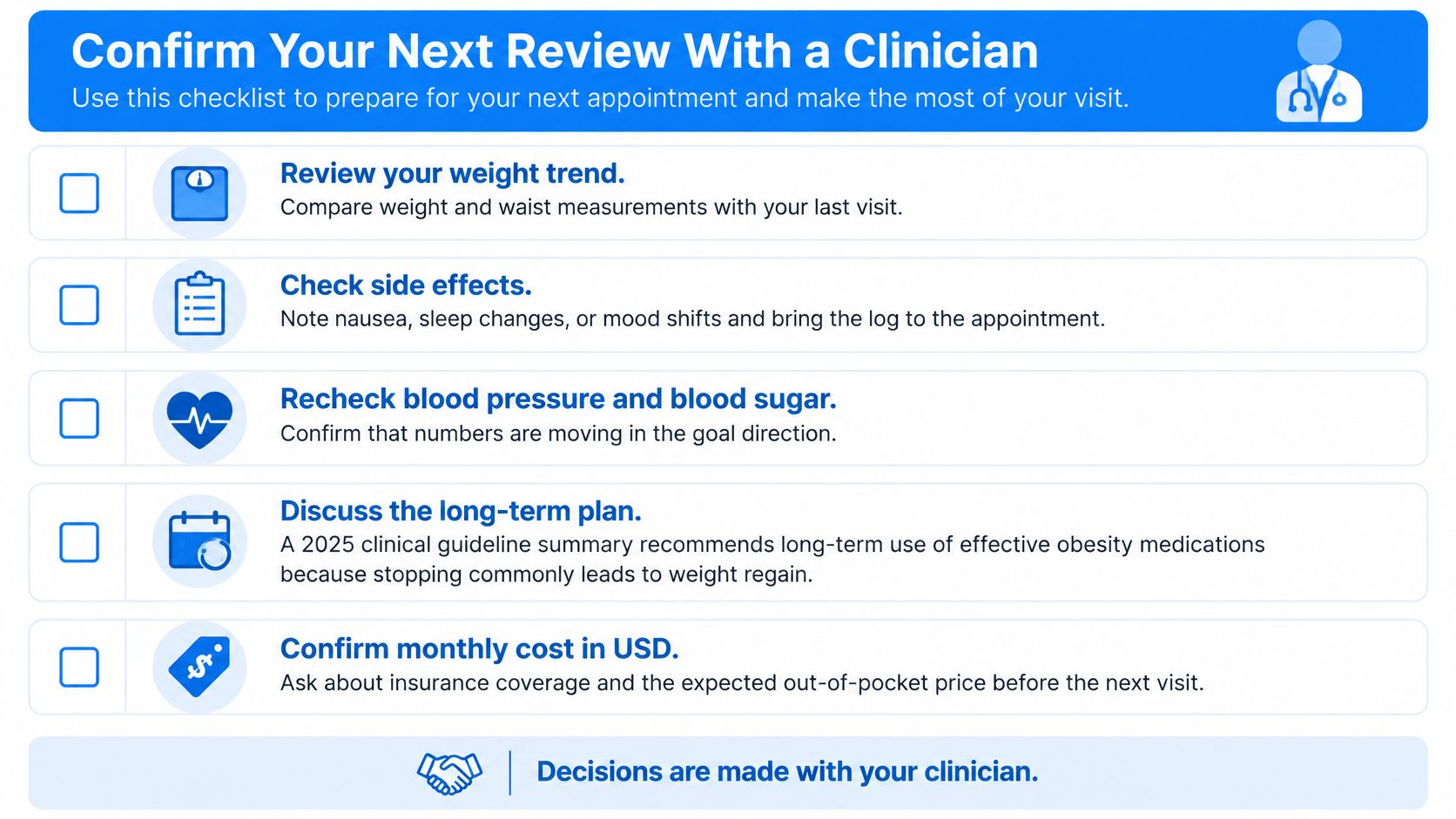
Maintenance is a risk-benefit decision that a clinician makes for each patient. The 2025 VA/DoD obesity guideline patient summary recommends long-term use of effective obesity medications because stopping commonly leads to weight regain and reversal of some benefits. It also identifies insufficient evidence for a standardized maintenance strategy based on reducing dose or frequency.
Taper plans differ between patients. Cost, adverse effects, access interruptions, pregnancy planning, and a preference to reduce medication exposure each require a clinician-directed plan. Exercise remains valuable during maintenance for strength, function, and insulin sensitivity, even though it cannot reliably reproduce a medication's weight-loss effect on its own.
Escalation triggers for clinical review
A missed refill is a common test of a maintenance plan. A patient who loses access for several weeks may return with regained weight, renewed hunger, and a stalled walking routine. Each of those changes points to a different cause, and none of them resolves with self-directed extra dosing.
Weight rising across several weeks, or waist increasing across consecutive monthly measurements, calls for reassessment. Repeated increases in glucose measures or blood pressure above the agreed target require review. Reduced strength or walking tolerance may indicate inadequate nutrition, illness, or an unsuitable treatment trajectory. Ongoing nausea, poor intake, or dehydration needs prompt clinical contact, and severe symptoms require urgent assessment.
Agree on contingencies before they occur
For a plateau, confirm intake, activity, and adherence before changing the prescription. For an interruption, obtain restart instructions first, because resuming a previous dose automatically can mismatch current tolerance. For regain, arrange reassessment and treat any return to medication as a fresh clinical decision that weighs current markers, prior tolerability, and the reason treatment stopped.
Patients should gather current marker values, medication names and doses, and a symptom log before booking a physician-directed telehealth review. The licensed provider determines eligibility and any next dose. This guidance is informational, and compounded medications in particular are evaluated by a licensed provider for individual suitability and fulfilled by state-licensed partner compounding pharmacies.
Vials + Vitals offers physician-directed telehealth assessment for individualized weight-management care, including consideration of semaglutide or tirzepatide when clinically appropriate. Adults seeking a plan that connects weight trends with laboratory results, nutrition, and medication monitoring can visit Vials + Vitals to begin an individualized clinical intake.