Best Sleep Routine for Adults: A Clinical Guide
Build the best sleep routine with evidence-based timing, light, and daytime habits. Learn when to seek provider-guided care for persistent insomnia.

More than one-quarter of American adults sleep less than 7 hours regularly, even though sufficient sleep is a basic requirement for metabolic, cardiovascular, and mental health. That gap explains why the best sleep routine isn't a single bedtime trick. It's a repeatable schedule that protects sleep opportunity, stabilizes circadian timing, and gives patients clear criteria for medical evaluation when behavior alone doesn't resolve symptoms.
Why Most Sleep Advice Falls Short
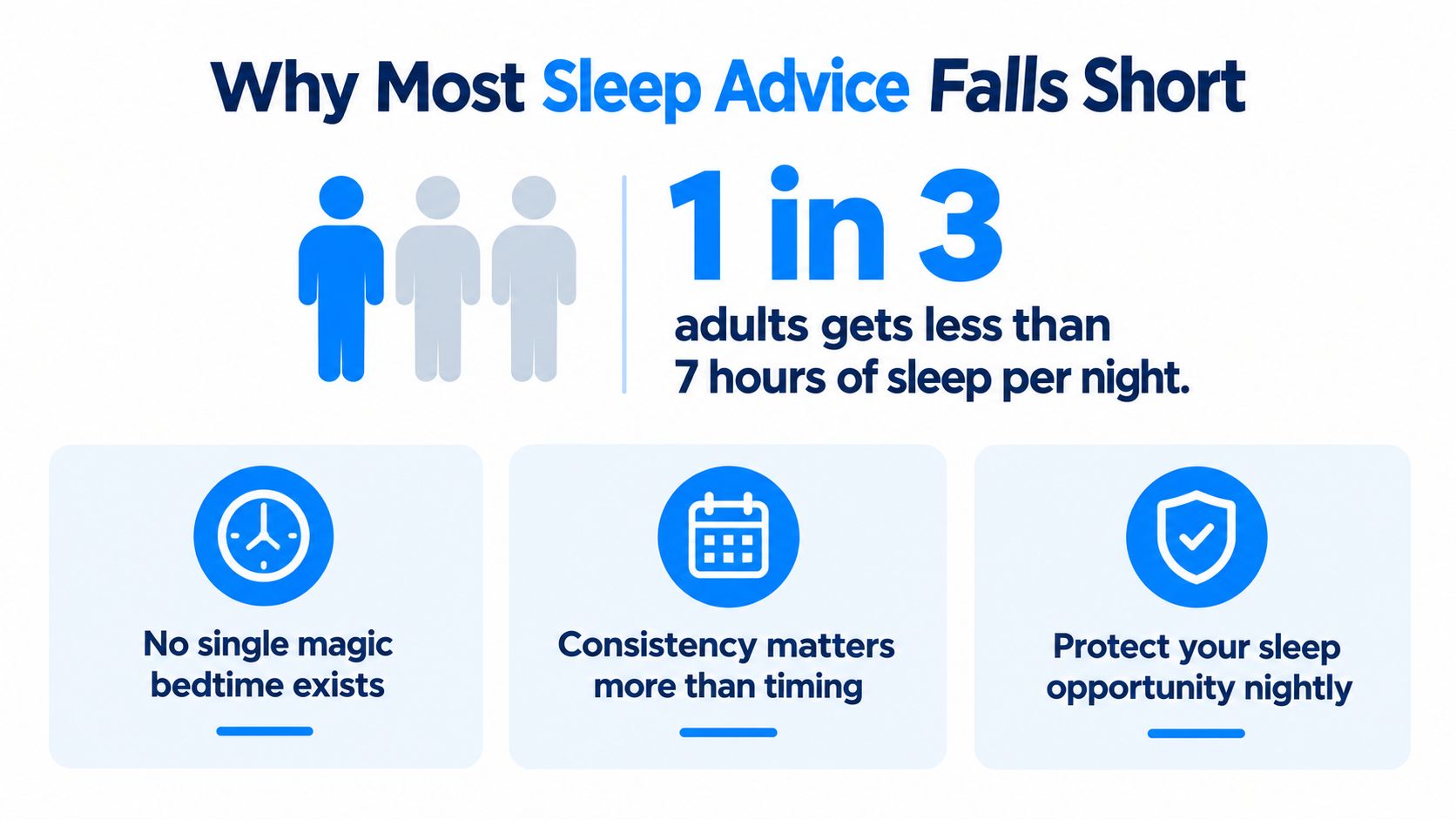
Short sleep isn't a personal failure of discipline. It's widespread. CDC data indicate 30.5% of U.S. adults slept under seven hours on average in 2024, a pattern described in CDC guidance on sleep and heart health. That figure should change how patients judge success. A routine that works once, after an exhausting day, isn't the same as a routine that protects sleep night after night.
Most popular advice starts at bedtime. It tells patients to pick an early hour, avoid screens, or try a supplement, then stops. The clinical problem is different. Adults need a schedule that allows enough time asleep, not enough time in bed, and they need that opportunity protected across workdays, weekends, and imperfect weeks.
Duration Sets The Floor, Not The Whole Target
Adults should sleep 7 or more hours per night on a regular basis to support optimal health, and many adults benefit from a 7 to 9 hour nightly window, according to the American Academy of Sleep Medicine adult consensus recommendation. Regularly sleeping fewer than 7 hours is associated with weight gain and obesity, diabetes, hypertension, cardiovascular disease, stroke, depression, impaired immune function, reduced performance, more errors, and higher accident risk, as detailed in that same consensus statement.
Age matters when selecting a target. National Sleep Foundation guidance places the typical target at 7 to 9 hours for ages 26 to 64 and 7 to 8 hours for adults 65 and older. Those ranges provide a starting window, not a diagnosis. Clinicians also assess quality, regularity, satisfaction, daytime functioning, and sleep related behaviors before deciding whether duration alone explains symptoms.
A useful routine can't be judged by one good night. It has to hold up on ordinary Tuesdays, travel days, and stressful weeks.
Why Occasional Long Sleep Doesn't Repair A Short Week
Patients often compress sleep during the week and try to recover with a long weekend sleep in. That approach leaves the underlying schedule unchanged. It also shifts wake time later, which can make the next bedtime harder and restart the cycle. The better clinical goal is a consistent bedtime and wake time that allow the age appropriate target most nights.
Environment supports that goal, but it doesn't replace timing. Dim, low arousal evenings help the body transition, and practical evening wind-down lighting suggestions can help patients separate stimulating daytime light from the quieter final hour. Lighting, temperature, and sound are secondary levers. Sleep opportunity and regularity remain the foundation.
That's why generic lists fall short. They treat sleep as an evening event when it's a 24 hour pattern. A best sleep routine aligns wake time, light, activity, meals, and wind down so sleep pressure builds during the day and circadian signals point toward sleep at night.
The Core Circadian Anchors of a Routine
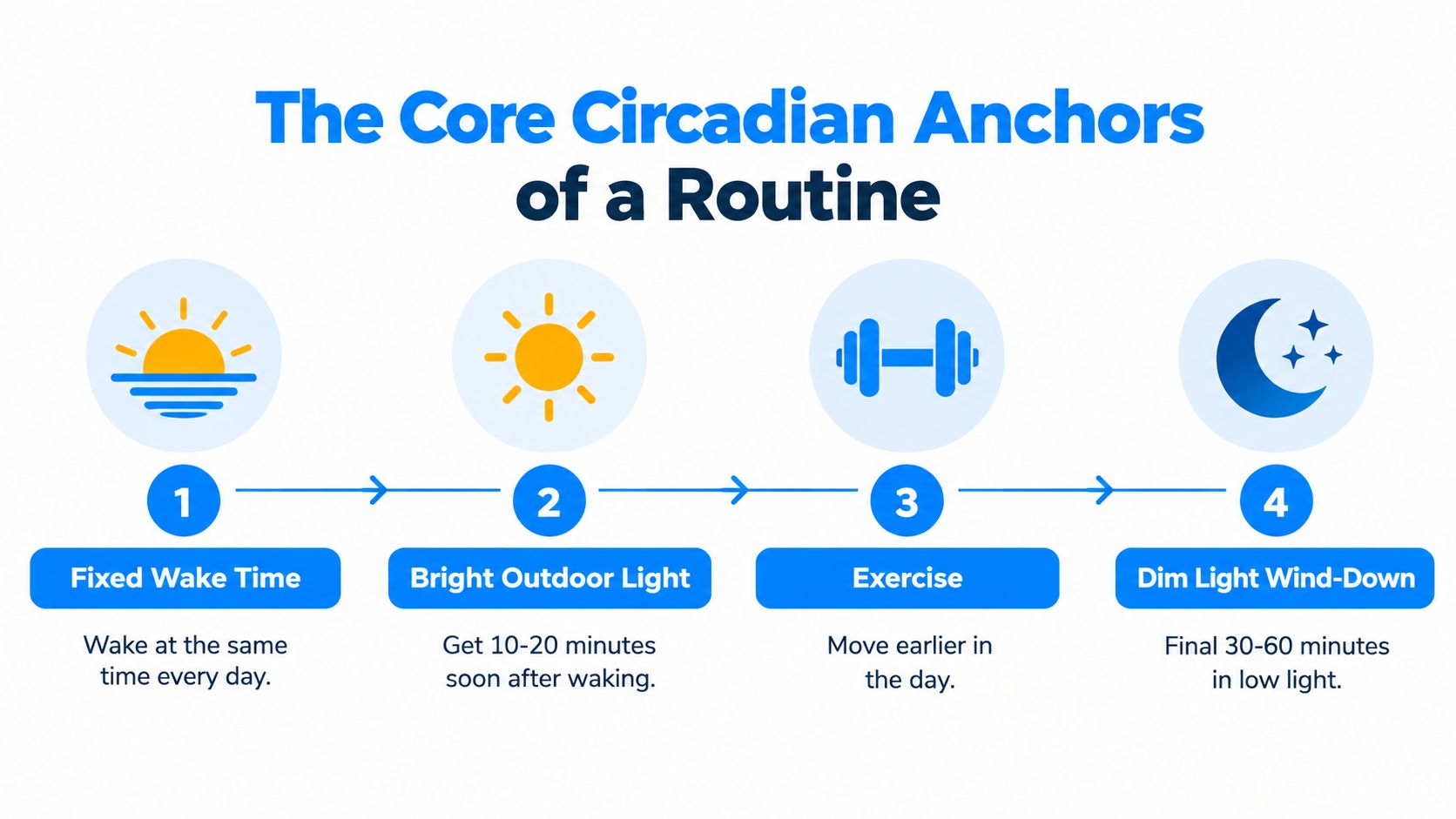
A high adherence routine uses circadian anchors rather than one sleep inducing tactic. Anchors are timed signals that tell the brain when to be alert and when to prepare for sleep. When those signals arrive at similar times each day, falling asleep requires less effort and waking becomes more predictable.
CDC guidance recommends the same bedtime and wake time every day, including weekends. That regularity is the most important benchmark because the circadian system responds to pattern, not intention. Patients who want to boost energy and focus naturally usually need to stabilize timing first, then refine smaller habits around that schedule.
Four Anchors That Structure The Day
- Fixed wake time: Select a wake time that fits work, caregiving, and chronotype, then hold it daily. Wake time is easier to control than sleep onset, so it anchors the entire schedule.
- Bright outdoor light soon after waking: Outdoor light provides a strong morning signal. It helps separate day from night and supports alertness without relying only on caffeine.
- Exercise earlier in the day when feasible: Daytime activity builds sleep pressure and supports metabolic health. Late, stimulating activity is harder for some patients to fit into a calm wind down.
- Dim light wind down: Reserve the final 30 to 60 minutes for dim light and low arousal activities. Finish stimulating work and heavy meals before this period begins.
These steps work together. Morning light without a stable wake time sends a shifting signal. A calm evening without enough sleep opportunity still leaves duration short. The routine succeeds when the anchors repeat in the same order.
Measure Adherence Without Chasing Perfection
Patients should track simple measures rather than rely on memory. Useful metrics include bedtime variability, wake time variability, total sleep time, sleep onset latency, and wake after sleep onset. A practical operational target is to keep wake time variation within roughly 30 to 60 minutes. Larger shifts create social jet lag, a mismatch between biological timing and social schedule that can make Monday sleep initiation harder even when total weekly sleep looks adequate.
Practical rule: Protect the wake time first. Bedtime becomes easier to regulate when the morning anchor stops moving.
Common failure modes are predictable. Caffeine late in the day can delay sleepiness. Alcohol used as a sleep aid can fragment the night. Bright screens in bed, clock watching, and extending time in bed to chase sleep all weaken the signal that bed is for sleep.
None of these errors means a patient lacks motivation. They usually mean the schedule is asking behavior to compensate for unstable timing. Stabilize the anchors, measure variability, and adjust one element at a time. That approach gives the routine a fair test before anyone concludes that behavioral care has failed.
A Clinical Protocol for Persistent Insomnia
Sleep hygiene isn't treatment for chronic insomnia. When difficulty falling or staying asleep persists, patients need a structured protocol. U.S. surveillance found 15.4% of adults had trouble falling asleep most days or every day and 18.1% had trouble staying asleep in 2024, figures cited alongside the American Academy of Sleep Medicine behavioral insomnia guideline. That scale is why vague relaxation advice is insufficient for many patients.
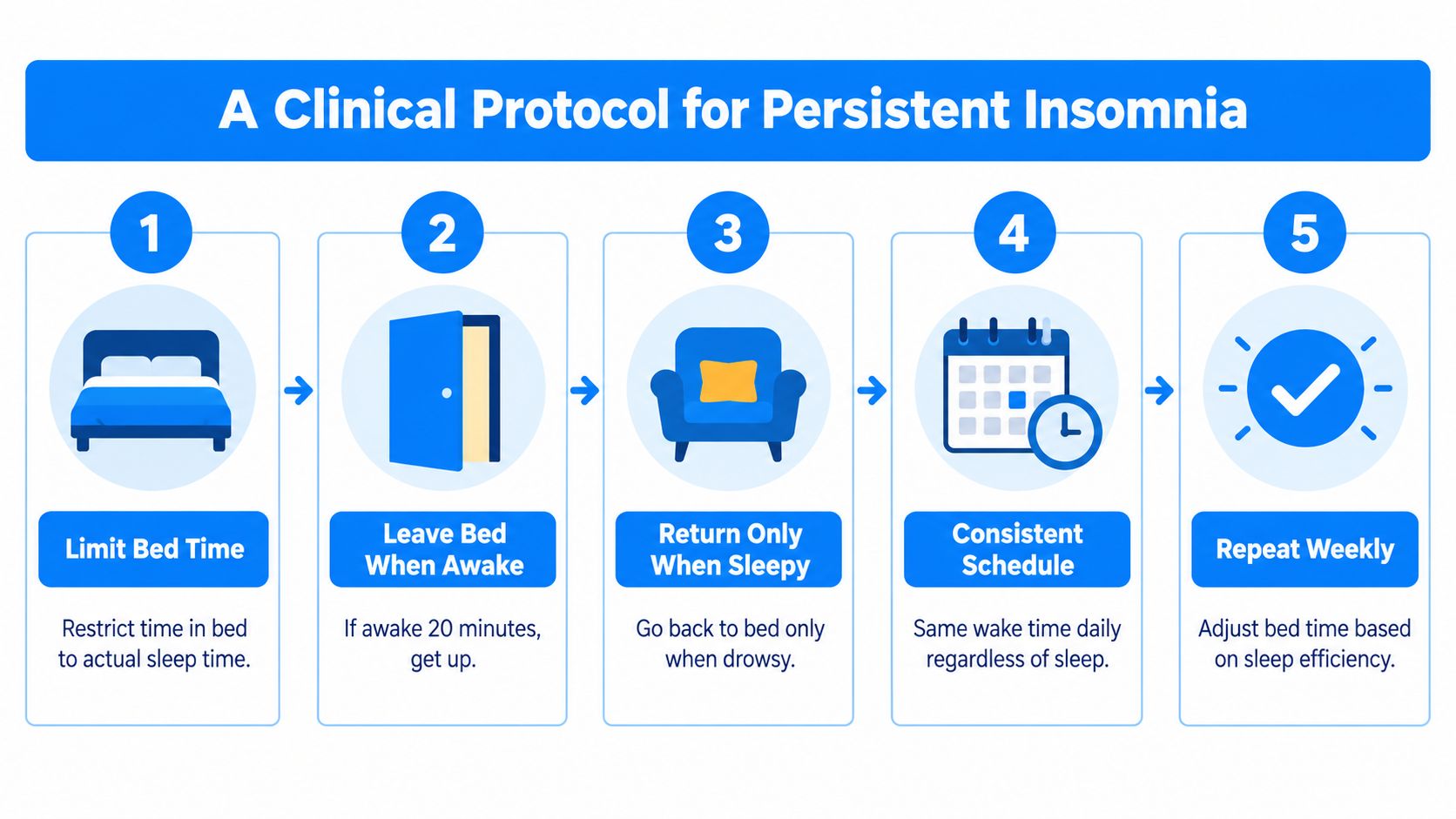
The American Academy of Sleep Medicine gives multicomponent cognitive behavioral therapy for insomnia a strong recommendation and supports stimulus control and sleep restriction therapy as evidence based components. The goal isn't to force sleep. It's to rebuild a reliable association between bed, sleepiness, and consolidated sleep. Background reading on natural insomnia remedies from a psychiatrist can complement that plan, but it shouldn't replace the behavioral structure below.
Stimulus Control In Practice
- Wake at the same time every morning: Keep the wake time daily, including weekends, regardless of the prior night.
- Go to bed only when sleepy: Tired and sleepy aren't identical. Heavy eyelids and drifting attention signal readiness better than the clock alone.
- Leave the bed if unable to sleep: Get up, keep light low, and return when sleepy. Lying awake trains frustration.
- Reserve the bed for sleep and sex: Move reading, television, and phone use elsewhere so the bed stops cueing wakefulness.
Use A Diary Before Changing Time In Bed
Record bedtime, estimated sleep onset, awakenings, final wake time, and out of bed time in a daily sleep diary for 1 to 2 weeks. Then maintain the wake time while adjusting bedtime toward observed sleep need. Sleep restriction doesn't mean arbitrarily sleeping less. Time in bed is initially aligned with diary estimated sleep duration and then expanded as sleep becomes more consolidated.
| Pitfall | Why It Backfires |
|---|---|
| Staying in bed awake | Weakens the bed and sleep association |
| Long naps or weekend sleep ins | Reduce homeostatic sleep pressure |
| Changing the schedule after one poor night | Prevents the pattern from stabilizing |
Clinical caution is essential. People with bipolar disorder, seizure risk, untreated sleep apnea, severe daytime sleepiness, or safety critical occupations shouldn't attempt aggressive sleep restriction without clinician supervision. For other patients, consistency matters more than intensity. A diary guided schedule, held steady long enough to assess response, gives both patient and clinician usable data.
What the Science Says About Sleep Regularity
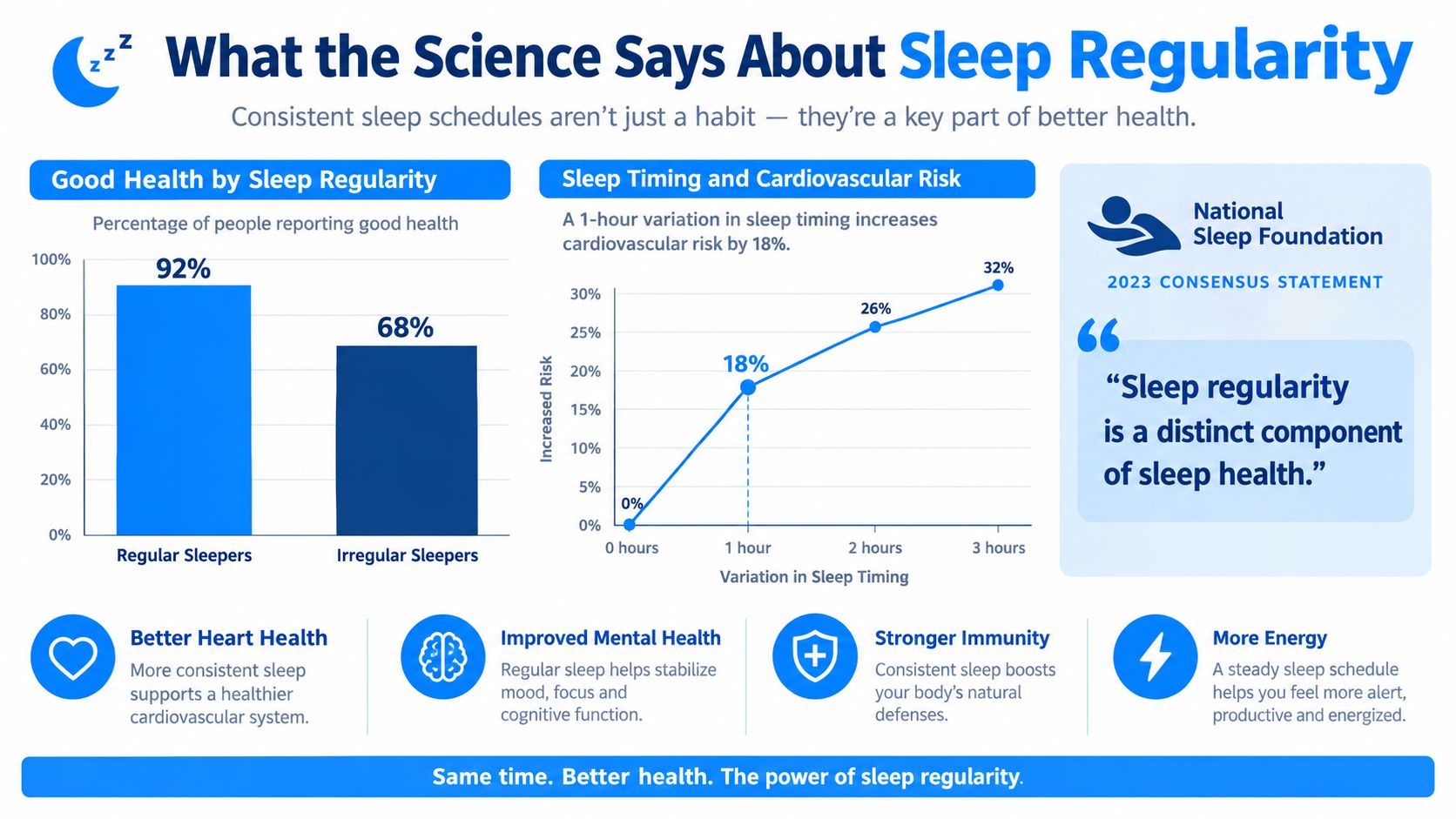
Sleep regularity is measurable. It isn't a preference for tidy habits. A 2023 National Sleep Foundation consensus review concluded that consistent sleep onset and wake up times are associated with better alertness, safety behaviors, cardiovascular and metabolic health, inflammation, mental health, academic performance, cognition, sleep duration, and sleep quality, as summarized in the National Sleep Foundation consensus review on sleep regularity00166-3/fulltext). That breadth matters because regularity appears to influence daytime function, not only nighttime comfort.
Patients often ask whether duration can compensate for erratic timing. Evidence suggests timing carries independent weight. A patient can average an acceptable number of hours across a week while sleeping at sharply different times, and still feel unrefreshed because circadian alignment changes from night to night.
Mortality Data From Large Scale Tracking
A large prospective UK Biobank analysis published in 2024 calculated sleep regularity scores from more than 10 million hours of accelerometer data involving 60,977 participants. During follow up, 1,859 deaths occurred. Compared with the least regular group, participants in the four higher regularity groups had 20% to 48% lower all cause mortality risk, 16% to 39% lower cancer mortality risk, and 22% to 57% lower cardiometabolic mortality risk. The analysis also reported that regularity predicted all cause mortality more strongly than sleep duration in its comparative models.
A separate cohort study found that participants with a regular optimal pattern, about 7.0 plus or minus 1.0 hours obtained regularly, had a 39% lower mortality hazard than those with an irregular insufficient pattern averaging 5.8 plus or minus 1.4 hours, after adjustment for demographics, lifestyle, medical conditions, and sleep disorders. These are observational associations, not proof that changing a schedule alone prevents death. They still strengthen the clinical case for treating regularity as a distinct target.
Duration answers how long a patient sleeps. Regularity answers whether the body can predict when sleep will occur.
What Regularity Means In Real Life
A routine built around stable bed and wake times across weekdays and weekends fits the evidence best. Perfection isn't required for the pattern to be useful. Evidence also recognizes that 1 to 2 hours of weekend catch up sleep may help people who can't obtain enough sleep during workdays. That allowance is a compromise for constrained schedules, not a reason to restrict sleep deliberately all week.
For shift workers, caregivers, and frequent travelers, the target may need to be the most regular pattern their obligations allow. The clinical question becomes practical. Which anchor can stay most stable, wake time, light exposure, main sleep window, or wind down sequence? Protecting one reliable anchor is better than abandoning structure because an ideal schedule isn't available.
Adapting the Routine to Your Chronotype and Life
Early isn't automatically better. A schedule that fights a patient's biological night can produce long sleep latency, morning impairment, and poor adherence, even when the bedtime looks disciplined on paper. The best sleep routine should be regular, but regular isn't synonymous with universally early.
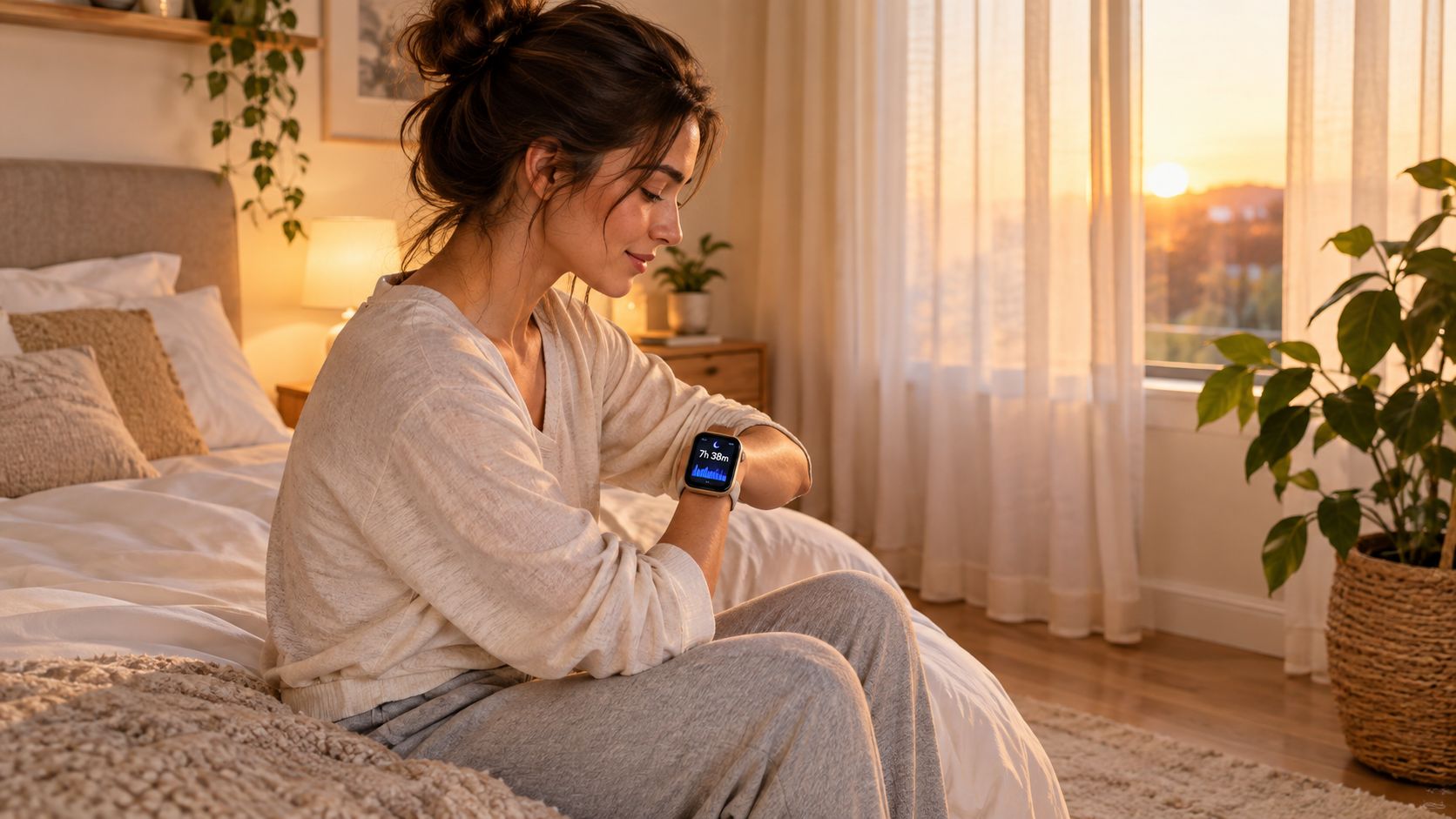
Recent wearable research suggests that both sleep regularity and alignment between circadian timing and sleep onset matter. In a two week study of 48 participants, higher Sleep Regularity Index scores and smaller differences between estimated melatonin timing and sleep onset were associated with better sleep quality and next day well being, according to wearable research on circadian sleep alignment. Timing relative to biology matters, not only timing relative to the clock.
Shift Gradually, Then Stabilize
When work or family obligations require an earlier schedule, abrupt changes often fail because sleepiness doesn't move as fast as an alarm. A gradual phase shift moves bedtime and wake time in small steps while morning light and daytime activity support the new timing. Patients shouldn't advance bedtime while leaving wake time unchanged for long. That stretches time in bed without sleep and can worsen frustration.
Consistent also doesn't necessarily mean identical every night. People with variable schedules may need an individualized target based on actual sleep opportunity rather than an unrealistic fixed bedtime. A caregiver with unpredictable nights, for example, may protect a core sleep window and a consistent wind down sequence even when total duration varies. The aim is the least variable schedule that remains sustainable.
Read Wearable Data As A Trend, Not A Verdict
Algorithmic sleep summaries can misclassify naps or irregular sleep. In a long term Fitbit analysis of more than 8,000 participants, a user centered algorithm reclassified 4.75% of sleep logs and identified 17.6 additional minutes of total sleep, on average, among people with the greatest schedule variability. That finding is a reminder to interpret device output cautiously, especially when schedules are irregular.
- Use multi night trends: Look at wake time variability and total sleep time across a stretch of nights, not one score.
- Compare data with daytime function: Alertness, mood, and performance help judge whether a change is helping.
- Stop checking during the night: Clock watching and score checking can raise arousal and undermine the routine.
Chronotype aware scheduling, gradual shifting, and cautious interpretation of wearable data answer questions generic sleep hygiene lists leave unresolved. Patients don't need a perfect biological match every night. They need a schedule close enough to their circadian tendency that adherence is realistic.
When to Seek Provider-Guided Treatment
A routine is a foundation, not a substitute for medical care. If persistent insomnia symptoms remain despite consistent behavioral implementation, clinicians should evaluate for obstructive sleep apnea, restless legs syndrome, circadian rhythm disorders, medication effects, depression, anxiety, or menopause related symptoms rather than escalating supplements independently, a point reinforced in a 2025 analysis of sleep pattern consistency. Escalation means diagnosis first, then treatment matched to cause.
Wearable data can support that conversation, but it can't make the diagnosis. Wearable use is already common enough to affect routine design. 19.3% of 1,200 survey respondents in a 2025 study reported using a sleep tracking device. Trend based monitoring is preferable to nightly scoring because anxious checking can become part of the sleep problem.
Warning Signs That Need Clinical Evaluation
- Snoring or breathing pauses: These symptoms raise concern for obstructive sleep apnea and shouldn't be managed as simple poor hygiene.
- Severe daytime sleepiness: Falling asleep unintentionally, struggling to stay awake while driving, or major performance impairment requires prompt assessment.
- Urge to move the legs at night: Restless legs syndrome can delay sleep onset and fragment sleep despite a stable schedule.
- Mood or medication changes: Depression, anxiety, menopause related symptoms, and medication effects can all alter sleep continuity.
Patients benefit from bringing a sleep diary, medication list, and wearable trends to an appointment. That record helps a provider distinguish insufficient sleep opportunity from insomnia, circadian misalignment, or another sleep disorder. It also prevents weeks of supplement trials that don't address the mechanism.
What Provider Guided Care Adds
Provider guided care starts with an online clinical assessment, review by a U.S. licensed provider, and individualized treatment planning. Depending on findings, care may emphasize behavioral protocols, treatment of contributing conditions, or medically supervised therapies when appropriate. Patients considering online insomnia treatment evaluation should expect eligibility review and safety screening, not automatic prescribing.
Persistent symptoms after faithful behavioral implementation aren't a reason to try harder at the same routine. They're a reason to look for a diagnosis the routine can't treat.
That distinction protects patients. Sleep apnea, restless legs, circadian disorders, and mood conditions can coexist with excellent habits. A clinician can order appropriate evaluation, review interacting medications, and set follow up metrics. The routine still matters during treatment, but it becomes one part of a supervised plan rather than the only intervention.
Building Your Personal Best Sleep Routine
Start with the wake time. Choose one that fits chronotype and obligations, allows the age appropriate sleep target, and can repeat on weekends. Then build the day around it rather than negotiating sleep at midnight.
A Practical Checklist
- Anchor the morning: Wake at the fixed time and obtain bright outdoor light soon after waking.
- Move during the day: Schedule exercise earlier when feasible and finish heavy meals before wind down.
- Create a transition: Use the final 30 to 60 minutes for dim light and low arousal activities.
- Limit drift: Keep wake time variation within roughly 30 to 60 minutes and avoid extending time in bed to chase sleep.
- Track what matters: Monitor bedtime variability, total sleep time, and sleep onset latency, and use a sleep diary if insomnia symptoms are present.
Consistency, not perfection, is the goal. A missed night doesn't break the routine, and one poor night shouldn't trigger a new schedule. Return to the anchor times, review trend data, and give the pattern time to stabilize.
The best sleep routine is the one a patient can sustain while protecting sufficient sleep, respecting circadian timing, and recognizing clinical warning signs early. If symptoms persist despite faithful implementation, provider guided evaluation is the appropriate next step.
If a consistent routine hasn't resolved trouble falling asleep, staying asleep, or functioning during the day, Vials + Vitals offers physician directed telehealth assessment with review by U.S. licensed providers and individualized, protocol driven care when clinically appropriate. Complete a confidential online assessment to discuss sleep focused options, safety parameters, and whether supervised treatment fits the clinical picture.