Weight Loss Injections Side Effects: A Clinical Guide
Weight Loss Injections Side Effects explained: trial frequencies, daily management, rare risks and when to seek urgent medical care.

73% of adults receiving Wegovy reported a gastrointestinal adverse reaction, compared with 47% receiving placebo, according to the FDA prescribing information. Digestive symptoms aren't unusual exceptions with these medications. They're a central part of treatment planning, particularly when a dose increases.
A useful clinical approach to weight loss injections side effects separates three questions: How common is the symptom? How urgent is it? Could an administration error explain it? Mild nausea after an increase requires a different response from persistent vomiting, severe abdominal pain, or symptoms following an uncertain dose.
Side Effect Frequencies and Severity at a Glance
Side effect rates by product and placebo
| Effect | Semaglutide (Wegovy label) | Tirzepatide (5-15 mg range) | Placebo (semaglutide / tirzepatide) | Typical severity |
|---|---|---|---|---|
| Nausea | 44% | 25-29% | 16% / 8% | Common, usually mild to moderate |
| Diarrhea | 30% | 19-23% | 16% / 8% | Common, usually mild to moderate |
| Vomiting | 25% | 8-13% | 6% / 2% | Common, dose-related |
| Constipation | Reported; rate not specified in cited summary | 11-17% | Not specified / 5% | Common, usually manageable |
| Any gastrointestinal reaction | 73% | 56% | 47% / 30% | Common class effect |
| Severe gastrointestinal reaction | 4.1% | 1.7-3.1% | 0.9% / 1% | Serious, needs prescriber contact |
| Discontinuation for adverse reactions | Overall rate not specified in cited summary | 4.8-6.7% | Not specified / 3.4% | Treatment-limiting in some patients |
| Acute gallbladder disease | Rate not specified in cited summary | 0.6%, from adult Mounjaro trials, not Zepbound trials | Not specified / 0% | Uncommon but serious, needs urgent evaluation |
| Hair loss | Reported on label | Reported on label | Rates not specified | Monitor and discuss with prescriber |
The common tirzepatide reaction rates and hair-loss listing come from the FDA Zepbound prescribing information; additional rows use the separately identified regulatory documents discussed below. Not specified means that a matching numerical rate isn't available in the cited summary, not that the reaction never occurs.
Reading the comparisons correctly
The placebo column lists semaglutide first and tirzepatide second. These were separate trial programs, not a direct comparison between medications. Differences in participants and study conditions mean the table can't establish which medication a particular patient will tolerate better.
The tirzepatide range covers the studied maintenance doses rather than predicting a steady increase for every symptom. Some reactions become more frequent with higher doses, while others don't follow a straight upward pattern. A percentage describes a group of trial participants, not an individual's future experience.
A practical severity key
- Expected and manageable at home: Mild symptoms that improve with food and fluid adjustments, without impaired drinking or significant pain.
- Needs a same-day call: Persistent symptoms, inadequate intake, new concerning changes, or uncertainty about the administered dose.
- Needs emergency care now: Breathing difficulty, severe abdominal pain, confusion, or signs of substantial dehydration.
Clinical distinction: A common symptom isn't automatically a harmless symptom. Its intensity and effect on hydration matter more than its name.
Why Gut Symptoms Dominate and Track Your Dose
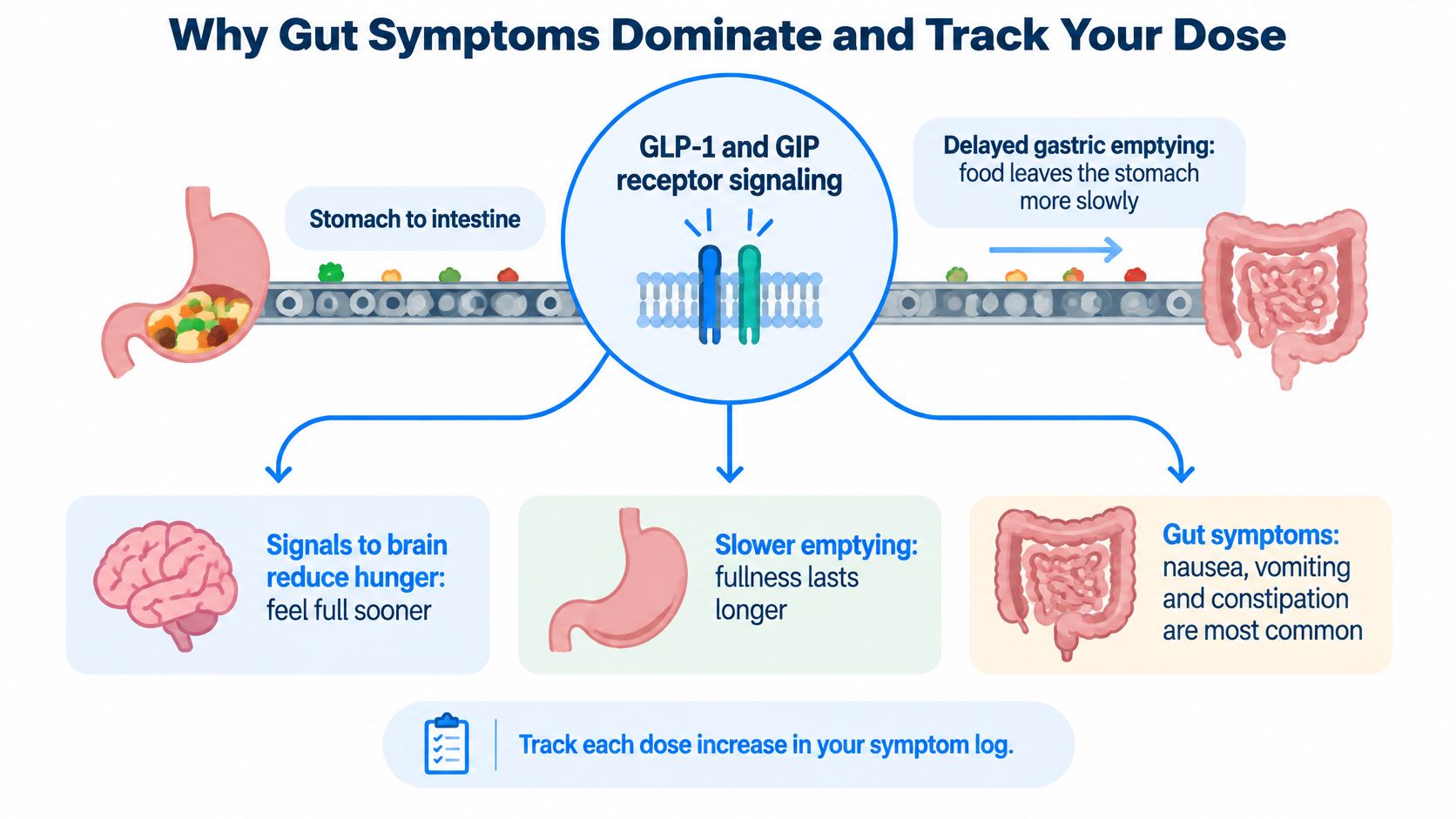
Nausea often appears within days of a dose increase, when the digestive effects of these medications become more noticeable. Semaglutide activates GLP-1 receptors, while tirzepatide activates both GIP and GLP-1 receptors. Their effects include appetite signaling and changes in digestion, rather than increased calorie expenditure.
GLP-1 signaling slows gastric emptying, so food moves out of the stomach more slowly. Brain pathways also reduce hunger, while changes in intestinal movement can affect bowel habits. These effects help explain why fullness, nausea, and constipation may occur together.
Following a hypothetical dose increase
After moving to a higher prescribed dose, a patient may develop nausea within a few days and feel unusually full after eating only a few bites. Nausea that begins within days of an increase is a reason to call the prescriber, not to wait it out. The timing helps the prescriber assess whether the dose change may be contributing and decide what to do next.
The trial figures in the side-effect table show that gastrointestinal reactions are common with both medications. For tirzepatide, severe gastrointestinal reactions ranged from 1.7% at 5 mg to 3.1% at 15 mg, compared with 1% with placebo, according to the FDA Zepbound label. Overall frequency and severity are different measures: a reaction can be common while severe reactions remain less frequent.
Tolerability determines the next step
Digestive reactions may be transient, but a fixed recovery deadline should not replace clinical assessment. Before a dose increase, the prescriber needs to know whether the patient can drink, eat adequately, and pass stool without substantial discomfort.
A larger meal to make up for reduced intake can worsen fullness. Persistent vomiting or inability to maintain fluids requires prompt assessment, and the patient should not proceed with another scheduled increase without contacting the prescriber. Routine gastrointestinal symptoms alone do not prove an allergy or infection, though a clinician may need to evaluate other causes.
How to Manage Nausea, Vomiting and Constipation
Management starts when symptoms first interfere with meals or bowel habits, not after dehydration develops. The goal is adequate nutrition and hydration at a tolerable dose, rather than eliminating appetite as completely as possible.
A symptom-management routine
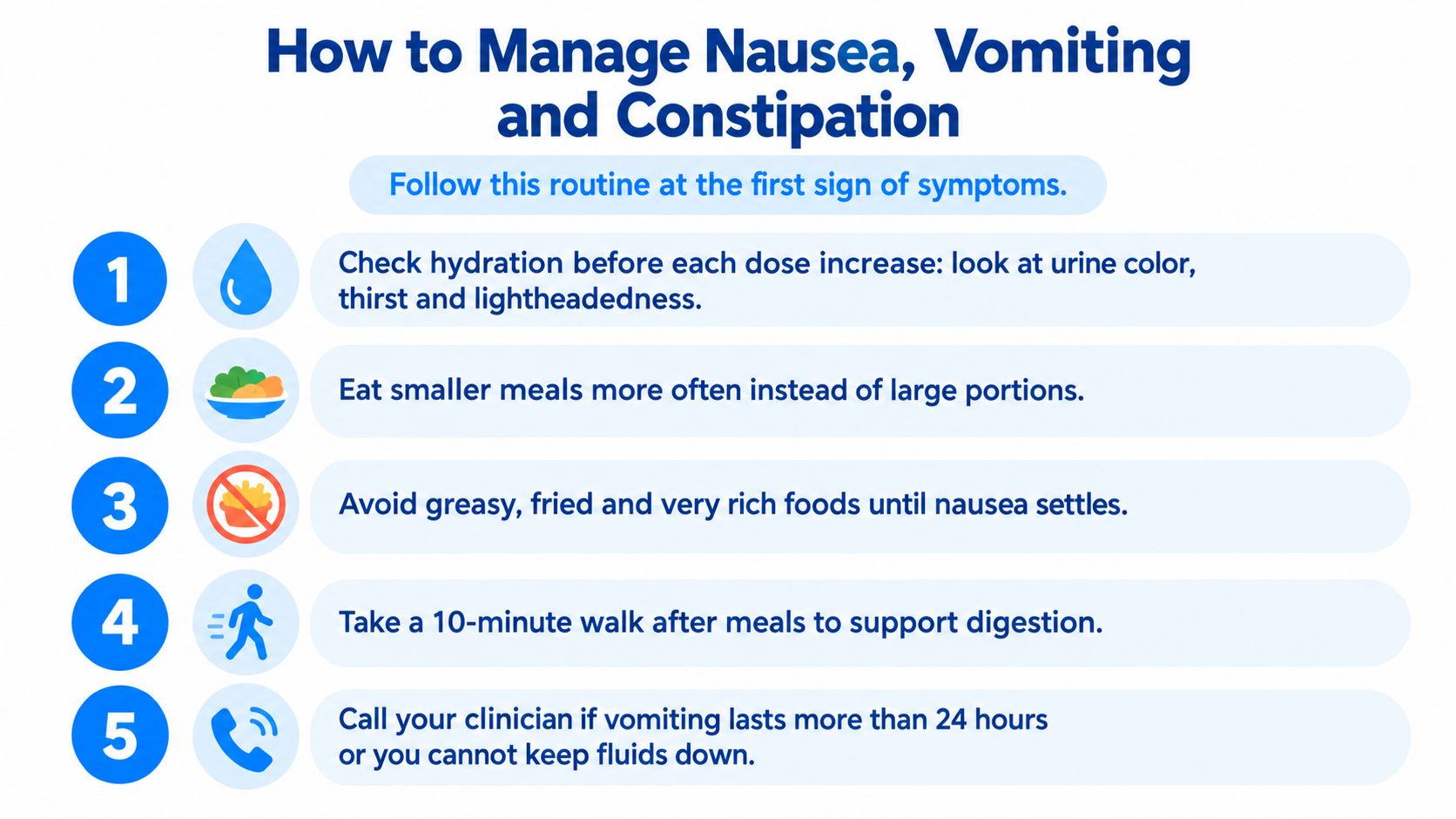
Check hydration before an increase. Thirst, darker urine, and lightheadedness can indicate that intake isn't keeping pace with losses. Urine color alone isn't diagnostic, so the prescriber should hear about the full symptom pattern.
Serve smaller meals and stop at early fullness. Eating slowly allows time to recognize that a comfortable portion has been reached. Continuing until the usual plate is finished can worsen pressure and nausea.
Limit rich foods and oversized portions. Greasy meals, high-fat dishes, and very sugary foods may be harder to tolerate during active nausea. Simple, lower-fat choices can make it easier to maintain intake without forcing a large meal.
Sip fluids steadily. Small amounts between meals may be more comfortable than drinking a large volume with food. Patients with prescribed fluid restrictions need an individualized hydration plan rather than a generic drinking target.
Address constipation gradually. Increase dietary fiber cautiously and pair it with appropriate fluids, because suddenly adding substantial fiber can worsen bloating. A prescriber or pharmacist should review laxatives or stool softeners before use, especially when pain, vomiting, or abdominal swelling accompanies constipation.
Maintain a useful symptom log. Record the injection date, medication dose, symptom, severity, bowel pattern, and what helped. Include whether fluids stayed down and whether symptoms interrupted normal activities.
Avoid automatic escalation during active intolerance. Ongoing vomiting, significant nausea, constipation, or poor intake should prompt a prescriber discussion about delaying an increase or changing the plan. A scheduled date doesn't establish that the current dose is tolerated.
Other practical measures
Patients experiencing dizziness should rise slowly and sit down if they feel faint. Fatigue deserves attention to food intake, hydration, sleep, and medication effects rather than an assumption that exhaustion is necessary for weight loss.
Injection sites should be rotated, and medication should be stored according to its specific label. Persistent local redness, spreading warmth, or increasing swelling merits clinical review rather than repeated injections into the same area.
Home management ends when fluid intake fails, symptoms intensify, or a red flag appears.
Vomiting or diarrhea continuing beyond a day warrants same-day contact. Inability to keep fluids down warrants earlier assessment, without waiting for that time threshold.
Rare Serious Effects and Red-Flag Triage
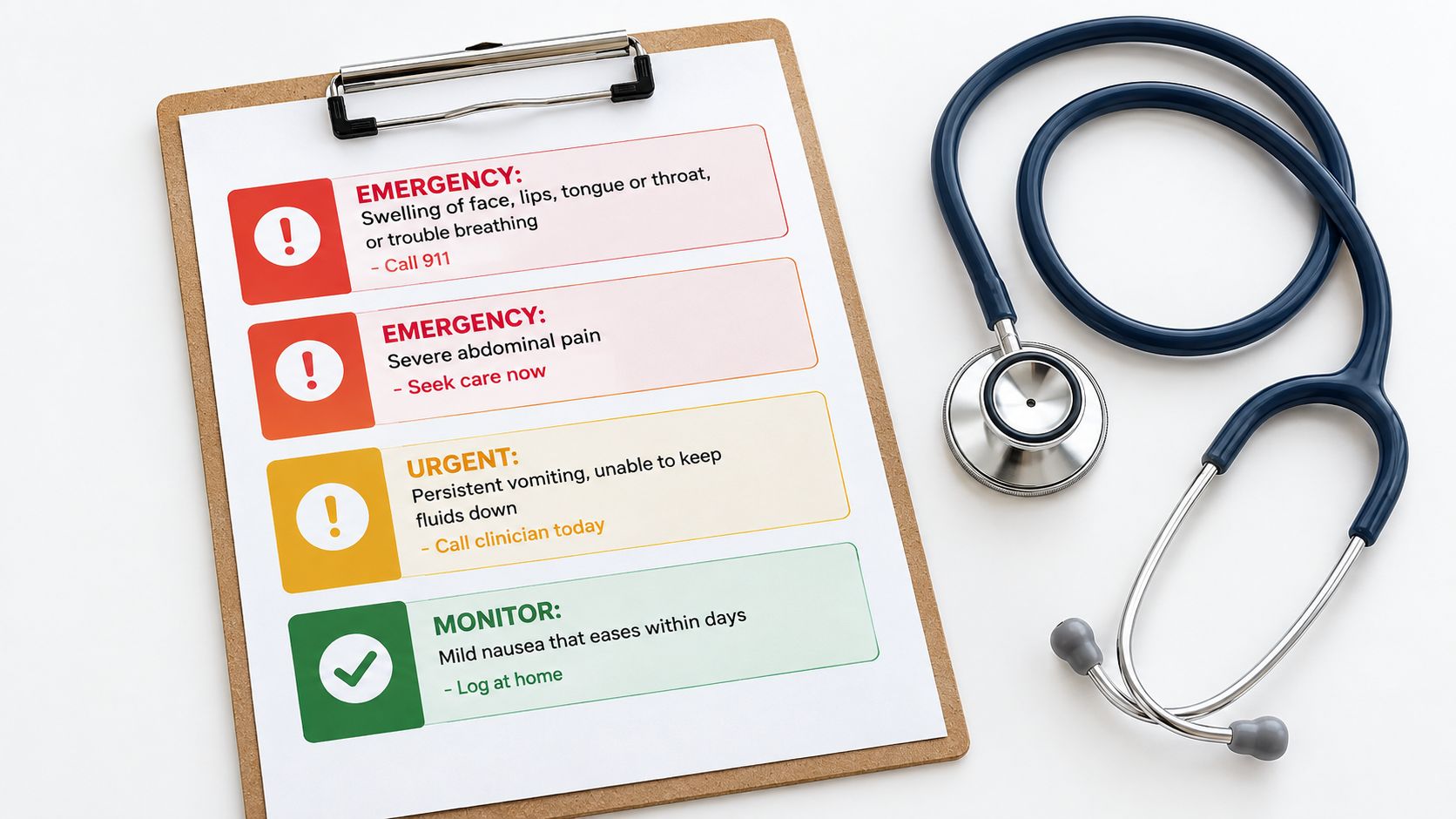
Symptoms differ in urgency. Use this table to match a warning sign with the next step. Severe or rapidly worsening symptoms need prompt action, even if they began during dose escalation.
| Symptom | Urgency | Action |
|---|---|---|
| Facial, lip, tongue or throat swelling, or trouble breathing | Emergency | Call emergency services immediately |
| Severe abdominal pain, especially pain radiating to the back | Emergency | Go to the emergency department for evaluation |
| Very low urine output with dizziness or confusion | Emergency | Seek emergency care for possible dehydration or kidney injury |
| Yellowing of skin or eyes, pale stools or dark urine | Same day | Contact the prescriber or urgent care |
| Vomiting or diarrhea lasting more than a day, or inability to keep fluids down | Same day, sooner if worsening | Obtain prompt assessment; use emergency care for collapse, confusion or severe dehydration |
| Right upper abdominal pain after meals, with or without fever | Same day | Contact the prescriber because gallbladder disease is possible |
| Sudden vision changes in a patient with diabetes | Same day | Contact the prescriber and arrange urgent eye evaluation |
| Low blood sugar signs, including shakiness, sweating or confusion, while using insulin or a sulfonylurea | Urgent | Follow the prescribed hypoglycemia plan and contact the prescriber; severe confusion or unconsciousness requires emergency services |
| Mild nausea or constipation improving with food and fluid changes | Routine | Record symptoms and report them at the next visit |
This table is general guidance, not a diagnosis. Follow individual written instructions from your prescriber. Emergency symptoms should not wait for a portal reply or scheduled appointment.
Conditions behind the warning signs
Acute pancreatitis. Tirzepatide labeling describes pancreatitis, including fatal and nonfatal hemorrhagic or necrotizing cases. Severe, sustained abdominal pain, especially pain that radiates to the back, needs medical evaluation. This symptom is different from the milder nausea or abdominal discomfort that can accompany dose increases.
Gallbladder disease. Gallstones, biliary colic and cholecystitis can cause upper abdominal pain, sometimes with fever or jaundice. In adult Mounjaro trials, acute gallbladder disease was reported in 0.6% of tirzepatide-treated participants versus 0% receiving placebo, according to the FDA safety discussion. These figures are not Zepbound weight-management trial rates. Rapid weight loss is a recognized gallstone risk factor, so new upper abdominal pain should not automatically be treated as routine medication-related nausea.
Acute kidney injury. Repeated vomiting or diarrhea can reduce the fluid circulating in the body and affect kidney function. Very low urine output, faintness or confusion calls for urgent assessment.
Hypoglycemia. Low blood sugar is a particular concern when treatment is combined with insulin or a sulfonylurea. Follow the prescribed hypoglycemia plan. Severe confusion or inability to swallow safely requires emergency assistance, not food or drink by mouth.
Hypersensitivity. Severe allergic reactions need immediate care. Throat swelling or trouble breathing is not ordinary irritation at an injection site.
Diabetic retinopathy complications. Sudden vision changes in a patient with diabetes need prompt evaluation. An eye-care professional can assess whether retinopathy or another urgent eye problem is involved.
Serious reactions may be uncommon, but the warning signs still matter. A smoke detector is useful precisely because a fire is not an everyday event.
Who Faces Higher Risk and Needs Closer Monitoring
Risk depends on a person's medical history, current medications, and ability to eat and drink enough. These details help a clinician decide what to monitor and whether dose increases should follow the usual pace.
What an individualized intake should capture
- Diabetes medications: Insulin and sulfonylureas make glucose monitoring and medication review especially important. Share current doses and any recent low-glucose episodes, not just a diabetes diagnosis. As weight falls and glucose control changes, a clinician may need to adjust insulin or metformin to match the patient's needs.
- Kidney function and diuretics: Existing kidney impairment or diuretic use can make fluid loss more consequential. Name each diuretic and disclose any prescribed fluid restriction.
- Gallbladder history: Previous gallstones, gallbladder inflammation, or unexplained upper abdominal pain may affect what symptoms need evaluation.
- Eye disease: Diabetes with retinopathy calls for coordination with eye care, particularly when glucose control changes.
- Rapid or substantial weight loss: Review nutrition, fluid intake, and gallbladder symptoms alongside changes on the scale.
- Other medications and supplements: A full list helps the clinician check for interactions, overlapping side effects, and treatments that may need adjustment.
Weight is only one part of diabetes follow-up. Understanding HbA1c reduction and longer-term glucose control can help explain why glucose measures and medication needs may change as weight changes.
Hair loss and symptoms outside the gut
Hair loss is a reported Wegovy adverse reaction. Fatigue, dizziness, reflux, and abdominal discomfort also appear in FDA information about semaglutide. New hair shedding deserves assessment rather than an assumption that it is an unavoidable part of treatment.
A clinician can consider when shedding began, changes in nutrition and weight, and other possible causes. This broader review helps determine whether the symptom may relate to treatment or another factor.
Verifying Your Dose and Product Before Each Injection
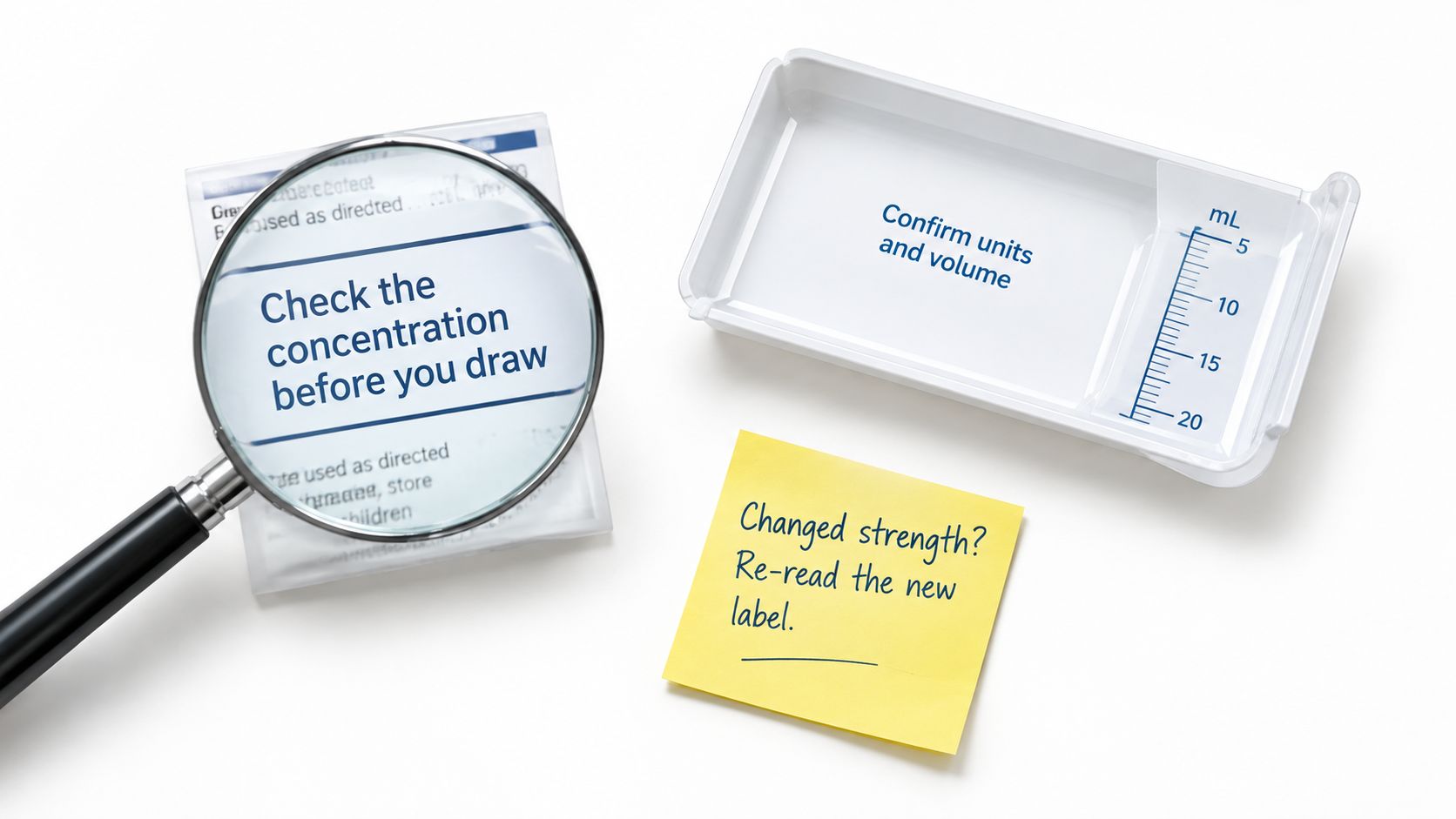
A change in vial concentration can turn familiar syringe instructions into a dosing error. Someone who keeps using the old instructions with a new, stronger concentration may inject more medication than prescribed, then develop severe vomiting and dehydration. Those symptoms can resemble ordinary intolerance, but the immediate concern is an incorrect dose.
The FDA warning about unapproved GLP-1 drugs describes hospitalizations associated with compounded semaglutide dosing errors. As of February 28, 2025, the FDA had received more than 455 adverse-event reports involving compounded semaglutide and more than 320 involving compounded tirzepatide. Unapproved versions do not undergo FDA premarket review for safety, effectiveness, and quality.
Verification before administration
- Identify the product. Check whether it is FDA-approved or compounded, then read the current container label instead of relying on memory.
- Match the concentration. Compare the vial's concentration with the prescription instructions. A different concentration may call for a different injection volume.
- Confirm the syringe markings. Follow written instructions that connect the prescribed medication dose to the correct volume and syringe markings. Milligrams describe medication amount, milliliters measure liquid volume, and syringe units indicate markings on the device.
- Document the dose and date. A written record can prevent accidental repeat dosing and help clinicians assess symptoms.
- Keep changes clinician-directed. Do not increase the dose because weight loss has slowed or follow another person's instructions.
- Check storage requirements. Follow the product label and ask the dispensing pharmacy about temperature excursions or unclear directions.
The differences between vial and pen administration can help clarify which device-specific instructions to confirm before an injection.
Reports aren't incidence rates
A 2024 pharmacovigilance analysis identified 31,444 adverse-event reports involving GLP-1 medicines: 13,956 for semaglutide, 16,748 for liraglutide, and 740 for tirzepatide. These counts show reports received, not how often reactions occur, and they do not prove that a medication caused each event.
Accreditation or potency testing cannot prevent every measurement mistake. If symptoms follow a possible dosing error, tell the clinician the product label, concentration, syringe type, and amount administered, as well as the symptoms.
Deciding Whether to Continue, Adjust or Stop
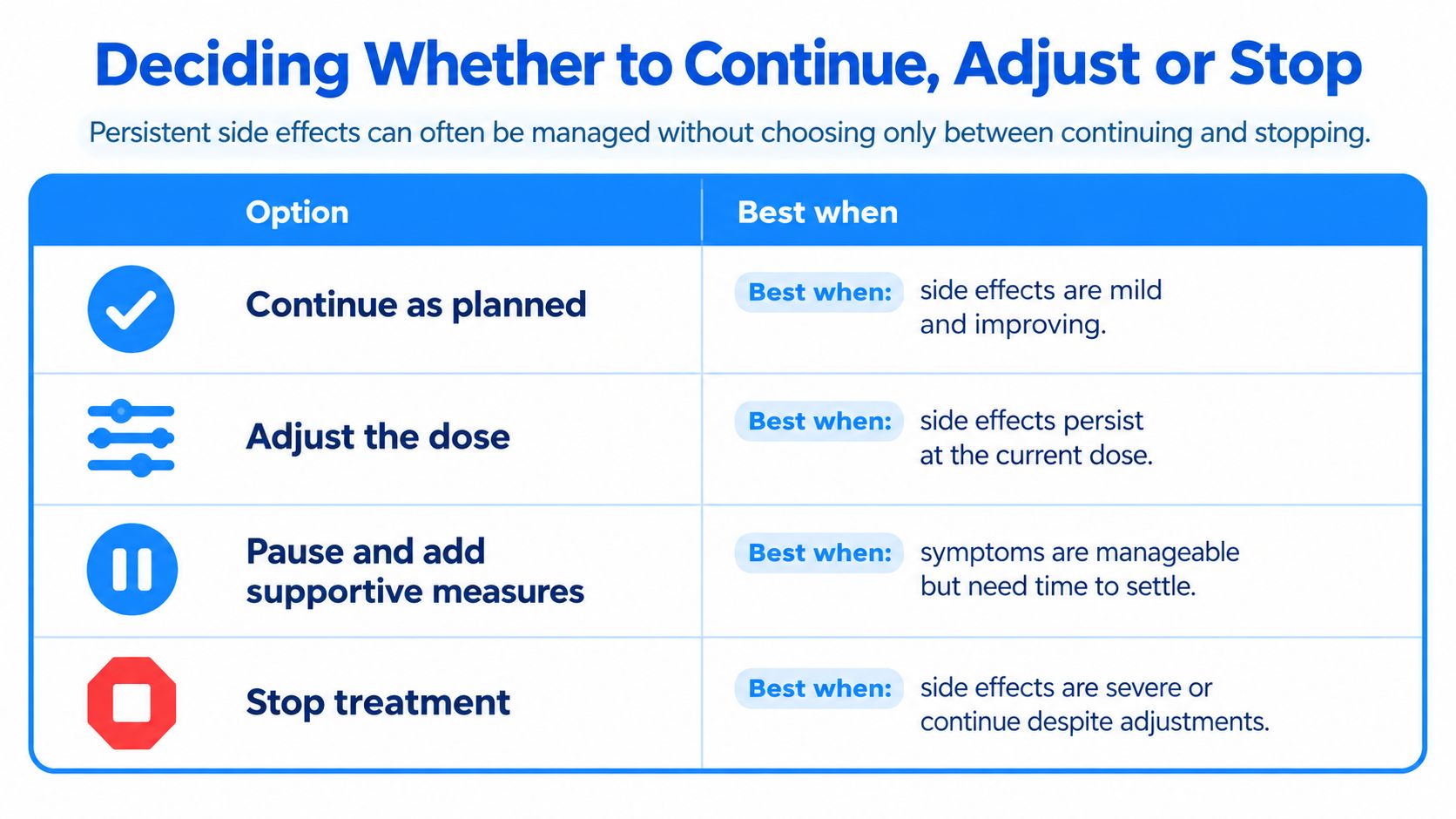
Persistent side effects do not always require stopping treatment. The right response depends on symptom severity, whether symptoms are improving, and how well you can maintain fluid intake and daily activities. A prescriber can help choose among these options:
Options for persistent side effects
| Option | When Prescribers Consider It | What It Involves | What to Watch For |
|---|---|---|---|
| Continue as scheduled | Mild symptoms are improving and fluid intake is adequate | Keep the prescribed dose and maintain a symptom log | Symptoms returning or worsening after an increase |
| Hold the dose | Active vomiting, diarrhea, or poor intake | Pause escalation; the prescriber determines whether an injection should also be delayed | Duration of the hold and explicit restart instructions |
| Slow titration | Symptoms follow dose increases | Extend the interval before another increase | Whether tolerability improves during the agreed review interval |
| Reduce the dose | Current dose is intolerable | Return to a lower dose if clinically appropriate | Appetite, intake, and weight changes |
| Discontinue | Serious adverse event or persistent intolerance | Stop under clinical supervision | Ongoing symptoms and possible appetite or weight return |
| Switch therapy | Intolerance persists and another agent is appropriate | Change medications under a new prescribing plan | Different adverse effects and monitoring requirements |
In key Zepbound trials, permanent discontinuation for adverse reactions ranged from 4.8% to 6.7%, compared with 3.4% with placebo, according to the FDA prescribing information. Stopping because side effects persist can be part of a clinically appropriate treatment decision.
Persistence isn't the same as tolerability
A 2025 nationwide Danish study summarized by Medscape found that 52% of adults without diabetes who began semaglutide for weight loss discontinued within one year, with discontinuation reaching 18% at three months, 31% at six months, and 42% at nine months. These figures describe discontinuation, not how many people stopped because of side effects.
Changing a treatment plan is different from stopping clinical follow-up. Dose reduction, slower titration, a temporary pause, and switching each involve distinct instructions. After missed doses, ask the prescriber whether reassessment is needed before restarting at the previous dose.
Decision principle: Treatment should remain tolerable enough to support hydration, nutrition, and normal daily function.
Preparing for the clinical decision
After stopping, delayed stomach emptying symptoms may continue for a time, and appetite or weight may return. Discuss expected treatment timing, including how long semaglutide takes to work, alongside side effects. Do not use expectations about timing as a reason to push through worsening symptoms.
Bring a symptom log and current medication list to the next appointment, along with the product label and details of any missed or uncertain doses. A provider can use this information to assess the next treatment step through an individualized clinical consultation.
Vials + Vitals offers physician-directed telehealth assessment and individualized weight-management prescribing, including titration oversight. Adults considering treatment or experiencing persistent intolerance can begin a clinical intake to discuss medication history, hydration, and dose-related symptoms with a licensed U.S. provider.
Prescription treatments and compounded formulations are prescribed at the clinical discretion of licensed U.S. healthcare providers. Compounded medications are assessed by a licensed provider for individual suitability and fulfilled by state-licensed partner compounding pharmacies.