Zepbound Vials vs Pens: A Clinical Guide to Choosing
Zepbound vials vs pens compared on dosing, storage, needle aversion, and access. An evidence-based guide to choosing the right tirzepatide presentation.

A prescription arrives, the pharmacy bag opens on a kitchen counter, and the contents don't match expectations. Instead of a ready to use pen, there's a small glass vial, separate syringes, and a set of instructions that assume confidence with drawing up a dose. That moment, repeated in homes every week, is where the Zepbound Vials vs Pens decision stops being abstract.
Why the Vial Versus Pen Question Matters
The patient at that counter isn't questioning the medicine. The uncertainty is procedural. A vial asks for a steady hand, a correct syringe, and an accurate reading of a barrel marking before any injection happens. A pen asks for something different, a firm placement against skin and the grip strength to actuate a device correctly.
That distinction shapes adherence from the first week. A patient who dreads preparation may delay a dose, rush a measurement, or avoid asking for help. A patient who can't actuate a pen reliably faces a different barrier, one that convenience marketing rarely mentions.
A Workflow Decision, Not a Medicine Decision
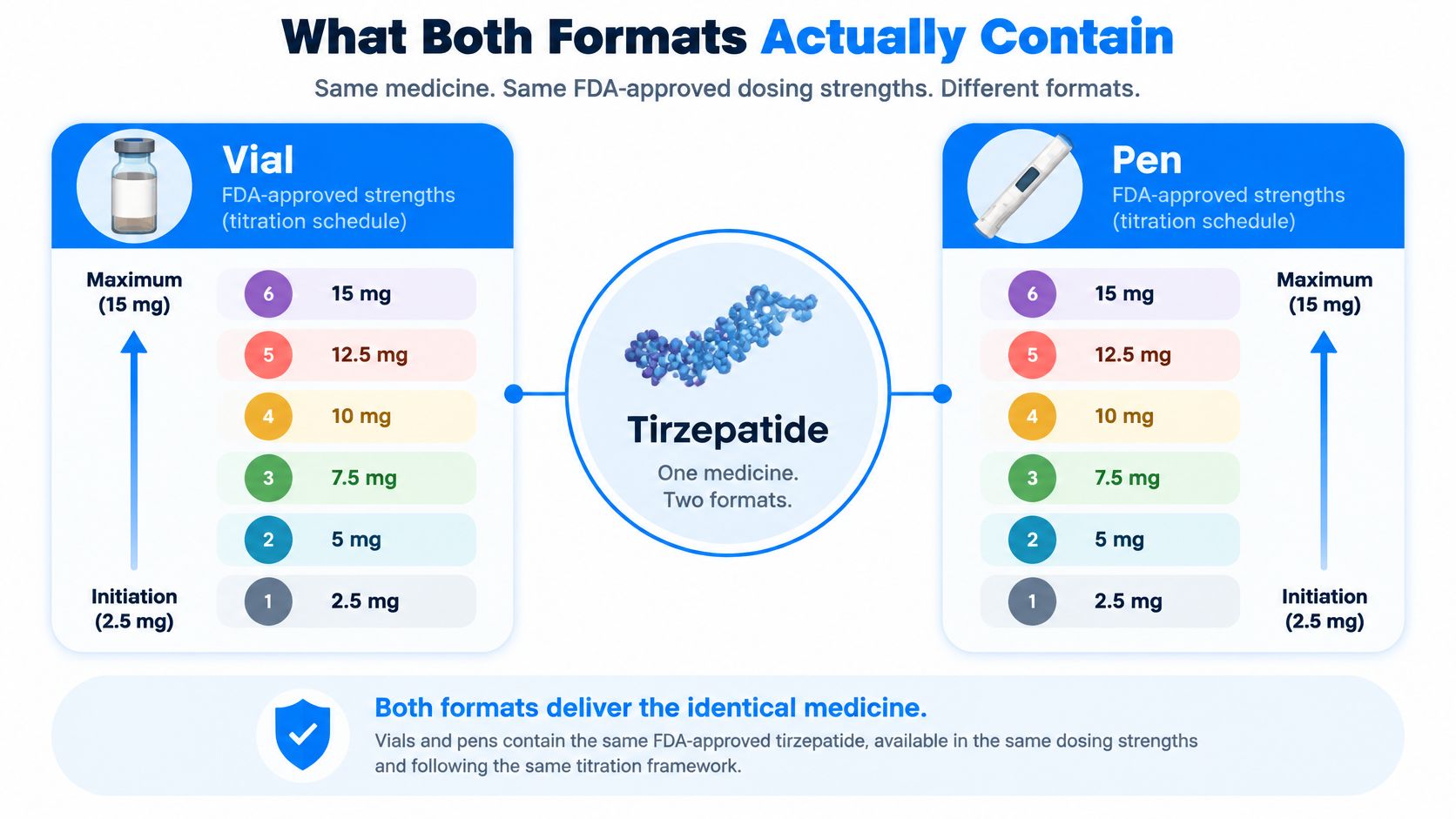
Both presentations deliver the same treatment. FDA approved labeling for the six shared tirzepatide strengths confirms that vials and pens provide once weekly subcutaneous tirzepatide across 2.5 mg, 5 mg, 7.5 mg, 10 mg, 12.5 mg, and 15 mg. The molecule, schedule, and route don't change with the container.
What changes is who performs each step and where errors can enter. Pens consolidate medication and delivery into one prefilled device. Vials separate the medication container from the injection device, and injection supplies aren't included with the vial.
- Preparation burden: Vial users draw up each dose. Pen users don't.
- Equipment burden: Vial users manage syringes, needles, and extra sharps disposal.
- Training burden: Each format requires its own demonstrated technique before the first dose.
Framing the choice this way prevents a common mistake. Patients sometimes assume a vial works differently, lasts differently, or permits personal dose adjustment. None of those assumptions follows from the labeling, and each one can lead to unsafe improvisation at home.
The clinically useful question isn't which format is easier in general. It's which format a specific patient can use accurately, every week, without workarounds.
That framing also sets honest expectations for prescribers. A format recommendation made without asking about vision, dexterity, caregiver support, and storage is incomplete. The device in the hand matters because the hand, the eyes, and the home environment differ from patient to patient.
What Both Formats Actually Contain
Strip away the packaging and the two formats converge. Each contains tirzepatide, a dual incretin therapy given under the skin once weekly. Each follows the same titration ladder, and each is dispensed at a labeled strength rather than as a flexible volume for patient directed adjustment.
The strengths span a 6 fold range from initiation to maximum. Labeling identifies 2.5 mg as an initiation dose, not a maintenance dose. Maintenance doses for weight reduction are listed as 5 mg, 10 mg, or 15 mg, with intermediate strengths supporting gradual escalation.
The Shared Titration Framework
Treatment starts at 2.5 mg once weekly, then increases to 5 mg after four weeks. Subsequent increases occur in 2.5 mg steps, and only after at least four weeks at the current dose. FDA labeling describing the shared dose escalation schedule applies that framework to both presentations without distinction.
Switching formats mid treatment therefore doesn't reset titration. A patient moving from vial to pen at the same strength continues the same pharmacologic exposure, provided the dose is administered correctly. The prescriber changes the presentation on the prescription, not the underlying schedule.
- Initiation: 2.5 mg weekly, intended to support tolerability rather than maintenance effect.
- Escalation: 2.5 mg increments, spaced by at least four weeks each.
- Maintenance: 5 mg, 10 mg, or 15 mg, selected by response and tolerability.
Efficacy evidence attaches to the administered dose and to adherence, not to the container. In a 72 week randomized trial, participants receiving maximum tolerated tirzepatide doses of 10 or 15 mg weekly achieved a least squares mean weight change of -20.2%, compared with -13.7% for maximum tolerated semaglutide doses, as reported in the randomized tirzepatide versus semaglutide trial. Gastrointestinal adverse events were most common in both groups and occurred mainly during dose escalation.
That evidence carries a practical implication. Debates about which format "works better" miss the mechanism. A correctly measured vial dose and a correctly delivered pen dose at the same strength are the same intervention, and outcomes diverge only when administration or adherence breaks down.
Head-to-Head Comparison of Administration Workflow
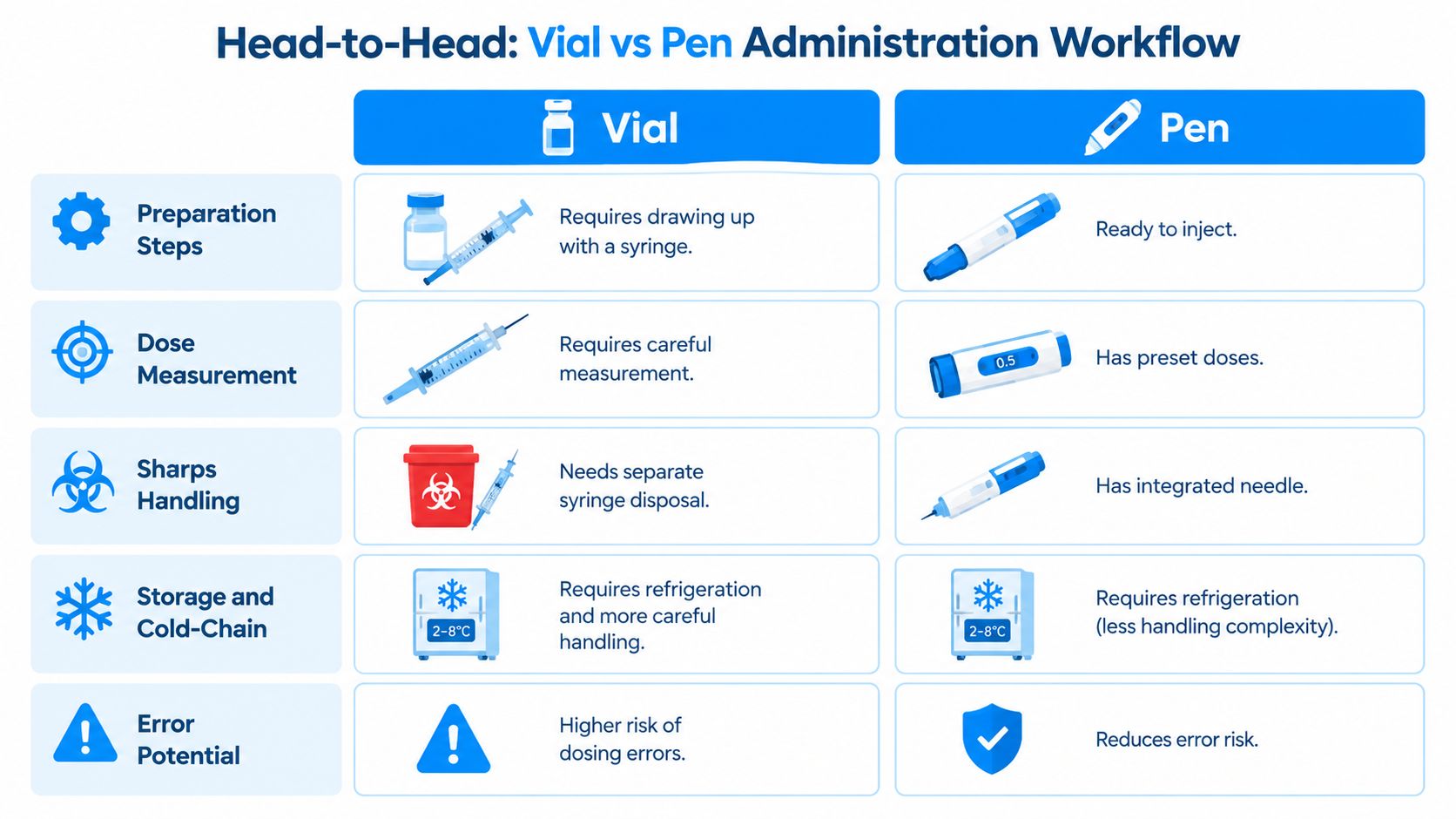
The workflow gap between formats is concrete and measurable in steps. A pen arrives prefilled at a fixed dose, so preparation centers on site selection, device placement, and actuation. A vial arrives as medication only, so preparation adds syringe selection, dose withdrawal, air bubble management, and needle handling before injection begins.
FDA labeling on the delivery system difference between pens and vials identifies the pen as an integrated, prefilled, single dose device. The vial, by contrast, requires the patient or caregiver to draw the prescribed dose into a syringe. That single added step creates most of the practical divergence between formats.
Vial Versus Pen Side-by-Side on Practical Criteria
| Criterion | Single-Dose Vial | Prefilled Pen |
|---|---|---|
| Preparation steps | Draw dose into a separate syringe | No drawing step, device is prefilled |
| Dose measurement | Patient reads syringe markings against prescribed volume | Fixed dose set by the device |
| Supplies required | Syringe and needle obtained separately | Integrated in one device |
| Sharps handling | Syringe, needle, and vial require disposal | Whole device enters sharps container |
| Error points | Measurement, incomplete withdrawal, contamination | Placement and actuation errors |
| Training focus | Drawing technique and barrel reading | Device positioning and completion checks |
Dose measurement deserves particular attention. Vial users must match the syringe to the prescribed concentration and read the correct calibration scale. Converting milligrams to syringe units without the prescriber or dispensing pharmacy specifying concentration and volume invites serious dosing errors, and patients should never attempt that conversion independently.
Where Errors Actually Enter
Pen design removes measurement error but doesn't remove error entirely. A pen lifted too early, placed at a poor angle, or actuated incompletely can underdeliver a dose. The failure mode shifts from arithmetic and eyesight to grip, pressure, and patience during the injection hold.
- Incorrect syringe measurement: Reading the wrong line or scale on the barrel.
- Incomplete vial withdrawal: Leaving part of the dose behind in the vial.
- Needle handling problems: Bending, touching, or reusing a needle that should be new.
- Contamination: Extra handling steps create extra contact opportunities.
Storage demands overlap more than marketing suggests. Both formats are temperature sensitive products that depend on intact cold chain handling from pharmacy to home refrigerator. Vials add a secondary storage problem, since syringes and needles must also be stocked, kept clean, and matched to the prescription.
Single dose discipline applies to both. A single dose vial is discarded after one use, and a single dose pen is discarded after one injection. Confusing either format with multi dose presentations creates reuse and storage errors that training should address explicitly before dispensing.
When Each Format Fails the Patient
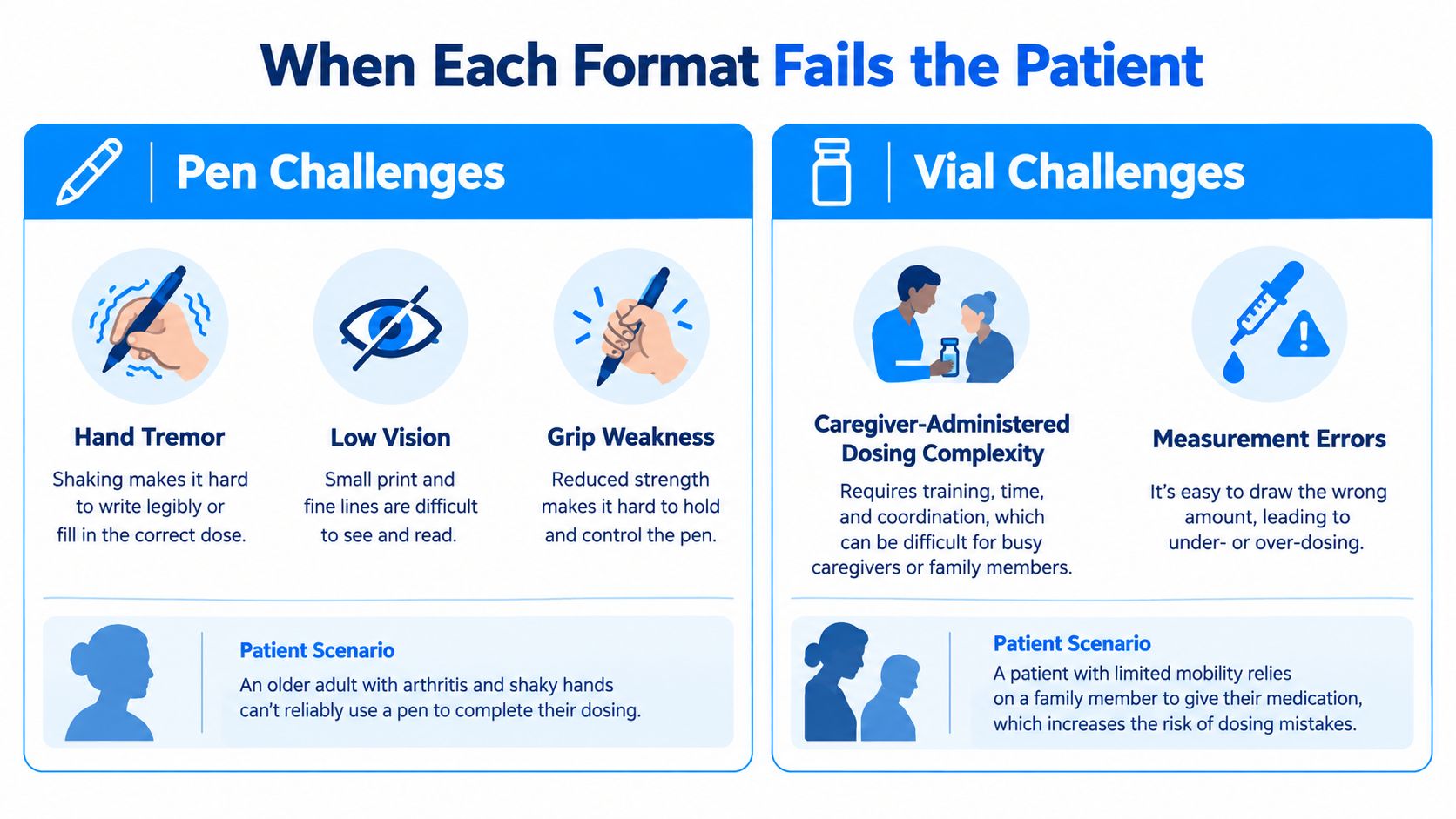
Convenience claims collapse under specific patient profiles. A pen described as effortless in a brochure can defeat a patient with weak grip strength who can't complete the actuation sequence. A vial described as simple by an experienced injector can defeat a patient with low vision who can't read barrel markings reliably.
FDA labeling directing clinicians to confirm and train on the specific presentation states that clinicians should confirm which presentation the patient receives and provide training for that presentation. That instruction reflects a regulatory position worth noting. Neither format is treated as categorically safer, and training isn't interchangeable between them.
Profiles Where the Pen Struggles
Grip weakness and limited dexterity sit at the top of this list. Unlocking, positioning, and pressing a pen while holding it steady against skin requires coordinated hand function. Arthritis, neuropathy, or post surgical limitations can make that sequence unreliable even when the patient understands it perfectly.
Hand tremor creates a related problem. A device that must stay flat and still during delivery penalizes involuntary movement. Some patients compensate well with bracing techniques, but compensation should be demonstrated in training rather than assumed.
Profiles Where the Vial Struggles
Low vision undermines every vial step that depends on reading small markings and inspecting liquid clarity. Tremor compounds the risk during withdrawal, when a needle must stay in the vial stopper and a plunger must stop at an exact line. Patients without prior injection experience face the steepest learning curve here.
Human factors rule: A format fails when its critical step depends on the exact ability the patient lacks, whether that's eyesight for a syringe barrel or grip strength for a pen.
Caregiver administered dosing reverses some assumptions. A confident caregiver may prefer a vial because drawing up is a familiar, controllable process. Separating the medication container from the injection device can suit households where one person prepares and another receives.
Travel exposes different weaknesses. Pens travel as self contained units, while vials travel with loose syringes that require protection and discreet disposal planning. Either format fails quickly when refrigeration access disappears, so itinerary realities belong in the format conversation.
Matching the Format to the Patient Profile
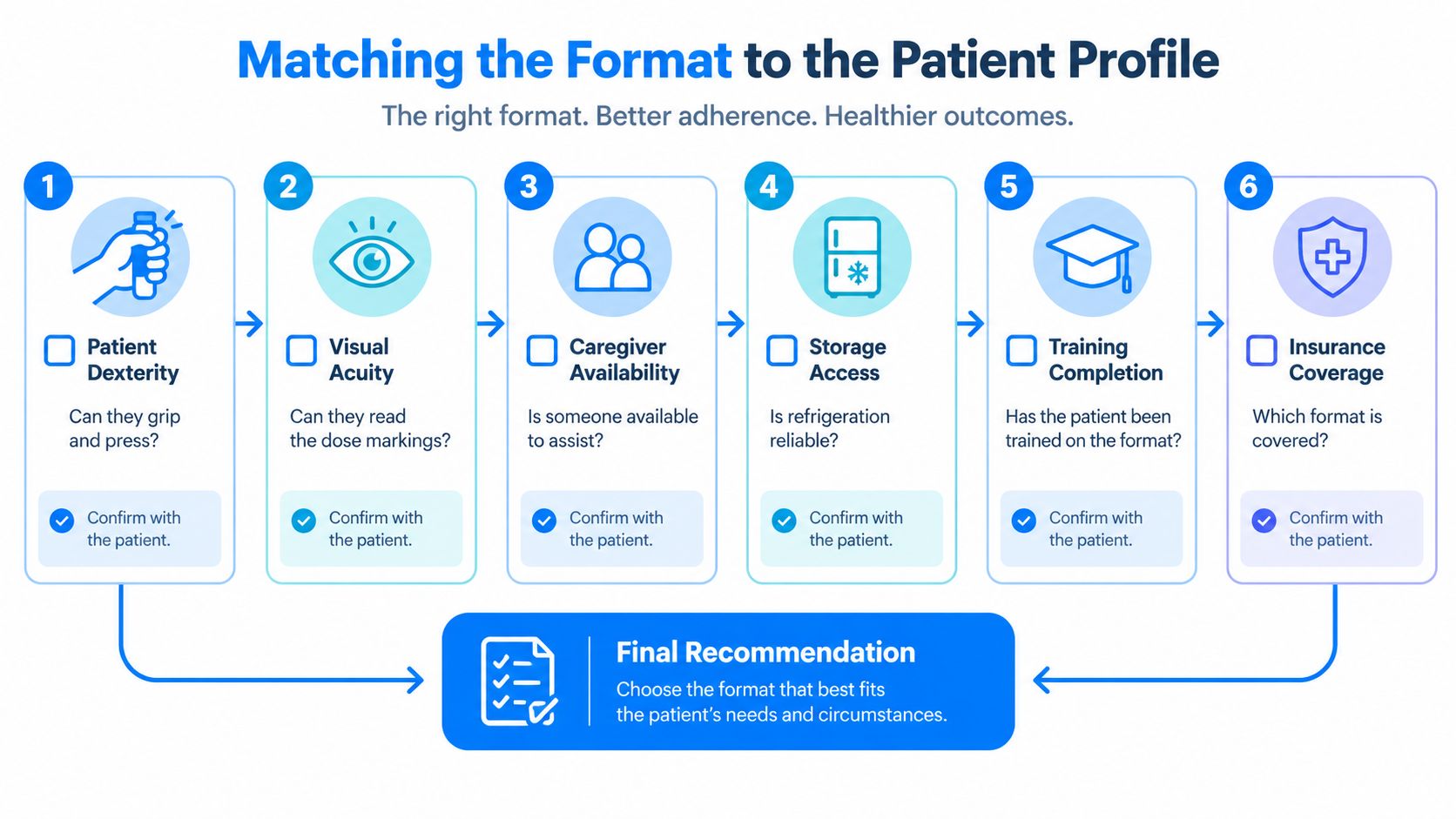
A structured assessment converts the comparison into a defensible clinical decision. Prescribers who work through capability, environment, and support questions before dispensing prevent most format failures. The assessment takes minutes and costs far less than a month of missed or mishandled doses.
Metabolic context matters alongside device capability. Patients managing glycemic targets alongside weight reduction benefit from understanding how titration, adherence, and monitoring connect, a relationship explored in guidance on reducing HbA1c levels through structured metabolic care. Device choice supports that larger plan only when weekly administration stays consistent.
A Prescriber Checklist Before Dispensing
- Dexterity and grip: Can the patient hold, operate, and actuate a pen, or manipulate a syringe plunger accurately?
- Visual acuity: Can the patient read syringe markings and inspect the liquid, or read a pen dose window?
- Caregiver availability: Will another person prepare or administer doses, and has that person been trained?
- Injection experience: Has the patient used syringes or pen devices before, and with what success?
- Storage access: Is refrigeration reliable at home, at work, and during travel?
- Training completion: Has technique been demonstrated and observed for the exact presentation dispensed?
Answers rarely point unanimously in one direction. A patient with strong vision, prior syringe experience, and a trained caregiver may well be served by vials. A patient with needle aversion and no injection history usually needs the fewest possible preparation steps, or a different conversation entirely.
Monitoring obligations continue after format selection. Substantial, rapid weight loss warrants attention to downstream effects, including hair shedding evaluated as telogen effluvium. A systematic review of hair loss patterns associated with GLP-1 therapies identified telogen effluvium and androgenetic alopecia as the predominant reported patterns, with rapid weight loss proposed as an important contributor.
That monitoring lens reinforces the format decision's real stakes. Consistent, accurate dosing produces the weight trajectory that clinicians then manage, including nutritional review when shedding appears. Erratic administration muddies every downstream clinical signal, from appetite response to hair retention.
Cost, Coverage, and Channel Realities
Assumptions about vials being cheaper deserve direct scrutiny. Pricing for Zepbound Vials vs Pens depends on dispensing channel, dose strength, payer recognition, and launch timing. The device itself explains less of the final cost than patients typically expect.
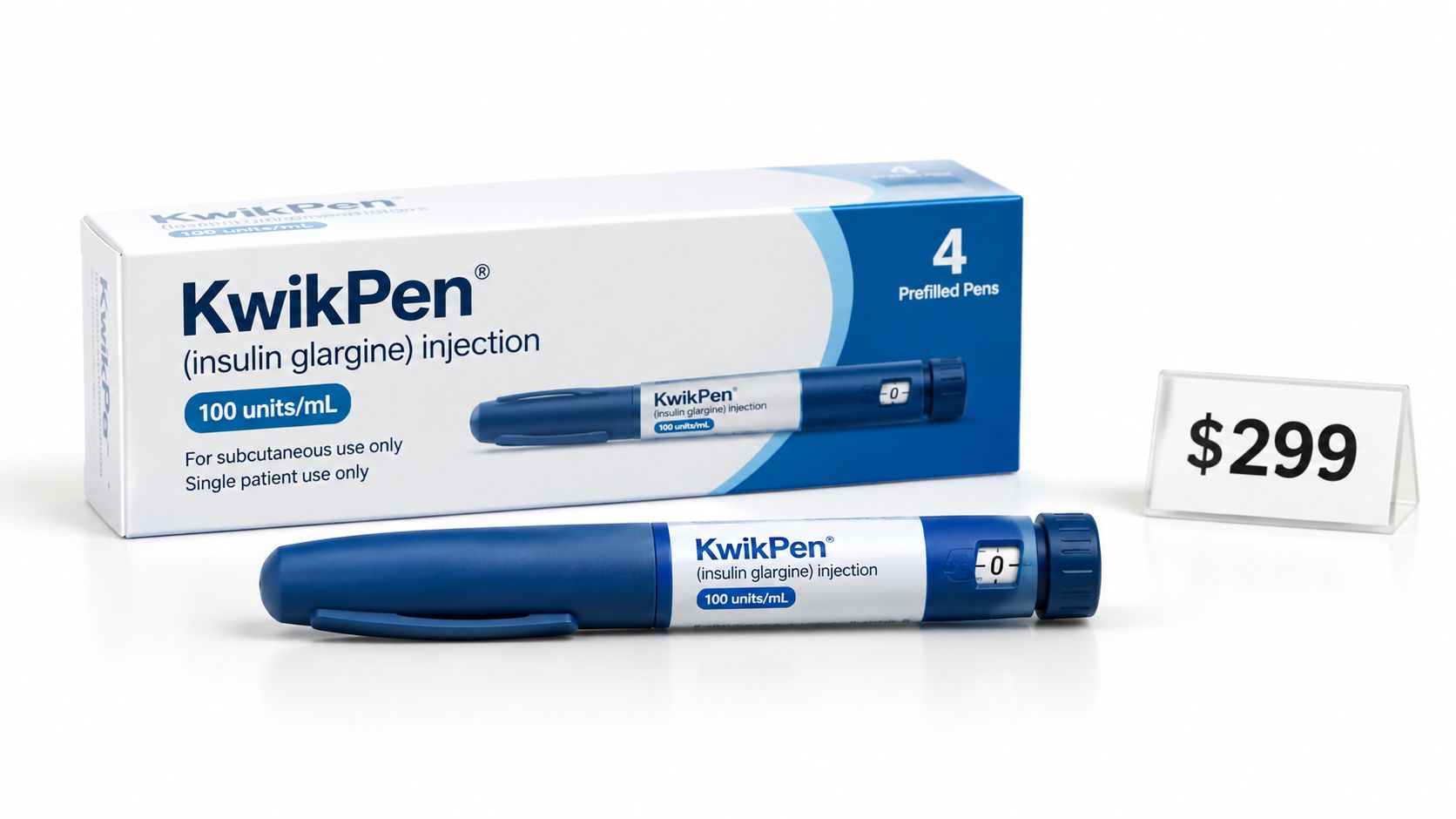
The product lineup keeps shifting that calculation. A four dose, single patient use KwikPen entered the lineup in 2026, adding a multi dose pen option alongside single dose vials and single dose pens. Each new presentation requires its own prescription, pharmacy stocking decision, and payer recognition before patients can reliably obtain it.
What the Pricing Evidence Actually Shows
For the self pay channel, KwikPen and single dose vials were offered at the same starting price of $299 for the 2.5 mg dose, with initial availability limited to LillyDirect. FDA supply information also states that Zepbound vial products had never been on the shortage list, and that the ability to meet demand for all strengths was reported as of August 2, 2024.
Those two facts dismantle the standard narrative. Vials weren't priced below the newer pen at that starting strength, and vial availability carried its own documented track record. Patients comparing formats on cost alone need current, channel specific figures rather than inherited assumptions.
- Exact presentation: Single dose vial, single dose pen, and multi dose pen aren't interchangeable at the pharmacy counter.
- Dispensing channel: Self pay direct channels and retail pharmacies may stock different presentations at different prices.
- Hidden supplies: Vial users should confirm syringe and needle costs, since those aren't included.
- Refill policy: Monthly quantity and refill timing can differ by presentation and payer.
Cold chain integrity adds a logistical cost dimension patients overlook. Temperature sensitive medication shipped to a home depends on packaging, transit time, and prompt refrigeration on arrival, considerations detailed in guidance on cold chain shipping for temperature sensitive therapies. A lower sticker price loses meaning if a shipment sits unrefrigerated on a porch.
Situational Recommendations for Real Patients
Recommendations hold up only when anchored to recognizable situations. The profiles below synthesize capability, workflow, and access factors into starting points for a prescriber conversation. None of them overrides individualized clinical judgment, and each assumes training on the exact presentation dispensed.
Experienced Self Injectors
Patients with prior syringe experience often handle vials without difficulty and sometimes prefer the control drawing up provides. Familiar technique, good vision, and established sharps routines neutralize the vial's main disadvantages. For this group, format selection can reasonably follow channel pricing and availability.
Confidence still requires verification. Experience with other injectable therapies doesn't guarantee correct volume reading for a specific concentration. A brief observed demonstration at initiation protects against habits transferred from different products.
First Time Users Without Support
New injectors living alone generally benefit from the fewest preparation steps. A prefilled pen removes measurement, withdrawal, and syringe sourcing from an already unfamiliar routine. Early adherence matters disproportionately, because titration schedules assume consistent weekly dosing from the start.
- First doses: Prioritize the format the patient can demonstrate correctly in training.
- Early follow up: Confirm technique again after the first home injection, not months later.
- Escalation points: Recheck confidence at each strength change, when routines feel new again.
Caregiver Administered Dosing
Households with a trained caregiver gain flexibility. Vials become practical when the person drawing up has steady hands and good vision, even if the patient doesn't. Pens remain reasonable when the caregiver prefers a fixed dose device and can manage placement and actuation on another person's injection site.
Training must include the caregiver directly. Secondhand instruction, where the patient relays pharmacy teaching at home, degrades quickly. Documentation should name who administers, who was trained, and which presentation that training covered.
Format loyalty helps no one. The correct presentation is the one the actual administrator, patient or caregiver, performs accurately under real home conditions.
Needle Aversion and Travel Demands
Needle averse patients need honesty about what each format shows and hides. Pens keep the needle out of view, while vials require sustained visual engagement with a syringe. For some patients, that distinction determines whether treatment starts at all, and needle free sublingual alternatives within a physician directed protocol may warrant discussion.
Frequent travelers should weigh self contained convenience against supply management. Pens simplify packing, while vials demand protected syringe transport and disposal planning away from home. Both formats require refrigeration planning that honest itinerary review should surface early.
Plateaus complicate format decisions less than patients fear. When weight loss stalls, the clinical response centers on dose, adherence verification, nutrition, and metabolic adaptation, themes addressed in guidance on navigating a GLP-1 weight loss plateau. Switching containers doesn't break a plateau. Confirming that every dose was measured and delivered correctly is the more productive first step.
Across every profile, three safeguards remain constant. Prescribers confirm the exact presentation and strength before dispensing. Pharmacies train on that presentation specifically, with the actual administrator present when possible. Patients verify channel, pricing, supplies, and refill terms before the first dispense, then revisit the decision whenever capability, support, or coverage changes.
Patients weighing Zepbound Vials vs Pens deserve a format decision built on assessed capability, verified pricing, and physician directed titration rather than assumptions. Vials + Vitals offers online clinical assessment by U.S. licensed providers, protocol driven GLP-1 care with individualized titration oversight, and fulfillment through accredited U.S. pharmacies with discreet, temperature controlled delivery. Adults ready to match a delivery format to their actual profile can begin with a confidential clinical assessment and confirm presentation, channel, and cost before the first dose ships.