Reducing HbA1c Levels a Clinician-Guided Plan That Works
Clinician-guided strategies for reducing HbA1c levels safely, covering GLP-1s, lifestyle changes, monitoring, and titration guardrails. Evidence-based
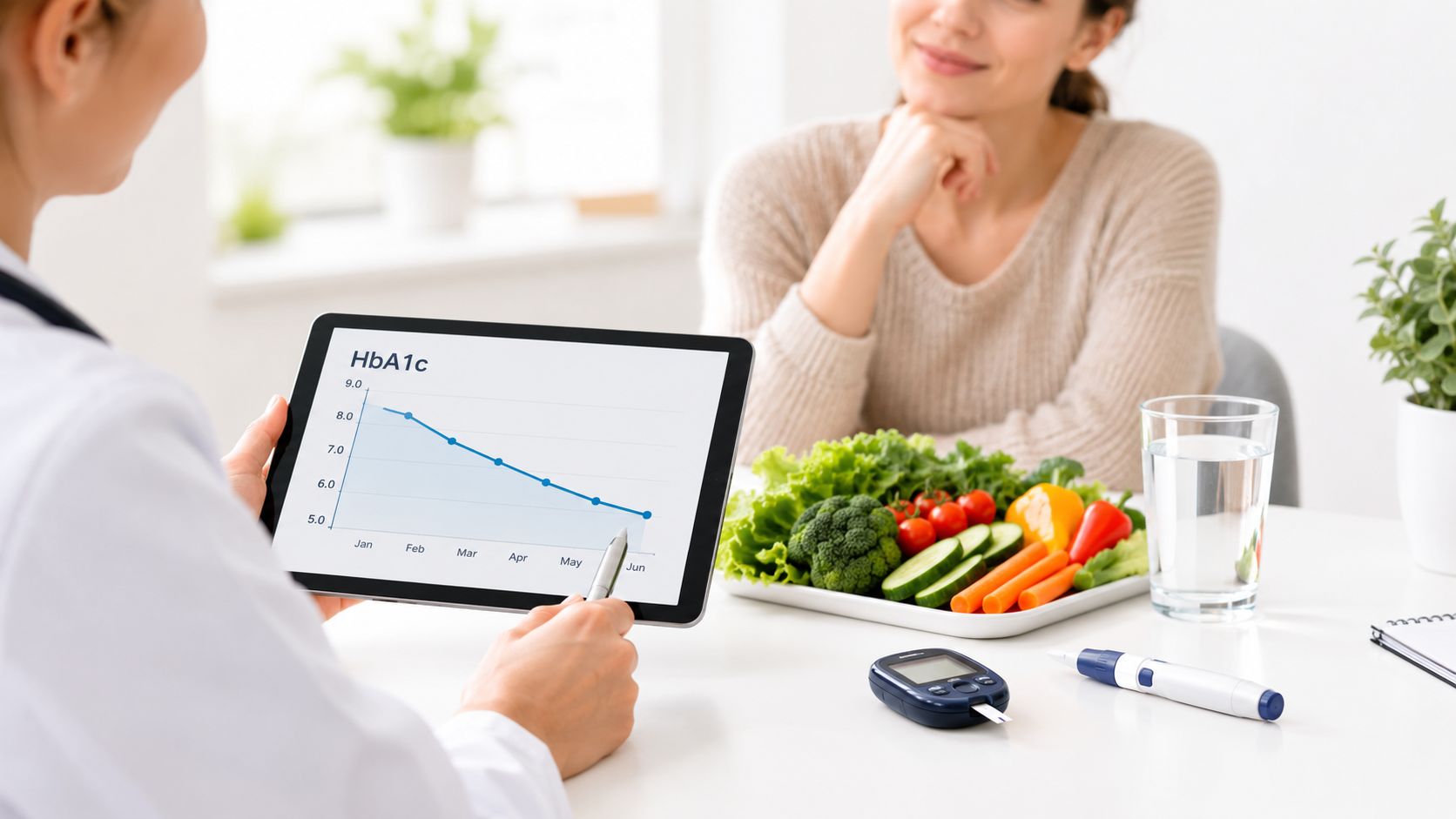
A patient may arrive at a follow-up visit with a lower HbA1c and still be having overnight lows, or with a stubbornly high result despite improving daily glucose readings. Both situations call for more than a verdict on one lab value. Reducing HbA1c levels safely means interpreting the result alongside glucose patterns, health conditions, medications, and the patient's priorities.
The aim isn't to chase the lowest possible number. It's to choose a clinically appropriate target, make changes that can be sustained, and monitor for both benefit and harm.
What HbA1c Actually Measures and Why the Number Alone Is Not the Goal
HbA1c reflects average glycemic exposure over roughly the preceding two to three months. It's useful for tracking longer-term glucose management, but it doesn't reveal when glucose rose or fell, how much it fluctuated, or whether the person experienced hypoglycemia. A daily glucose reading and an HbA1c answer different questions, so clinicians interpret them together.
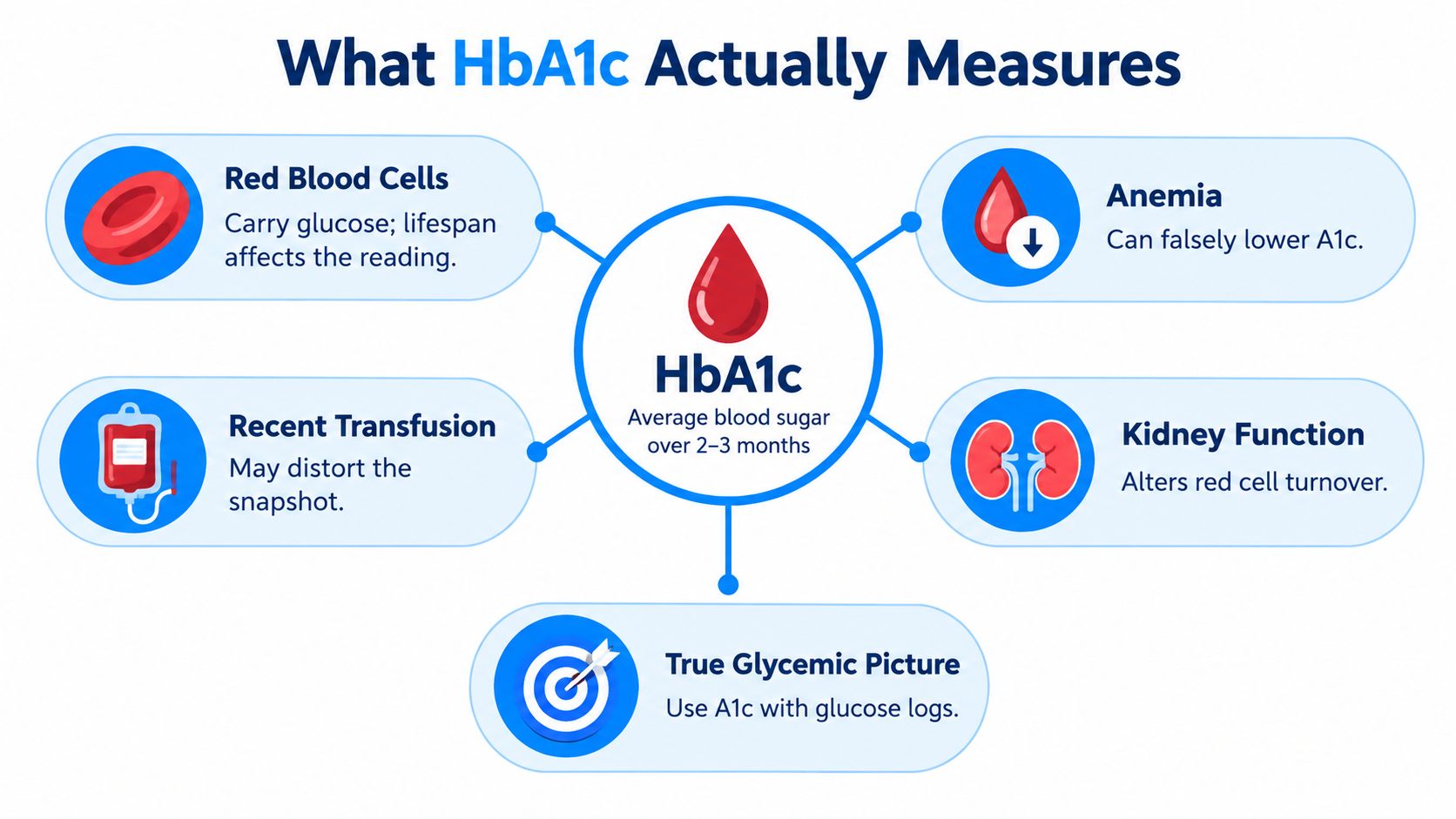
The measurement also depends on red blood cells. Anemia, a recent transfusion, altered red-cell turnover, kidney disease, or acute illness can make an HbA1c less representative of current glucose exposure. If the lab result doesn't fit the person's home readings or symptoms, a clinician should investigate the mismatch rather than intensify treatment based on the number alone.
The Diabetes Control and Complications Trial showed why sustained glucose improvement matters in type 1 diabetes. Over approximately 6.5 years, intensive therapy maintained median HbA1c near 7%, compared with about 9% under conventional treatment; the intensive approach reduced the risk of developing retinopathy by 76% among participants with diabetes for less than five years and reduced retinopathy progression by 54% among those with existing retinal disease. It also reduced the development of kidney disease by 43% and nerve disease by 57%, findings reported in the DCCT summary. The trial tested intensive management, not a single modern medicine or telehealth protocol.
Four parts of a safer plan
A practical plan starts by checking the baseline result and whether it fits glucose data. Next, the clinician and patient set an individualized target. They then choose or adjust evidence-based therapy, which may include a GLP-1 medicine or dual incretin when clinically appropriate, alongside nutrition and activity changes. Finally, they monitor the response and treatment burden, adjusting when the data or side effects call for it.
Clinical takeaway: HbA1c is one part of the decision loop. It can guide care, but it can't replace glucose monitoring or clinical context.
Why Lower Is Not Always Better and How to Set a Realistic Target
A target below 7% is often appropriate for many nonpregnant adults with diabetes, but it isn't a universal finish line. The right goal depends on how likely treatment is to prevent complications compared with the risks and burdens it creates. A lower HbA1c achieved through repeated hypoglycemia may be worse care than a less aggressive target that keeps glucose safer and treatment manageable.
For otherwise healthy older adults, 2025 American Diabetes Association guidance describes an HbA1c goal below 7.0–7.5% as reasonable. For people with frailty, substantial comorbidities, cognitive or functional limitations, or greater risk of medication-related hypoglycemia, a goal below 8.0% may be safer. The same guidance prioritizes avoiding hypoglycemia and symptomatic hyperglycemia over pursuing a stringent numerical target in people with complex health needs, as outlined in the ADA guidance for older adults.
Factors that shape the target
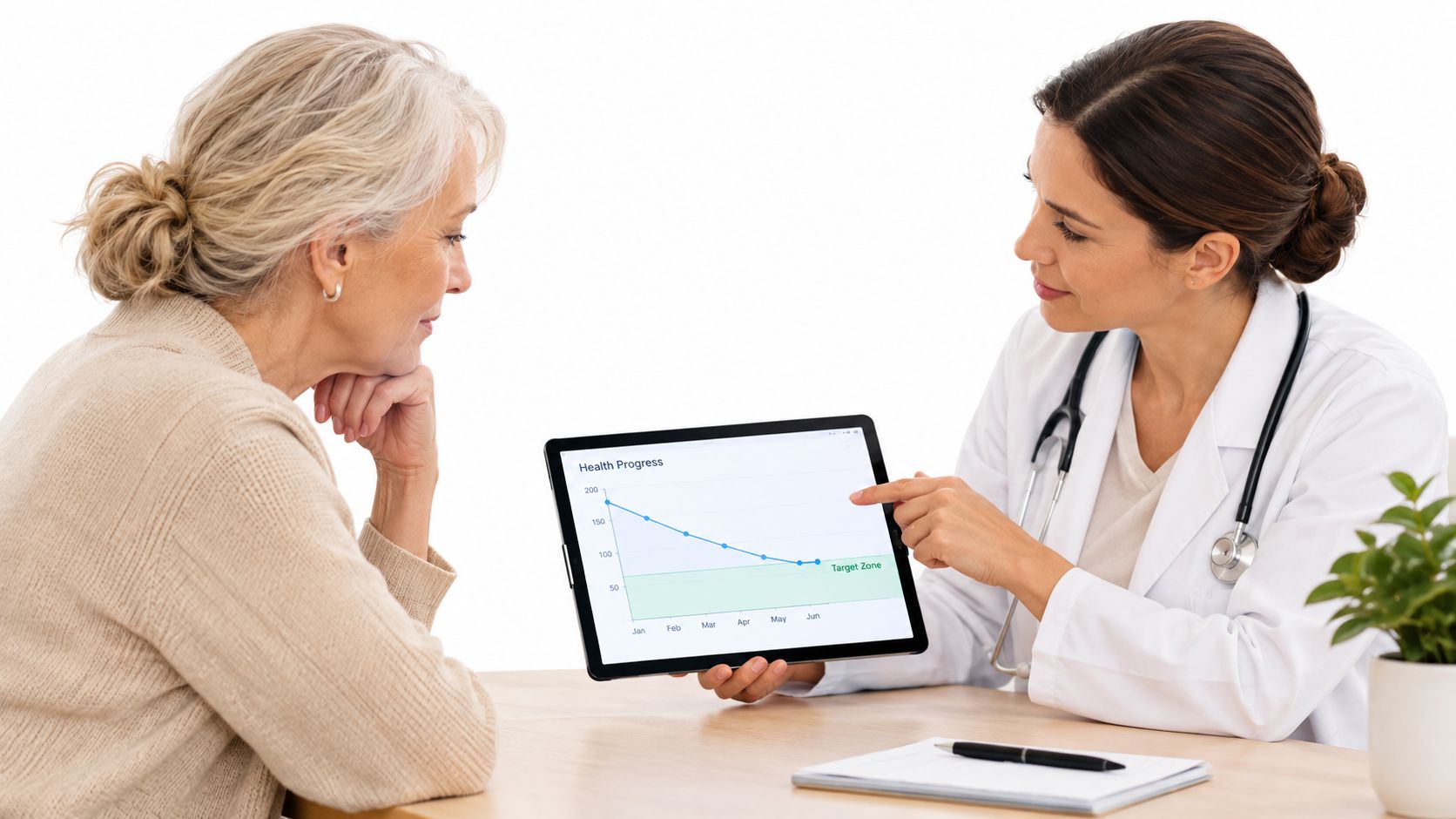
Age matters, but it doesn't determine the goal by itself. Kidney function, other health conditions, life expectancy, the medications in use, and the patient's preferences all influence the balance of benefit and risk. Insulin and sulfonylureas, for example, make hypoglycemia risk an important part of any plan to intensify glucose lowering.
Continuous glucose monitoring can add useful context. For healthier older adults, ADA guidance cites roughly 70% of readings in the 70–180 mg/dL range, while people with complex health needs may have a lower appropriate time-in-range target and tighter limits on hypoglycemia. These patterns help show whether a lower average reflects steadier glucose or a mix of highs and unsafe lows.
The United Kingdom Prospective Diabetes Study also showed that intensive glucose-lowering therapy in newly diagnosed type 2 diabetes achieved a median HbA1c of 7.0%, compared with 7.9% under conventional, primarily diet-based care, and reduced microvascular complications by 25%. Its UKPDS overview supports the value of glucose management, not a single target for every patient.
A good target is one that reduces meaningful risk without creating avoidable harm.
The Clinician-Directed Assessment and Titration Loop
Medication changes work best when they follow an assessment rather than a guess. Before starting or intensifying treatment, a clinician reviews the patient's current HbA1c, renal function, glucose-lowering medicines, hypoglycemia risk, weight trajectory, and barriers such as cost, side effects, or difficulty following the schedule. This baseline helps determine what to change and what to monitor.
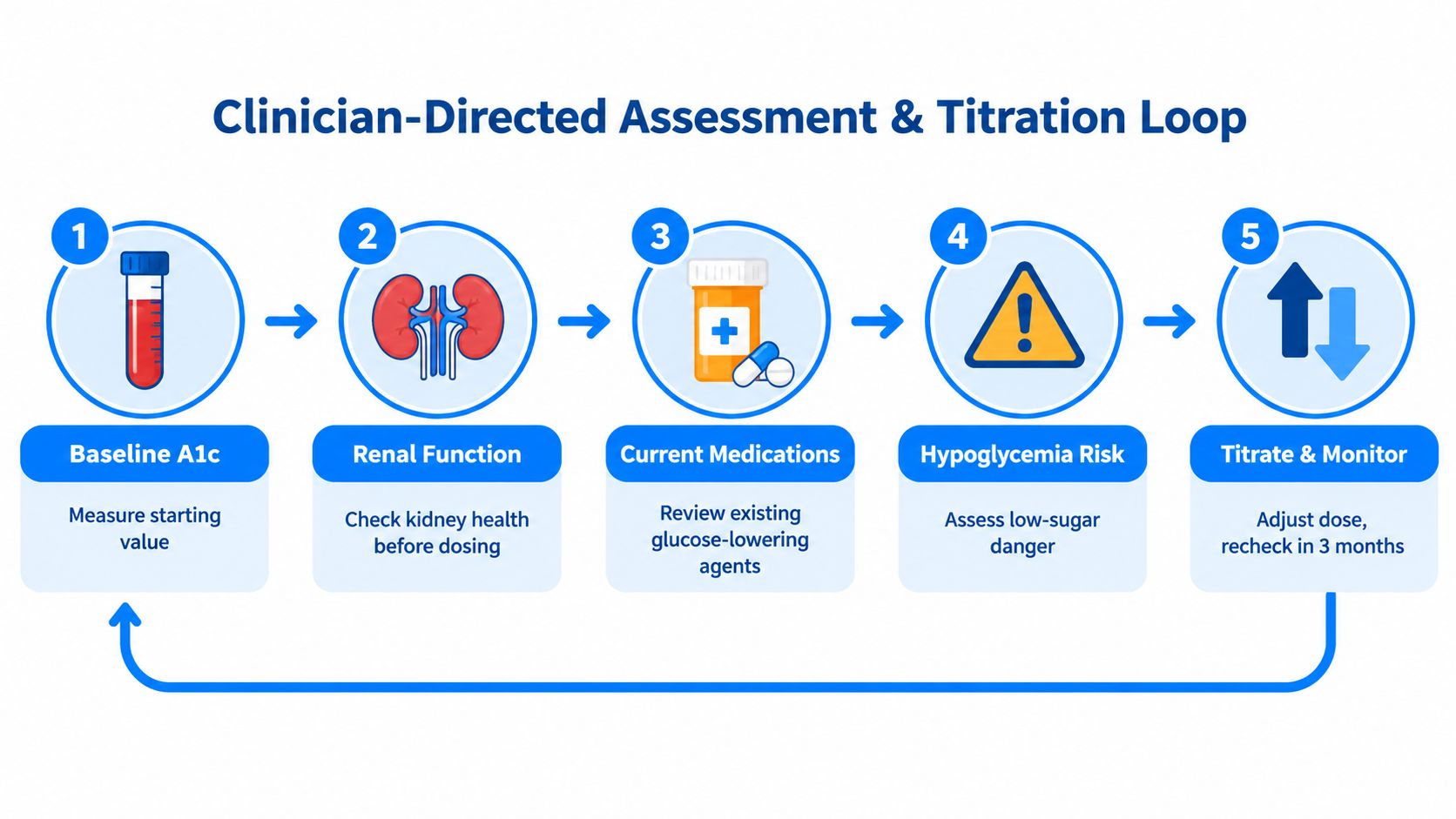
What the loop looks like in practice
The clinician and patient agree on a target, then choose a plan that fits the patient's health and preferences. That might mean adjusting an existing medicine, adding a new one, or addressing adherence and lifestyle barriers before changing medication. For people taking metformin, the timing and routine should fit the prescribed plan; a practical discussion of when to take metformin can help clarify questions to raise with the prescribing clinician.
Incretin medicines should be advanced according to the prescribed product's dose-escalation schedule. Escalating faster because early results seem modest can worsen gastrointestinal effects, undermine adherence, and obscure whether the current dose is helping. When an incretin is added to insulin or a sulfonylurea, the clinician should also reassess low-glucose risk and whether background therapy needs adjustment.
Reassessment typically includes adherence, adverse effects, fasting and post-meal glucose, and HbA1c about every three months during titration. That interval helps the clinician judge a developing response rather than overreacting to short-term glucose changes before HbA1c has had time to reflect them. If hypoglycemia or intolerable gastrointestinal symptoms emerge, de-intensification or a different approach may be safer than pressing ahead.
Patient role: Report missed doses, symptoms, appetite changes, and glucose patterns honestly. Those details help the clinician distinguish an ineffective regimen from one that needs a practical adjustment.
Comparing GLP-1 and Dual Incretin Options on Glycemic Outcomes
Semaglutide and tirzepatide can both lower HbA1c in type 2 diabetes, but trial averages don't predict an individual result. Baseline HbA1c, concurrent medicines, dose escalation, kidney function, adherence, diet, and prior exposure to GLP-1-based therapy all influence the response. Comparisons also depend on whether a result comes from a direct head-to-head trial or separate studies against placebo.
Across SURPASS trials, tirzepatide lowered HbA1c by approximately 1.5–2.3 percentage points; semaglutide trials in type 2 diabetes generally reported reductions of about 1.0–1.8 points, as summarized in this review of incretin therapy. In a network meta-analysis, estimated reductions versus placebo for tirzepatide were dose-related: 1.60 percentage points at 5 mg, 1.84 at 10 mg, and 1.96 at 15 mg. The corresponding semaglutide estimates were 1.09 points at 0.5 mg, 1.39 at 1.0 mg, and 1.59 at 2.0 mg, according to the systematic review and network meta-analysis.
| Therapy | Dose | Average HbA1c reduction | Key caveat |
|---|---|---|---|
| Tirzepatide | 5 mg | 1.60 percentage points versus placebo | Population average, not an individual guarantee |
| Tirzepatide | 10 mg | 1.84 percentage points versus placebo | Response depends on baseline and treatment context |
| Tirzepatide | 15 mg | 1.96 percentage points versus placebo | Requires prescribed dose escalation and clinical review |
| Semaglutide | 0.5 mg | 1.09 percentage points versus placebo | Estimate may not match another dose or population |
| Semaglutide | 1.0 mg | 1.39 percentage points versus placebo | Direct comparisons require matching trial conditions |
| Semaglutide | 2.0 mg | 1.59 percentage points versus placebo | Individual response and tolerability vary |
Direct comparison is not a universal ranking
In SURPASS-2, adults with type 2 diabetes receiving background metformin had HbA1c reductions of approximately 2.01% to 2.30% across tirzepatide doses, compared with 1.86% with semaglutide 1 mg, as summarized in a scholarly review of the head-to-head evidence. That result favors tirzepatide for average glycemic lowering in the trial population, but it doesn't establish that it's the right choice for every person. Tolerability, contraindications, other medications, pregnancy status, and treatment goals still matter.
Real-world response can be smaller, particularly after prior GLP-1-based treatment. A comparative analysis found average HbA1c reductions of 1.3% with tirzepatide and 0.9% with semaglutide among people new to GLP-1-based therapy, compared with 0.9% and 0.6%, respectively, among those with prior exposure. In that analysis, 67% of tirzepatide initiators reached an HbA1c of 6.5% or lower, while 30% reached below 5.7%; these are study results, not promised outcomes, as reported in the real-world comparative study.
Food choices remain part of the treatment picture, not a substitute for medication review or glucose monitoring. Readers looking for practical meal-planning context can explore nutrition for blood sugar control and bring questions about its suggestions to a clinician or dietitian.
Lifestyle Pillars That Reinforce Pharmacologic Lowering
Medication can support glycemic improvement, but daily routines affect whether that improvement is sustainable. The useful goal isn't a rigid diet or an exhausting exercise plan. It's a pattern that supports nutrition, activity, and treatment adherence while giving the care team enough glucose data to adjust the plan.

Build habits that can survive real life
An ADA-aligned eating pattern can include Mediterranean-style or lower-carbohydrate approaches, chosen according to health needs and personal preference. During obesity treatment, adequate protein and micronutrient intake matter, especially if appetite is reduced or gastrointestinal symptoms make eating difficult. A food plan should be sustainable and nutritionally adequate, not designed only to move the scale.
Activity works best when it progresses gradually. A combination of aerobic movement and resistance exercise supports a broader health plan, while starting at a manageable level can make consistency more realistic. If a medication causes nausea or reduced appetite, hydration and sufficient nutrition need attention rather than being treated as afterthoughts.
Sleep and routine also deserve clinical attention when they interfere with medication adherence, appetite, or glucose management. The patient and clinician can identify practical barriers, then select changes that fit the person's schedule and health.
Use glucose trends to check the plan
Home glucose monitoring or continuous glucose monitoring can help show how meals, activity, and medication affect glucose between lab visits. Reviewing those patterns alongside HbA1c during titration helps distinguish a durable improvement from an average that masks lows or substantial swings. Weight loss alone isn't proof that glucose management is adequate.
Adherence problems are easy to underestimate. A patient may be taking a medicine inconsistently because of side effects, confusion about the schedule, or difficulty obtaining it, so those barriers should be discussed before a clinician labels the treatment a failure. Likewise, compounded or other nonstandard formulations shouldn't be assumed to have the same pharmacokinetics as approved products.
For everyday planning, a collection of healthy snack ideas for diabetes may help prompt discussion about convenient options. The best choice still depends on the person's overall eating pattern, nutritional needs, and glucose response.
Maintaining the HbA1c Gain After Early Improvement
A falling HbA1c is a milestone, not a permanent reset. Consider a person whose HbA1c improves while taking a GLP-1 medicine, then pauses or stops treatment. In a 2025 nutrition publication summarizing outcomes among 154 people deprescribed from GLP-1 receptor agonists, a ketogenic diet was associated with prevention of weight regain and no HbA1c increase at follow-up, although mean HbA1c rose 0.2% at 12 months and remained in the nondiabetic range, as described in the published analysis.
That finding isn't a universal deprescribing protocol. It illustrates why a medication pause should come with a plan for nutrition, activity, glucose monitoring, and follow-up. A patient's response will depend on individual circumstances, and a clinician should help decide whether continuing, reducing, or restarting treatment is appropriate.
Track the pattern, not just the average
HbA1c summarizes average glucose exposure. It doesn't reveal whether that average includes significant highs and lows or how glucose changes from day to day. A patient may need home glucose checks or CGM to understand what is happening between lab tests, especially when symptoms don't match the HbA1c result.
Treatment changes should be supervised rather than driven by appetite rebound, a plateau, or a single reading. A patient facing a weight-loss plateau can use a structured review of medication, eating patterns, and monitoring, such as the discussion of a GLP-1 weight loss plateau, to frame questions for the prescribing clinician.
A maintenance plan should specify what happens if appetite returns, glucose trends rise, or side effects prompt a dose change. The decision may be to continue treatment, adjust it, or taper under supervision. Whatever the choice, the clinician and patient should agree on when to recheck glucose and HbA1c so a drift doesn't go unnoticed.
Safety Guardrails and the Smart Next Step
A medically supervised plan is more than a prescription. It includes a confidential intake, review of health history and current medication, clear dose instructions, and follow-up that responds to glucose patterns and side effects. For telehealth care, patients should confirm that a U.S.-licensed clinician reviews their information and determines whether treatment is appropriate.
Vials + Vitals describes a process that includes HIPAA-compliant intake, physician review, individualized titration, and pharmacy fulfillment. Its materials also state that compounded formulations are prepared to USP standards with third-party analytical potency and sterility testing, and that the consultation fee is refunded when treatment isn't clinically appropriate. Patients receiving temperature-sensitive medication should understand the handling instructions and cold-chain shipping process.

The next step is concrete: arrange a confidential clinical assessment and share the current HbA1c result, glucose readings if available, medication list, and relevant health conditions. A clinician can then help set an individualized target and determine whether medication, lifestyle changes, closer monitoring, or a different approach is appropriate.
Vials + Vitals offers physician-directed telehealth assessment and individualized GLP-1 treatment plans when a clinician determines they're appropriate. Visit Vials + Vitals to begin an assessment and discuss a monitored plan for improving HbA1c safely.