How Long to Notice Weight Loss by Week
See how long to notice weight loss, from early appetite shifts to a 5% milestone, plus what speeds or slows GLP-1 and lifestyle results.

Appetite often changes within several weeks, a steady scale trend is best judged over 4 to 8 weeks, and losing 5 percent of starting weight commonly takes months rather than days. The popular advice to expect a particular weekly loss doesn't establish when clothing will fit differently or when other people will notice.
Noticeable weight loss isn't one event. A patient may feel less hungry before seeing a consistent downward trend, and a changing waistline may become apparent before anyone comments. For patients receiving prescription treatment, the starting dose also shouldn't be mistaken for the full treatment effect.
How Long to Notice Weight Loss by Signal
Reduced hunger, measurable weight change, and visible changes answer different questions. Appetite describes how treatment or dietary changes feel; the scale measures total body mass; clothing reflects changes in shape. Other people's observations are less standardized than any of these.
The National Institute of Diabetes and Digestive and Kidney Diseases provides context for a commonly used pace of about 1–2 pounds per week, which would total roughly 4–8 pounds over four weeks or 8–16 pounds over eight weeks if that pace holds. Those are arithmetic examples, not a prescription for how quickly every patient should lose weight.
When each weight-loss signal usually appears
| Signal | Typical window | What it usually means |
|---|---|---|
| Quieter appetite or earlier fullness | First several weeks | Treatment or diet exposure is starting, not the full result |
| Scale pace of about 1–2 lb per week | 4 to 8 weeks | About 4–8 lb by week 4 and 8–16 lb by week 8 if that pace holds |
| Looser clothing or smaller waist | Often before others comment | Shape can change before a single weigh-in looks dramatic |
| At least 5% of starting weight | Often months, highly individual | A clinical milestone; missing it at week 12 is not automatic failure |
| Other people notice body size | No fixed week | Starting size, fat pattern, muscle, and the location of loss affect recognition |
The distinction matters because a person can have a meaningful early response without looking substantially different. Leaving food on the plate comfortably, experiencing less between-meal hunger, or noticing less pressure at the waistband can precede an obvious visual change.
Other people's comments aren't a clinical measurement. Someone who sees a patient daily may overlook gradual change, while another person may notice after a longer interval. Neither reaction establishes whether treatment is effective.
Percentage loss gives pounds context
A clinical milestone is commonly defined as losing at least 5% of starting weight. As hypothetical calculations, that equals 10 pounds from 200 pounds, 12.5 pounds from 250 pounds, or 15 pounds from 300 pounds. The same percentage therefore represents different amounts of weight, and it won't produce an identical appearance across different bodies.
Long medication trials use a different clock from early home monitoring. The 68-week and 72-week trial averages discussed below are end-of-treatment outcomes, not week-one expectations.
Practical rule: The useful question isn't whether a particular morning looks different. It's whether several signals are moving in a clinically appropriate direction.
An assessment around 4, 8, and 12 weeks offers more context than isolated weigh-ins. Starting weight, food intake, physical activity, fluid balance, medication exposure, and tolerability all influence how those checkpoints look.
Why the Scale and the Mirror Disagree
Consider a patient whose waistband feels looser but whose weight rises after travel and restaurant meals. That combination isn't necessarily contradictory: a scale measures water, muscle, fat, and gastrointestinal contents together. It doesn't identify which component changed.
The Centers for Disease Control and Prevention recommends gradual loss of about 1–2 pounds per week, but that pace doesn't establish a deadline for visible change. Weight loss and visible fat loss aren't interchangeable measurements.
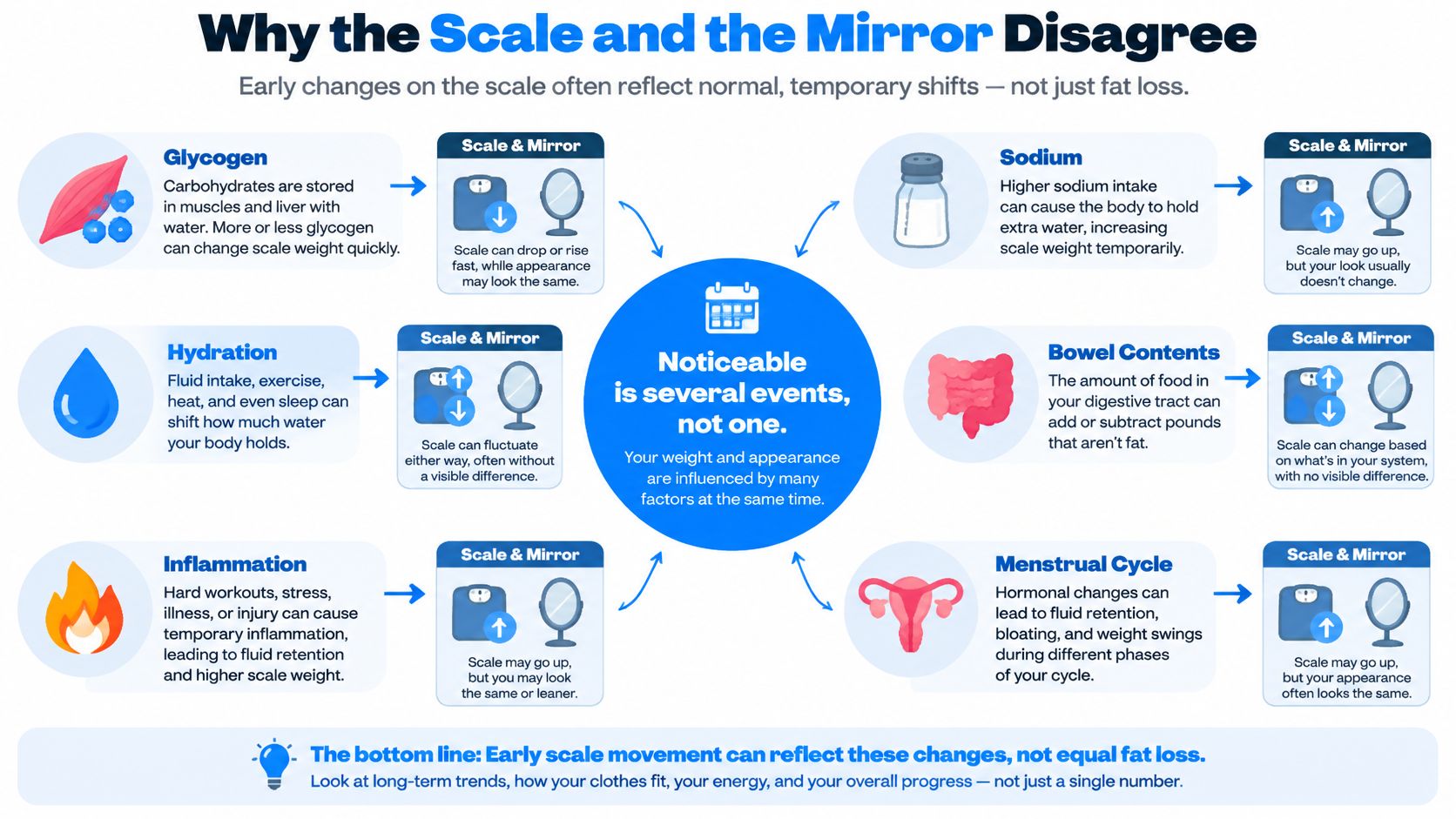
A noisy microphone, not a fat scanner
The scale resembles a noisy microphone, while a weekly average resembles a cleaned recording. Averaging doesn't eliminate uncertainty, but it makes the underlying direction easier to distinguish from background variation.
Glycogen storage changes the amount of associated water in the body. Sodium intake, hydration, menstrual-cycle changes, inflammation, and bowel contents can also shift the reading without an equivalent change in body fat.
Fat loss isn't visually uniform, either. Changes around the abdomen, hips, or less visible internal stores don't necessarily become obvious at the same time. A patient performing resistance training may also improve body shape while changes in lean tissue partly offset declining fat mass.
Signals that deserve a place beside weight
- Morning weight average: A standardized average helps distinguish a sustained direction from an unusual reading.
- Waist and clothing fit: A consistent measurement and the same waistband provide practical comparisons.
- Progress photos: Similar lighting, posture, distance, and clothing reduce misleading visual differences.
- Energy and strength: These help identify whether the plan supports function, rather than merely producing a smaller scale number.
For the traveler in the example, the appropriate next step is to resume the usual measurement routine and observe the trend. Cutting food sharply in response to a temporary increase could compromise nutrition without addressing the reason for the fluctuation.
Modest weight reduction can support metabolic health before appearance changes dramatically. Clinical review may therefore consider blood pressure, glycemic measures, physical function, and symptoms alongside size.
A flat early scale isn't a reason to raise a GLP-1 dose independently. A prescribing clinician can assess whether the pattern reflects expected variation, constipation, missed treatment, tolerability problems, or another medical issue.
What Speeds or Slows the Timeline
The same percentage milestone arrives on different calendars because body size, behavior, and medication exposure interact. A larger starting weight changes the pounds represented by a percentage; it doesn't establish a guaranteed week for reaching it.
The FDA-reviewed prescribing information evaluates weight outcomes over 68 weeks, illustrating why treatment effectiveness belongs on a months-long horizon. For a hypothetical 100-kg adult, a 5% reduction equals 5 kg, but the arithmetic alone says nothing about the time required.
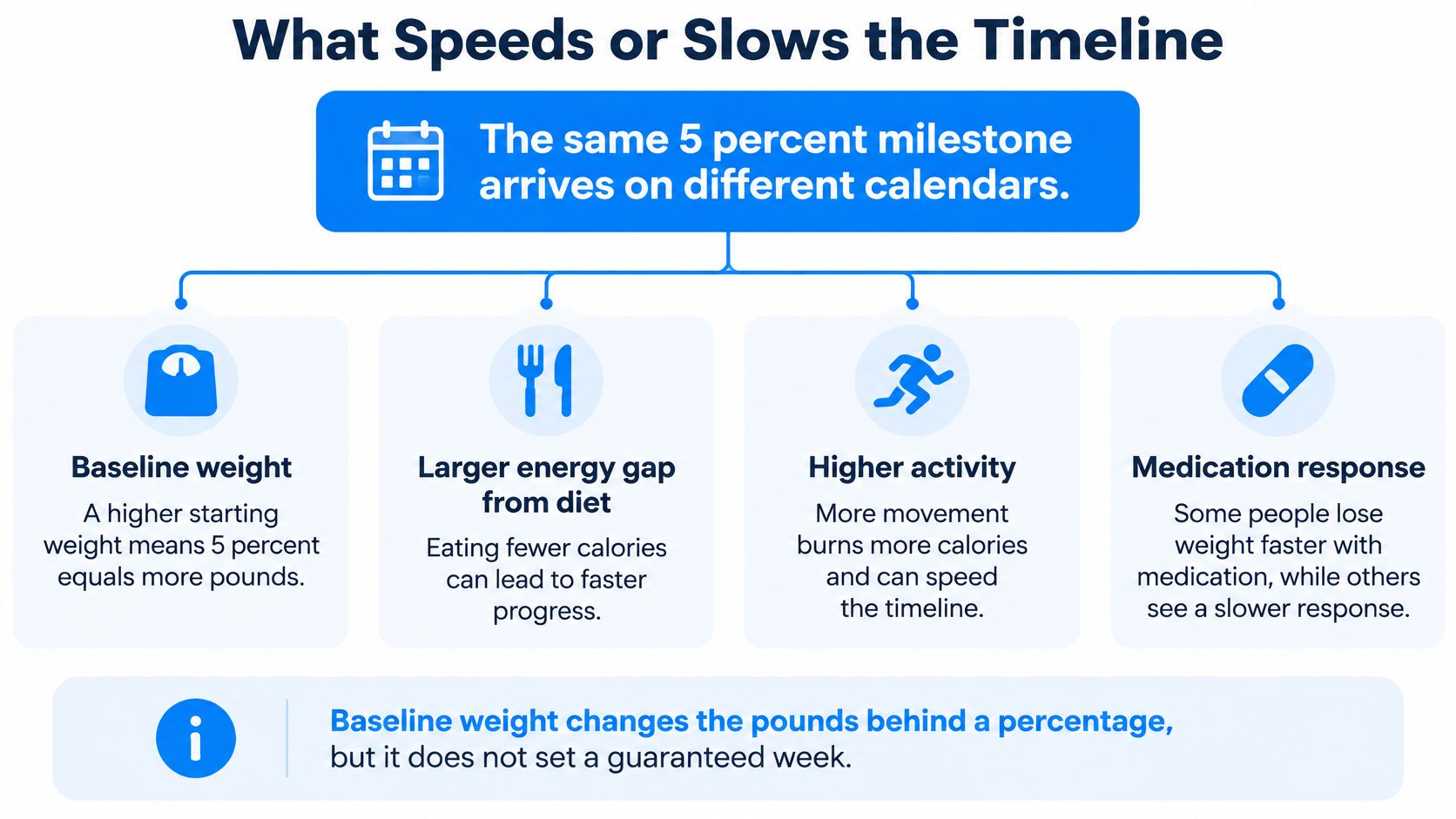
Body and behavior affect different measurements
A sustained gap between energy intake and expenditure supports weight reduction. More daily movement and an eating pattern that remains manageable can help maintain that gap, but severe restriction isn't a substitute for a sustainable plan.
Protein intake and resistance training matter because maintaining muscle is a separate goal from reducing total weight. Inadequate nutrition can produce weight loss that includes unwanted lean-tissue loss, while strength training can improve shape without an equally striking scale change.
Sleep disruption and alcohol can interfere with food choices and consistency. High-sodium meals may temporarily obscure progress through water retention rather than directly reversing fat loss.
- Body factors: Baseline size, fat distribution, existing medical conditions, and biological response affect the trajectory.
- Behavior factors: Meal composition, activity, sleep, and treatment consistency influence what can be sustained.
- Measurement factors: Fluid retention and bowel patterns can conceal the direction of tissue change.
A practical approach to improving metabolic health treats nutrition, activity, and clinical monitoring as complementary parts of care. A metabolic reset shouldn't be understood as a literal switch or a promised biological transformation.
Medication exposure isn't the same as starting treatment
Semaglutide activates GLP-1 receptors. Tirzepatide activates both GIP and GLP-1 receptors. These incretin pathways affect appetite regulation and glucose-dependent insulin signaling; effects on gastric emptying can also contribute to earlier fullness.
Receptor activity begins before a large cumulative change in body mass becomes apparent. Gradual escalation allows clinicians to balance exposure with gastrointestinal tolerability, rather than treating the highest dose as the immediate objective.
Missed doses, other medications, comorbidities, and adverse effects may alter apparent progress. A clinician matches the prescribed schedule to the individual response; the appropriate comparison is the patient's own sustained trend, not another person's result or a trial average.
GLP-1 Milestones from Trials Not Day One
Trial results describe group averages after months of treatment. They do not set a deadline for when one person should notice a change. Appetite, clothing fit, and comments from others may shift on different schedules, while trial weight outcomes are measured at set checkpoints.
| Treatment | Trial and length | Mean weight change | Share reaching at least 5% loss |
|---|---|---|---|
| Semaglutide 2.4 mg weekly | STEP 1, 68 weeks | −14.9% (placebo −2.4%) | 86.4% (placebo 31.5%) |
| Tirzepatide 5 mg weekly | SURMOUNT-1, 72 weeks | −16.0% | 85.1% (placebo 34.5%) |
| Tirzepatide 10 mg weekly | SURMOUNT-1, 72 weeks | −21.4% | 88.9% (placebo 34.5%) |
| Tirzepatide 15 mg weekly | SURMOUNT-1, 72 weeks | −22.5% | 90.9% (placebo 34.5%) |
Mean weight change is the average for a treatment group. The share reaching at least 5% loss counts participants who crossed that threshold. These measures answer different questions, and neither predicts an individual result.
What STEP 1 and SURMOUNT-1 measured
STEP 1 enrolled 1,961 adults with obesity or overweight plus comorbidities; 69.1% reached at least 10% weight loss and 50.5% reached at least 15% at the endpoint (NEJM). Participants received weekly semaglutide alongside lifestyle intervention.
SURMOUNT-1 enrolled 2,539 adults with obesity or overweight plus a weight-related condition, who received weekly tirzepatide or placebo alongside lifestyle intervention. The American College of Cardiology trial summary describes a 20-week dose-escalation period and average weight reductions of 15.0%, 19.5%, and 20.9% across the dose groups, compared with 3.1% for placebo.
The table and the ACC summary report different analyses, which handle treatment adherence and discontinuation differently. Keep each result with its own analysis rather than treating the figures as a single forecast or a reason to change an individual's dose.
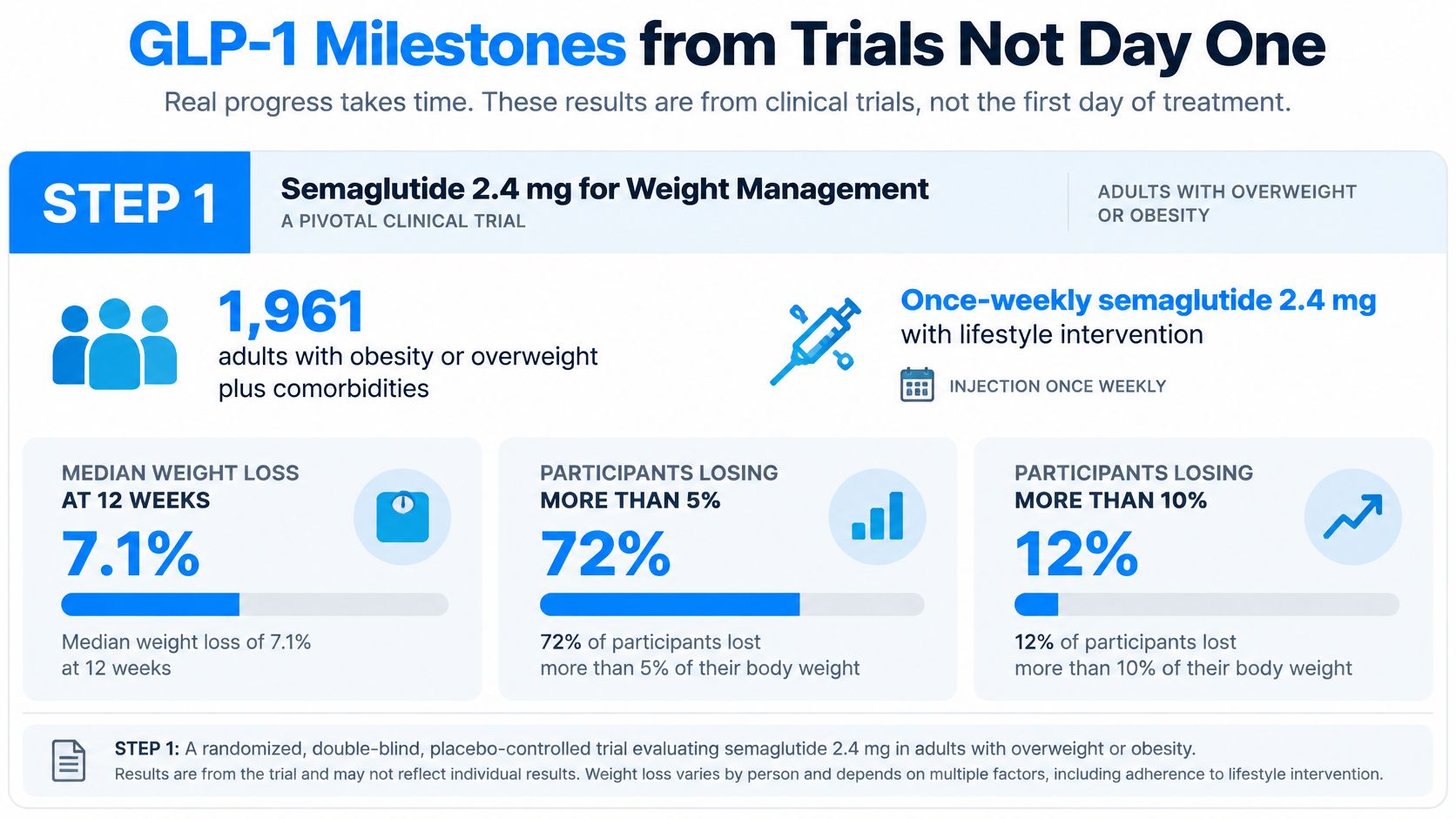
A separate real-world review reported short-term semaglutide findings, which are distinct from the randomized STEP 1 results shown in the table.
Later response can still be clinically meaningful
In a follow-up analysis of STEP 4, 90% of participants who had lost less than 5% by week 20 reached at least 5% weight reduction by week 72; their average time to reach that threshold was approximately 24.8 weeks (STEP 4 analysis). An early result therefore does not always reflect the eventual response.
Early titration is a period for assessing exposure, tolerability, and response. It is not a contest to reproduce a trial endpoint immediately.
Trial outcomes also reflect structured follow-up and lifestyle support. Medication results should be understood alongside adherence, nutrition, activity, and whether treatment can continue safely.
Prescription treatments and compounded formulations are prescribed strictly at the clinical discretion of licensed U.S. healthcare providers following an individualized telehealth intake and consultation. Compounded products are not automatically interchangeable with FDA-approved products, and evidence for an approved formulation does not establish equivalent outcomes for every compounded preparation or route.
How to Track Progress Without Chasing a Date
A useful home record makes clinical decisions easier without turning every reading into a verdict. The FDA Wegovy injection prescribing information specifies escalation over 16 weeks toward a 2.4 mg maintenance dose, reinforcing the distinction between early exposure and maintenance treatment.
For practical monitoring, a trend over at least 4 weeks and a 7-day rolling average provide more context than a single measurement. The weight outcomes were assessed at week 68, not after a few doses.
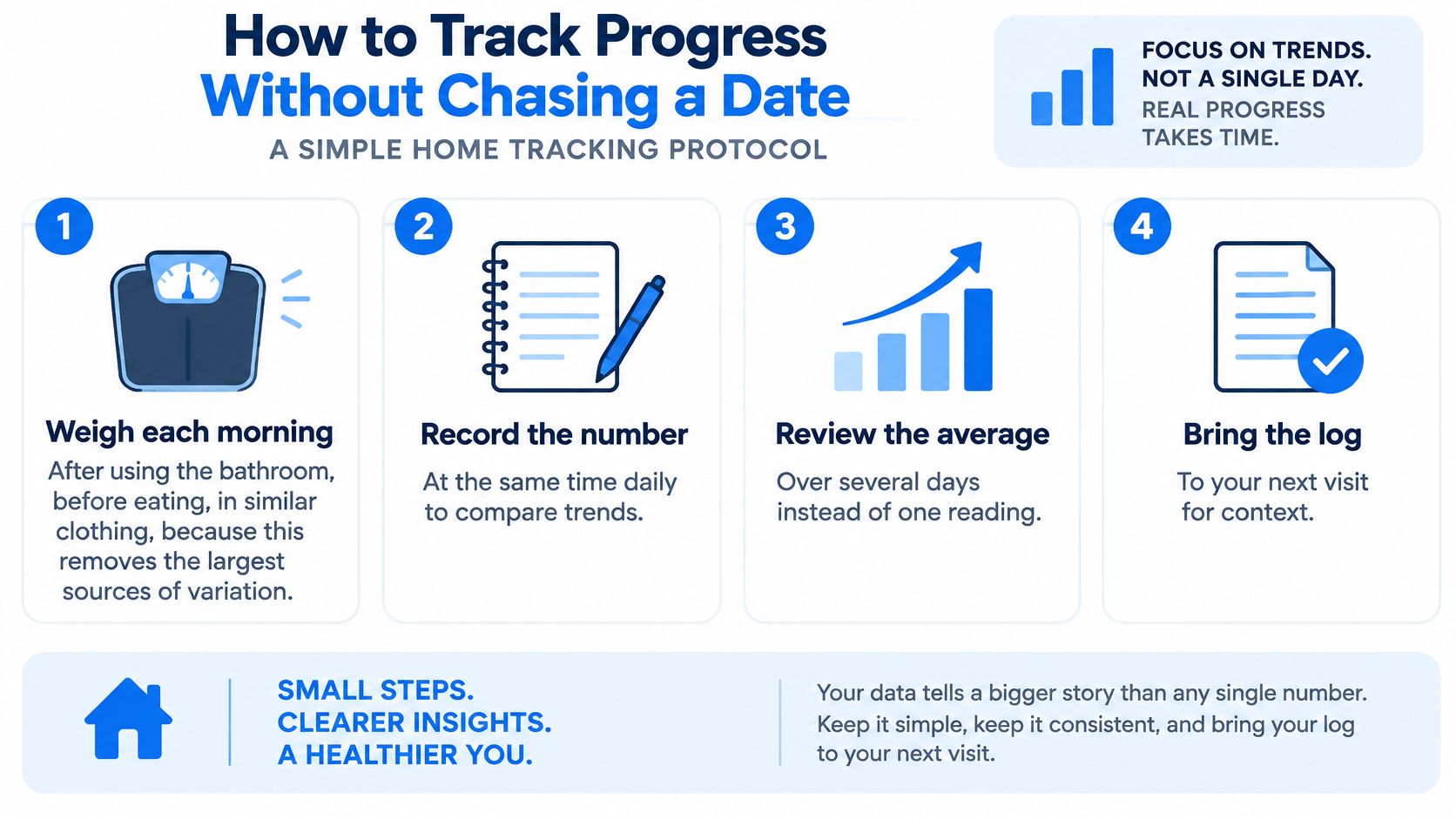
A repeatable home protocol
Standardize morning conditions. Weigh after using the bathroom, before eating, and in similar clothing. Keeping the scale on the same firm surface reduces avoidable measurement differences.
Record consistently and average. Daily morning records support a rolling average; if daily weighing isn't practical, recording at least three mornings weekly still provides useful context. Missing measurements shouldn't be entered as estimated weights.
Annotate isolated spikes. Travel, constipation, menstrual changes, or high-sodium meals belong in the log. An unusual reading alone shouldn't trigger changes to food intake or medication.
Measure the waist monthly. Use the same anatomical landmark, keep the tape level, and avoid pulling it tightly. Consistent technique matters more than repeatedly measuring throughout the day.
Standardize photographs about every four weeks. Front and side views in the same lighting and clothing make comparisons more useful. Posture and camera distance should remain similar.
Record function and tolerability. Appetite, protein-containing meals, steps or training, and side effects help explain the weight pattern. A lower number accompanied by poor intake or declining function requires a different conversation from comfortable, sustained progress.
Review percentage change at titration visits. Subtract current weight from starting weight, divide by starting weight, and multiply by 100. The clinician should interpret that result alongside tolerability before considering a dose change.
The log supports care, not self-prescribing
A metabolic calorie calculator can provide an estimate for discussion, but it can't determine medication suitability or account for every medical condition. Prescribed nutrition targets may need adjustment when appetite suppression makes adequate intake difficult.
Persistent vomiting, dehydration, weakness, or inability to maintain protein and fluid intake requires prompt clinician review. Rapid loss isn't reassuring when the patient cannot eat or drink adequately.
Early Plateaus and Deciding on Clinical Care
Week 12 isn't a universal pass-fail date. A patient can still be progressing through dose escalation, managing adverse effects, or accumulating a response that isn't yet visually striking.
A 2023 real-world semaglutide review presented at the European Congress of Endocrinology reported median weight loss of 7.1% at 12 weeks, with 72% losing more than 5% and 12% losing more than 10% of baseline weight. Those findings describe that patient group, not a quota that every patient should meet.
A plateau needs interpretation before intervention
An early drop followed by a flatter period may reflect a transition from fluid changes to a slower tissue-weight trend. Constipation can also mask change, while nausea may disrupt meal quality and make regular protein intake difficult.
Missed doses or inconsistent administration can reduce treatment exposure. As body weight decreases, energy requirements may also decline, narrowing the gap between intake and expenditure even when habits seem unchanged.
The clinician's review should distinguish limited medication response from limited tolerability. A patient who cannot follow the intended regimen because of adverse effects needs a different adjustment from someone who tolerates treatment but has little change across multiple measures.
A treatment review should explain the pattern before changing the prescription.
Useful preparation includes the prescribed formulation, dose history, missed-dose dates, bowel pattern, symptoms, and the monitoring log. A medication list also helps identify other therapies that may influence weight or complicate treatment.

Ordinary variation and symptoms require different responses
A temporary rise after a salty meal, a brief stretch of unchanged weight, or disagreement between waist and scale measurements usually calls for context rather than an automatic dose increase. The patient should continue documenting the pattern and discuss persistent concerns at the planned review.
Symptoms change that decision:
- Prompt clinical assessment: Ongoing vomiting, signs of dehydration, weakness, or inability to maintain fluids and protein shouldn't wait for a routine progress discussion.
- Urgent medical evaluation: Fainting or severe abdominal pain, particularly with vomiting or worsening symptoms, warrants urgent assessment rather than an online dose adjustment.
- Medication questions: Repeated missed doses or uncertainty about restarting treatment should go to the prescriber, not be resolved through catch-up dosing.
A guide to weight-loss injection side effects can help patients recognize issues worth discussing, but educational material doesn't replace assessment of active symptoms.
Two appropriate next steps
When weight averages, waist measurements, photographs, and function support progress, the usual next step is to continue the current nutrition and activity plan and follow the prescribed dose until the next scheduled reassessment. Faster loss isn't automatically a better outcome.
When no meaningful signal has changed at early titration checkpoints, the next step is a licensed clinician's review of the log, adherence, formulation, nutrition, and tolerability. The patient shouldn't increase the dose independently or assume that a different preparation will produce an equivalent response.
Semaglutide or tirzepatide, whether approved or compounded, is prescribed only when a U.S.-licensed provider determines it is appropriate after an individualized telehealth intake and consultation. The practical expectation remains staged: appetite may change early, trends require weeks of observation, and meaningful percentage loss is assessed over months.
Informational purposes only. Compounded medications are evaluated by a licensed provider for individual suitability and are fulfilled by state-licensed partner compounding pharmacies.
Vials + Vitals offers physician-directed telehealth assessment for weight-management protocols, with individualized prescribing and titration oversight when treatment is clinically appropriate. Adults seeking help interpreting appetite changes, weight trends, or early plateaus can visit Vials + Vitals to begin an intake and discuss their treatment history and monitoring record with a licensed U.S. healthcare provider.