Trulicity and Weight Loss: What the Evidence Shows
Trulicity and weight loss explained: trial-reported results, how dosing compares with semaglutide and tirzepatide, and what to discuss with a licensed provider.
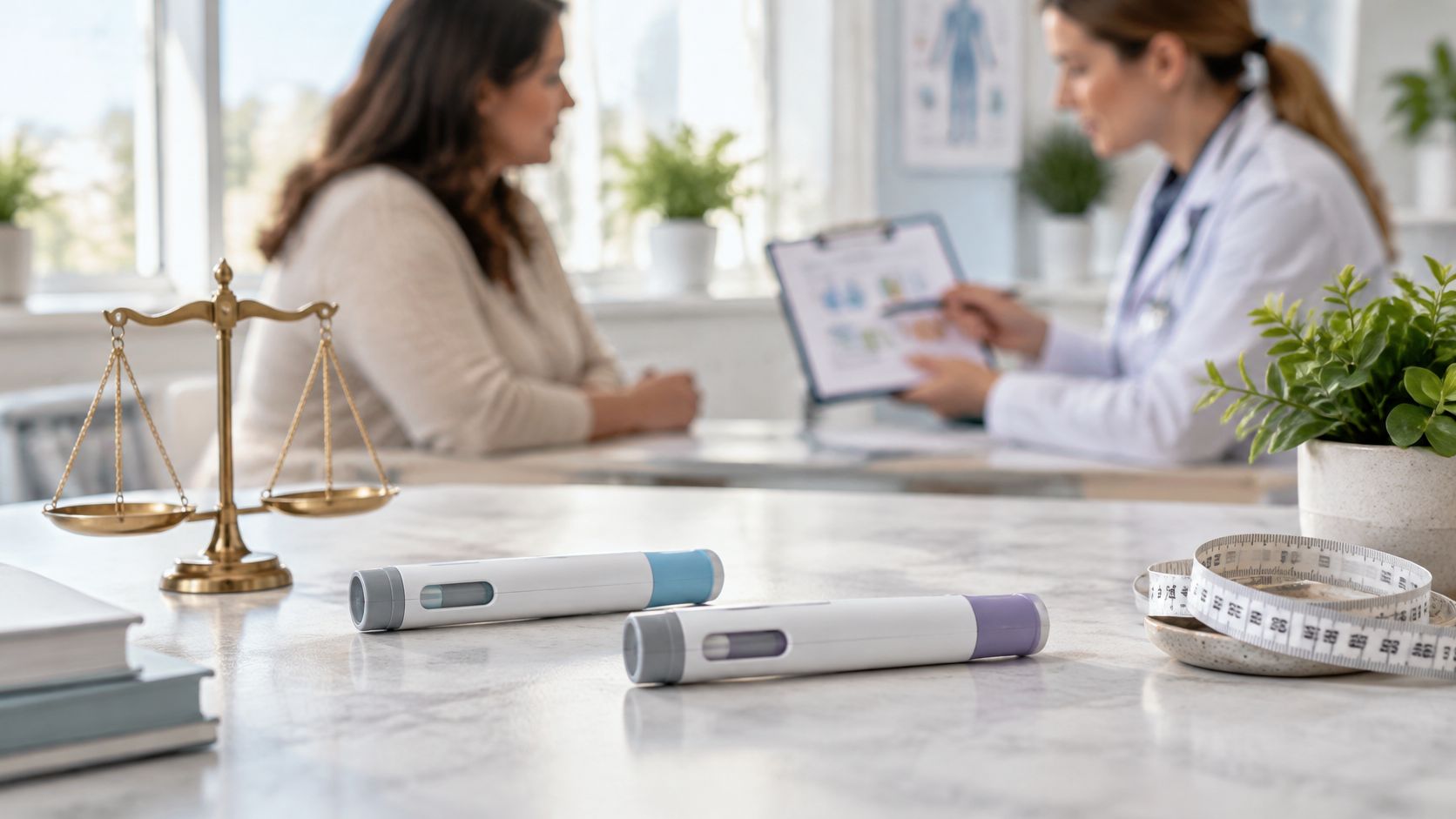
An additional 0.95 kg of weight reduction versus placebo was the estimated benefit of dulaglutide in a NICE evidence review of adults with type 2 diabetes. That modest difference reframes the discussion of Trulicity and weight loss: the medication can support weight reduction, but its diabetes benefits and its weight effects aren't interchangeable treatment goals.
The Vials + Vitals Medical Board's clinical perspective separates three questions: what the medication is approved to treat, how much weight changed in the relevant studies, and what happens when treatment changes. A useful decision requires all three, not just the largest weight-loss figure available.
Realistic Weight Loss Results on Trulicity
Trulicity generally produces modest weight change in adults with type 2 diabetes. Its measured effect should be read in the context of diabetes treatment, rather than as a result from medication designed specifically for chronic weight management.
Approved use and reported weight change by medication
| Medication | Primary FDA-approved use | Dosing frequency | Reported weight change in registration or main trials |
|---|---|---|---|
| Trulicity (dulaglutide) | Type 2 diabetes | Once-weekly injection | About −0.35 to −2.88 kg absolute change across dulaglutide studies, summarized in the Australian regulatory product information |
| Semaglutide (Wegovy) | Chronic weight management | Once-weekly injection | No placebo-controlled range in the sources reviewed here |
| Tirzepatide (Zepbound) | Chronic weight management | Once-weekly injection | No placebo-controlled range in the sources reviewed here |
The comparison cells for semaglutide and tirzepatide are left without numerical estimates because the evidence cited here does not provide comparable placebo-controlled ranges. Using figures from different populations, doses, or treatment conditions would imply a direct comparison the available information does not establish.
What the Trulicity trials measured
The AWARD-1 and AWARD-4 populations differed in background therapy and follow-up length. In AWARD-1, adults taking metformin and pioglitazone lost an average 1.3 kg with dulaglutide 1.5 mg, while those receiving 0.75 mg gained 0.2 kg over 26 weeks. In AWARD-4, participants also using mealtime insulin lispro lost approximately 2.9 kg with 1.5 mg over 52 weeks, according to the AWARD trial summary. The different treatment backgrounds and follow-up periods limit what these averages can predict for an individual.
A 2024 systematic review and meta-analysis found a pooled 0.86 kg greater weight reduction versus placebo with subcutaneous dulaglutide. That placebo-adjusted estimate is not the same as total weight lost after starting treatment.
Absolute change isn't placebo-adjusted change
Absolute weight change is the difference between starting weight and weight at follow-up. It reflects the combined effects of medication, dietary changes, activity, background treatment, and other influences during that period.
Placebo-adjusted change subtracts the comparison group's change from the medication group's change. In a randomized trial, this provides a better estimate of the medication's additional effect under those study conditions.
A 2025 observational report using Romanian patient data from 2023 described a mean 3.5 kg reduction after 12 months among dulaglutide recipients. Because the report did not use a randomized placebo comparison, it cannot establish how much of that change dulaglutide caused or be directly ranked against placebo-adjusted estimates.
For a weight effect that is secondary to diabetes treatment, follow-up should focus on the patient's recorded trend and the treatment plan, not a deadline borrowed from another medication's trial. Guidance on how long weight loss takes to become noticeable can help frame expectations without treating a particular timeline as a guaranteed result.
How Trulicity Works and Why It Is Labeled for Diabetes
Dulaglutide activates glucagon-like peptide-1 receptors, commonly called GLP-1 receptors. It increases glucose-dependent insulin secretion, reduces inappropriate glucagon release, and slows gastric emptying. The FDA Trulicity labeling describes these mechanisms and authorizes Trulicity, alongside diet and exercise, to improve glycemic control in adults and children at least 10 years old with type 2 diabetes.
“Glucose-dependent” means the insulin response is linked to glucose levels. Reduced glucagon signaling can limit excess glucose release, while slower gastric emptying changes how quickly food moves through the digestive system.

Receptor activity doesn't determine the indication
These effects may help some patients feel full sooner and eat less, so weight reduction can accompany treatment. That effect does not establish Trulicity as an obesity treatment. Its labeled purpose is improving glycemic control in type 2 diabetes.
Dulaglutide and semaglutide act on GLP-1 receptors. Tirzepatide activates both glucose-dependent insulinotropic polypeptide receptors, or GIP receptors, and GLP-1 receptors. Differences in receptor activity may contribute to differences in average treatment response, but they cannot predict an individual patient's weight change.
Two drugs sharing a receptor target can still differ in approved use, dose, and tolerability. The relevant evidence depends on the diagnosis and the treatment purpose, not the receptor name alone. A diabetes indication and an obesity indication reflect different treatment evidence.
Before comparing weight outcomes, a clinician should clarify whether treatment is intended primarily for diabetes management or chronic weight management. A licensed U.S. healthcare professional must assess an individual patient's circumstances and monitor prescription use, including any off-label consideration.
Dosing, Titration and Daily Routine
Starting doses and step-up schedules
| Medication | Starting dose | Step-up schedule | Maintenance or top dose |
|---|---|---|---|
| Trulicity (dulaglutide) | 0.75 mg weekly | Increase through prescribed steps after at least four weeks at the current dose | Adult maximum of 4.5 mg weekly |
| Semaglutide (Wegovy) | 0.25 mg weekly | Standard injectable escalation occurs every four weeks | Standard target of 2.4 mg weekly |
| Tirzepatide (Zepbound) | 2.5 mg weekly | Increase in 2.5 mg increments after at least four weeks at the current dose | Maintenance options include 5, 10, or 15 mg weekly |
These are adult injectable schedules, not instructions to begin treatment or change a prescription. The FDA prescribing information for Trulicity governs dulaglutide dosing; the medication-specific prescription and current product labeling govern the other schedules.
A higher dose isn't automatically the right next step. The prescriber must consider glucose response, gastrointestinal symptoms, background medications, and whether the current dose remains clinically appropriate.
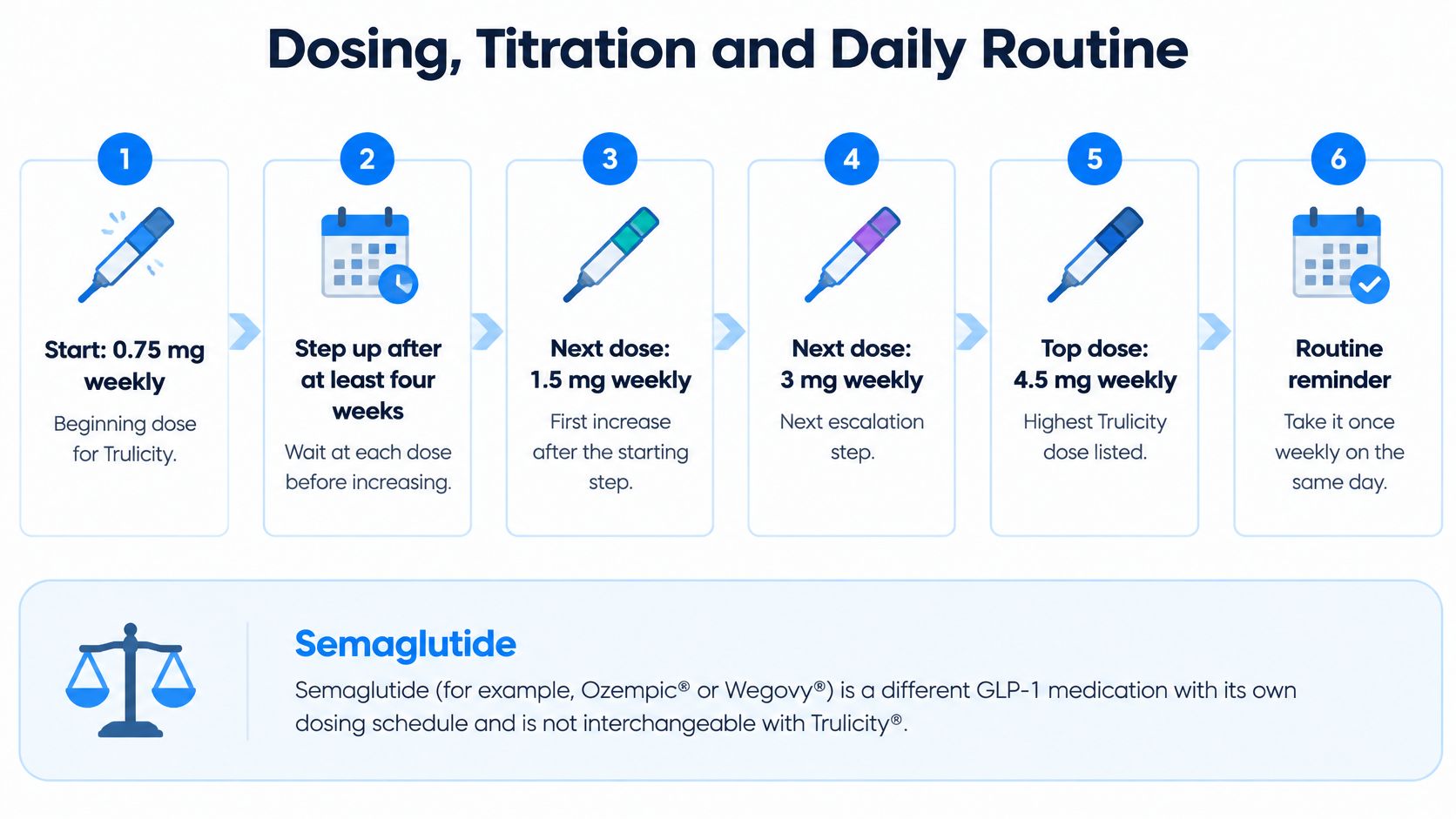
A repeatable titration routine
- Confirm the prescription. The pen strength should match the current prescription, not a previous fill or an anticipated increase.
- Keep a consistent weekday. A recurring calendar reminder can reduce uncertainty about whether a dose was administered.
- Record the response. A brief log should capture appetite, nausea, vomiting, bowel changes, energy, and relevant glucose readings.
- Wait for authorization. A completed interval doesn't automatically authorize escalation.
- Report a plateau. A stalled weight trend calls for reassessment, not an extra injection or a stronger pen used without approval.
Trulicity comes in a single-dose prefilled pen for injection under the skin of the abdomen, thigh, or upper arm. It can be administered at any time of day, with or without meals, and injection sites should be rotated rather than repeatedly using the same spot.
Missed doses and storage
Missed-dose instructions depend on the time remaining before the next scheduled dose, not just the time elapsed since the missed injection. A patient should use the current package instructions or obtain pharmacist guidance before administering a late dose; closely spaced catch-up injections should be avoided.
Unused pens should remain refrigerated and must not be frozen. Any room-temperature storage period should be checked against the package instructions before the pen leaves refrigeration, and a pen stored incorrectly should be reviewed with the pharmacist before use.
The device and dosing format shape the routine more than the drug name does.
Before the first fill, the pharmacist should answer three practical questions: Which strength is being dispensed? What is the exact missed-dose instruction? What storage conditions and discard date apply to these pens?
Side Effects and Safety Checks Before Starting
Nausea, vomiting, diarrhea, constipation, and reduced appetite are symptoms patients may encounter during incretin treatment. Gastrointestinal symptoms can be especially noticeable during initiation or dose escalation, so persistent symptoms should be reviewed before another increase.
Reduced appetite isn't a reason to ignore inadequate fluid intake or repeated vomiting. Severe digestive symptoms are a safety issue, not evidence that the medication is working especially well.
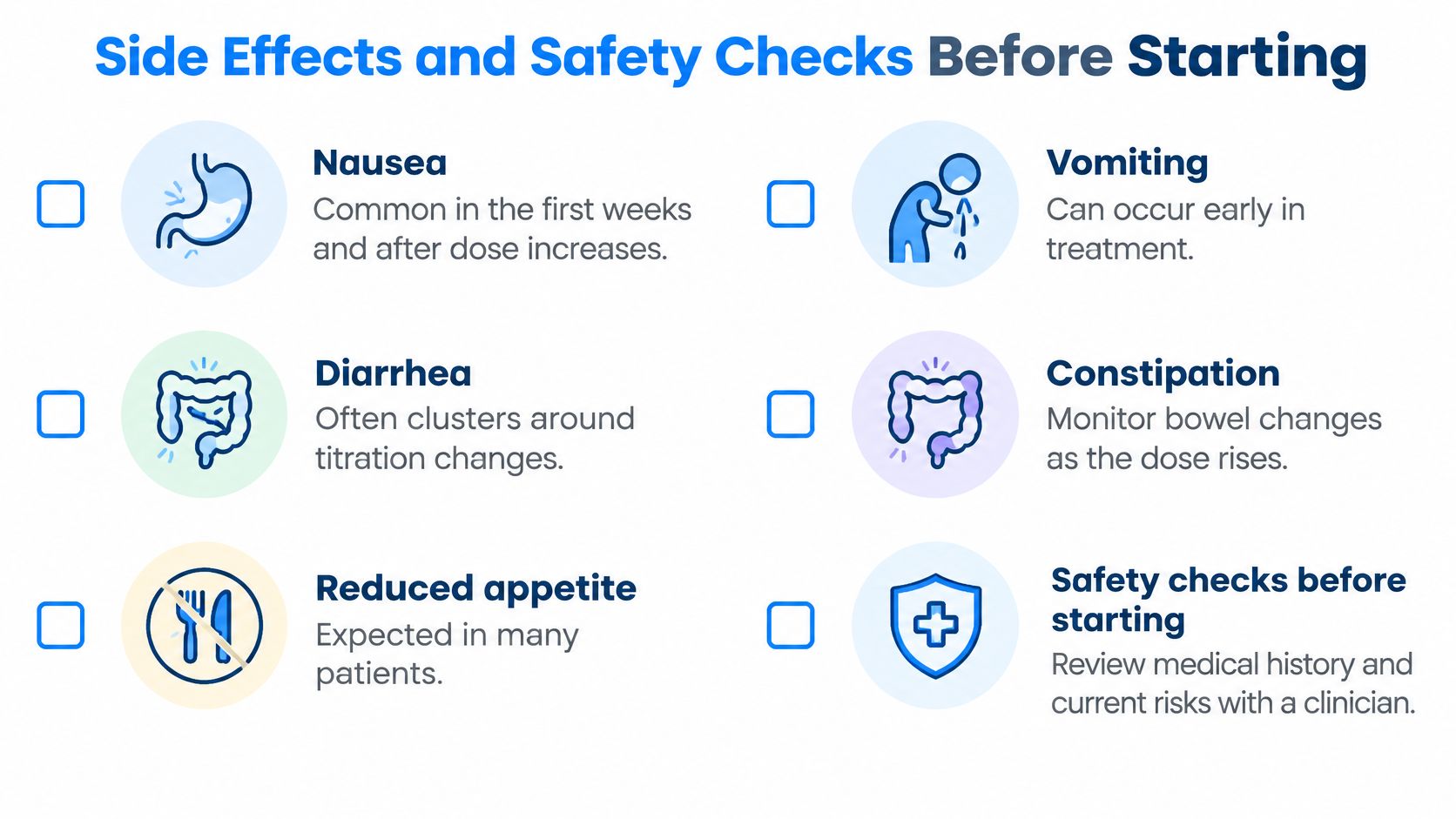
Separate expected discomfort from warning signs
The boxed warning concerns thyroid C-cell tumors observed in rodent studies. That finding doesn't establish the same effect in humans, but Trulicity is contraindicated in patients with a personal or family history of medullary thyroid carcinoma or multiple endocrine neoplasia syndrome type 2.
Other important concerns include pancreatitis, gallbladder disease, dehydration-related kidney problems, and hypoglycemia when treatment is combined with insulin or sulfonylureas. The action depends on the symptom and the patient's background treatment.
Safety checks and actions for GLP-1 therapy
| Check | Who it applies to | Action |
|---|---|---|
| Thyroid C-cell tumor boxed warning | Personal or family history of medullary thyroid carcinoma or MEN 2 | Do not use Trulicity; discuss alternatives with the prescriber |
| Gastrointestinal effects | Nausea, vomiting, diarrhea, or constipation, particularly around titration | Maintain fluids and report persistent or severe symptoms |
| Pancreatitis | Severe abdominal pain that may radiate to the back | Stop the medication and seek urgent medical care |
| Hypoglycemia | Treatment alongside insulin or sulfonylureas | Review background diabetes medications and the glucose-monitoring plan |
| Gallbladder disease | Right upper abdominal pain or fever | Arrange prompt medical evaluation |
| Dehydration and kidney strain | Prolonged vomiting or diarrhea | Contact the prescriber early |
Severe abdominal pain that radiates to the back requires urgent medical care. A patient shouldn't wait until the next routine appointment or assume the pain is ordinary nausea.
Make the intake clinically complete
The intake should include a complete medication and supplement list, previous reactions to GLP-1 products, relevant digestive or pancreatic conditions, kidney concerns, and family thyroid cancer history. A vague entry such as “thyroid disease” may need clarification because different thyroid diagnoses have different implications.
Smaller meals, stopping at comfortable fullness, and avoiding foods that worsen symptoms may help with mild discomfort. Inability to keep fluids down, worsening symptoms, or signs of low glucose require a clinical response rather than dietary adjustments alone.
The overview of weight-loss injection side effects provides additional context for discussing symptoms. It shouldn't replace urgent assessment when a warning sign appears.
Which GLP-1 Option Fits Your Situation
The prescribing decision starts with the approved use, the primary treatment goal, and the patient's clinical profile. A preference for a particular injection can then inform the discussion.
Likely fit by situation
| Situation | Likely fit | Reason |
|---|---|---|
| Type 2 diabetes with a glucose target and a weight goal | Discuss Trulicity or another diabetes-labeled incretin with weight benefit | Glycemic control is the approved purpose; weight change is secondary |
| Type 2 diabetes with weight reduction as the main goal | Compare diabetes-labeled semaglutide or tirzepatide | Diabetes-focused comparisons generally show greater average weight reduction with semaglutide than dulaglutide (review of incretin treatment evidence) |
| Obesity without diabetes | Evaluate an obesity-labeled medication | Trulicity doesn't carry a chronic weight-management indication |
| Strong needle aversion | Ask about available formulations | Trulicity uses an injection; other options require a separate discussion of suitability |
| Weight loss has stalled on Trulicity | Review dose and diabetes control with the prescriber | Any dose change requires individualized clinical review |
Comparisons depend on the specific product, dose, patient population, background therapy, and follow-up period. The evidence describes average effects in studied groups, not a guaranteed response for an individual.
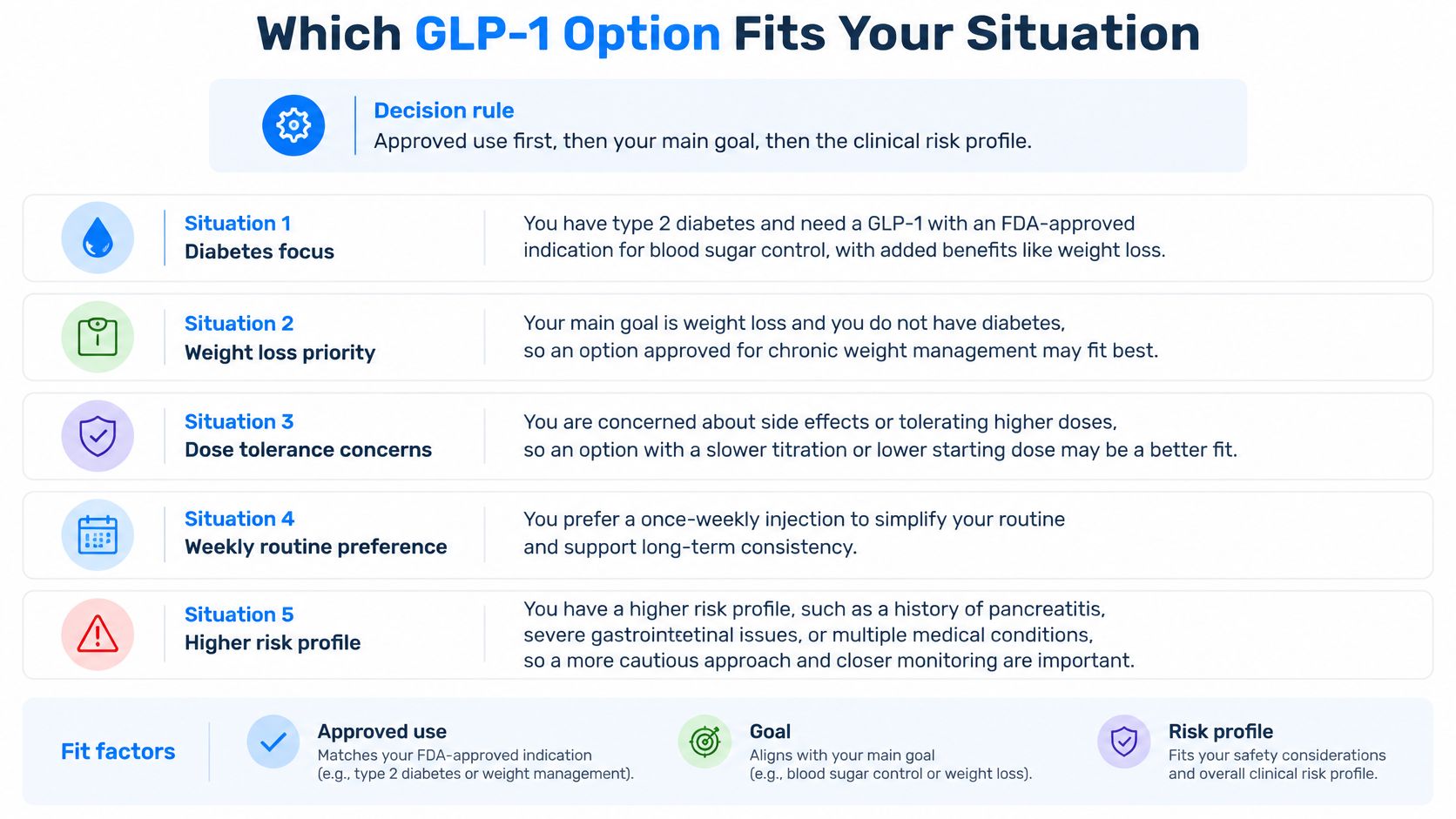
Translate the goal into a prescribing question
Consider a hypothetical 52-year-old adult with type 2 diabetes, an HbA1c near 8%, metformin treatment, and a goal of losing 10% of body weight. The clinician would assess a diabetes-labeled treatment that may also affect weight, while considering whether the desired reduction is realistic for that treatment.
A colleague without diabetes but with the same hypothetical weight goal would need an assessment for eligibility for obesity treatment. The shared goal of weight reduction still leads to different prescribing questions.
For someone focused on diabetes, the discussion centers on the HbA1c target and the expected secondary weight response. For someone prioritizing weight reduction, it centers on whether an eligible treatment better matches that goal.
Needle aversion warrants asking about suitable formulations and their evidence. Previous intolerance calls for review of symptom severity and titration. A plateau warrants examination of adherence, dose, and the overall diabetes plan.
A glucose target and a weight target are different goals, and they may point to different medicines.
Cardiovascular risk, prior pancreatic or thyroid history, tolerability, coverage, and formulary access can also affect treatment choice. A comparison of weight-loss injection options can help frame that discussion alongside the patient's clinical needs.
Stopping, Switching and Weight Maintenance
A meta-analysis of GLP-1 discontinuation studies involving 8,993 patients reported significantly greater weight regain after withdrawal than with continued therapy, with a pooled difference of 17.90%. The analysis wasn't specific to dulaglutide, so that pooled result must not be presented as a prediction of how much weight an individual will regain after stopping Trulicity.
The practical conclusion is narrower and more useful: maintenance needs a plan before treatment changes. Ending a prescription and arranging a transition are different clinical tasks.
A transition checklist for the prescriber
- Document the starting point. Record weight, recent HbA1c, relevant glucose readings, current dose, and the reason for considering a change.
- Clarify the intended transition. The prescriber should determine whether treatment should stop, continue, or switch and whether any tapering approach is appropriate.
- Avoid dose equivalence assumptions. Dulaglutide, semaglutide, and tirzepatide doses aren't interchangeable. The receiving medication may require re-titration.
- Schedule monitoring. Weight and glucose trends should be reviewed during the early transition, with the frequency individualized to diabetes treatment and clinical risk.
- Report changes promptly. Appetite rebound, rising glucose, or difficulty following the new regimen should trigger contact rather than unsupervised dose adjustments.
Maintenance includes more than the prescription
Nutrition, activity, and glucose monitoring remain relevant after a medication ends. A practical plan can include regular meals, adequate protein intake, resistance exercise appropriate to physical ability, and a consistent method for recording weight.
These measures shouldn't be presented as a promise that medication-associated weight loss will persist. They give the clinician and patient actionable information when appetite, eating patterns, or glucose control change.
A switch also requires a clear final-dose and first-dose plan to prevent accidental overlap. At Vials + Vitals, medication must be used only as directed on the label, and patients shouldn't change the amount or schedule themselves.
Stopping or switching is therefore a prescriber-led clinical decision, not a test of willpower or a self-directed response to a disappointing scale reading.
Confirm Your Options With a Licensed Provider
A useful consultation starts with a clearly defined problem: inadequate glucose control, an unmet weight goal, intolerable symptoms, or uncertainty about continuing treatment. Each problem can lead to a different recommendation.
The consultation record should include recent HbA1c results, a weight history, current medications and supplements, previous treatment responses, pancreatic history, thyroid diagnoses, and family history of thyroid cancer. Specific glucose and weight goals help the provider distinguish a metabolic treatment need from an expectation the selected medication may not meet.
What the clinical assessment establishes
Vials + Vitals initiates care through an online clinical assessment followed by review by a U.S.-licensed provider. A prescription is issued only when the provider determines that treatment is clinically appropriate.
Prescription treatments and compounded formulations are prescribed strictly at the clinical discretion of licensed U.S. healthcare providers following an individualized telehealth intake and consultation. Submitting an intake requests a clinical evaluation and doesn't purchase a specific medication; neither a prescription nor an outcome is promised.
The Vials + Vitals GLP-1 weight care area compares semaglutide, tirzepatide, and a needle-free tablet option. A formulation discussion should distinguish compounded preparations from FDA-approved products rather than assuming equivalent approval status or clinical evidence.
Questions that make the decision clearer
- Indication: Which approved indication applies to the patient's diagnosis, and would the proposed use be off-label?
- Targets: What weight and glucose outcomes are realistic for this treatment, and what would count as an inadequate response?
- Monitoring: Which follow-up measurements, adverse symptoms, and stop criteria apply?
A sound treatment decision includes a follow-up plan, not merely a medication name. If treatment is prescribed through Vials + Vitals, the patient receives fulfillment and use information with clear next steps.
Informational purposes only. Compounded medications are evaluated by a licensed provider for individual suitability and are fulfilled by state-licensed partner compounding pharmacies.
Vials + Vitals offers physician-directed telehealth evaluation for weight-management options, including semaglutide, tirzepatide, and a needle-free tablet option. Adults weighing Trulicity's diabetes benefits against a separate weight-management goal can visit Vials + Vitals to submit an individualized clinical intake for licensed-provider review.