Taking Ozempic for the First Time: What to Expect
Taking Ozempic for the first time? Learn the 0.25 mg starter dose, injection steps, side effect management and red flags to report to your provider.
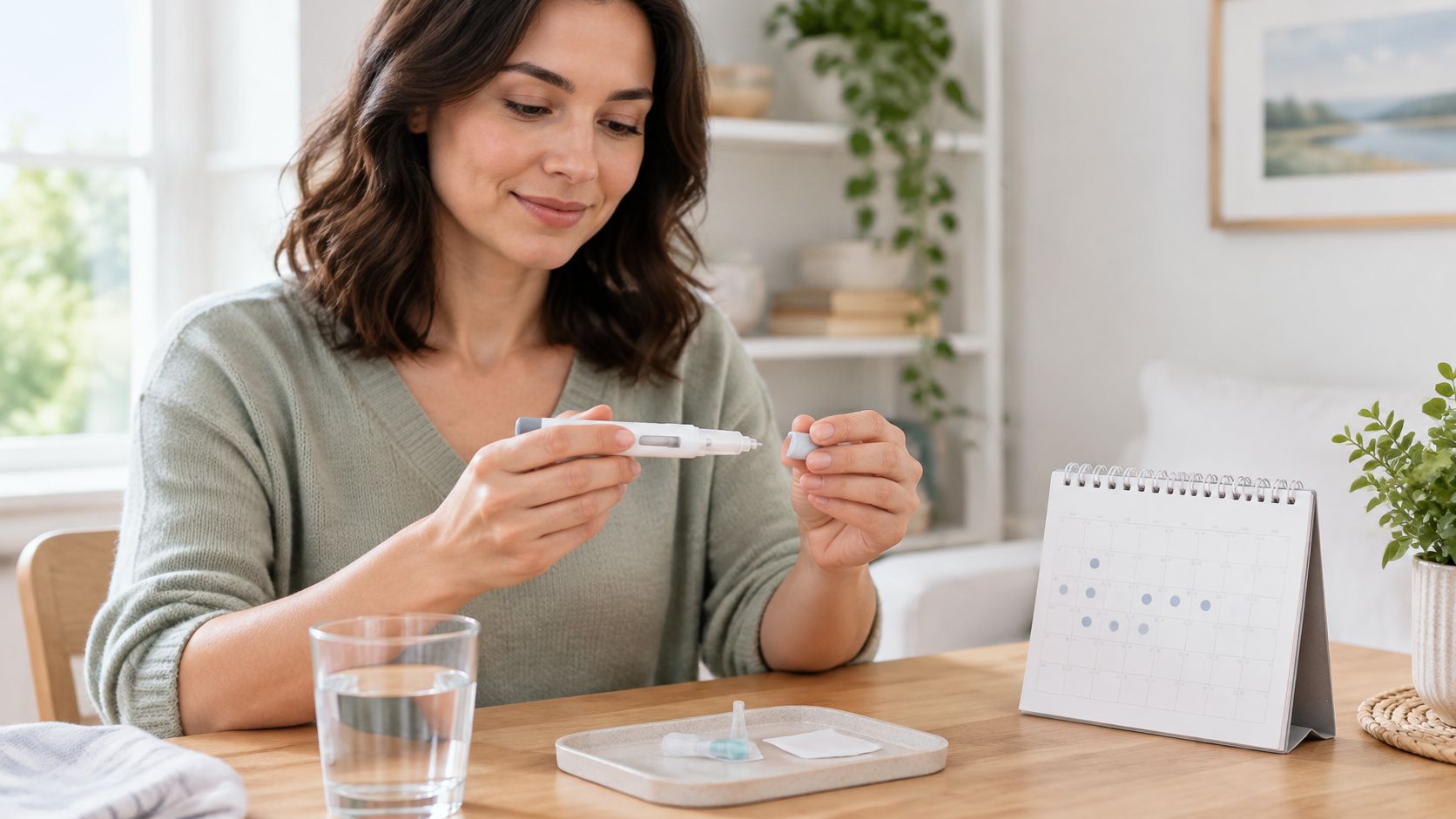
Is the first month supposed to prove that Ozempic is “working,” or is it mainly a month for the body to adjust?
Most adults taking Ozempic for the first time watch the scale or the glucose meter and treat a quiet first week as failure. That reading skips how the medicine is built. Semaglutide is a GLP-1 receptor agonist. It binds GLP-1 receptors, slows stomach emptying, and supports insulin release when glucose is high. The labeled start sits below a maintenance dose so the gut can adapt before the amount rises.
That design sits inside chronic disease care, not a short appetite experiment. The FDA approval record shows initial U.S. approval on December 5, 2017, as an addition to diet and exercise for glycemic control in adults with type 2 diabetes. On January 16, 2020, the FDA added an indication to reduce the risk of major adverse cardiovascular events, meaning cardiovascular death, nonfatal heart attack, or nonfatal stroke, in adults with type 2 diabetes and established cardiovascular disease. The first injection starts monitored titration. It does not test a full effect.
First-Month Dose Schedule at a Glance
Four weekly injections stay at one fixed dose before any increase is even considered.
| Period | Weekly dose | Purpose |
|---|---|---|
| Weeks 1 to 4 | 0.25 mg subcutaneous | Initiation dose while the gut adapts; glycemic control belongs to later prescribed doses |
| Week 5 onward | 0.5 mg subcutaneous | Standard dose after initiation, if tolerated and prescribed |
| Beyond 0.5 mg | Prescriber-directed increase | Based on response and tolerability; a licensed prescriber sets every change |
The U.S. prescribing information starts Ozempic at 0.25 mg injected under the skin once weekly for 4 weeks, then moves to 0.5 mg once weekly. That same labeling states the 0.25 mg amount is for treatment initiation and is not effective for glycemic control. Weeks 1 to 4 work like breaking in new shoes at home before a long walk: the stomach gets time to settle before the amount rises. The gradual rise is meant to lower the chance and the severity of gastrointestinal adverse reactions, which are among the most relevant early concerns with semaglutide.
Labeling also frames Ozempic as an adjunct to diet and exercise for blood-glucose control in adults with type 2 diabetes. A lighter appetite in week 2 is starter pharmacology. It is a reason to stay on the written step, not a score that calls for a faster climb.
How a fixed weekday keeps titration honest
A patient who chooses Sunday morning puts that weekday on a calendar alert and books the telehealth review before the week-5 Sunday. The alert holds the dose in place until a clinician looks at response and tolerability. Any amount above 0.5 mg requires medical direction. Patients do not speed the amount or the schedule on their own.
Practical rule: The month is on track when the injection lands on the same weekday, side effects stay tolerable, and open questions are written down for the next review.
During these starter weeks, the goal is a repeatable weekday and a dose the prescriber has already set.
Pre-Start Checks Before Your First Injection
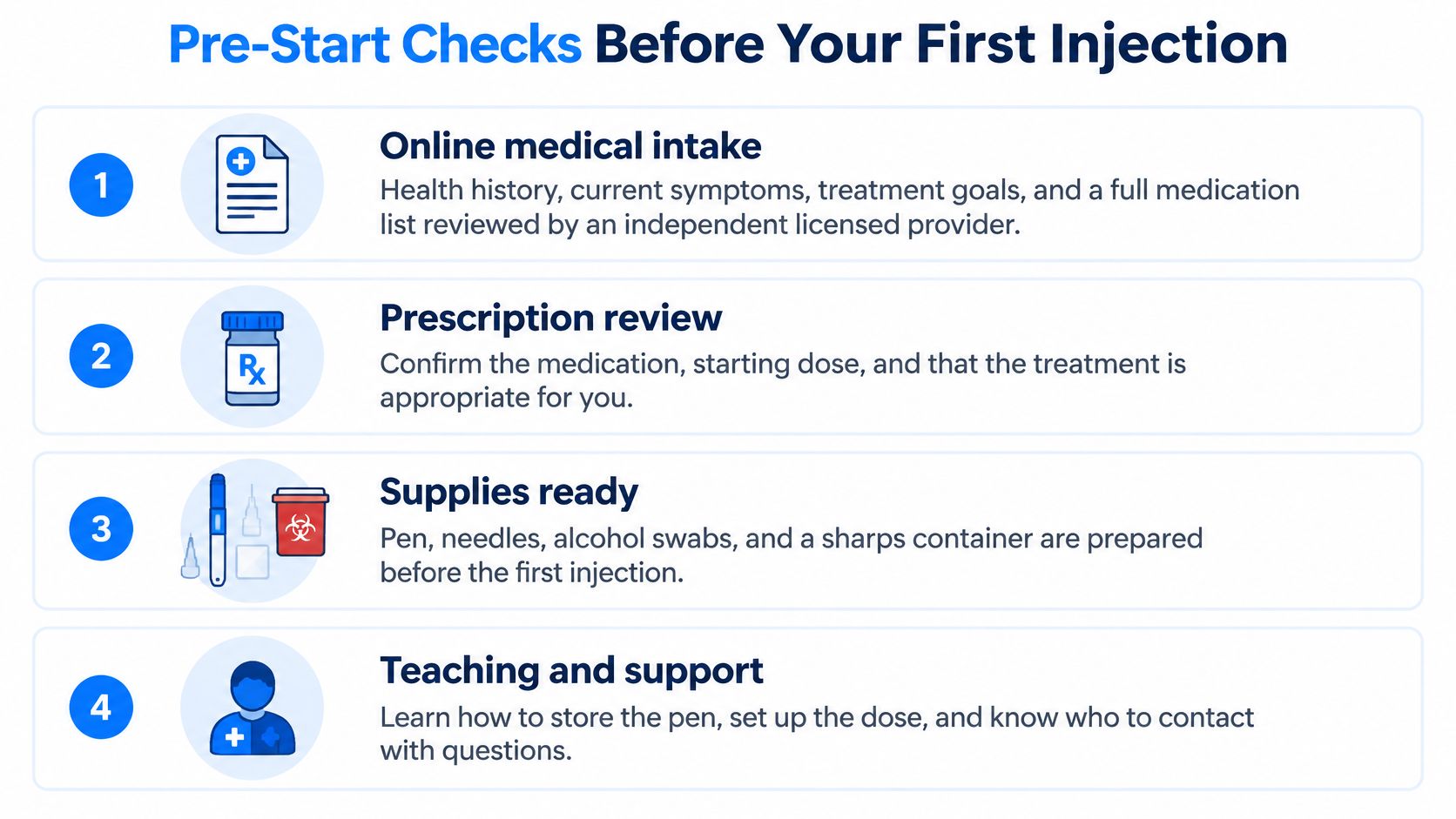
The first step is an online medical intake covering health history, current symptoms, and treatment goals. An independent, licensed healthcare provider reviews that intake against the chart. A prescription is required. Eligibility and availability vary, and provider approval is required, so opening a pen is never automatic. A telehealth weight loss doctor still has to match the medicine to the person.
Withholding a medication, a condition, or a prior reaction can make a protocol unsafe and is grounds for declining or ending care. Disclose each of these before the first dose:
- Thyroid history: Personal or family medullary thyroid carcinoma, or multiple endocrine neoplasia type 2, is a contraindication.
- Pancreas: Prior pancreatitis changes how risk is weighed.
- Eyes: Diabetic retinopathy needs a monitoring plan, not a surprise later.
- Kidneys and gallbladder: Existing disease affects how gastrointestinal illness is handled.
- Pregnancy plans: Current pregnancy or an intention to conceive belongs in the intake.
- Every other product: Prescriptions, over-the-counter medicines, and supplements can interact or duplicate effects.
What “ready” looks like
Confirm the prescription, the disclosed conditions, and the 0.25 mg start. Have the pen and needles in hand, choose the weekly day, and book the first follow-up before that day arrives. A complete intake means the provider has the history, the dose is the labeled starter, and nobody is guessing from a social post.
How to Inject Your First Dose Step by Step
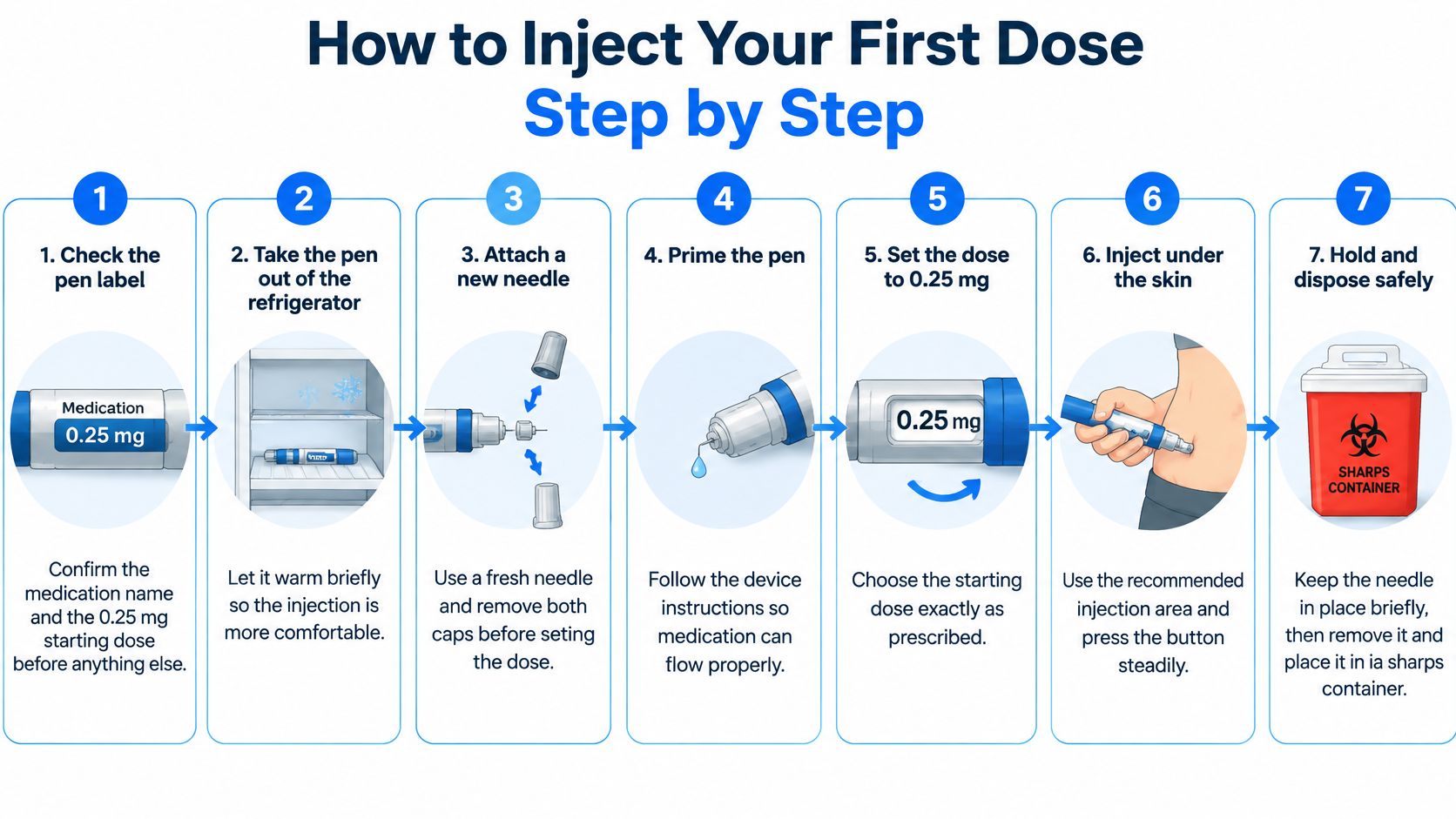
Use the medicine only as directed on the label. Do not change the amount or the schedule yourself.
- Read the pen first. Confirm the name and the 0.25 mg starting dose before the cap comes off. A wrong pen cannot be fixed after the button is pressed.
- Let a cold pen warm. Take it from the refrigerator and allow it to reach room temperature as the instructions for use describe. A cold device is harder to hold steady.
- Wash, then pick a site. Use the abdomen, the front of the thigh, or the back of the upper arm, and rotate sites each week so one patch of skin is not used twice in a row.
- Attach a new needle. Remove both caps and run the safety test in the instructions for use so you know medicine can leave the pen.
- Dial 0.25 mg on the dose selector. That marking is milligrams on the pen, not a syringe “unit.”
- Inject and count. Insert the needle straight in, press the dose button fully, count slowly to five, then withdraw. The pause keeps the dose from leaking back out.
- Discard the needle. Place it in a sharps container. A loose needle in a household bin is a stick risk.
Why the number on the dial is the dose
Semaglutide has a terminal elimination half-life of about one week, so it remains in circulation for about five weeks after the last dose, which is why the FDA dosing-error alert fits a weekly schedule. The same alert describes dosing errors with compounded injectable semaglutide, including wrong amounts and miscalculated concentrations, and some events required hospitalization. Do not convert milligrams to milliliters or syringe units unless the prescribing clinician and the dispensing pharmacy gave explicit instructions.
A successful first injection is a completed labeled dose, mild soreness at most, and the next weekly date written down.
Expected Side Effects and How to Ease Them
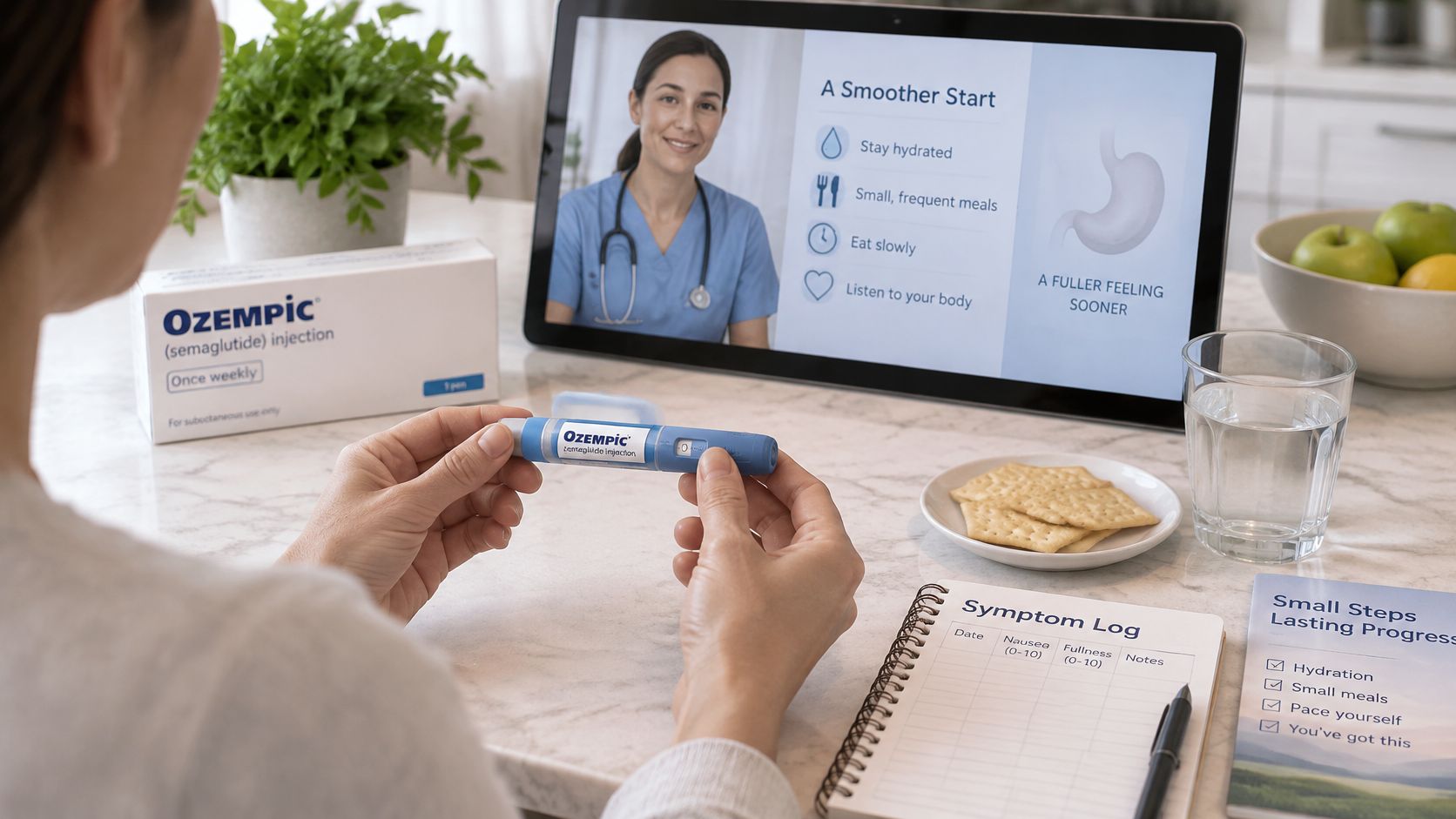
The first month is an adaptation period. Stomach symptoms may appear as your body adjusts, especially after a dose change. These practical steps can help:
| Symptom | Typical timing | What helps |
|---|---|---|
| Nausea | Often in the first days after a dose change | Smaller meals and lower-fat foods |
| Diarrhea | Early weeks | Regular fluids; report if it persists |
| Constipation | Early weeks | Fluids, fiber as tolerated, daily walking |
| Abdominal discomfort or bloating | Early weeks | Slower eating, smaller portions, avoid large meals |
| Reduced appetite | First weeks | Small protein-focused meals with regular fluids |
Semaglutide can slow stomach emptying. Food may remain in the stomach longer, so a large or fatty meal can feel harder to tolerate than usual. Nausea, fullness, and constipation can occur during this adjustment.
The STEP 1 trial report studied semaglutide 2.4 mg weekly over 68 weeks in adults with overweight or obesity, a different regimen from first-month Ozempic initiation. The report found gastrointestinal events were more common with semaglutide than placebo. Most were mild to moderate and temporary, although some participants stopped treatment because of gastrointestinal events. Common reactions include nausea, vomiting, diarrhea, abdominal pain, and constipation.
Ease symptoms without changing the dose yourself
Choose smaller, lower-fat meals when symptoms flare, and sip fluids through the day. If symptoms are significant or persist, contact your prescriber before the next planned dose change. Nausea can signal that your body is still adapting; discuss it with your prescriber rather than increasing the dose on your own. The prescriber may recommend holding the current dose, delaying a step-up, checking hydration and kidney risk, or assessing another cause. Read more about common weight-loss injection side effects to help prepare questions for that conversation.
Missed Doses and Planned Procedures
If you miss a weekly dose, take it within 5 days of the scheduled day, as described in the Ozempic prescribing information. If more than 5 days have passed, skip the missed dose and take the next one on your usual day. Never take two doses to catch up. Because Ozempic leaves the body slowly, missing one injection may not make symptoms disappear that afternoon.
Tell every clinician before sedation
The Ozempic prescribing information warns that slowed stomach emptying may affect anesthesia or deep sedation and instructs patients to tell healthcare professionals about Ozempic before planned surgery or procedures. This includes dental visits, endoscopies, emergency operations, and tests involving sedation. Contact the prescribing clinician for instructions rather than stopping or skipping a dose on your own.
Save this checklist and share it with the procedure team:
- Medicine: name, current weekly dose, and date of the last injection.
- Reason for treatment: the indication recorded in your chart.
- Diabetes status: whether you also use glucose-lowering medicines.
- Current symptoms: any nausea, vomiting, diarrhea, constipation, or abdominal pain.
An endoscopy booked for week 3 is a common case. Send the checklist to the endoscopy team when the appointment is confirmed, then ask the prescriber whether to adjust the weekly injection day. Treat persistent symptoms as a clinical question and discuss them with your care team.
Red Flags and Kidney or Eye Monitoring
| Symptom | Urgency | Action |
|---|---|---|
| Persistent vomiting or inability to keep fluids down | Same day | Contact the prescriber promptly; dehydration raises kidney risk |
| Severe or persistent abdominal pain | Urgent | Seek immediate medical care |
| Dizziness or markedly reduced urination | Same day | Call the care team; possible dehydration |
| Vision changes in a patient with diabetic retinopathy history | Prompt | Contact the eye care provider and the prescriber |
| Swelling of the face or throat, or trouble breathing | Emergency | Call emergency services immediately |
| Bothersome side effects that do not resolve | Scheduled | Raise at the next telehealth review |
The FDA labeling advises monitoring patients with a history of diabetic retinopathy because diabetic retinopathy complications were reported in a semaglutide cardiovascular-outcomes trial. The same labeling describes postmarketing reports of acute kidney injury and worsening chronic renal failure, sometimes requiring hemodialysis. Renal-function monitoring is recommended when starting or escalating Ozempic in patients who report severe gastrointestinal reactions. Prolonged vomiting or diarrhea can dehydrate a person, and that fluid loss may raise kidney risk.
Bothersome effects that linger belong at the next telehealth review. Face or throat swelling, or trouble breathing, is an emergency call, not a portal message. Questions about whether semaglutide is dangerous are better answered against this person's chart than against a headline. Eligibility, dose selection, monitoring, and any decision about compounded treatment rest with a licensed U.S. healthcare provider after an individualized intake and consultation.
Confirm Your Titration Plan at Your Next Visit

At the week-5 visit, your provider can assess whether moving to 0.5 mg is appropriate. Your symptom log, how well you have tolerated treatment, hydration, and any planned monitoring help inform that decision. The first month is an adaptation period, not a reason to increase the dose on your own.
Before the visit, gather your daily symptom log with dose dates and fluid intake, your procedure disclosure checklist even if no procedure is booked, and a complete medication list that includes supplements. These details help your provider review your experience and consider your treatment in the context of your health history.
Ask the provider to confirm your injection weekday, the date of your next dose, and what to do if you miss one. Semaglutide costs from $199 per month for a 1-month supply, so you can also ask about cost and coverage during the intake conversation. Vials + Vitals does not promise a prescription or outcome. Visible change is assessed over months rather than days, and a response is not guaranteed.
Informational purposes only. If a clinician prescribes treatment, a dispensing pharmacy supplies the medication with directions. Completing an assessment does not guarantee a prescription.
Vials + Vitals offers physician-directed telehealth review for semaglutide. U.S.-licensed providers assess eligibility, formulation, and titration after an individualized intake. Visit Vials + Vitals to begin a confidential assessment and learn whether treatment is appropriate.