Why Am I Not Losing Weight on Semaglutide? Clinical Reasons
Why am I not losing weight on semaglutide? Clinician-facing guide covering dosing, adherence, plateaus, and when to seek telehealth review.
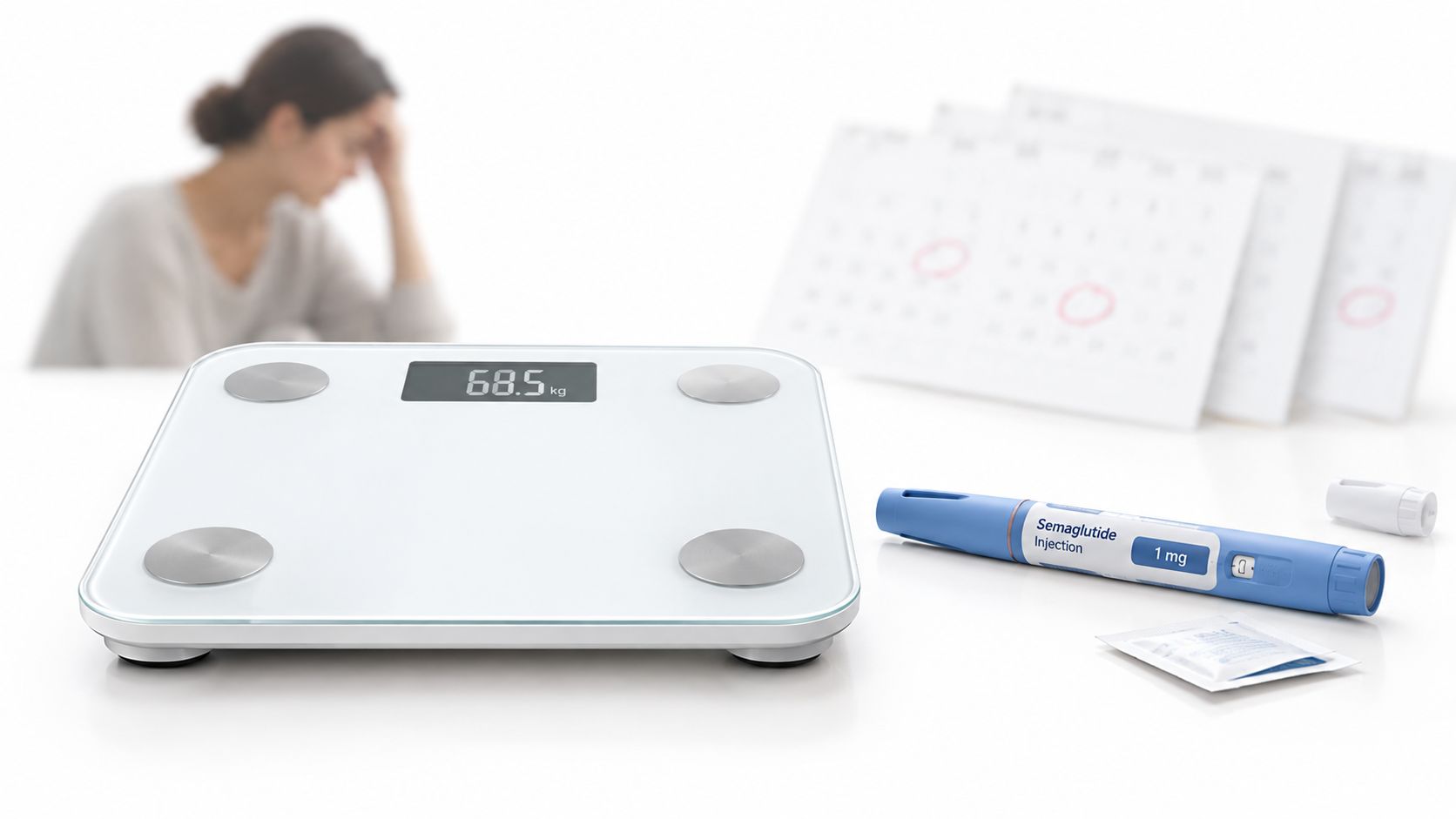
Average weight change in the STEP 1 trial was 14.9% after 68 weeks on semaglutide 2.4 mg, but that group result isn't a promise for every patient. Apparent nonresponse is often explained by incomplete maintenance-dose exposure, missed or mistimed injections, or a normal biological plateau, so clinician review should follow a documented timeline and adherence audit, not unsupervised dose escalation.
A patient may be taking semaglutide every week, watching the scale closely, and still see little movement after several weeks. The concern is understandable, especially when expectations are shaped by dramatic before-and-after stories. Clinically, however, the first question isn't whether semaglutide is “working.” It's whether the patient has had enough exposure, for enough time, at a dose that can reasonably be evaluated.
The causes usually fall into four groups: early titration, inconsistent medication exposure, biological adaptation, and medical or treatment factors that obscure progress. A plateau can also reflect changes in fluid, digestion, lean mass, appetite, or activity rather than an immediate loss of pharmacologic effect.
Introduction to Apparent Nonresponse on Semaglutide
A patient may report weekly injections, close attention to the scale, and little change after several weeks. That pattern can feel like treatment failure, but the timing of exposure often explains the apparent nonresponse. The relevant clinical question is whether semaglutide has been used long enough, at a dose appropriate for evaluation, with injections taken as prescribed.
The STEP 1 trial enrolled 1,961 adults with obesity or overweight plus a weight-related condition, excluding diabetes. Participants received once-weekly semaglutide 2.4 mg or placebo with lifestyle counseling for 68 weeks. Average weight change was 14.9% with semaglutide versus 2.4% with placebo, a difference of 12.4 percentage points (STEP 1 trial summary from the American College of Cardiology). These group results establish a benchmark, not an individual guarantee.
The benchmark also depends on completed exposure. Participants first increased their dose and were assessed after a long treatment period, rather than after a few weeks on a starter dose. Among participants who adhered to treatment, average loss reached 16.9%, and 92.4% achieved at least 5% weight loss. Some still lost less than 5% or responded less than expected. Individual variation remains clinically relevant.
Clinical principle: A flat scale during titration is an exposure question first and a treatment-failure question later.
A clinician-ready review should record the exact dose, time spent at each dose, injection dates, missed doses, side effects, and the broader weight trend. Waist circumference, hunger, satiety, glucose markers, sleep, concurrent medications, fluid retention, and changes in activity can add context when scale weight remains unchanged.
The next step is a structured review, not unsupervised escalation. Patients should not double doses, accelerate titration, or restart independently after an interruption. The prescriber should determine whether the main issue is limited exposure, poor tolerability, another medical contributor, or a treatment plan that needs reconsideration.
Understanding Semaglutide Dosing and Treatment Timeline
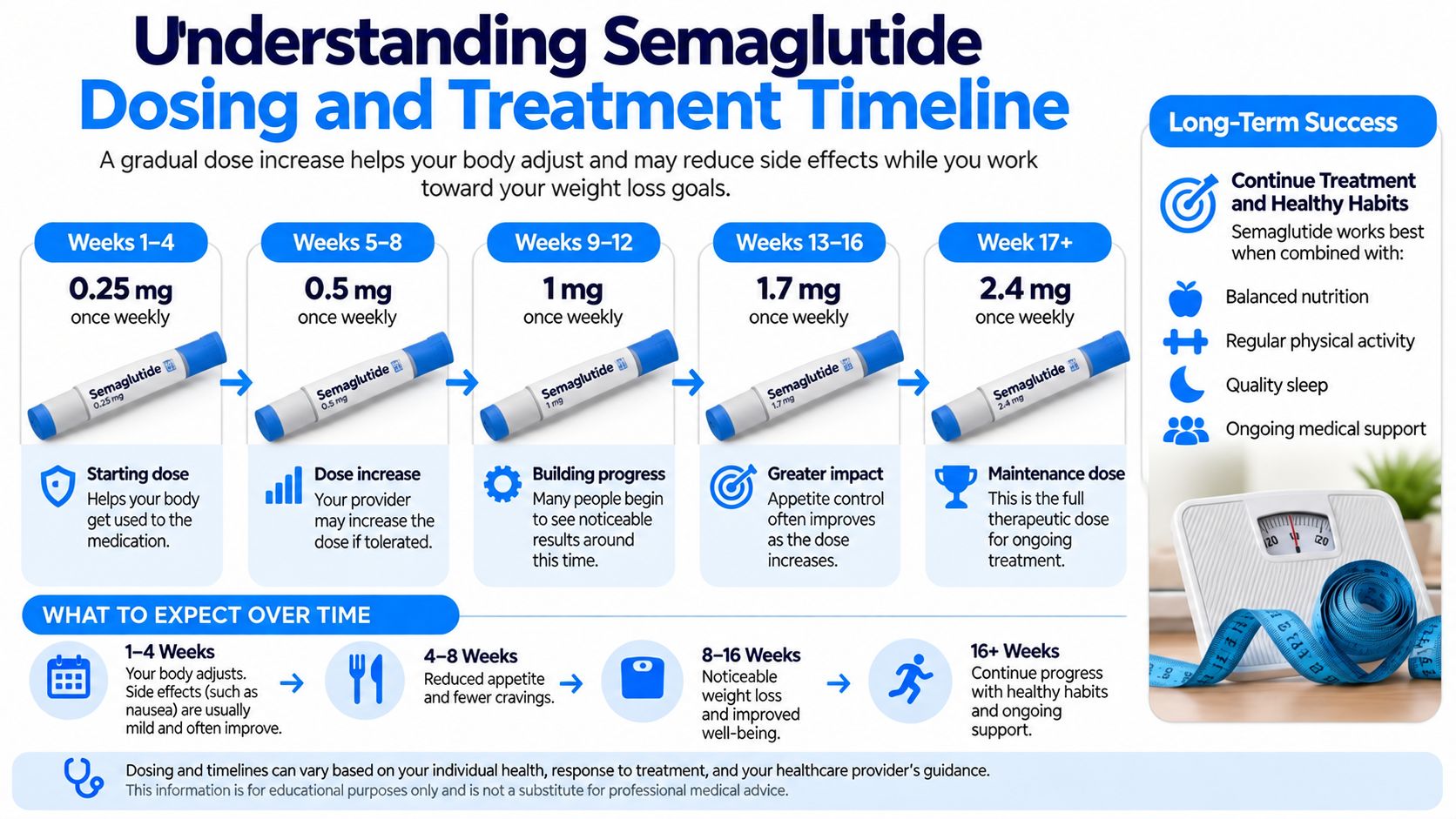
A patient at 0.5 mg in week 6 is answering a tolerability question, not yet an efficacy question. Semaglutide starts below the maintenance dose because gradual escalation can reduce problems such as nausea, vomiting, constipation, reflux, and reduced oral intake. The FDA-approved injectable schedule begins at 0.25 mg once weekly, then increases at four-week intervals through 0.5 mg, 1.0 mg, and 1.7 mg before reaching the 2.4 mg maintenance dose (FDA prescribing information for semaglutide injection).
Why the early weeks can mislead
During the first 8 to 16 weeks, a patient may still be receiving doses intended mainly to establish tolerability. Lower doses can have clinical effects, but weight change during titration should not be judged as though maintenance-dose treatment has already been completed.
The STEP 1 trial evaluated once-weekly semaglutide over 68 weeks, with approximately the first 16 weeks used for dose escalation (clinical review of semaglutide treatment timelines). A patient who spends much of that period at a lower tolerated dose has had less exposure than someone who completes titration and remains at maintenance.
The clinical distinction is straightforward: little change during early titration indicates limited exposure, while little change after adequate maintenance exposure raises a different question about response. Treat those situations separately.
Tolerability can change the timeline
If adverse effects interfere with hydration, nutrition, or daily functioning, escalation can be delayed. The prescribing information permits delaying an increase for four weeks when the current dose is not tolerated. A slower schedule may be appropriate, but it lengthens the time before maintenance-dose response can be assessed.
A telehealth review should document:
- Prescribed dose: The clinician's intended dose and escalation schedule.
- Actual dose: What was administered, on which dates, and whether the full amount was taken.
- Time at each dose: The duration at 0.25 mg, 0.5 mg, 1.0 mg, 1.7 mg, or 2.4 mg.
- Tolerability: Nausea, vomiting, constipation, reflux, reduced intake, or symptoms that changed treatment.
- Trend: Weekly weight alongside waist circumference and appetite changes.
A flat scale during titration is not automatically treatment failure. Persistent minimal loss after verified adherence and an adequate clinician-directed maintenance trial warrants review of caloric intake, alcohol and liquid calories, sleep, other medications, endocrine conditions, and whether fluid or lean-mass changes are masking fat loss. Do not double doses, accelerate escalation, or restart independently after an interruption.
Adherence, Missed Doses, and Real-World Exposure
A patient may report taking semaglutide while receiving less consistent exposure than the prescription assumes. Travel, nausea, delayed refills, uncertainty about the dose, or restarting after an interruption can all change the treatment timeline. Those events should be documented before labeling the medication ineffective.
A recent real-world semaglutide adherence analysis classified 61% of patients as fully adherent. In that analysis, 22.2% sometimes skipped doses because they believed treatment was not working, and 42.2% occasionally missed a dose or took it at a different time after falling out of their usual routine. These findings support a factual exposure review rather than judgments about whether a patient was “good” or “bad” with treatment.
What a practical exposure audit includes
A telehealth review should reconstruct what happened, then compare it with the intended protocol. Keep the questions specific:
- Injection dates: When were the last several injections given?
- Dose history: What dose was prescribed, and what dose was taken each time?
- Time at dose: How long did the patient remain at each titration or maintenance dose?
- Interruptions: Were injections missed, delayed, stopped, or restarted?
- Reason for changes: Did nausea, vomiting, uncertainty, travel, refill delays, or cost alter the schedule?
- Restart point: After an interruption, did the patient resume independently or receive a new clinician-directed schedule?
This audit separates early titration exposure from a true plateau. Little change while the dose is still being increased does not establish nonresponse. A sustained lack of progress after consistent use at a clinician-directed maintenance dose deserves a different assessment.
Missed doses require a safe plan
The prescribing information states that one missed dose may be administered as soon as possible when the next scheduled dose is more than 48 hours away. If the next dose is due within 48 hours, the missed dose should be skipped. After more than two consecutive missed doses, reinitiation with dose escalation may be needed to reduce gastrointestinal adverse effects (FDA prescribing information for semaglutide injection).
Safety rule: A missed injection is not a reason to double the next dose or resume an old dose without clinical guidance.
The trade-off is practical. Continuing an irregular schedule can produce less predictable appetite control, while restarting too aggressively can worsen adverse effects and interrupt treatment again. Depending on the interruption and symptoms, a clinician may choose slower re-escalation, continue the current dose, or reassess whether the formulation and treatment plan remain suitable.
Plateaus, Regain, and Biological Adaptation
A plateau means the scale has stabilized. It doesn't automatically mean appetite control has disappeared or that semaglutide has stopped producing any benefit. As body weight changes, energy requirements, activity, dietary intake, fluid balance, and lean mass can also change. A patient may feel less hunger than before treatment while still seeing little movement on the scale.
The STEP 1 extension provides an important distinction between plateau during treatment and regain after withdrawal. Participants who completed 68 weeks of semaglutide 2.4 mg were followed for another year after treatment ended. One year after withdrawal, they regained approximately two-thirds of the weight they had previously lost, and related cardiometabolic improvements moved back toward baseline (STEP 1 extension publication).
Why stopping can look like failure
The follow-up reported that regain continued through week 120, the end of observation. Missed injections, prolonged interruptions, or discontinuation can therefore reduce appetite-control effects and allow gradual regain. That pattern doesn't prove the medication never worked. It may show that the medication-associated effect depended on continued treatment and behavioral support.
The broader STEP 1 data also show that weight loss isn't guaranteed to continue in a straight line. By week 68, average loss was 14.9% from baseline with semaglutide 2.4 mg plus lifestyle intervention, compared with 2.4% with placebo, while the group result still contained substantial individual variation (FDA prescribing information summarizing semaglutide trial data).
Scale stability needs context
A clinician should ask whether the patient has:
- Reduced hunger but stable weight.
- A smaller waist despite limited scale change.
- Increased resistance training or preserved lean mass.
- Constipation or fluid shifts affecting weight.
- Experienced a treatment interruption.
- Noticed increased portions, liquid calories, alcohol, or appetite between doses.
A stable scale can coexist with a useful appetite effect. The question is whether the overall clinical trend supports continuation, adjustment, or reassessment.
The right response to a plateau is measurement, not punishment. Weekly weight trends, waist circumference, hunger or satiety scores, protein and fiber intake, resistance training, sleep, and injection consistency provide more actionable information than an isolated weigh-in.
Clinical Evaluation Beyond the Scale
A clinically useful review starts with the simplest possibility: the patient may not yet have had adequate exposure. It then expands to factors that can blunt loss, obscure the result, or create a separate medical problem. This sequence prevents premature dose escalation and keeps the assessment focused.
Start with medication facts
The first record should state the prescribed dose, actual dose, injection dates, time at each dose, missed injections, side effects, and formulation. If the patient uses a product requiring measurement from a vial, the clinician should confirm that the concentration and administration instructions are understood. Product and formulation discrepancies deserve review before interpreting response.
Weight should be recorded as a trend rather than a single result. Waist circumference can identify body-composition change that the scale misses, while hunger, satiety, glucose markers, and gastrointestinal symptoms help show whether the medication is having a physiologic effect.

Review nutrition, movement, and recovery
The aim isn't to impose a rigid diet. The clinician should identify whether intake has shifted in ways that reduce the expected energy deficit, including liquid calories, alcohol, larger portions, or reduced meal structure. Protein and fiber intake matter for nutrition and satiety, while resistance training can support lean-mass retention during weight reduction.
Sleep deserves direct attention because poor sleep can affect appetite, activity, and food choices. The review should also ask about constipation, vomiting, diarrhea, hydration, menstrual or hormonal changes when relevant, and a recent change in activity. These factors can alter the scale independently of fat loss.
A compact checklist can keep the visit focused:
- Exposure: Confirm prescribed versus taken dose, injection timing, technique, storage, and interruptions.
- Response: Compare weekly weight, waist circumference, appetite, satiety, and glucose-related markers.
- Nutrition: Review protein, fiber, alcohol, liquid calories, meal pattern, and gastrointestinal tolerance.
- Activity: Assess daily movement and resistance training without assuming that more exercise is automatically appropriate.
- Recovery: Discuss sleep, stress, hydration, constipation, and reduced intake from adverse effects.
- Medical context: Reconcile medications associated with weight gain and assess whether endocrine conditions, fluid retention, or another diagnosis could explain the pattern.
- Plan: Decide whether to maintain, slow, or adjust titration, change formulation, consider another evidence-based therapy, or obtain further evaluation.
When the differential needs to widen
Persistent minimal loss after verified adherence and an adequate maintenance-dose period warrants clinical reassessment. The review may include medication reconciliation, evaluation for endocrine conditions, assessment of fluid retention, and confirmation that the prescribed formulation is accurate and clinically appropriate.
A needle-free sublingual option may be discussed for a patient whose injection aversion is undermining persistence, but formulation changes still require physician assessment. Dose escalation isn't a substitute for diagnosis, and no formulation should be treated as automatically interchangeable with another.
When to Seek Telehealth Review and Next Steps
Self-monitoring is reasonable during early titration when symptoms are manageable, injections are consistent, and the clinician has provided a clear schedule. Little change during this phase does not establish treatment failure. Record dose exposure and weight trends, and avoid changing the schedule independently.
Telehealth review is appropriate when a clear clinical decision is needed:
- Persistent minimal loss: Weight remains largely unchanged after verified adherence and an adequate clinician-directed maintenance trial.
- Repeated interruptions: Missed or mistimed injections make cumulative exposure uncertain.
- Tolerability barriers: Nausea, vomiting, constipation, reflux, or poor intake delays escalation or threatens continuation.
- Rapid regain: Weight rises after missed doses, discontinuation, or another treatment interruption.
- Possible medical contributor: New symptoms, medication changes, fluid retention, or concern about an endocrine condition accompanies the plateau.
- Formulation uncertainty: The patient is unsure which concentration, dose, or administration instructions apply.
A clinician may recommend more time at the current dose, slower re-escalation, a supervised maintenance trial, a formulation review, or another evidence-based treatment. Changes involving semaglutide formulations, tirzepatide, or other metabolic therapies require assessment of eligibility, adverse effects, comorbidities, access, and the patient's ability to follow the regimen.
Seek urgent medical assessment for severe or concerning symptoms, especially vomiting, poor intake, dehydration, or other significant deterioration. Weight-loss goals do not justify doubling a dose, accelerating titration, or restarting after multiple missed injections without guidance.
Bring a medication list, injection dates, dose history, side-effect notes, weekly weights, waist measurements, appetite changes, and questions about the next supervised step. Vials + Vitals offers physician-directed telehealth assessment for individualized semaglutide and tirzepatide protocols, including review of eligibility, formulation, and titration under licensed clinical oversight.
For patients asking why semaglutide is not producing expected weight loss, Vials + Vitals can provide a confidential clinical assessment. Bring the injection log and dose history so the reviewing physician can distinguish early titration exposure from a true plateau at the first appointment.