Weight Loss Plateau Why It Happens and Fixes
Discover weight loss plateau why it occurs on GLP-1 therapies. Learn the clinical causes of metabolic adaptation and evidence-based management steps.

Most advice about a weight loss plateau starts with “eat less and exercise more.” That recommendation is often incomplete, and in some patients it can be counterproductive. A plateau doesn't automatically mean poor discipline, hidden overeating, or a medication that has stopped working. It may indicate that the body has adapted to a lower weight, that treatment exposure is incomplete, or that another clinical factor needs review.
The useful question isn't only “weight loss plateau why?” It's whether the current weight represents a normal physiological endpoint, a temporary fluctuation, or an underpowered and inconsistently used treatment plan. The Vials + Vitals Medical Board approaches that distinction through trend review, medication assessment, nutrition and activity evaluation, and appropriate medical supervision.
Redefining the Weight Loss Plateau
A plateau is best understood as a change in the conditions that produced weight loss, not as proof that effort has disappeared. As body mass declines, the body generally requires less energy to maintain itself and to move. Appetite-regulating systems can also increase hunger, creating a biological push toward restoring lost weight.
A review in the NCBI StatPearls discussion of weight-loss plateaus describes plateaus as a predictable phase that typically emerges around 6–8 months after weight reduction begins. The same review explains that adaptive thermogenesis can reduce total daily energy expenditure beyond the change expected from a smaller body alone. It estimates that a 10% reduction in body weight may correspond to an approximately 15% decline in total daily energy expenditure, which could equal roughly 375 calories per day for someone initially consuming or expending about 2,500 calories daily.
That shift can turn a previously effective eating pattern into a maintenance pattern. The patient may still be following the same plan, but the plan no longer creates the same energy deficit.
A plateau isn't a verdict on adherence
Patients often interpret a stable scale as a moral judgment. Clinicians should resist that framing. Weight is influenced by body mass, fluid balance, glycogen, gastrointestinal contents, medication effects, sleep, activity, and changes in appetite. A single weigh-in can't identify which factor is responsible.
Clinical reassessment should examine:
- Current body weight and trend, not one isolated measurement.
- Food and beverage intake, including changes in portions and appetite.
- Physical activity, including unplanned reductions caused by fatigue.
- Medication effects, including treatments that can promote weight gain.
- Sleep and stress, which can affect appetite, recovery, and daily movement.
- Treatment response, including whether the current dose and duration are adequate.
Clinical perspective: A plateau means the current system has reached equilibrium. It doesn't explain why that equilibrium exists.
The right response is structured, not punitive
More restriction isn't automatically better. Aggressive calorie reductions can worsen fatigue, make protein and micronutrient intake harder to maintain, and increase compensatory hunger. Automatic medication escalation can also create unnecessary gastrointestinal symptoms or nutritional problems when the actual issue is missed dosing, inadequate titration, or an unrelated medical condition.
A plateau deserves attention, but it deserves diagnostic attention. The safest next step is usually to clarify what changed, what remained consistent, and whether the patient is trying to reach continued weight loss or maintain a clinically meaningful reduction.
The Physiology of Metabolic Adaptation
A plateau often reflects physiology doing exactly what physiology does. As weight falls, the body becomes more efficient. Energy expenditure is not a fixed target. It shifts with body size, body composition, food intake, daily movement, and treatment response.
Three changes matter most. Resting energy expenditure drops because a smaller body needs less energy to maintain basic function. Movement becomes less costly because the same walk, climb, or workout is being done with less mass. The thermic effect of food also falls when total intake is lower. On top of that, adaptive thermogenesis can reduce energy expenditure beyond what clinicians would expect from changes in fat and lean mass alone.
That is why a plan that worked well at the start can stop producing visible loss later.
A practical example makes this clearer. If a patient begins with a modest daily calorie deficit, that gap can narrow over time from several directions at once. Resting needs fall, routine activity may drift down without the patient noticing, and appetite often rises as the body defends against further loss. Controlled human studies estimate an additional adaptive reduction of about 0.5 megajoules per day, or roughly 120 calories per day on average, with wide variation between individuals, as described in the PubMed review of adaptive thermogenesis. In real life, that means a small deficit in the 100–200 calorie range can disappear without any obvious lapse in adherence.
Why a small deficit can disappear
Patients usually do not feel this process happening in a clear, dramatic way. They feel a little hungrier. They fidget less. Their step count slips because fatigue, routine changes, or appetite suppression has altered eating patterns and training quality. A walking route that once created a meaningful energy cost now costs less at a lower body weight. The biology has changed, so the original prescription may no longer match the current metabolic state.
The answer is reassessment, not reflexive punishment. Sometimes a modest adjustment in intake, protein distribution, activity, or treatment structure is enough. Sometimes pushing harder creates worse trade-offs, including fatigue, poorer dietary quality, lower training output, and more hunger.
Use trends instead of daily verdicts
Daily scale readings are noisy. Water retention, bowel patterns, menstrual cycling, sodium intake, and training stress can all obscure what is happening to body fat.
Use trend measures collected over several weeks:
- Average body weight, under reasonably consistent conditions.
- Waist circumference, alongside weight and body composition.
- Resistance-training performance, to judge whether strength and function are being preserved.
- Dietary intake and protein adequacy, especially when appetite is suppressed.
- Activity patterns, including walking, exercise, and total daily movement.
The goal is to see whether lean tissue is being maintained, metabolic health is improving, and the current plan still fits the patient in front of you.
GLP-1 Therapies and Real-World Trajectories
GLP-1-based treatment changes the appetite side of the energy equation, but it doesn't abolish metabolic adaptation. Semaglutide primarily reduces appetite, hunger, cravings, and food reward. Tirzepatide acts through incretin pathways that can support appetite and glycemic control, but patients still approach a new balance between intake and expenditure as weight decreases.
A modeling analysis reported that semaglutide and tirzepatide were associated with a lower appetite-feedback parameter, approximately 30–60 calories per day per kilogram, compared with stronger feedback during diet-only weight loss. The finding supports a clinically important point: these therapies can prolong weight loss, but they don't make a plateau biologically impossible. The GLP-1 and dual-incretin modeling analysis also reported that semaglutide weight loss continued through approximately week 60 before reaching a nadir, with mean loss of 15.2% at week 104 versus 2.6% with placebo.
Trial exposure isn't everyday exposure
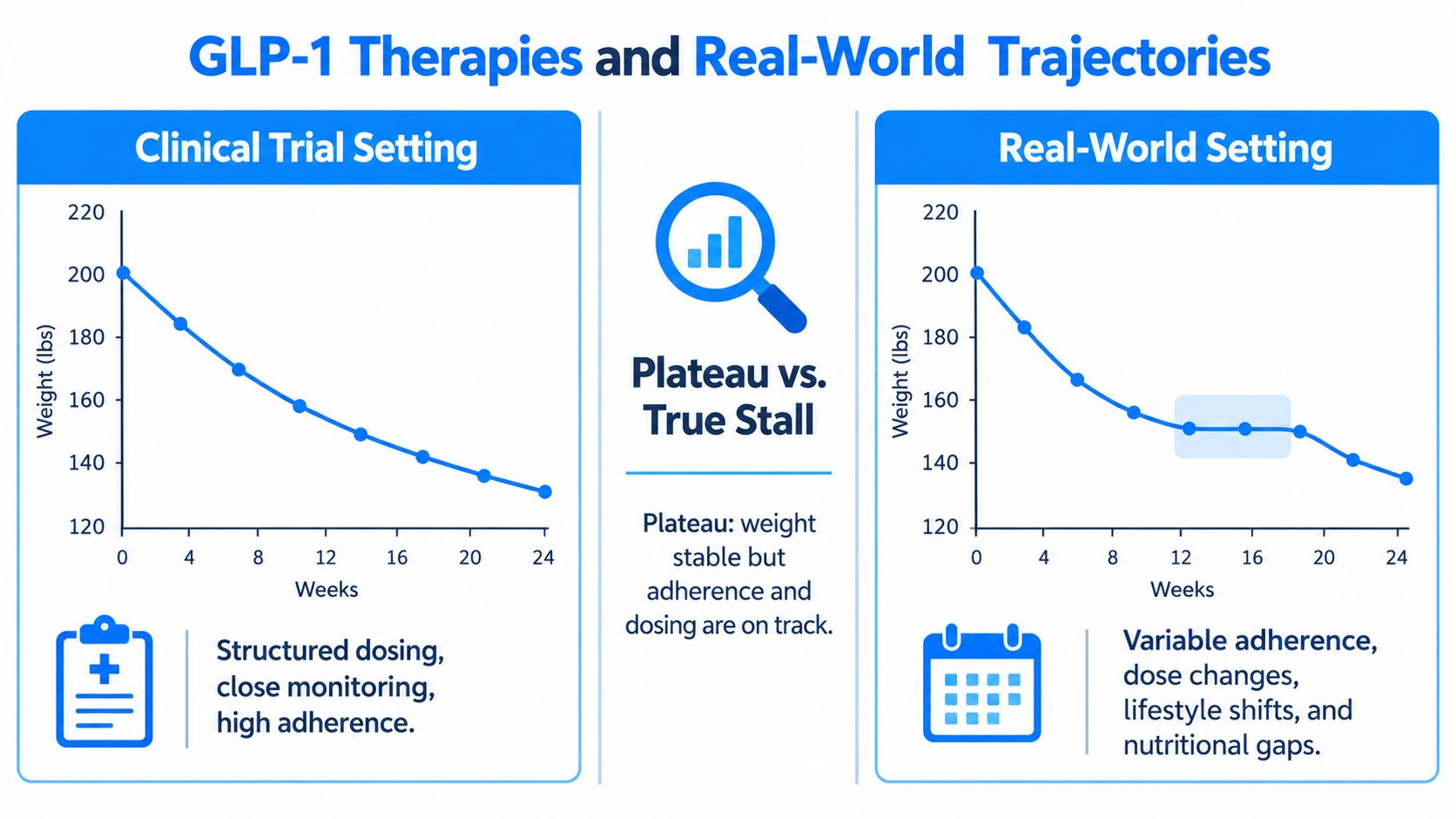
Clinical trials provide structured titration, regular follow-up, and protocolized support. Everyday care may involve missed doses, supply interruptions, dose reductions because of gastrointestinal effects, affordability problems, or stopping before an effective maintenance dose is reached. Each of those factors can reduce observed benefit without proving pharmacologic failure.
A 2025 Cleveland Clinic analysis reported that patients who remained on treatment and used high maintenance doses lost an average of 13.7% with semaglutide and 18.0% with tirzepatide after one year, while those who discontinued early lost 3.6% and late discontinuers lost 6.8%. These are real-world group averages, not individual guarantees, and the findings reinforce why persistence and exposure belong in any plateau assessment. The Cleveland Clinic analysis of real-world injectable treatment outcomes provides that context.
Plateau timing varies by treatment and patient
An exploratory analysis of SURMOUNT-1 and SURMOUNT-4 found that most participants receiving tirzepatide reached a plateau by week 72, while median time to plateau ranged from 24.3 weeks among participants with overweight to 36.1 weeks among those with class II or III obesity. Higher doses of 10 or 15 milligrams were associated with a later plateau than 5 milligrams, while female sex and younger age were associated with a longer time to plateau. The analysis of plateau timing with tirzepatide shows why a stable scale doesn't automatically mean treatment has stopped working.
The clinical question becomes exposure versus endpoint. A prescriber should verify administration, titration history, tolerability, appetite response, and the duration of the current dose before considering a change.
Structured Clinical Assessment for Stalled Progress
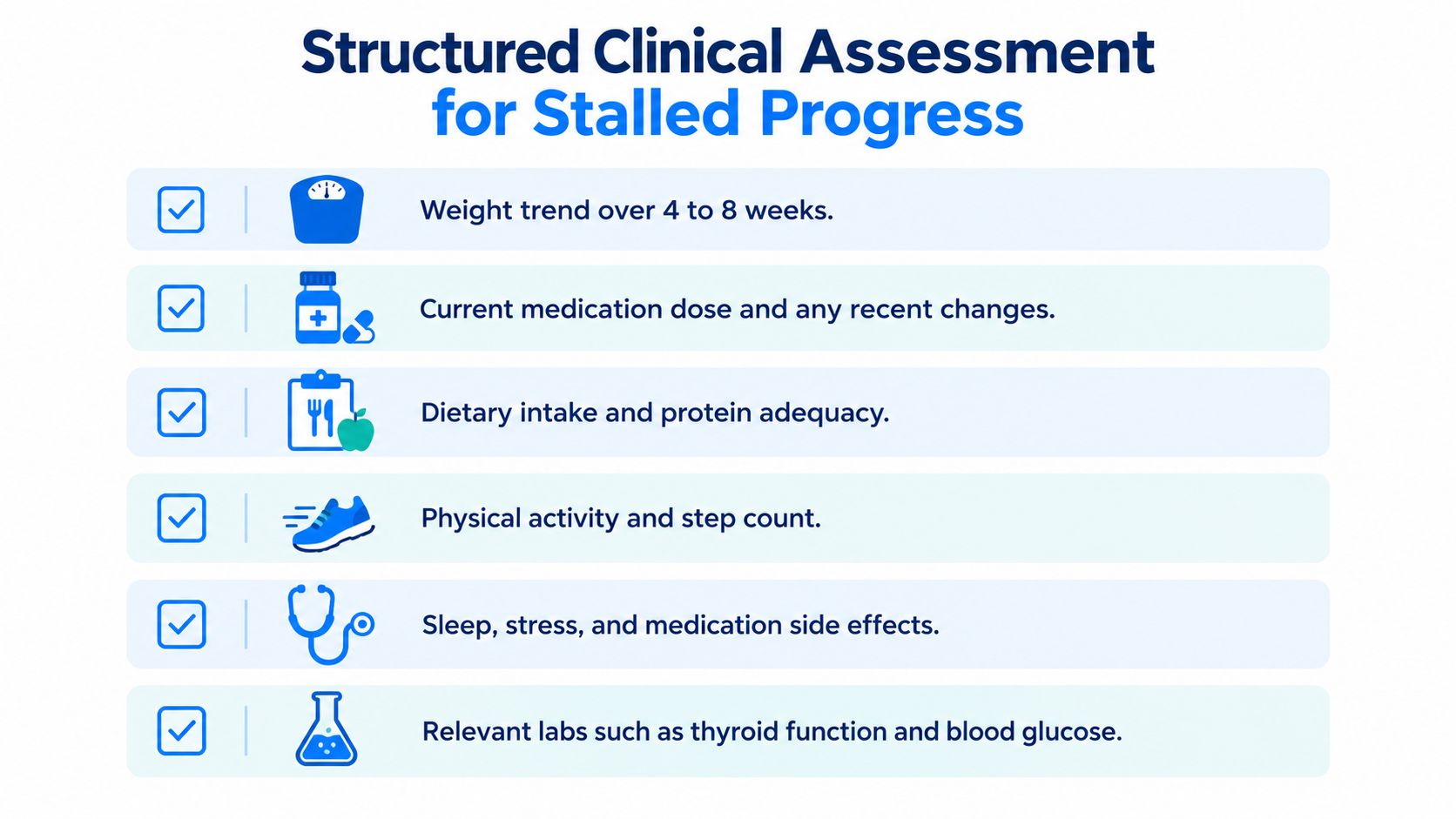
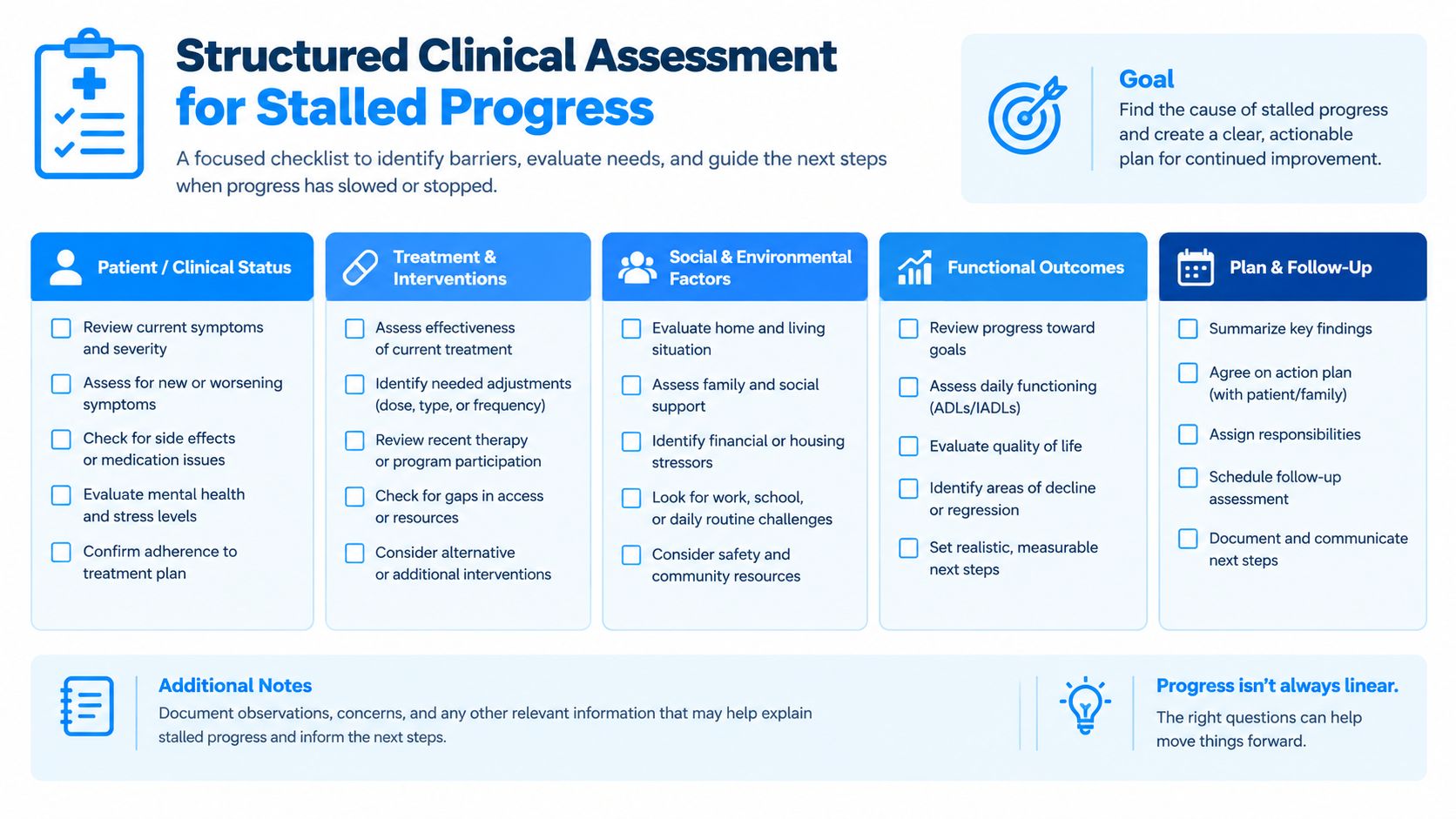
A plateau evaluation works best when it follows a repeatable sequence. Patients can prepare for a clinical visit by bringing an accurate medication list, recent weight records, notes about appetite and side effects, and a realistic description of food and activity patterns. Providers can then separate a true physiological plateau from a correctable treatment problem.
Start with the weight trajectory
A few unchanged readings don't establish a plateau. Water retention, constipation, menstrual-cycle changes, changes in sodium intake, and recent training can obscure fat loss. The provider should review a multi-week pattern and compare it with waist circumference, clothing fit, strength, and treatment milestones.
Confirm medication exposure
The next question is whether the patient is receiving the intended treatment. Review the current dose, recent dose changes, missed administrations, injection or administration technique, and any interruption caused by tolerability, access, or travel. The labeled four-week titration schedule in a comparative effectiveness analysis allowed escalation to at least 10 milligrams of tirzepatide and at least 1.7 milligrams of semaglutide by week 16. Those milestones provide context, but individual titration must remain clinically directed. Details are available in the comparative titration analysis.
Examine intake, activity, and recovery together
A patient may eat less overall but consume too little protein, or may follow the meal plan while unconsciously moving less because of fatigue. A provider should examine food quality, protein adequacy, hydration, resistance exercise, walking, sleep, stress, and gastrointestinal symptoms as one connected picture.
The review should also include concurrent medications and medical conditions that can influence weight or appetite. Thyroid function, blood glucose, and other testing may be relevant when symptoms or medical history warrant evaluation. Testing should answer a clinical question, not turn every plateau into an indiscriminate laboratory search.
Define the treatment target
Continued scale reduction isn't always the only meaningful outcome. A patient may be achieving better glycemic control, improved blood pressure, greater mobility, or stable weight after a substantial reduction. The clinician and patient should clarify whether the immediate target is additional fat loss, waist reduction, metabolic improvement, or maintenance.
Practical rule: A dose change should follow a documented review of exposure, response, safety, and goals. It shouldn't be a reflex triggered by one disappointing weigh-in.
Evidence-Based Strategies to Break the Plateau
The best intervention depends on what the assessment finds. A patient with missed doses needs a different response from a patient who has reached a stable weight after adequate treatment exposure. The goal is not to force the scale downward at any cost. The goal is to restore an appropriate energy deficit while protecting lean tissue, hydration, nutrition, and tolerability.
Adjust nutrition modestly
A modest calorie adjustment may be reasonable when the current intake has become maintenance intake, but the change should be calculated from current needs rather than copied from an earlier phase. Food records can identify overlooked beverages, larger portions, reduced protein, or appetite changes without assuming dishonesty or failure.
Protein deserves particular attention during appetite-suppressing treatment. Adequate intake supports lean-mass preservation, while excessive restriction can leave too little room for protein, fiber, and micronutrients. A dietitian can help calibrate meals to the patient's body size, activity, medical conditions, and tolerance.
Preserve muscle through resistance training
Resistance exercise is more useful than just adding exhausting cardio when the priority is body composition and function. It gives the body a reason to preserve strength and lean tissue during weight loss. Training should be scaled to the patient's health status and recovery capacity, with progression based on performance rather than punishment.
A sudden increase in exercise can backfire if it raises fatigue, pain, or hunger enough to disrupt adherence. Consistent strength work, routine daily movement, and adequate recovery generally provide a more durable foundation.
Consider medication changes only within guardrails
Comparative evidence supports a meaningful average difference between tirzepatide and semaglutide. Pooled analyses reported an additional mean reduction of approximately 4.28 percentage points and 4.43 kilograms with tirzepatide, while the 72-week SURMOUNT-5 trial reported estimated mean reductions of 20.2% with tirzepatide versus 13.7% with semaglutide among adults with overweight or obesity without diabetes. The comparative incretin evidence describes trial-level averages, not guaranteed results for a particular patient.
Escalation may be inappropriate when nausea, vomiting, poor fluid intake, inadequate nutrition, or another medical problem is present. The prescriber should review the indication, current exposure, gastrointestinal effects, hydration, nutritional status, and lean-mass preservation before changing dose or formulation.
What generally doesn't work well: panic restriction, unsupervised dose escalation, compensating for a plateau with punishing exercise, or stopping treatment abruptly without a clinical plan. Those approaches can increase side effects and make the underlying problem harder to identify.
Navigating Hair Retention and Nutritional Stress
Hair shedding can be especially alarming during successful weight reduction. The timing often creates confusion because shedding may become noticeable after the initial weight loss rather than immediately after a medication change. A common mechanism is telogen effluvium, in which physiological stress shifts hair follicles prematurely from the growth phase into the resting phase.
Rapid weight loss, inadequate protein, micronutrient deficiency, illness, endocrine disease, and reduced energy intake can all contribute. Scholarly reviews describe hair-loss signals during GLP-1 receptor agonist treatment but also emphasize that controlled prospective evidence specifically establishing medication causation remains limited. The review of hair loss and GLP-1 receptor agonists cautions that obesity and the weight-loss process itself can confound pharmacovigilance reports.
Interpret medication signals carefully
In the OASIS 1 randomized trial of adults with obesity, alopecia was reported in 23 of 334 participants receiving oral semaglutide 50 milligrams daily, approximately 7%, compared with 9 of 333 receiving placebo, approximately 3%. The difference wasn't statistically significant, and the small event count can't establish that semaglutide directly damages follicles. The OASIS 1 trial report supports cautious interpretation rather than dismissal or alarm.
For a patient with diffuse shedding after substantial weight loss, the practical response is to review the timeline and nutritional status. Protein intake, iron status when clinically indicated, thyroid function, anemia, illness, and other endocrine causes may need evaluation. The patient shouldn't stop or alter treatment without prescriber guidance, particularly when the therapy is improving diabetes or other metabolic outcomes.
Know when dermatology is appropriate
Diffuse shedding can fit telogen effluvium, but patchy, scarring, painful, inflamed, or persistent hair loss needs a more specific assessment. A dermatologist can examine the scalp, distinguish shedding from follicular disease, and determine whether additional testing or treatment is necessary.
Hair retention also depends on avoiding the preventable stresses that make recovery harder. Adequate protein and micronutrient intake, gradual rather than extreme restriction, and prompt attention to gastrointestinal symptoms protect overall nutrition while the care team evaluates the cause.
Long-Term Metabolic Health and Maintenance
Weight loss follows a recurring pattern across many interventions. In the Look AHEAD lifestyle trial, participants receiving intensive lifestyle intervention lost about 9% of body weight after one year, compared with less than 1% among participants receiving diabetes support and education alone. Over eight years, the intensive-intervention group maintained nearly 5% average weight loss, while the comparison group reached about 2% loss. These findings are reported in the eight-year Look AHEAD analysis.
The same intervention literature describes maximal weight loss as commonly occurring around six months for diet, exercise, and combined approaches, with bariatric surgery as a notable exception. In the eight-year analysis, participants reached their greatest loss around year one, then gradually regained weight, with body weight stabilizing between years four and six at approximately 4.0%–4.7% below baseline. Maintenance at a lower weight is not a clinical defeat. It can represent the point at which treatment, behavior, and physiology have reached a sustainable balance.
Redefine success after the scale stabilizes
Long-term care should track more than continued weekly loss. Relevant outcomes include:
- Metabolic markers, such as glycemic control when clinically relevant.
- Lean-mass preservation, strength, mobility, and physical function.
- Waist circumference and body composition, interpreted with the broader clinical picture.
- Medication tolerability and adherence, including whether the regimen remains practical.
- Quality of life, appetite control, sleep, and the ability to sustain daily habits.
A plateau can therefore be a transition point. The patient may need a nutrition adjustment, a treatment review, a different dose strategy, or a maintenance plan rather than another aggressive push toward restriction.
Ongoing medical supervision keeps that decision grounded in evidence. The most useful care plan is compassionate without being passive, structured without being punitive, and flexible enough to respond to changing biology.
Vials + Vitals offers physician-directed telehealth assessments for medically supervised weight management, including individualized semaglutide and tirzepatide protocols, titration oversight, and review of factors that can contribute to a plateau. Patients can begin with the clinical assessment at Vials + Vitals to determine whether treatment is appropriate and what next step should be discussed with a licensed provider.