Insomnia Treatment Online: Your Evidence-Based Guide
Insomnia treatment online explained with evidence-based guidance. Compare CBT-I, telehealth, and digital programs to find safe, effective virtual care.

"Try a sleep app" is among the most common answers to insomnia, and it's also incomplete. Insomnia treatment online isn't merely a convenience decision. It's a triage decision. Digital care may offer effective, structured therapy, but it can't by itself determine whether sleeplessness reflects insomnia alone, sleep apnea, a circadian-rhythm disorder, restless legs syndrome, medication effects, substance use, or a mood condition.
The right question is more precise: Can this patient safely use self-guided digital CBT-I, would clinician-supported online care be more appropriate, or is an in-person sleep evaluation needed first? The answer depends on symptoms, access, safety, technology comfort, and the quality of the program.
Why Online Insomnia Treatment Is More Than an App Download
Online access doesn't automatically mean equitable care. The 2025 VA/DoD insomnia guideline specifically recognizes barriers to technology-based CBT-I, including limited internet access and low technology literacy. The guideline also notes that some patients may not want to work with a provider, so a digital option can be attractive even when it doesn't provide enough clinical oversight.
That tension matters for older adults, people with limited digital access, and patients who need help interpreting instructions. A person may be able to open an app but still struggle to complete a sleep diary, adjust a sleep window safely, recognize a warning sign, or know when a treatment plan needs to change.
Convenience can conceal a treatment gap
Prior patient-perspective research found that people with lower income or education were two to three times less likely to complete digital CBT-I. That finding doesn't mean digital therapy is ineffective. It means completion depends partly on support, usability, confidence, and the patient's ability to fit treatment into daily life.
The same concern applies when insomnia occurs alongside possible sleep apnea, restless legs syndrome, circadian-rhythm disorders, substance use, mood symptoms, or medication effects. A sleep program that assumes every patient has uncomplicated behavioral insomnia may offer reassurance where diagnostic review is needed.
Practical rule: “Online” should describe the delivery method, not replace the clinical question of who needs evaluation.
A useful triage framework has three pathways. Self-guided digital care may suit an adult with a clear insomnia pattern, no major red flags, and enough comfort with technology to follow a structured program. Clinician-supported online care adds assessment, feedback, safety screening, and adjustment. In-person sleep medicine becomes more important when symptoms suggest another sleep disorder, treatment requires examination or testing, or digital barriers make self-guided care unrealistic.
What CBT-I Actually Is and Why Guidelines Recommend It First
Cognitive behavioral therapy for insomnia, or CBT-I, is a structured treatment that changes the thoughts and behaviors keeping insomnia active. It is not just advice to avoid screens or drink less caffeine. A complete program addresses both the mental cycle of sleep-related worry and the learned habits that keep the bed associated with wakefulness.
The core components
Cognitive therapy helps patients identify thoughts such as “If sleep doesn't happen immediately, tomorrow will be impossible.” The clinician then works with the patient to test and revise unhelpful beliefs, reduce catastrophic thinking, and lower the anxiety that can intensify wakefulness.
Stimulus control rebuilds the connection between bed and sleep. The patient uses the bed for sleep rather than extended worrying, scrolling, or lying awake. The purpose is behavioral retraining, not punishment.
Sleep-restriction therapy temporarily matches time in bed more closely to actual sleep. This builds sleep pressure and can consolidate fragmented sleep, but it requires individualized screening. The American Academy of Sleep Medicine notes that this method may be inappropriate or unsafe for people in high-risk occupations, including commercial driving or heavy-machinery operation.
Relaxation methods can be added to reduce physical arousal. They may include breathing exercises, progressive muscle relaxation, or other techniques, but they work as part of a broader treatment rather than as a substitute for it.
The American Academy of Sleep Medicine's clinical practice guideline gives a strong recommendation for multicomponent CBT-I in adults with chronic insomnia disorder. That recommendation draws on evidence from 49 studies, including multiple large randomized controlled trials.
A clinically complete online program should therefore reproduce the main CBT-I components instead of offering sleep-hygiene education alone. The strongest format is structured, multiweek, measurable, and supported by follow-up. A meditation app may help relaxation, but it isn't automatically CBT-I.
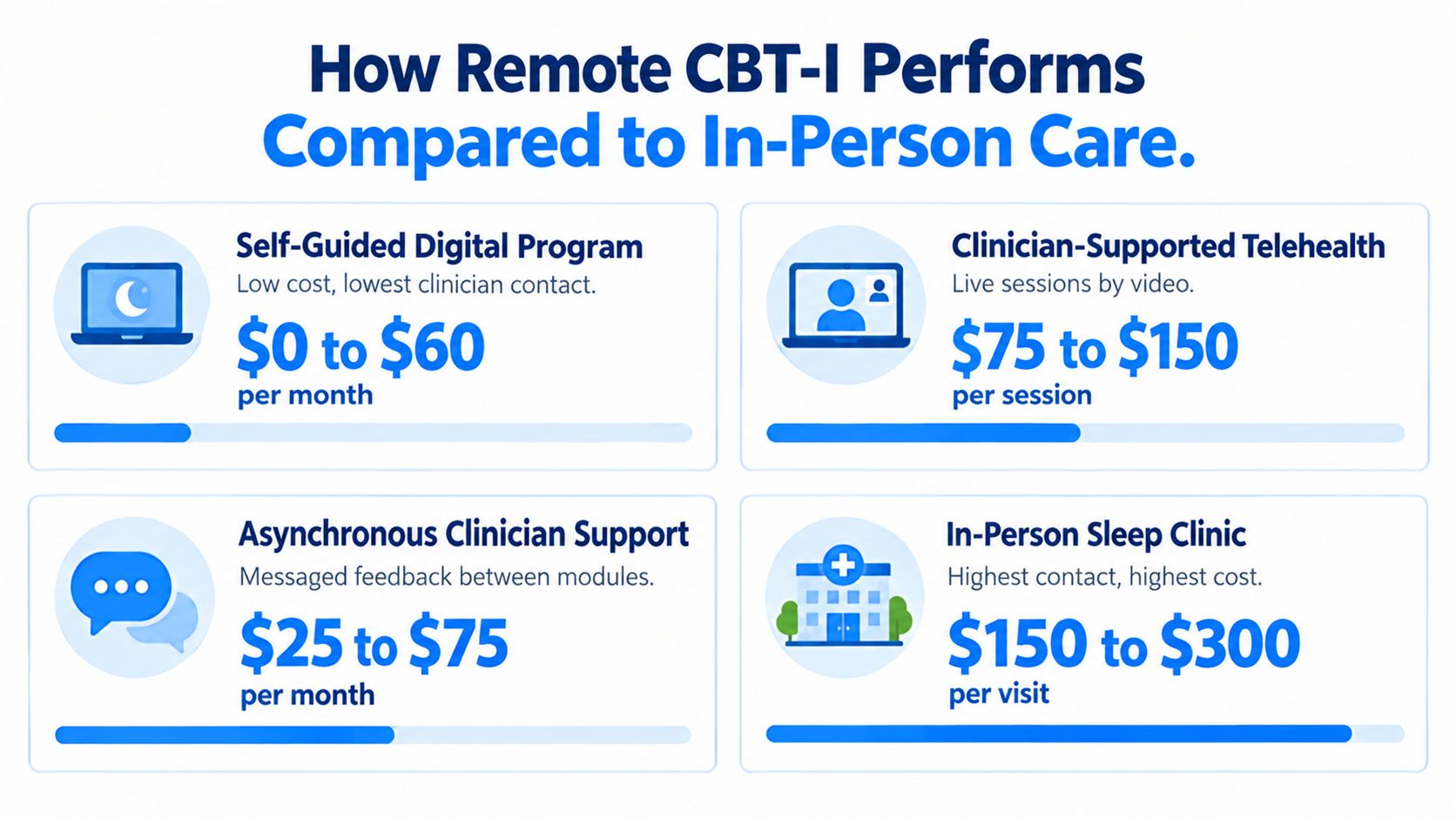
How Remote CBT-I Performs Compared to In-Person Care
Remote CBT-I comes in several forms, and the patient experience differs substantially.
A self-guided program provides lessons, exercises, and sleep tracking with little or no individual feedback. It can be convenient for a motivated patient with a straightforward presentation, but the patient must interpret instructions and recognize when the plan isn't a good fit.
Asynchronous clinician support adds written feedback between modules. This format can preserve flexibility while giving a clinician an opportunity to review symptoms, clarify assignments, and identify problems. It may work well for patients who don't need live conversation for every adjustment but still benefit from oversight.
Synchronous telehealth uses live video or similar visits. The clinician can ask follow-up questions, review the sleep pattern, evaluate medication and comorbidities, and modify the plan in real time. That additional contact can matter when sleep-restriction therapy, medication changes, or diagnostic uncertainty is involved.
What the evidence shows
A systematic review and meta-analysis of 42 randomized controlled trials involving 10,496 participants found that remote CBT-I reduced insomnia severity by 3.92 points more than control conditions on the Insomnia Severity Index, with a 95% confidence interval of 3.48 to 4.36 points. The meta-analysis of remote CBT-I also reported improvements in sleep quality, total sleep time, sleep efficiency, sleep-onset latency, wake time after sleep onset, awakenings, fatigue, anxiety, depression symptoms, and mental-health-related quality of life.
Older adults can benefit as well. A randomized trial of 311 participants aged 55–95 found that digital CBT-I significantly improved insomnia severity, sleep latency, awakenings, sleep efficiency, sleep quality, and fatigue compared with online education. Benefits continued through 12 months.
These findings support clinician-guided online delivery as a legitimate treatment format. They don't support replacing assessment with generic advice. Program structure, follow-up, accessibility, and escalation rules determine whether a digital option functions as treatment or merely as information.
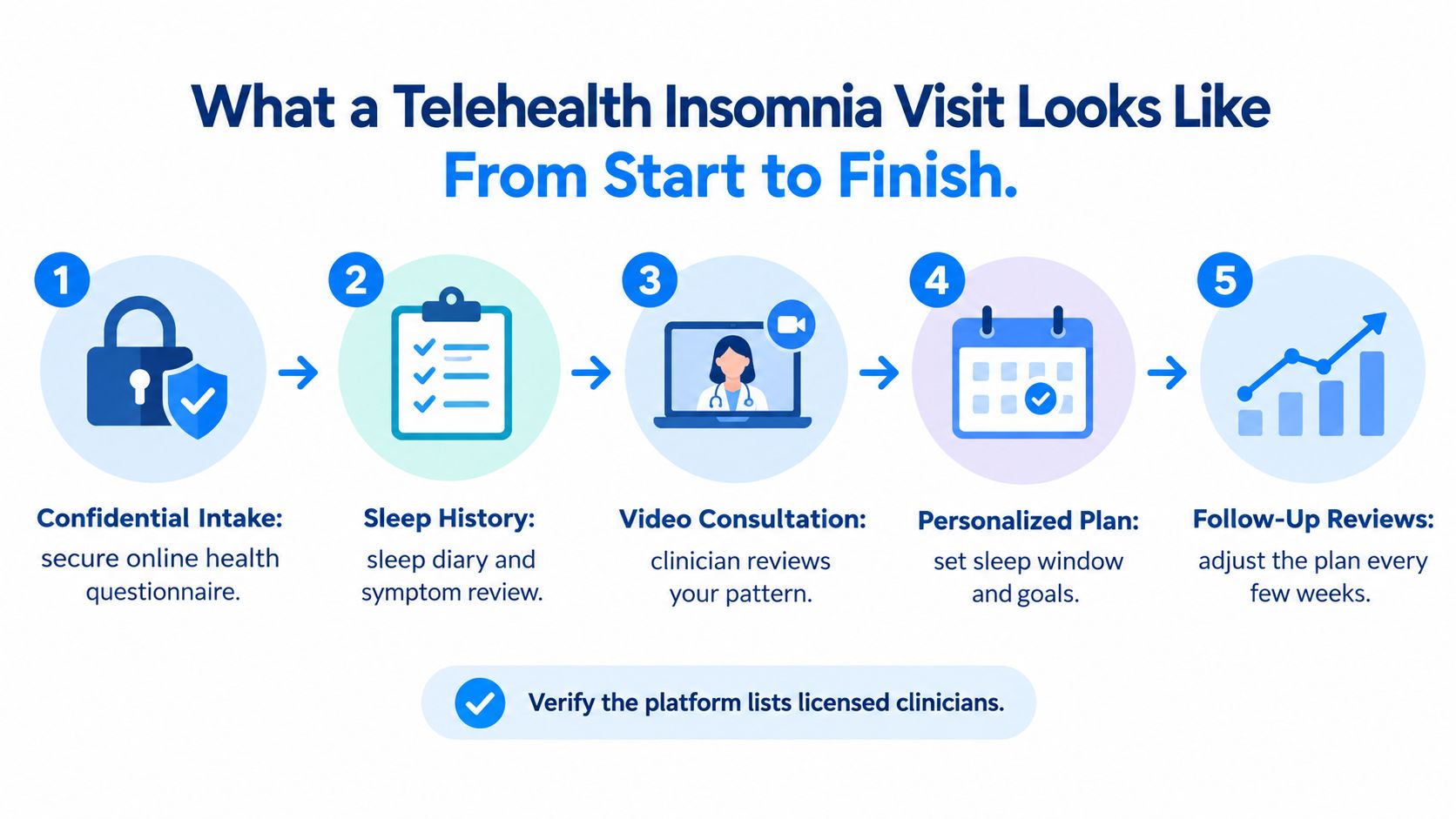
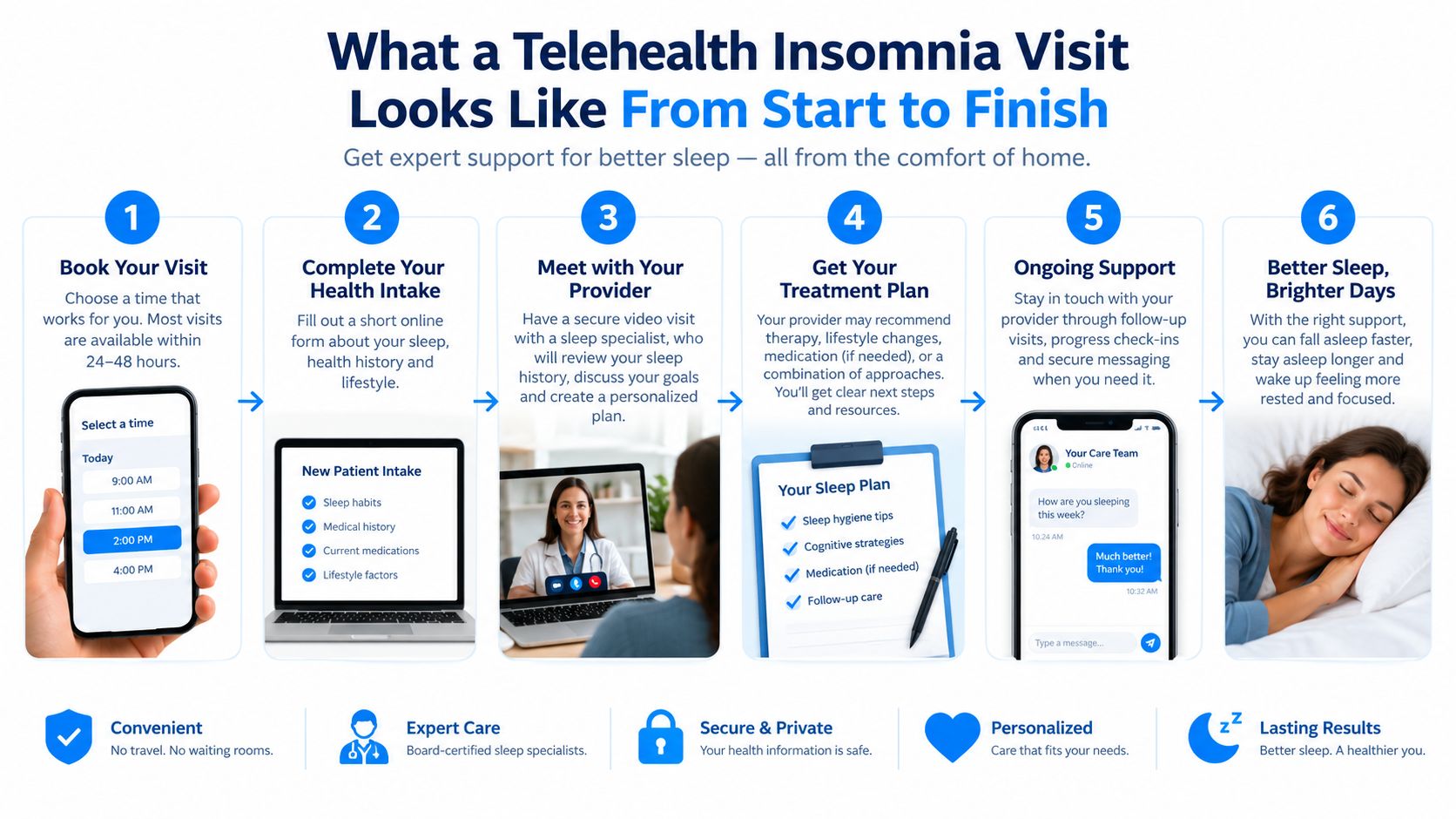
What a Telehealth Insomnia Visit Looks Like From Start to Finish
A serious online sleep encounter starts before the video call. The patient completes a confidential clinical intake that covers sleep timing, trouble falling or staying asleep, daytime effects, medical history, current prescriptions, supplements, alcohol or other substances, and symptoms that could point to a different diagnosis.
Assessment before treatment
A qualified clinician reviews the information rather than treating every intake as an automatic prescription request. The review should consider whether the symptoms fit insomnia, whether another sleep disorder needs evaluation, and whether the proposed intervention is safe.
The next step may be asynchronous messaging, a live consultation, or both. A U.S.-licensed physician determines eligibility, the treatment formulation when medication is appropriate, and the titration or treatment schedule. The clinician should also explain what the patient is expected to track and which symptoms require contact.
A plan that changes with the patient
A complete pathway includes diagnostic review and safety screening, CBT-I fundamentals, individualized sleep-window adjustment, medication reconciliation, short-interval follow-up, and a taper or maintenance plan. Follow-up isn't administrative. It gives the clinician a chance to identify excessive daytime sleepiness, worsening mood, difficulty adhering to the sleep window, adverse effects, or evidence that the original formulation was incomplete.
Patients evaluating an online clinic should look for HIPAA-compliant processes, physician review of every intake, and a clear refund pathway when treatment isn't clinically appropriate. A platform that offers medication without asking about current prescriptions, alcohol use, breathing symptoms, mood, or daytime safety is not providing meaningful clinical triage.
The distinction between a sleep clinic and a prescription mill is visible in the questions asked. A responsible service can decline treatment, recommend another evaluation, or revise the plan when the patient's symptoms don't fit the intended pathway.
Where Hypnotics and Melatonin Fit in an Online Treatment Plan
Online insomnia care should begin with triage, not a medication request. Medication may ease symptoms, yet it does not by itself change the worry, sleep habits, or conditioned alertness that keep chronic insomnia going. Guideline synthesis supports multicomponent CBT-I as first-line treatment, with internet-assisted CBT-I useful when face-to-face care is limited by time, location, or cost.
Hypnotics are generally adjunctive and short term, rather than the basis of long-term care. Extended-release melatonin may suit some older adults, but the decision depends on age, symptoms, other medicines, and the likely diagnosis. A sleep aid is not automatically appropriate just because a visit takes place online.
What medication review should include
A responsible online review covers prescriptions, over-the-counter sleep aids, alcohol, recreational substances, stimulants, and medicines that can fragment or alter sleep. The clinician should then decide whether a short prescription is appropriate, whether another cause needs attention first, and how treatment will end.
The taper or maintenance plan belongs at the start of care. Discussing it early reduces uncertainty if rebound symptoms or dependence become concerns. Medication may support a defined phase, while CBT-I addresses the patterns that make sleep difficult.
A long-term comparison reported average remission of 41% for CBT-I, compared with 28% for pharmacotherapy-initiating treatment arms. The comparative evidence on CBT-I and medication supports behavioral therapy as the foundation, rather than treating it as a fallback.
| Outcome | CBT-I | Pharmacotherapy |
|---|---|---|
| Main role | Addresses sleep-related thoughts and perpetuating behaviors | May reduce symptoms during a defined treatment period |
| Use in chronic insomnia | Foundation of care | Generally adjunctive and short term |
| Online safety need | Screening before sleep-window adjustment | Medication reconciliation and prescribing oversight |
| End of treatment | Maintenance skills and relapse planning | Taper or discontinuation plan when clinically appropriate |
The practical test is whether medication is fitted to the diagnosis and reviewed over time. A sound telehealth plan builds medication around CBT-I, not CBT-I around medication.
Red Flags That Should Redirect You From Digital to In-Person Care
Online insomnia treatment is a triage decision before it is a convenience decision. Self-guided care may be unsuitable when poor sleep could reflect another condition, because changing sleep timing or adding medication without assessment can delay the right treatment.
Symptoms that need diagnostic review
- Possible obstructive sleep apnea: Loud snoring, witnessed breathing pauses, gasping, morning headaches, or daytime sleepiness alongside cardiovascular risk should prompt sleep-medicine evaluation.
- Possible restless legs syndrome: An urge to move the legs, uncomfortable sensations while resting, or repeated leg movements at night warrants clinical assessment rather than an assumption that insomnia is the main problem.
- Possible circadian-rhythm disorder: A persistent mismatch between the desired bedtime and the body's natural sleep window may require a different diagnostic pathway. Sleep-window changes can worsen the problem if the timing disorder is missed.
- Medication- or substance-related insomnia: New or worsening symptoms after a medication change, stimulant use, alcohol reliance, or other substance exposure call for medication reconciliation and treatment of the contributing factor.
- Severe mood or anxiety symptoms: Persistent depression, severe anxiety, or thoughts of self-harm require prompt psychiatric assessment. Immediate safety concerns require urgent emergency support.
These signs do not automatically rule out remote care. They indicate that a clinician should determine the diagnosis and decide whether digital CBT-I is appropriate, supervised, or premature.
Access is part of clinical suitability
A digital program also needs to be usable. Unreliable internet, limited technology literacy, or sensory and cognitive limitations can prevent someone from completing sleep diaries, following instructions, or recognizing when symptoms are changing. Accessibility support or clinician-led care may therefore be safer than a self-guided subscription.
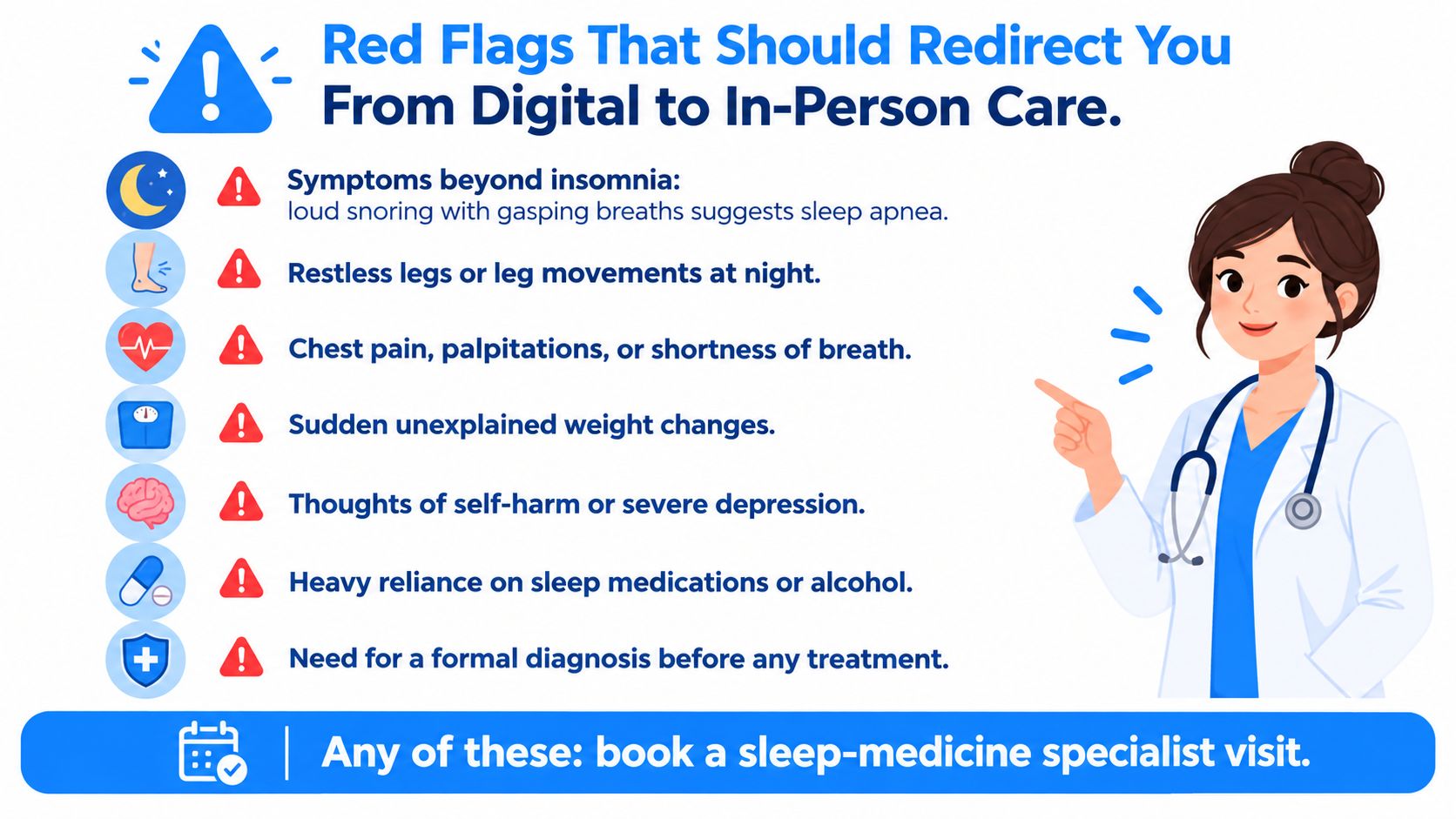
Escalation rule: If a red flag is present, obtain clinical assessment before starting a self-guided program. Choose online services that include clinician oversight during triage.
How to Choose Between Digital Programs and Telehealth Clinics
Brand recognition matters less than clinical design. A patient comparing online options should ask whether the program delivers multicomponent CBT-I or only sleep-hygiene education, whether follow-up is structured, and whether a clinician can intervene when symptoms change.
Questions that separate complete care from thin content
- Treatment content: Does the program include cognitive therapy, stimulus control, sleep-window adjustment, and relaxation methods?
- Safety screening: Is sleep-restriction therapy screened and supervised, especially for people in safety-sensitive jobs?
- Clinical oversight: Does a licensed clinician review the intake and provide follow-up rather than only automated reminders?
- Medication management: Does a U.S.-licensed physician handle reconciliation, eligibility, titration, adverse effects, and discontinuation?
- Pharmacy standards: If medication is dispensed, is the pharmacy accredited, and are compounded formulations prepared to USP standards with analytical potency and sterility testing?
- Diagnostic triage: Does the service screen for coexisting sleep, mood, and substance concerns before treatment?
One randomized comparison illustrates why design matters more than branding. In a trial of 82 adults with chronic insomnia, structured internet-delivered mindfulness-based CBT-I produced remission in 56.10% of participants, compared with 17.07% after one online sleep-hygiene education session. The reported odds ratio was 6.21, with a 95% confidence interval of 2.24 to 17.23, according to the randomized comparison of structured digital treatment and sleep-hygiene education.
A plain-English checklist is useful:
- Complete CBT-I, not sleep tips alone.
- Clinician review, especially before sleep-window changes.
- Red-flag screening for breathing, movement, mood, substance, and medication concerns.
- Defined follow-up with adjustment and escalation.
- A taper or maintenance plan when medication is used.
What Meaningful Improvement Looks Like After Online Insomnia Treatment
Online treatment has worked when sleep and daytime life improve together. Meaningful change can include shorter sleep-onset latency, less wake time after sleep onset, improved sleep efficiency, better daytime function, and sustained remission over months rather than days. A wearable may support the conversation, but it cannot define recovery by itself.
CBT-I can remain appropriate when insomnia occurs alongside medical or psychiatric conditions. A meta-analysis of 37 randomized clinical trials involving 2,189 patients found remission after treatment in 36.0% of CBT-I recipients, compared with 16.9% in control or comparison conditions. The pooled odds ratio was 3.28, with a 95% confidence interval of 2.30 to 4.68, as reported in the meta-analysis of CBT-I for insomnia with comorbid conditions. These results support careful treatment, not a promise that every patient will respond in the same way.
Use five questions to judge whether online care is doing its job:
- Complete CBT-I, rather than sleep tips alone.
- Clinician review before sleep-window changes.
- Red-flag screening for breathing, movement, mood, substance, and medication concerns.
- Defined follow-up for adjustment or escalation.
- A taper or maintenance plan when medication is used.
Patients seeking insomnia treatment online can begin with a confidential assessment through Vials + Vitals, where U.S.-licensed providers review eligibility and treatment options. Physician-directed telehealth pathways, medication oversight when clinically appropriate, and follow-up planning help distinguish a treatment pathway from an automatic prescription request.