Increase Penis Sensitivity: A Clinician's Evidence Guide
Learn clinically supported ways to increase penis sensitivity, from medical evaluation of numbness to pelvic-floor therapy, lifestyle factors, and when

A man notices that partnered sex feels less intense than it used to. Erections may still occur, but touch seems muted, orgasm feels less satisfying, or increasingly firm pressure seems necessary. Fatigue and stress seem like plausible explanations, yet the change persists.
The safest way to increase penis sensitivity starts with identifying what has changed. Reduced touch detection, diminished erotic pleasure, difficulty maintaining an erection, and delayed orgasm aren't interchangeable symptoms, and they don't call for the same treatment.
Why Reduced Sensation Deserves a Closer Look
Reduced sensation is a symptom, not a diagnosis. A supplement marketed for nerve support cannot establish whether the problem involves peripheral nerves, pelvic-floor tension, medication effects, or reduced arousal. An erection medication cannot answer that question either.
The distinction matters because patients often use numbness to describe different experiences. Someone may detect ordinary touch normally but feel little erotic pleasure. Another patient may notice a numb area after an injury, while someone else feels less stimulation only when an erection softens.
Identify the function that changed
A useful symptom description separates the following:
- Touch detection: Whether light contact feels weaker or absent in a particular area.
- Erotic pleasure: Whether stimulation remains detectable but feels less sexually rewarding.
- Erectile function: Whether reduced firmness accompanies the perceived loss of sensation.
- Orgasm and ejaculation: Whether climax feels muted, takes longer, or no longer occurs.
- Painful sensitivity: Whether touch produces burning, tenderness, or discomfort rather than pleasure.
These distinctions prevent an unhelpful treatment cycle. A patient seeking stronger stimulation for an arousal problem may irritate tissue without addressing the underlying difficulty. A patient with pelvic pain may worsen symptoms by following generic strengthening advice.
Clinical starting point: Describe the missing function before choosing an intervention.
Use a diagnostic pathway rather than a product routine
The practical sequence is to define the symptom, investigate plausible causes, address documented contributors, and measure the response. Treatment may involve a medication review, management of metabolic disease, pelvic-floor rehabilitation, or support for anxiety and sexual conditioning.
Not every patient receives a single explanatory diagnosis. An international continence-medicine clinical abstract on genital numbness describes patients whose sensory complaints did not follow a clear nerve distribution and whose neurophysiological testing could remain normal. That uncertainty doesn't make the experience unreal; it means that an abnormal sensation doesn't automatically establish generalized nerve damage.
The appropriate reassurance is measured: a change in sexual sensation deserves assessment, but it doesn't justify assuming permanent injury. The most useful clinical question is what changed, under which circumstances, and alongside which other symptoms.
How Penile Sensation Actually Works
Penile sensation includes several sensory systems. Tactile thresholds describe the minimum touch needed for detection, while thermal thresholds concern temperature perception. Erotic pleasure also depends on arousal-related processing, so a laboratory threshold cannot serve as a direct pleasure score.
A histological review of penile sensory anatomy reports that free nerve endings account for approximately 80–90% of axon terminals in the glans, outnumbering corpuscular receptors by about 10 to 1. The review associates these endings particularly with temperature sensitivity and identifies specialized genital corpuscles as important mediators of sexual response.
More detectable touch doesn't necessarily mean more pleasure
The same anatomical review describes a narrow separation between fine-touch and pain thresholds at the glans. It also reports that measured glans tactile sensitivity decreases during sexual arousal. These observations challenge the assumption that the most touch-sensitive state must be the most pleasurable state.
Increasing pressure or friction can therefore produce discomfort rather than a better sexual experience. Burning, pain, and temperature awareness aren't substitutes for erotic sensation.
| Sensory concept | What it describes | What it cannot establish alone |
|---|---|---|
| Tactile threshold | Detection of light contact | Sexual satisfaction |
| Thermal threshold | Detection of temperature changes | Orgasm quality |
| Pain threshold | When stimulation becomes painful | Desirable stimulation intensity |
| Erotic perception | Subjective sexual experience | A specific nerve lesion |
Circumcision status isn't a complete explanation
A quantitative sensory-testing study published in The Journal of Urology assessed 62 men aged 18–37, including 30 circumcised and 32 intact participants. Testing used modified von Frey filaments and a thermal analyzer, with penile sites assessed alongside a forearm control.
The researchers found no statistically meaningful group differences across the tested stimulus types or penile locations. Foreskin tissue showed greater tactile sensitivity than other penile sites, but that distinction didn't extend to thermal or pain measures. These results don't establish that altering circumcision status reliably restores erotic pleasure.
For patients trying to understand peripheral neuropathy symptoms, Arizona Valley Acupuncture provides a general patient resource. Such background information can help organize questions, but penile symptoms still require an individualized examination rather than self-diagnosis.
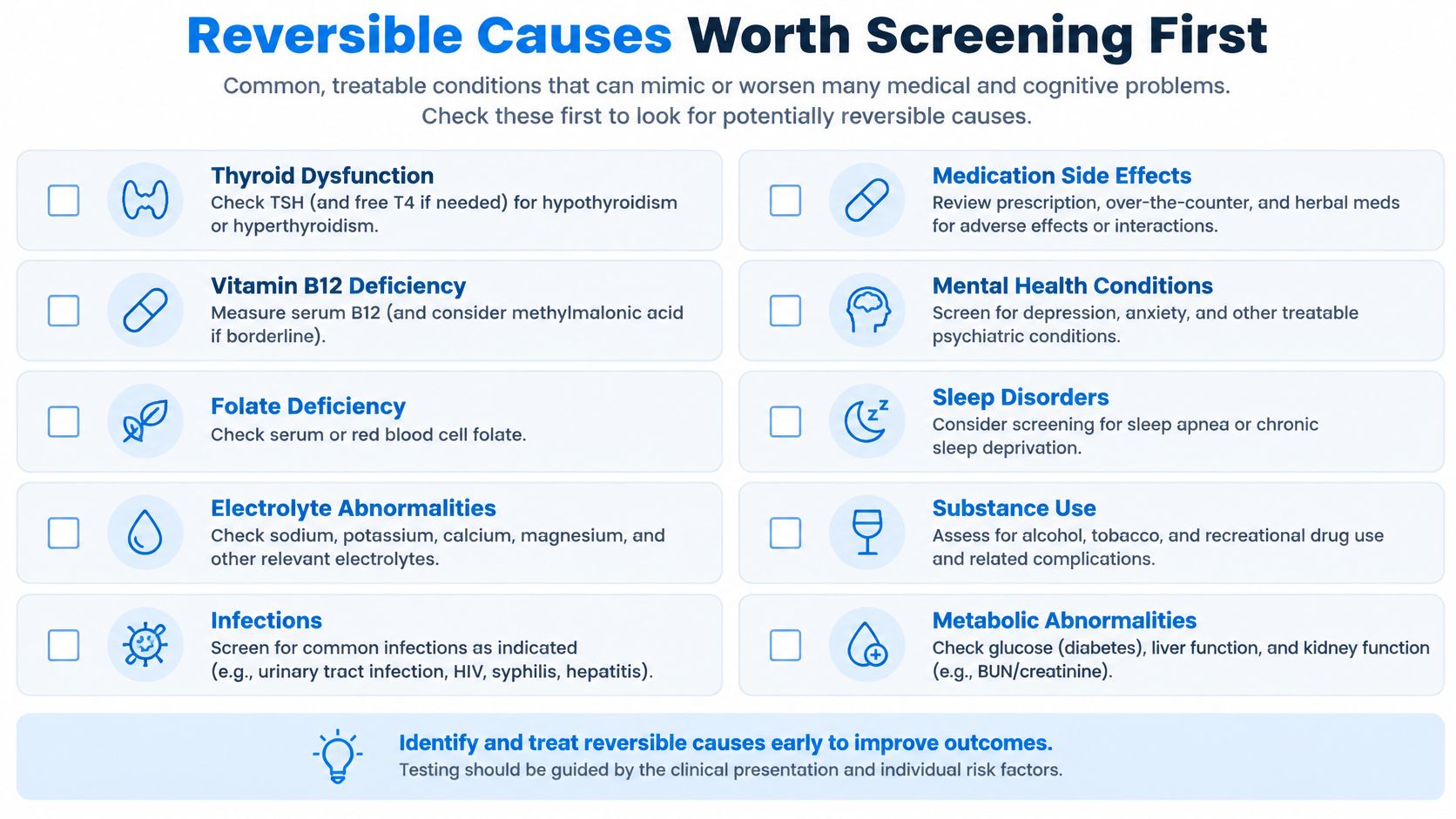
The following checklist can help organize that conversation. Its categories are prompts for assessment, not a guarantee that every contributor is reversible.
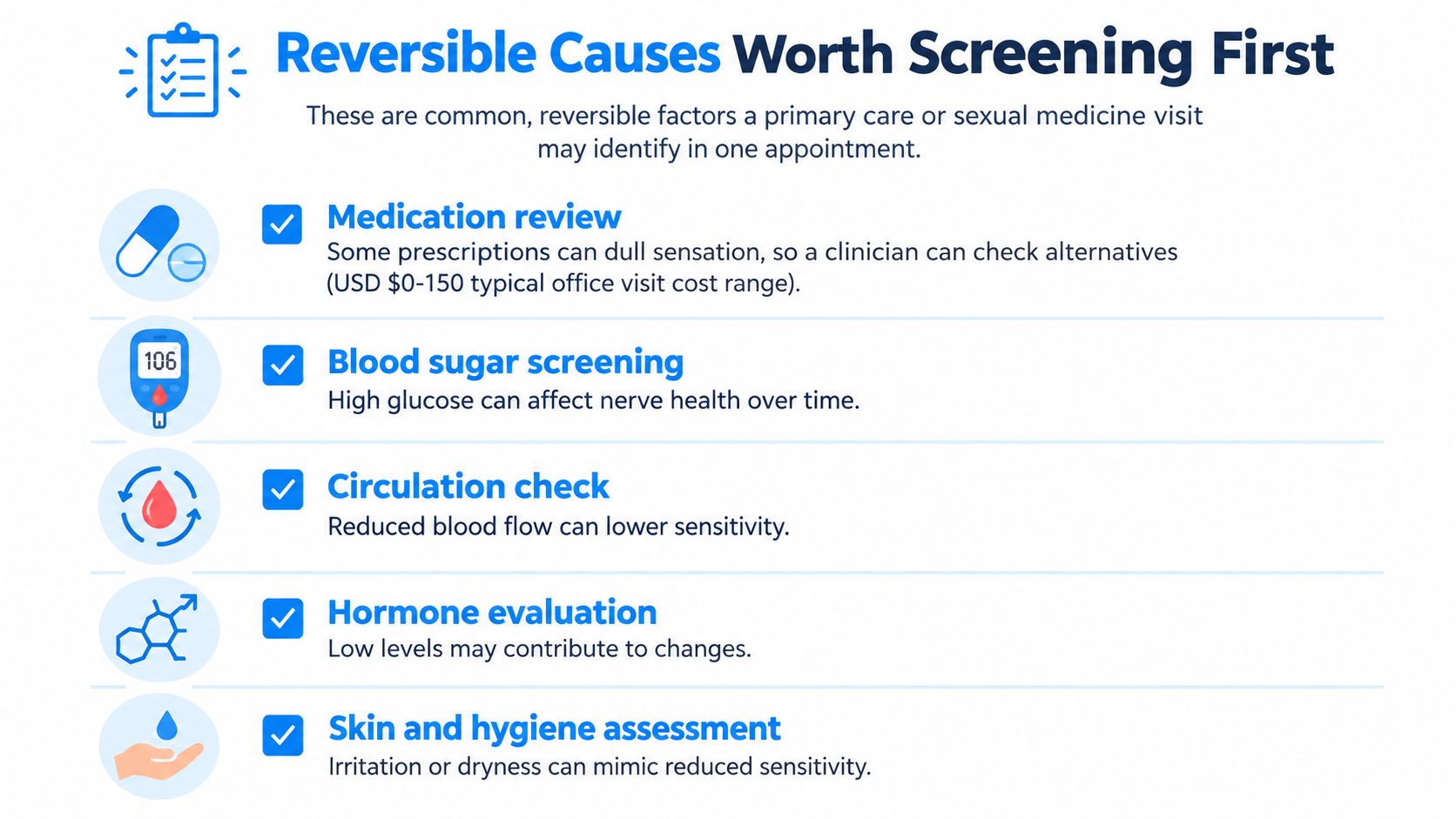
Reversible Causes Worth Screening First
The highest-yield assessment starts with the timing of symptoms and the patient's medical history. A change after starting a prescription raises different questions than numbness following pelvic surgery or discomfort associated with prolonged pressure.
The European Association of Urology guidance on erectile dysfunction assessment supports a structured sexual and medical evaluation. Diabetes, vascular risk, medications, substance exposure, trauma, surgery, and neurologic symptoms belong in that review.
Bring a medication and exposure checklist
A useful appointment summary includes:
- Prescription history: Antidepressants, finasteride, other medications, and recent dose changes. Prescribed treatment shouldn't be stopped without discussing alternatives with the prescriber.
- Metabolic history: Diabetes, known glucose abnormalities, and vascular concerns.
- Mechanical exposure: Pelvic procedures, genital injuries, and activities associated with sustained perineal pressure.
- Substance use: Alcohol and recreational drugs, including whether symptoms vary with use.
- Sexual context: Whether the change occurs during partnered activity, masturbation, or both, and whether anxiety or a highly specific stimulation pattern is involved.
A recent illness can also be recorded as part of the timeline. Timing alone, however, doesn't establish post-viral neuropathy or any other causal diagnosis.
For patients already seeking regional neuropathy care, information from a diabetic neuropathy clinic in north-central Pennsylvania can help frame a referral discussion. Genital symptoms still warrant an evaluation that considers sexual, neurologic, and urologic factors rather than assuming diabetes explains everything.
Metabolic treatment and hair treatment need separate review
GLP-1 and dual-incretin treatment isn't a penile-sensitivity protocol. Tirzepatide and semaglutide may be relevant to a patient's metabolic care, but sexual symptoms require their own assessment. The randomized trial comparing tirzepatide with semaglutide for obesity evaluates weight-related outcomes, not sensory restoration; its findings shouldn't be repurposed as evidence for treating numbness.
Hair-retention treatment also deserves a mechanism-based discussion. A review of androgenetic alopecia treatment biology distinguishes finasteride's suppression of the androgenic trigger from minoxidil's support of follicular growth. Medication selection should consider sexual adverse effects without assuming that every symptom has the same cause.
A patient preparing for that conversation can review hair-loss treatment side effects and document the relationship between treatment changes and symptoms. New shedding during major weight loss also shouldn't automatically be labeled permanent patterned hair loss.
This screening overview can support, but not replace, that clinical discussion.
Safety boundary: Sudden numbness, saddle anesthesia, weakness, urinary changes, or significant new pain warrants prompt assessment. Acute or combined neurologic symptoms call for same-day evaluation rather than a home sensitivity routine.
What a Clinician Evaluation Looks Like
A useful appointment begins with a detailed account, not an automatic prescription. The clinician needs to know whether the problem is constant or situational, localized or widespread, and associated with changes in erection, ejaculation, orgasm, desire, or comfort.
Patients can make the history more useful by describing the onset, any preceding medication change or procedure, and the circumstances in which sensation remains normal. The same description should distinguish true loss of touch from reduced enjoyment despite preserved touch detection.
Match examination and testing to the symptom
A focused examination may assess genital skin, areas of altered sensation, and relevant neurologic findings. Pelvic-floor assessment becomes particularly relevant when pain, tension, urinary symptoms, or ejaculatory difficulty accompanies the complaint.
Testing should answer a specific question rather than create an exhaustive laboratory checklist:
- HbA1c or other glucose assessment: Relevant when diabetes or impaired glycemic control is a concern.
- Lipid assessment: Useful within a vascular-risk evaluation, particularly when erectile symptoms coexist.
- Testosterone testing: Considered when the history suggests a hormonal contributor, not as an automatic explanation for isolated numbness.
- Specialized sensory testing: Considered when the symptom pattern and examination justify further characterization.
Patients reviewing their metabolic history may find an overview of reducing HbA1c levels helpful before the appointment. The clinical purpose is to identify and manage relevant metabolic disease, not promise that a better laboratory result will automatically restore genital sensation.
Penile biothesiometry measures vibration-detection thresholds. It doesn't directly measure pleasure, desire, or orgasm. Quantitative sensory testing may characterize additional sensory modalities, but testing isn't necessary for every patient and should be interpreted alongside the history.
Establish an outcome that matters
A sensible baseline records sensation, pleasure, erection quality, and pain separately. A patient who reports firmer erections but unchanged numbness has experienced a different outcome from someone whose touch detection improves.
A practical monitoring plan can use a consistent patient-rated sensory scale alongside a validated sexual-function questionnaire over 8–12 weeks, consistent with the diagnosis-first approach described in the European guidance cited earlier. That interval is a reassessment framework, not a guaranteed nerve-healing deadline.
A stronger erection, an earlier orgasm, and better touch detection are different outcomes. Progress should be recorded in the function that was impaired.
The clinician and patient should define success before treatment begins. Meaningful improvement may include more pleasurable activity without increased pain, less reliance on intense pressure, or better function after correcting a documented contributor. A stalled or worsening response should trigger reassessment rather than automatic treatment escalation.
Pelvic Floor Rehabilitation and Behavioral Approaches
Pelvic-floor rehabilitation is most relevant when reduced sensation occurs alongside documented muscle overactivity, pelvic pain, urinary symptoms, or related dysfunction. It shouldn't be prescribed as a universal nerve-repair program.
The first task is determining whether the muscles need relaxation, coordination, or strengthening. Unsupervised Kegels can backfire when the pelvic floor is already tense, potentially worsening discomfort or associated symptoms. More contractions are not automatically better rehabilitation.
Match the complaint to the intervention
The European sexual-dysfunction guideline publication supports a diagnosis-led approach to sexual dysfunction. The comparison below translates that principle into conservative discussion points rather than a self-treatment prescription.
Matching Sensory Complaints to Conservative Interventions
| Symptom Pattern | Likely Driver | First-Line Conservative Approach | Cautions |
|---|---|---|---|
| Muted sensation with pelvic tension or pain | Possible muscle overactivity | Clinician-directed relaxation, diaphragmatic breathing, and graded mobility | Avoid repetitive strengthening before assessment |
| Symptoms associated with prolonged pressure | Possible mechanical irritation or compression | Review the provoking activity and reduce aggravating exposure | Persistent numbness needs examination |
| Pleasure mainly with very firm stimulation | Possible conditioned arousal pattern | Gradually vary pressure and stimulation with behavioral guidance | Doesn't establish nerve damage |
| Painful or burning touch | Possible irritation, inflammation, or another disorder | Identify the cause before rehabilitation | Don't intensify friction to overcome discomfort |
| Persistent symptoms after pelvic surgery | Possible postsurgical contributors | Coordinate rehabilitation with the treating clinician | Follow procedure-specific restrictions |
Patients exploring local care can use Lake City Physical Therapy's resource to find pelvic floor therapy and prepare questions about assessment. The relevant qualification is experience evaluating pelvic-floor dysfunction, not offering a strengthening program.
Build a relaxation-first plan when indicated
A clinician-directed program may begin with comfortable diaphragmatic breathing and learning to release unnecessary pelvic contractions. Down-training means reducing excess muscle activity, not forcefully bearing down.
Graded hip and pelvic mobility can follow according to tolerance. Behavioral retraining may address the tendency to increase pressure, duration, or muscular bracing whenever arousal feels insufficient. Changes should remain comfortable rather than becoming another form of repeated tissue stress.
Follow-up can use the monitoring framework described earlier, with adjustments based on symptoms rather than a fixed promise of recovery. Worsening pain, expanding numbness, or new urinary difficulty should prompt in-person review.
Judge rehabilitation by the right endpoint
A 32-man retrospective case series of hard-flaccid symptoms reported median erection-hardness improvement from 2 to 4 and satisfaction improvement from 2 to 5, as discussed with the guideline-linked evidence above. Its multimodal design, lack of a control group, and absence of a validated primary sensory endpoint prevent interpreting those results as a sensitivity-restoration success rate.
The practical target is improved comfort and sexual function without worsening symptoms. Stronger erections alone don't establish that sensory nerves have recovered.
What the Evidence Does Not Support
Products marketed to increase penis sensitivity often blur distinct goals: creating a tingling sensation, improving erection firmness, delaying ejaculation, or restoring damaged nerves. A product may affect one experience without improving another.
Evidence remains insufficient for supplements, nerve-boosting creams, aggressive stretching, or shockwave treatment specifically to restore penile sensation. The erectile-dysfunction guidance discussed earlier addresses low-intensity shockwave therapy in the context of erectile function, with limited-quality evidence, not proven sensory restoration.
The same caution applies to claims that intensified stimulation can reactivate nerves. Discomfort isn't evidence that a treatment is working.

Numbing products address the opposite problem
Lidocaine/prilocaine products are used for premature ejaculation because they reduce genital sensation. They aren't a logical treatment for diminished pleasurable sensation, and they can transfer numbness to a partner unless removed as directed.
Painful hypersensitivity also deserves its own diagnosis. Irritation, inflammation, trauma, infection, or foreskin problems shouldn't be managed by alternating anesthetics with increasingly forceful stimulation.
Likewise, abstinence isn't an established cure for penile numbness. Reducing an aggravating activity may be reasonable, but a promise that a fixed period without masturbation reliably restores sensation exceeds the evidence.
Practical rule: A treatment claim should name the outcome it improves. Erection hardness, ejaculation timing, and sensory restoration aren't interchangeable endpoints.
Selected treatments require selected patients
Penile vibration has clinical evidence, but that doesn't make every consumer device a nerve-repair treatment. A systematic review of penile vibratory stimulation identified 30 studies involving 14,750 males; within a clinical study of 36 men, 72% reported restoration of orgasm. Much of the evidence concerns selected patients with spinal cord injury or specific orgasm and ejaculation difficulties, not universal enhancement of normal sensation.
Erection treatment requires equally careful interpretation. A consumer medical summary of a 2023 tadalafil study reports improved penile sensitivity after 12 weeks of daily treatment in men with erectile dysfunction. That secondary summary isn't proof that tadalafil treats isolated penile numbness, and improved perceived sensation doesn't demonstrate direct sensory-nerve regeneration.
The defensible approach remains mechanism-based care. Documented erectile dysfunction may justify erectile treatment; pelvic-floor overactivity may justify rehabilitation; medication-associated symptoms may justify a supervised prescribing review. None supports a generic sensitivity protocol for every patient.
Vials + Vitals offers physician-directed telehealth assessment and individualized care across metabolic health, sexual wellness, and hair health, with treatment determined by licensed clinicians. Adults concerned about sensation changes alongside GLP-1 treatment, erectile symptoms, or hair-retention medications can visit Vials + Vitals to begin a confidential assessment and discuss whether telehealth care or an in-person referral is appropriate.