How to Overcome Weight Loss Plateau: Clinical Strategies
Learn how to overcome weight loss plateau with clinical strategies for GLP-1s, resistance training, and metabolic adaptation. Evidence-based guidance.
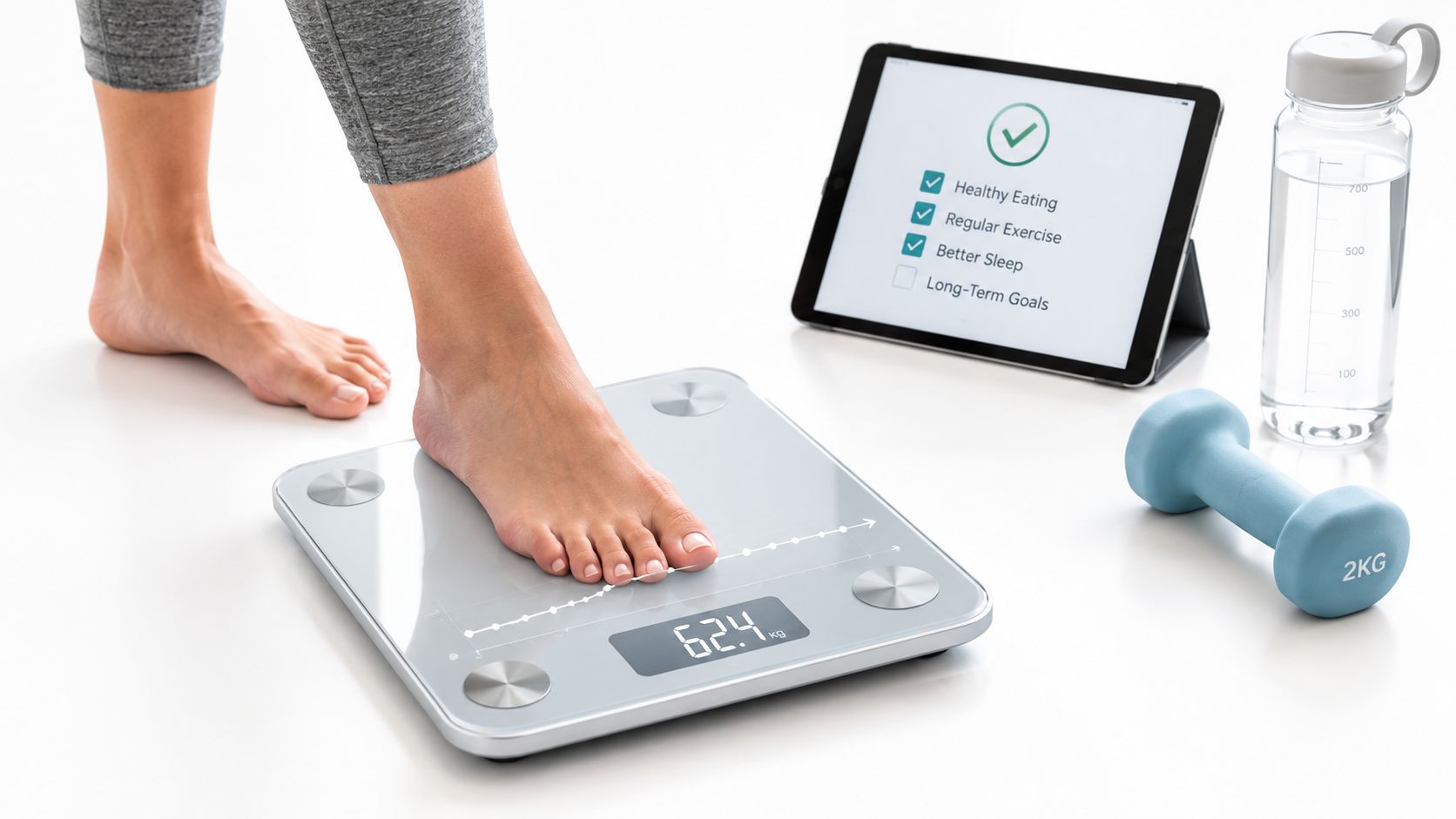
A patient follows a structured GLP-1 protocol, sees steady progress for four months, and then watches the weekly weight trend flatten. The medication hasn't changed, meals appear consistent, and daily habits look familiar. The understandable reaction is to eat less, exercise harder, or request a higher dose.
That response can miss the clinical issue. A plateau is often a diagnostic event, not proof that treatment has failed. The right question is not just how to overcome weight loss plateau, but why the trend has stalled, whether the stall is genuine, and which intervention protects metabolic health rather than creating a new problem.
Understanding the Physiology Behind a Metabolic Stall
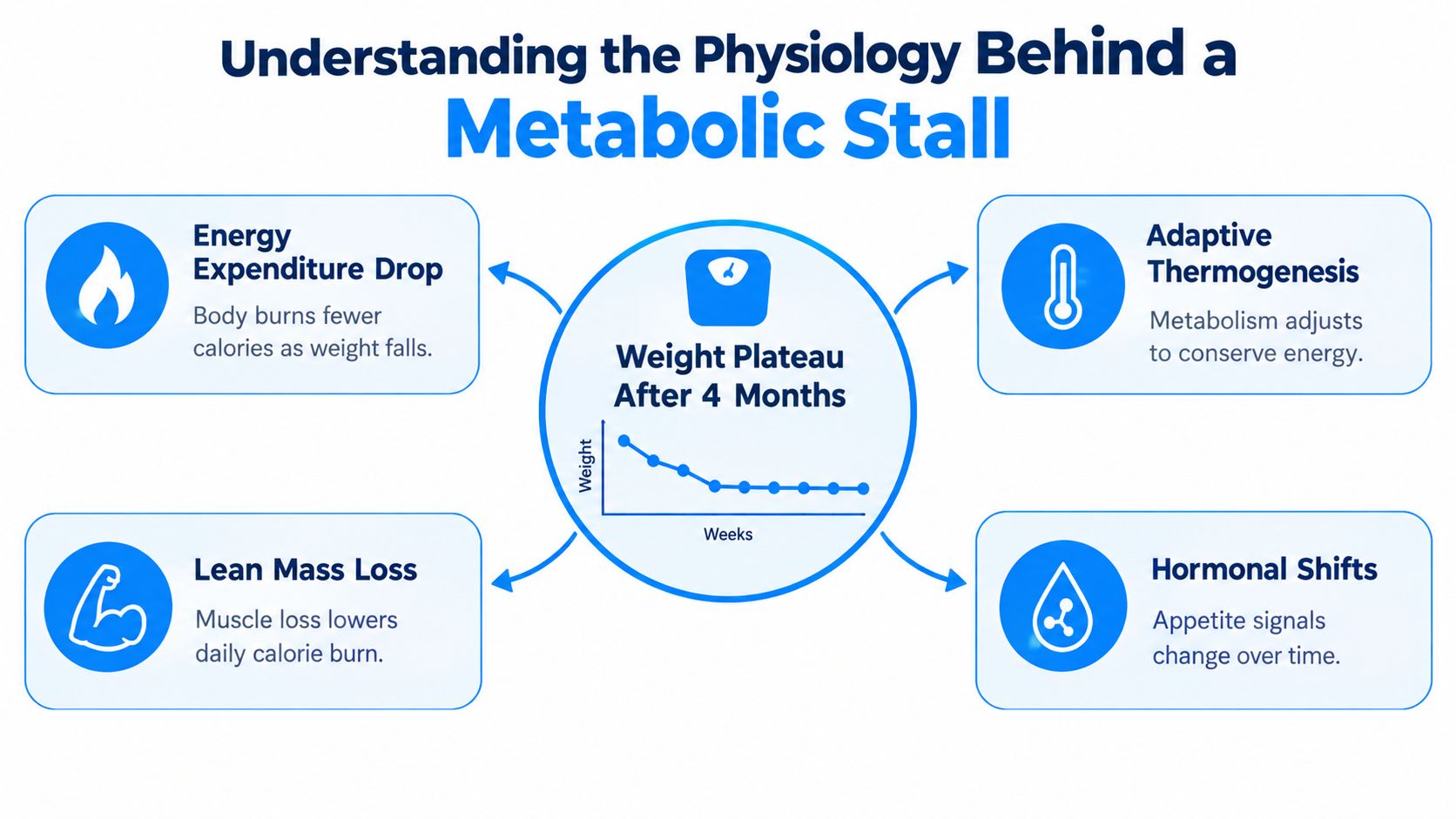
Weight loss changes the conditions under which the body operates. As body mass decreases, the body generally requires less energy for movement and basic function. Spontaneous movement may also decline, muscle can become more efficient, appetite signals can shift, and the lower-weight state may require fewer calories than the original state.
This process is often described as adaptive thermogenesis, a reduction in energy expenditure beyond what would be expected from weight change alone. A 2025 review reports that these adaptive changes can persist from months to several years after weight loss, which helps explain why continued loss becomes metabolically more difficult rather than proceeding in a straight line. The review of adaptive thermogenesis and weight-loss plateaus supports treating this response as physiology, not a character judgment.
Why the scale can mislead
A daily weight reflects more than fat mass. Fluid retention, constipation, menstrual-cycle changes, sodium intake, gastrointestinal contents, and recent exercise can all obscure the underlying trend. Reacting to one or several higher readings with severe restriction often increases hunger and makes preservation of lean mass harder.
A clinically meaningful plateau requires a multi-week trend, not an anxious response to daily variation. Waist circumference, strength, physical function, metabolic markers, and how clothing fits may show progress even when the scale is temporarily unchanged.
Clinical principle: A flattening scale trend should trigger an audit of treatment exposure, nutrition, activity, symptoms, and health markers before it triggers a dose increase.
The body's adaptation doesn't mean further progress is impossible. It means the next decision should be targeted. A true plateau may call for improved protein intake, progressive resistance training, a review of medication exposure, a different treatment strategy, or acceptance of maintenance as an appropriate outcome.
Conducting a Systematic Clinical Audit
Before changing therapy, confirm that a true plateau exists. Average body weight across two to four weeks rather than reacting to daily fluctuations. Clinical guidance recommends reviewing at least three to six months of documented adherence at a maximally tolerated or approved maintenance dose. Many patients reach a plateau within six to twelve months, making exposure and timing central to the assessment. Clinical guidance on evaluating weight-loss plateaus and treatment response
Start with treatment exposure
First establish whether the patient received a consistent therapeutic exposure.
- Administration: Confirm injection technique, tablet instructions, timing, storage, and the intended formulation.
- Missed doses: Review the medication calendar instead of relying on memory.
- Maintenance dose: Record how long the patient has stayed at a tolerated, approved maintenance dose.
- Access interruptions: Check delayed refills, supply gaps, travel interruptions, and pharmacy availability.
- Tolerability: Document nausea, vomiting, diarrhea, constipation, reflux, early satiety, and symptoms that reduced food or fluid intake.
A patient who spent little time at a tolerated dose or experienced repeated interruptions has an exposure problem. Biological resistance should not be the working diagnosis until exposure is verified. The distinction determines whether the next step is restoring consistency, addressing side effects, or reconsidering treatment.
Review the metabolic context
Use a practical lifestyle and medical review to identify factors that a general recall may miss. A seven-day record can show liquid calories, alcohol, compensatory eating after exercise, reduced daily movement, or inadequate protein caused by appetite suppression.
The clinical checklist should include:
- Sleep quality and duration, particularly recent deterioration.
- Alcohol intake, including changes in frequency or quantity.
- Constipation and fluid retention, which can temporarily change scale weight.
- Other medications, especially those associated with weight gain.
- Secondary causes, such as hypothyroidism or uncontrolled diabetes when symptoms or history support evaluation.
Assess waist circumference, glycemia, blood pressure, physical function, and body composition when available. The scale remains one measure within the metabolic record, not the sole basis for escalation. A systematic audit separates inconsistent exposure, modifiable barriers, temporary weight changes, and medical contributors before treatment is intensified.
Implementing Progressive Resistance and Protein Targets
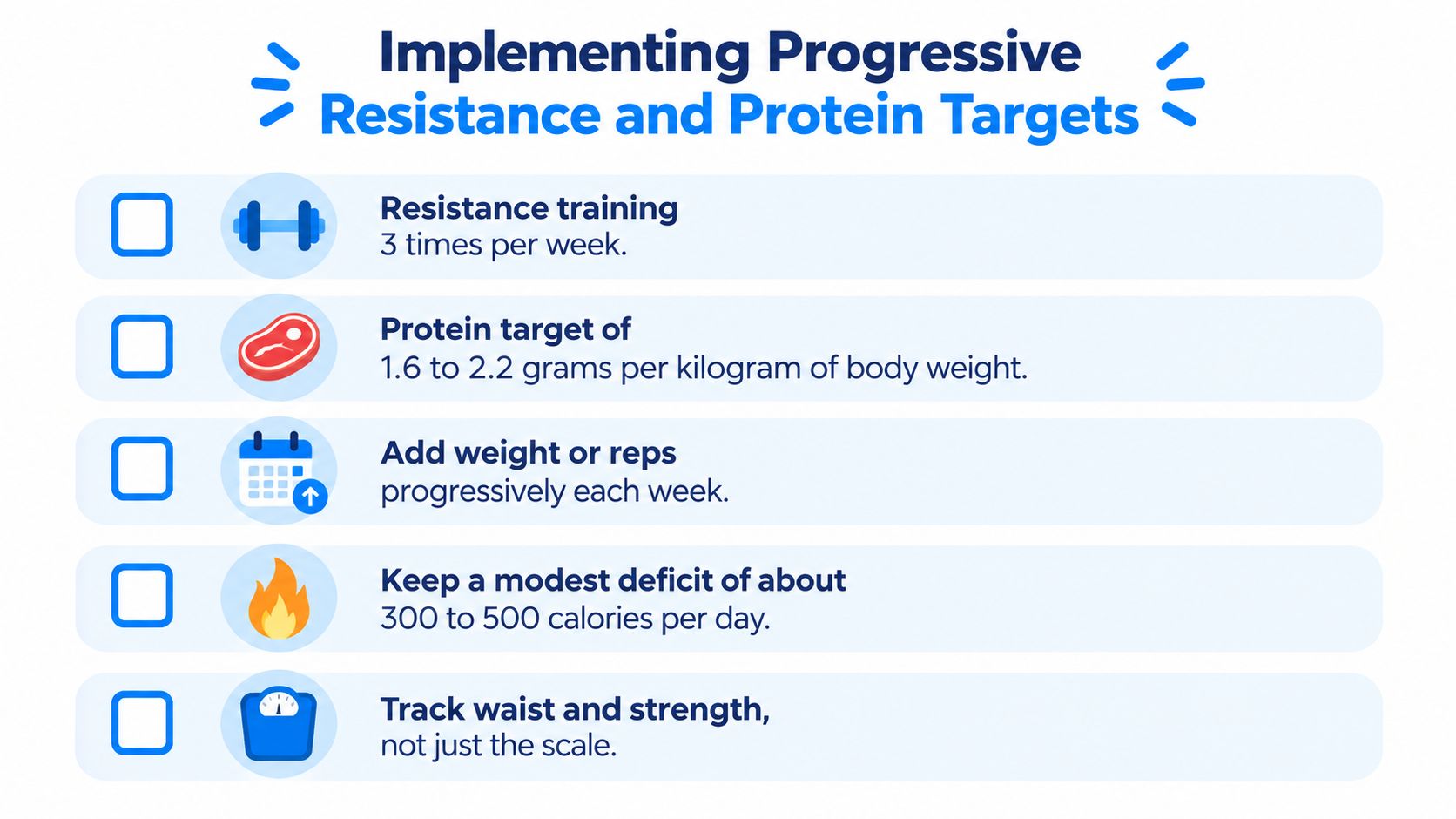
A stalled scale does not automatically call for a sharper calorie cut. First, test whether the current plan provides enough progressive resistance training, protein, and recoverable activity to support further fat loss without worsening fatigue or reducing daily movement.
Clinical obesity guidance commonly uses approximately 1.0 to 1.5 grams of protein per kilogram of ideal body weight daily and resistance exercise one to two times weekly. Broader activity recommendations target at least 150 minutes per week of moderate aerobic activity. Adjust the workload for fitness, symptoms, recovery, and medical status. The clinical guidance on nutrition and physical activity during obesity treatment provides the relevant framework.
Build the plan around measurable actions
Start with a seven-day food and activity baseline. Use it to check protein, fluid intake, movement, meal composition, and tolerance under the current treatment. The goal is a diagnostic snapshot, not a permanent logging burden.
Spread protein across meals instead of placing it in one sitting. Eggs, poultry, fish, dairy foods, tofu, tempeh, beans, and other tolerated sources can fit. Appetite suppression may reduce total intake without obvious hunger, so each smaller meal needs a deliberate protein component.
Use full-body resistance movements that train the major muscle groups. A load allowing roughly eight to twelve controlled repetitions is a practical starting point. Once every prescribed set is completed with sound technique, increase repetitions or resistance gradually. Adding more sessions or volume is not automatically better if recovery deteriorates.
Walking or equivalent aerobic activity can complement resistance work. Monitor fatigue and spontaneous movement. Excessive training may reduce both and can increase compensatory eating.
Audit the predictable obstacles:
- Compensatory eating: Exercise can create permission to replace the energy expended.
- Liquid calories: Sweetened beverages, specialty coffees, and alcohol are easy to omit from records.
- Insufficient protein: Reduced appetite does not ensure adequate protein or micronutrient intake.
- Scale-only monitoring: Waist circumference, strength, symptoms, and functional capacity can show progress during recomposition.
A practical week might include two full-body resistance sessions, 150 minutes per week of moderate aerobic activity divided across several days, and protein anchored at each meal. This structure makes the plateau measurable: adherence, recovery, strength, waist change, and intake can be reviewed before changing treatment.
Evaluating Medication Duration, Dose Exposure, and Agent Choice
Medication decisions should begin with exposure, not frustration. A plateau may reflect insufficient time at a tolerated dose, missed doses, supply interruptions, improper storage or administration, or gastrointestinal symptoms that have reduced nutrition and activity. Only after these factors are clarified can a clinician reasonably assess whether the current agent remains appropriate.
A large real-world comparative study of 2,396 adults treated for obesity found greater six-month average weight reduction with tirzepatide than semaglutide. Mean loss was 11.15% of baseline body weight with tirzepatide and 8.83% with semaglutide, an adjusted difference of 2.32 percentage points, with a 95% confidence interval of 1.48 to 3.17 percentage points. The observational comparison of tirzepatide and semaglutide should be interpreted cautiously because dosing, persistence, comorbidities, and treatment selection may differ between groups.
Comparing expected treatment context
| Therapy | Mean 6-Month Weight Loss | Adjustment for Dosing and Persistence |
|---|---|---|
| Tirzepatide | 11.15% of baseline body weight in the observational study | Greater average loss in this comparison, but results may reflect dose exposure, persistence, comorbidities, and selection |
| Semaglutide | 8.83% of baseline body weight in the observational study | A slowing trend may be expected; treatment failure shouldn't be assumed before adherence and maintenance exposure are reviewed |
The comparison does not justify an automatic switch. A patient receiving semaglutide may be experiencing a normal slowing of loss rather than resistance. The clinician must consider starting weight, time on treatment, dose exposure, hunger recurrence, glycemic response, adverse effects, nutritional adequacy, and the patient's ability to sustain the plan.
Real-world persistence adds another layer. A 2025 analysis of 6,392 participants found that patients with at least one month of GLP-1 access interruption still achieved 13.7% weight loss at twelve months and 14.9% at twenty-four months when enrolled in an intensive lifestyle program. The Cleveland Clinic report on real-world GLP-1 access interruptions and outcomes shows why interrupted access complicates expectations without making future progress impossible.
Dose escalation must remain clinician-directed. Increases should follow the product's approved titration schedule and gastrointestinal tolerability, not an improvised rapid escalation intended to force the scale downward.
Recognizing When Maintenance or Recomposition Is the Goal
If the scale has stopped moving after sustained treatment, first assess what has changed clinically. Continuous weight loss is not always the correct objective. A patient may reach a physiological ceiling where maintaining weight, reducing waist circumference, improving strength, or preserving lean mass represents meaningful progress.
The STEP 1 extension offers useful context. Participants who continued weekly semaglutide maintained and extended their weight loss, reaching an apparent plateau around weeks 60 to 68 and an estimated 17.4% reduction over the trial. The STEP 1 extension and semaglutide weight-loss findings support allowing adequate treatment duration before judging the response inadequate.
Replace automatic restriction with targeted adjustment
Severe restriction can intensify hunger, reduce protein and micronutrient intake, impair training quality, and increase lean-mass loss. It may also make the treatment plan harder to sustain when appetite-regulating medication has already reduced food intake.
Clinical decision tools can organize this assessment: the Metabolic Calorie Tool may support individualized calorie adjustments, while the Follicular Retention Index may help frame nutrition and hair-retention concerns when rapid loss or inadequate intake is suspected. Neither replaces clinical judgment.
A patient with stable glycemia, improving strength, a smaller waist, and adequate nutrition may benefit from maintenance or body recomposition. The goal then shifts from forcing further scale loss to improving body composition and preserving function.
A patient with persistent hunger, inadequate treatment exposure, deteriorating metabolic markers, or clinically significant symptoms requires a different review. The plateau may signal a need to reassess the treatment strategy rather than impose further dietary restriction.

A maintenance or recomposition phase still requires adequate protein, progressive resistance training, routine movement, sleep, and an individualized calorie target. The plateau becomes concerning when it coincides with declining function, poor nutrition, uncontrolled metabolic disease, or adverse effects, rather than only because the scale has stopped falling.
Deciding When to Escalate or Consult a Clinician
A clinician should review the plan before a patient requests a dose increase. The decision depends on documented adherence, time at the current dose, gastrointestinal tolerability, hunger pattern, glycemic response, body-composition changes, and safety history.
Escalation may be reasonable when the patient has followed the prescribed schedule, tolerated the current therapy, maintained adequate nutrition and hydration, and still has a clinically meaningful treatment gap. A formulation change may be considered when administration barriers, injection aversion, access interruptions, or tolerability prevent consistent exposure.
Compounded semaglutide and tirzepatide options, including needle-free sublingual orally disintegrating tablets, may be appropriate for selected patients with injection aversion or specific administration concerns. Eligibility, formulation, quality controls, and dosing must be reviewed by licensed U.S. providers. Any transition between agents requires individualized prescribing and monitoring, not dose equivalence based only on a percentage change in weight.
Hair and systemic symptoms need evaluation
Hair shedding can occur after rapid weight reduction because systemic stress or inadequate energy and nutrient availability may shift follicles prematurely into the resting phase. The shedding often appears after a delay, which means it shouldn't automatically be attributed directly to the medication.
A systematic review identified telogen effluvium and androgenetic alopecia as the predominant hair-loss categories reported with GLP-1 therapies. In the OASIS 1 trial of high-dose oral semaglutide, alopecia occurred in 23 of 334 treated participants, or 7%, compared with 9 of 333 participants, or 3%, with placebo. The systematic review of GLP-1 therapies and hair loss describes an observed signal, not proof that semaglutide directly damages follicles.
New patchy, scarring, inflammatory, or rapidly progressive hair loss warrants dermatologic evaluation. Unexplained fatigue, menstrual changes, persistent gastrointestinal symptoms, recurrent hunger, or other metabolic symptoms also justify clinical review.
For a telehealth appointment, patients should prepare:
- Weight trends: Bring averaged readings rather than isolated daily values.
- Adherence records: Include dates, doses, missed doses, storage concerns, and access interruptions.
- Nutrition details: Record protein intake, fluids, alcohol, and symptoms affecting eating.
- Training logs: Note resistance sessions, walking, strength changes, and recovery.
- Health markers: Include available glucose, blood pressure, waist, and relevant laboratory information.
Integrating Long-Term Metabolic Health Into Your Plan
A weight-loss plateau is a normal phase that deserves clinical patience, not panic. The appropriate response begins by verifying adherence and dose exposure, auditing sleep, nutrition, alcohol, constipation, medications, and secondary causes, then assessing metabolic health beyond the scale.
The most durable plan protects muscle and function. That means adequate protein, progressive resistance training, routine movement, sufficient recovery, and individualized calorie adjustments. Formulation changes or titration should occur only with physician guidance, and maintenance should be recognized as a successful outcome when metabolic markers, physical function, body composition, and quality of life are improving.
Structured monitoring makes the next decision clearer. Weight averages, waist measurements, strength logs, protein intake, symptoms, glycemia, and blood pressure can reveal whether a patient needs a treatment adjustment or just more time. Sustainable management depends on consistent protocol execution, adequate sleep, stress regulation, and professional oversight, not rapid interventions that risk muscle loss or nutritional deficiency.
Vials + Vitals provides physician-directed telehealth evaluations for GLP-1 and dual-incretin therapies, with individualized formulation and titration decisions when clinically appropriate. Patients navigating a plateau can begin with a confidential assessment and discuss adherence, dose exposure, nutrition, and treatment options with licensed providers through Vials + Vitals.