How to Make Your Hair Grow Faster Guys
How to make your hair grow faster guys. Evidence-based guide on how to make your hair grow faster for guys, from minoxidil and finasteride

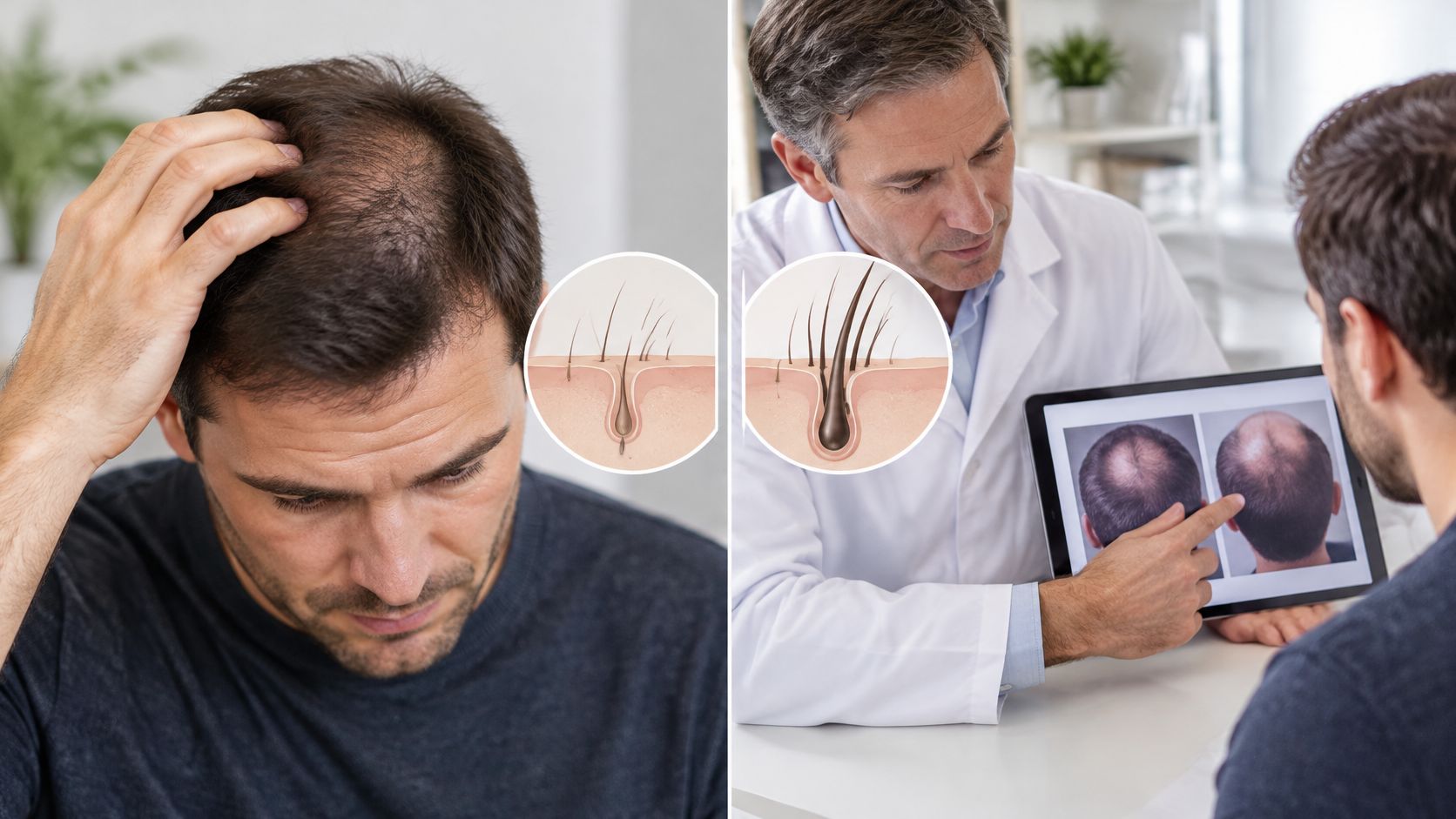
Shampoo, scalp oils, and biotin are popular answers to the search “how to make your hair grow faster guys,” but they miss the central problem when a man notices crown thinning. Longer strands won't necessarily make a thinning crown denser. The useful question is whether follicles are progressively miniaturizing, temporarily shedding after a metabolic change, or affected by another condition that needs medical evaluation.
An evidence-based approach separates hair retention from growth speed. That distinction is particularly important during weight management with semaglutide or tirzepatide, when abrupt shedding may have a different explanation than gradual male-pattern baldness.
Why Faster Growth Is the Wrong Frame
A thinning crown isn't usually evidence that hair needs a faster growth rate. In androgenetic alopecia, genetically influenced follicles progressively miniaturize. Treatment aims to preserve those follicles and improve their output, not make existing strands grow several times faster.
A population-based study of 1,005 men aged 30–50 identified androgenetic alopecia in 583 participants, or 58%, with severity increasing with age. Broader clinical estimates place its prevalence at roughly 30–50% of men by age 50, although estimates vary by population and assessment method, as described in the population study and clinical context on male-pattern hair loss.
Density Matters More Than Length
A man noticing more scalp at the crown may assume that supplements or a different shampoo will restore coverage. Those changes aren't substitutes for addressing progressive follicle miniaturization. A hair-care routine and a medical retention strategy serve different purposes.
The clinically meaningful outcomes are:
- Retention: Less additional loss from the starting point.
- Improved density: Better coverage from thickening miniaturized follicles and partial regrowth.
- Sustainable treatment: A regimen that remains tolerable and practical enough for continued use.
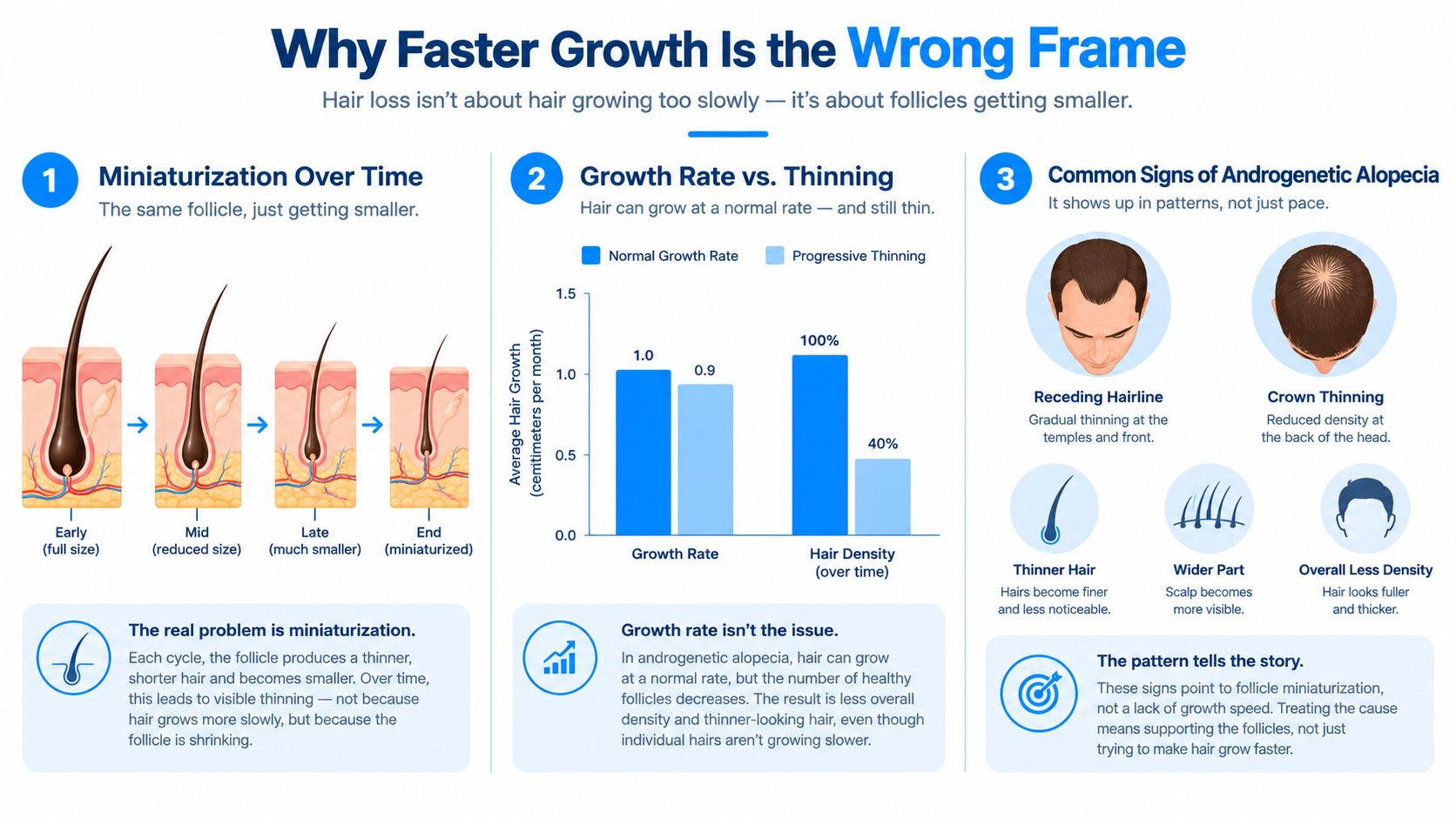
Cosmetic volume can still matter. Guidance on how to give hair more volume addresses appearance, but improved styling shouldn't be mistaken for a change in the underlying diagnosis.
Clinical takeaway: For crown thinning, success may mean keeping existing hair rather than producing dramatic new growth.
The other important correction is that not every thinning crown is ordinary male-pattern baldness. A gradual change without scalp symptoms creates a different clinical picture than painful, patchy, or rapidly worsening loss. Buying a growth product before clarifying that distinction can delay appropriate care.
Identifying the Type of Hair Loss You Have
A dermatologist starts with the distribution, timing, and symptoms of hair loss, not the product a patient hopes to use. The same complaint, “more scalp is showing,” can describe several conditions with different treatment needs.
The patient's history should include recent illness, substantial weight loss, medication changes, family patterns of thinning, and scalp discomfort. GLP-1 treatment belongs on that list, but its presence doesn't establish that the medication caused the loss.
Pattern and Timing Guide the Evaluation
| Finding | Possible explanation | Appropriate next step |
|---|---|---|
| Gradual recession or crown thinning | Androgenetic alopecia | Dermatologic assessment for patterned miniaturization |
| Abrupt shedding across the scalp | Telogen effluvium | Review metabolic changes, illness, nutrition, and medications |
| Discrete patches of loss | Alopecia areata or another localized disorder | Examination rather than routine self-treatment |
| Pain, inflammation, or suspected scarring | Inflammatory or scarring hair loss | Prompt dermatologic care |
These distinctions are a decision framework, not a home diagnostic test. Evidence-based guidance on androgenetic alopecia treatment and nutritional supplementation supports identifying the cause rather than treating every form of loss as the same problem.
Appearance also needs context. A patient concerned that hair looks thin when wet should bring photographs taken under comparable conditions rather than relying on a wet-hair image alone.
Build a Useful Clinical History
Before the appointment, a patient can document:
- Onset and distribution: Whether thinning developed gradually at the crown or shedding increased abruptly throughout the scalp.
- Recent changes: Illness, dietary restriction, weight loss, or a new medication.
- Scalp symptoms: Itching, tenderness, redness, or visibly altered skin.
- Baseline appearance: Frontal, temporal, and crown photographs that can support later comparisons.
For patients exploring broader wellness questions, Peak Performance's supplement guide for testosterone and aging can provide topics to discuss with a clinician. It isn't a diagnostic resource or evidence that testosterone-focused supplements treat crown thinning.
The practical boundary is straightforward: a patient shouldn't assume that minoxidil or finasteride substitutes for evaluating an unexplained shedding episode.
Topical Minoxidil Protocol for Men
For crown thinning, topical minoxidil is a treatment for retaining and supporting vulnerable follicles, not a way to make hair grow overnight. It is an established option for clinically diagnosed male-pattern hair loss, and results depend on regular application to the affected scalp.
A 48-week randomized trial found that 5% minoxidil outperformed 2% minoxidil on patient and investigator assessments and nonvellus hair counts, with a faster perceived response. Set a baseline with clear photographs, compare them under similar conditions about every 3 months, and allow roughly 6 months before judging efficacy. The trial results are described in this study comparing 5% and 2% minoxidil. Gains may fade within about 6 months after stopping, so discuss the ongoing commitment before starting.
Application Technique Determines Whether the Regimen Is Usable
A clinician can help choose solution or foam based on scalp tolerance, personal preference, and product directions. Apply it to the thinning scalp, not just the hair.
- Follow the label: Use the specified amount and frequency. More medication is not a shortcut.
- Expose the target area: Part the hair so the product reaches the scalp.
- Avoid unsuitable skin: Address wet, irritated, or inflamed skin before applying.
- Choose a repeatable routine: A regimen that fits your day is easier to maintain.

If you are comparing formats, check Lola's minoxidil spray and review its directions with a pharmacist or clinician. Spray delivery does not, by itself, mean better results.
Tolerability and Expectations
Possible adverse effects include irritation, itching, dermatitis, and unwanted facial or ear hair. Persistent symptoms deserve clinical review; continuing to apply the product to increasingly irritated skin can make the problem harder to manage.
Some men notice increased shedding early in treatment. That alone does not establish treatment failure, but severe or atypical loss should be assessed rather than self-treated. Consistent photographs are more useful than daily shed counts.
Applying more medication is not a reliable shortcut. Use the directed amount, and keep the regimen consistent long enough to assess it.
The crown generally responds better than the frontal hairline. A successful response may improve coverage and follicular output, but it cannot guarantee restoration of an adolescent hairline.
Oral Finasteride Under Medical Supervision
A thinning crown calls for a diagnosis before a prescription. Oral finasteride is prescription-only and may be appropriate when an examination supports androgen-driven hair loss. A clinician can prescribe it alone or alongside topical treatment.
The standard hair-loss dose is 1 mg daily. The American Academy of Dermatology reports that it slows further loss in approximately 80–90% of men, and regrowth is more likely when treatment starts soon after hair loss begins, according to its male-pattern hair-loss treatment guidance.
What a Prescribing Review Should Cover
A prescription should follow a review of the likely diagnosis, potential benefit, and individual risks.
- Confirm the diagnosis: Patterned thinning should be distinguished from unexplained diffuse shedding or inflammatory hair loss.
- Review relevant history: Discuss sexual symptoms, psychiatric history, fertility considerations, liver disease, and current medications.
- Set a baseline: Take photographs for follow-up. Test for other contributors, such as iron deficiency or thyroid disease, when clinically indicated.
- Plan follow-up: Review adherence, tolerability, and photographic changes rather than renewing treatment without reassessment.
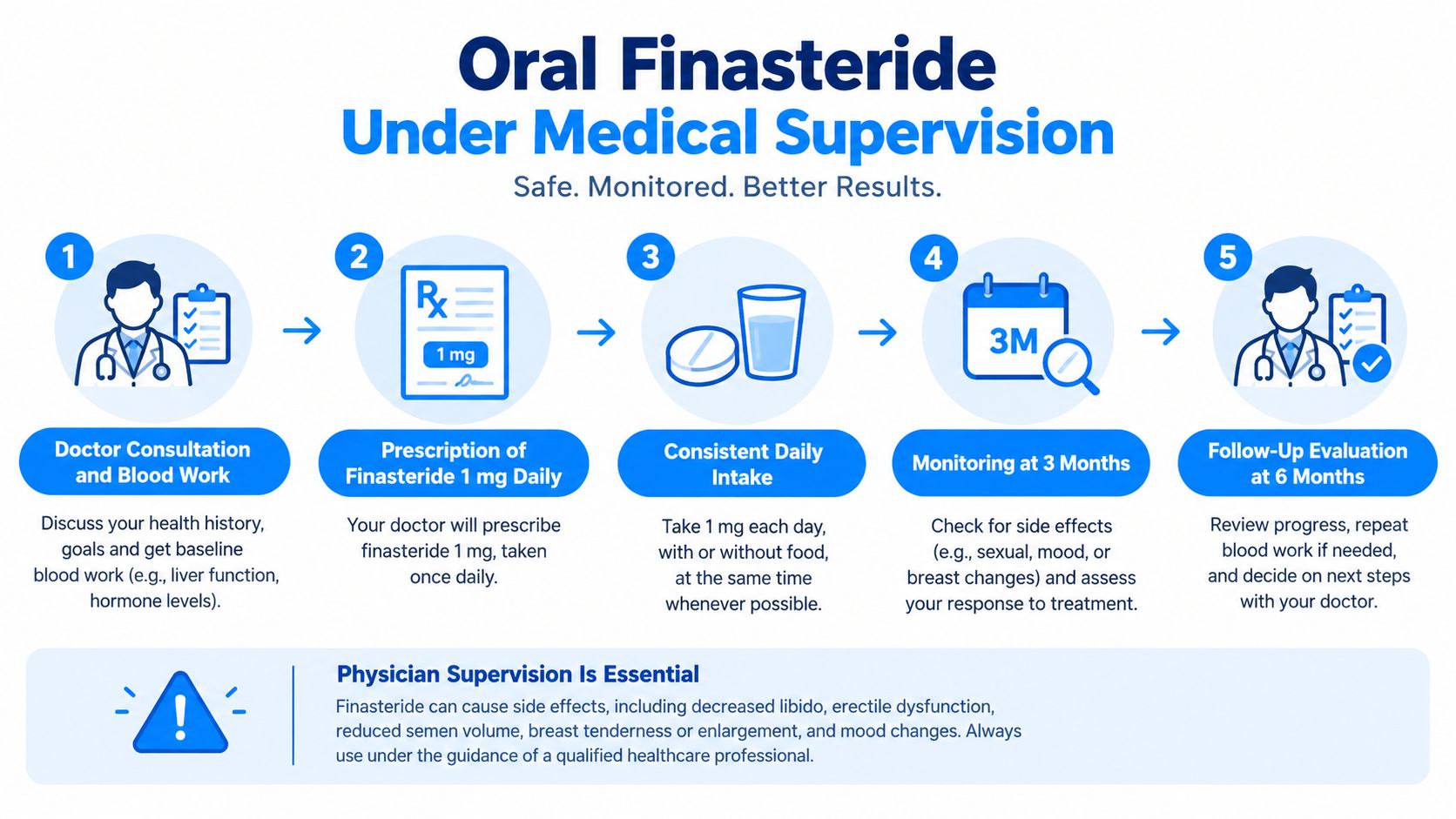
The dermatology guidance on medically supervised finasteride treatment supports reassessment at 6 and 12 months. Contact the clinician sooner if adverse effects develop.
Retention and Perceived Improvement Aren't Identical
Keeping existing hair and noticing visible improvement are different outcomes. A systematic-review summary estimated that approximately 5.6 men need short-term treatment and 3.4 need long-term treatment for one additional patient to perceive improvement. Absolute patient-perceived improvement was roughly 20% short-term and 30% long-term, according to the systematic review of finasteride treatment outcomes.
Reported sexual concerns include reduced libido, erectile dysfunction, and ejaculatory disorders. Discuss these risks with the prescriber; they should neither be dismissed nor described as inevitable. Continue treatment only while its benefits outweigh its risks.
Longer-term expectations also matter. A review involving 1,879 men reported photographic improvement in 48% after 1 year and 66% after 2 years, compared with 7% with placebo at both endpoints, in its summary of phase III finasteride trials. Combining treatments may improve density beyond a single agent, but requires appropriate prescribing. Stopping finasteride generally leads to gradual loss of benefits maintained during treatment.
Comparing Minoxidil and Finasteride at 24 and 48 Weeks
A treatment comparison is only useful when it identifies the formulation, endpoint, and duration. “Minoxidil works faster” is an incomplete claim because oral and topical minoxidil aren't interchangeable.
A network meta-analysis found that at 24 weeks, oral minoxidil 5 mg daily produced the greatest terminal-hair-count increase among evaluated regimens, exceeding finasteride 1 mg daily by 10.4 hairs per square centimeter, with a 95% confidence interval of 2.2–18.6. At 48 weeks, finasteride produced greater terminal-hair-count increases than 2% and 5% topical minoxidil, by 32.1 and 26.2 hairs per square centimeter, respectively, according to the network meta-analysis of male androgenetic alopecia treatments.
Minoxidil vs Finasteride Response at Common Endpoints
| Regimen | 24-Week Signal | 48-Week Signal | Best Use Case |
|---|---|---|---|
| Oral minoxidil | Strongest terminal-hair-count signal among evaluated regimens | No universal later superiority established by the findings above | Clinician-selected treatment when systemic risks can be assessed |
| Oral finasteride | Smaller terminal-hair-count increase than oral minoxidil in this analysis | Greater increase than the topical minoxidil regimens | Medically supervised treatment of androgen-driven loss |
| Topical minoxidil | The quoted early oral result shouldn't be transferred to topical treatment | Smaller increase than finasteride in this analysis | Scalp-directed treatment when consistent application is feasible |
These are network comparisons, not a guarantee that every regimen was tested directly against every other regimen in identical patients.
A Separate Trial Adds Context
A comparative clinical study reported increased hair intensity in 80% of men receiving oral finasteride, compared with 52% receiving topical 5% minoxidil, corresponding to 32 of 40 and 13 of 25 participants, in the clinical comparison of finasteride and topical minoxidil. Investigators used “clinical cure” for that endpoint; it shouldn't be interpreted as permanent elimination of androgenetic alopecia.
Decision rule: A larger trial endpoint doesn't automatically identify the most appropriate treatment for an individual patient.
Oral minoxidil requires a different safety discussion because cardiovascular and fluid-related adverse effects may require monitoring. Patients shouldn't switch routes or escalate doses based on a comparison table.
A guide to hair-loss products for men can help organize categories, but the decision should account for diagnosis, tolerability, application burden, and medical suitability.
Nutrition, Weight Loss, and the GLP-1 Shedding Question
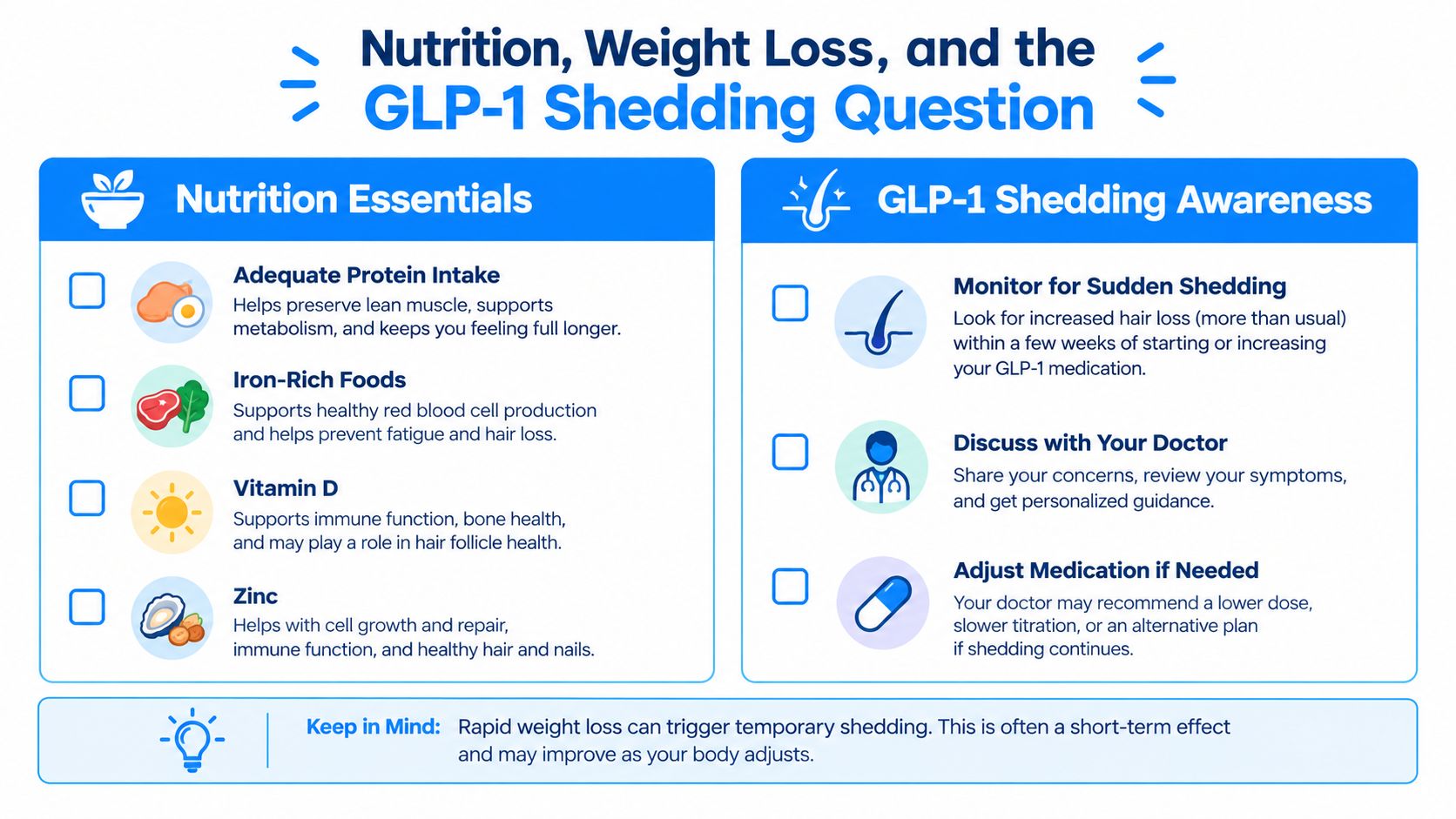
Abrupt diffuse shedding during substantial weight loss shouldn't automatically be labeled worsening male-pattern baldness. Telogen effluvium may explain the change, and it can coexist with preexisting androgenetic alopecia.
The distinction also prevents an unsupported conclusion that a medication directly damaged follicles. Current GLP-1 hair-loss evidence includes associations, but causality remains unsettled.
What the Drug-Specific Evidence Shows
A review describes a 2025 retrospective TriNetX analysis in which tirzepatide was associated with higher telogen-effluvium risk than other weight-loss medications, with a hazard ratio of 2.65; semaglutide and liraglutide didn't show increased risk in that comparison. Another analysis found that semaglutide-associated hair-loss risk wasn't increased in males, illustrating the importance of drug-specific and sex-specific interpretation in the review of incretin therapies and hair loss.
A systematic review identified androgenetic alopecia and telogen effluvium as the predominant reported subtypes. Tirzepatide was most frequently linked with telogen effluvium, while semaglutide reports appeared more common at higher obesity-treatment doses, according to the systematic review of GLP-1-associated hair loss. These findings don't establish that every reported episode was caused directly by treatment.
Protect Nutrition Without Defaulting to Supplements
The practical response is a clinical review of the weight-loss trajectory, intake, and shedding pattern.
- Avoid crash dieting: Excessive restriction can create a separate metabolic stressor.
- Maintain adequate intake: Protein, calories, and micronutrients deserve attention during appetite suppression.
- Investigate relevant contributors: Iron deficiency, thyroid disease, illness, and other medications may warrant evaluation.
- Preserve prescribing oversight: Medication changes should be discussed with the treating clinician, not made automatically.
Stride's personalized nutrition guide can help patients prepare questions about food intake and individualized planning. It doesn't replace medical assessment of persistent shedding.
Routine biotin, zinc, or amino-acid supplementation lacks clear support without a relevant deficiency or nutritional indication. Even when telogen effluvium is suspected, the appropriate intervention is to identify and address the trigger rather than purchase an indiscriminate supplement stack.
Realistic Timelines, Red Flags, and Your Next 12 Months
A useful hair-retention plan begins with documentation and a diagnosis. It doesn't begin with a promise of visible growth within days.
Treatment commonly reduces shedding after 3–6 months, with visible regrowth after 6–12 months, according to the evidence-based dermatology guidance cited earlier. These are assessment windows, not deadlines every patient will meet.
An Action Plan That Can Be Evaluated
- At baseline: Arrange an appropriate clinical assessment and photograph the frontal hairline, temples, and crown under consistent lighting.
- At the photographic checkpoints: Repeat the same angles with comparable hair condition and lighting. Avoid comparing a wet-hair image with a dry, styled photograph.
- During treatment: Record application or dosing consistency, scalp symptoms, and adverse effects.
- During weight loss: Track substantial dietary and medication changes alongside the onset of shedding.
- At formal follow-up: Review photographs, tolerability, and whether continued treatment remains worthwhile.
The established photographic schedule and later efficacy reviews provide more useful information than repeatedly checking the shower drain. A patient with little apparent regrowth may still have achieved retention, while an improved photograph taken under different conditions may exaggerate progress.
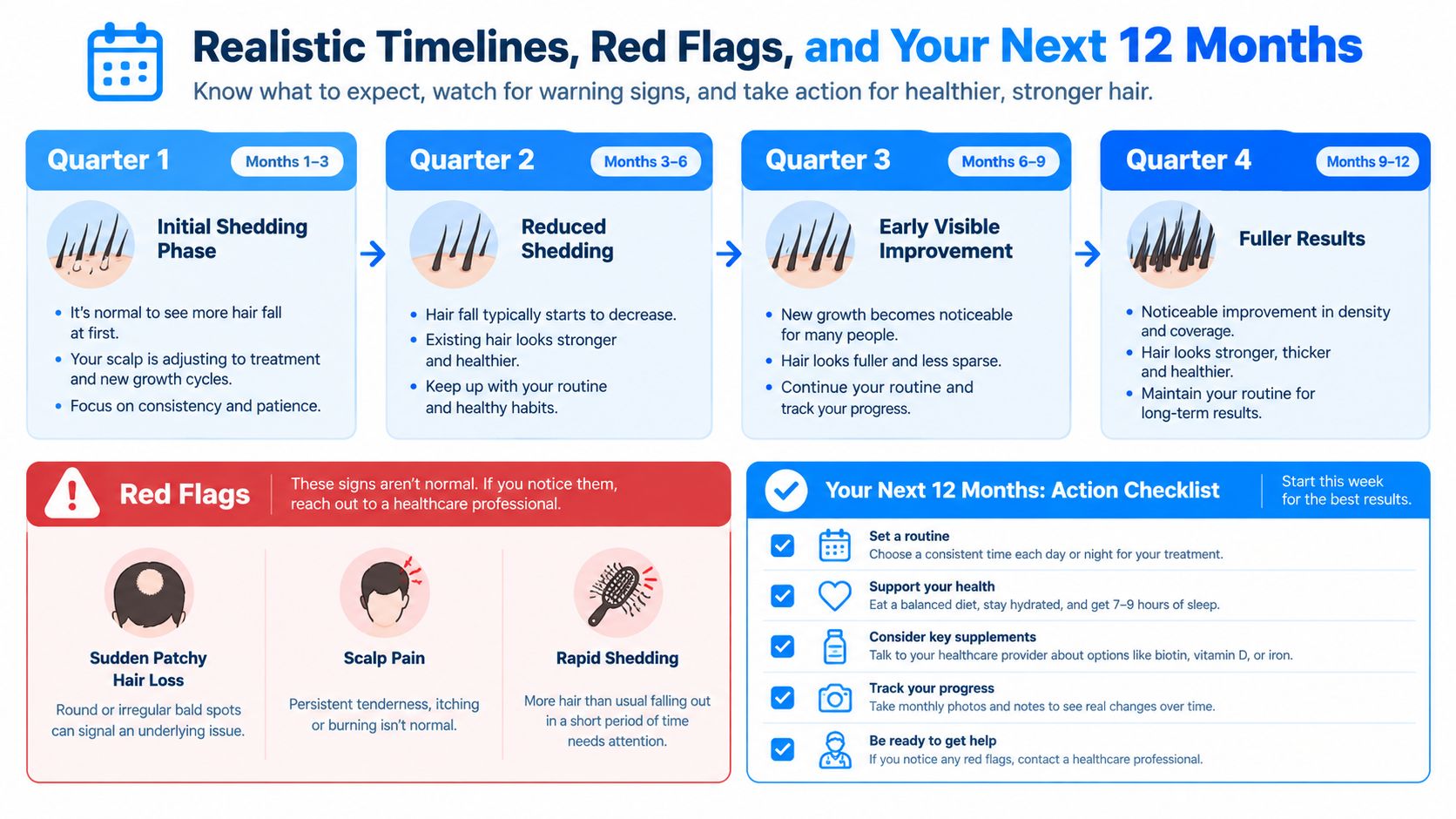
Red Flags Override the Routine Schedule
Sudden onset, patchy loss, scalp pain, inflammation, suspected scarring, or rapidly worsening shedding warrant medical evaluation rather than waiting for a routine progress review. A patient shouldn't continue self-treatment on the assumption that every unexpected change is a normal treatment phase.
The practical objective is improved density and less ongoing loss, not restoration of a prepubertal hairline. Early diagnosis and preservation of miniaturizing follicles offer a more defensible route to fuller coverage than attempts to accelerate growth biology.
Vials + Vitals offers physician-directed telehealth assessment for hair health and metabolic weight management, with U.S.-licensed providers determining whether prescription treatment is appropriate. Men noticing crown thinning or new shedding during GLP-1 treatment can visit the service to begin an online clinical assessment and discuss an individualized, medically supervised plan.