How to Make Hair Grow Faster for Guys: A Clinical Guide
How to make hair grow faster for guys with evidence-based medical guidance. Explore timelines, prescription options, and when to seek evaluation.

The most popular advice about how to make hair grow faster for guys gets the problem backward. Oils, supplements, and elaborate scalp routines can't reliably speed up the hair cycle or reverse genetic thinning. For many men, the priority isn't making each strand grow faster. It's finding out why coverage is changing and protecting follicles before further loss makes regrowth harder.
That distinction matters during weight loss, too. Hair shedding can reflect a nutritional or metabolic stressor alongside male-pattern hair loss, so a treatment plan should consider both scalp biology and overall health.
Why Faster Hair Growth Is the Wrong Goal
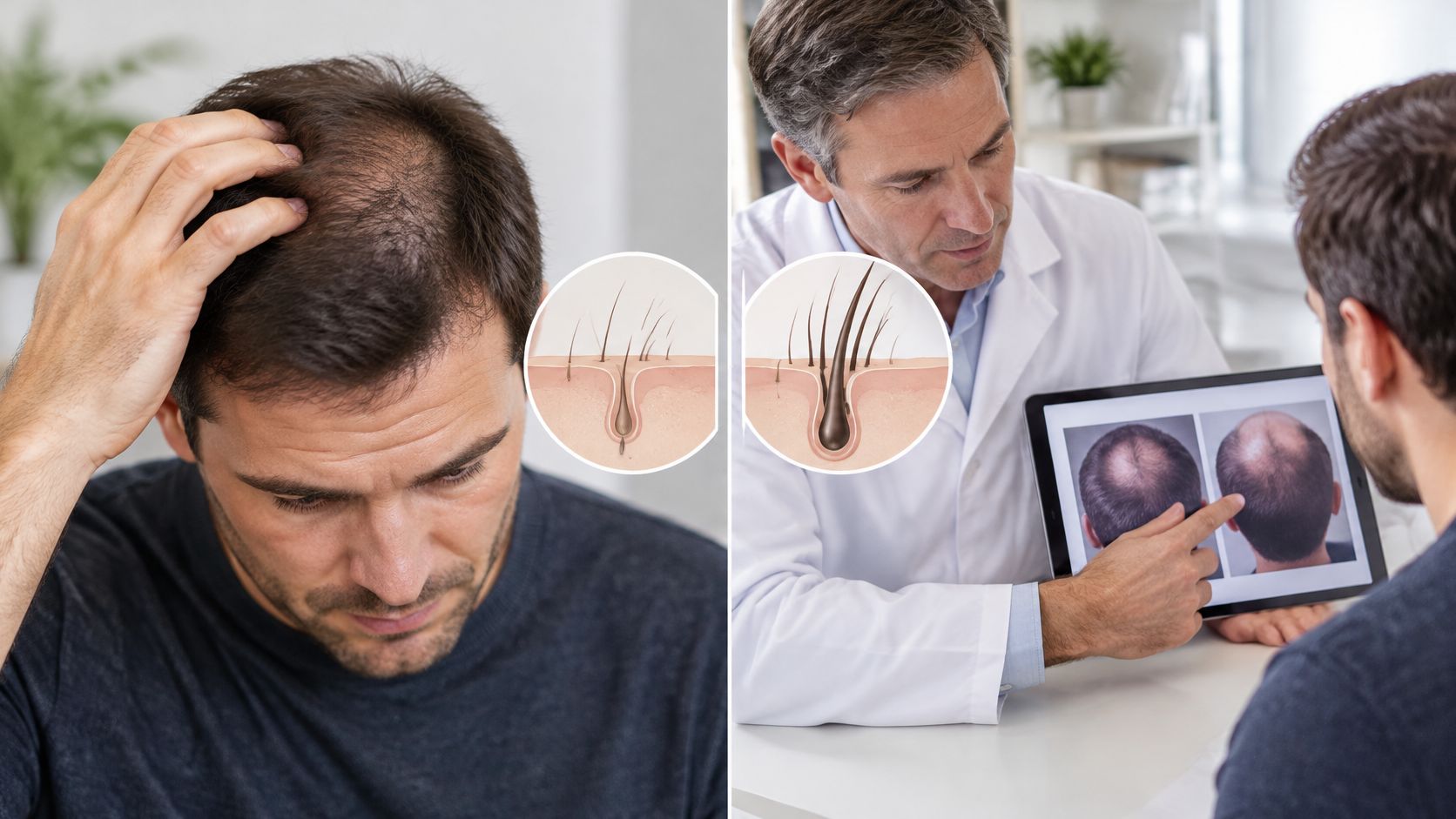
Preserving follicle function is the treatment goal. Androgenetic alopecia, or male-pattern hair loss, shortens the growth phase and gradually miniaturizes susceptible follicles. The result is finer, shorter hair and declining coverage, even while individual strands continue to grow.
The condition can begin after puberty and affects up to 50% of males and females, according to the NIH clinical reference, which also describes substantial variation in progression. Some men lose coverage rapidly; others experience gradual thinning over decades. Neither course supports promises of dramatic improvement within weeks. Recession or crown thinning warrants treatment evaluation while there is still hair to preserve.
In the United States, topical minoxidil and oral finasteride are FDA-approved treatments for male-pattern baldness. Prioritize these evidence-based options over cosmetic routines marketed as growth accelerators. Treatment aims to slow further loss, maintain coverage, and support partial regrowth. Judge results over months of consistent use. Finasteride requires a prescription evaluation that includes medical history, potential adverse effects, and whether ongoing treatment suits your priorities.
Weight-management treatment deserves attention here, too. During GLP-1 treatment, weight loss and inadequate nutritional intake can contribute to telogen effluvium, a shedding process distinct from follicle miniaturization.
Clinical takeaway: Protect existing hair, support the hair cycle, and identify the cause of shedding before choosing treatment.
For an in-person consultation about hair restoration in Easton MD, bring your medication list and weight-loss history. Ask whether your pattern warrants prescription treatment and whether a separate shedding trigger needs medical attention.
Documenting Baseline and Confirming the Diagnosis
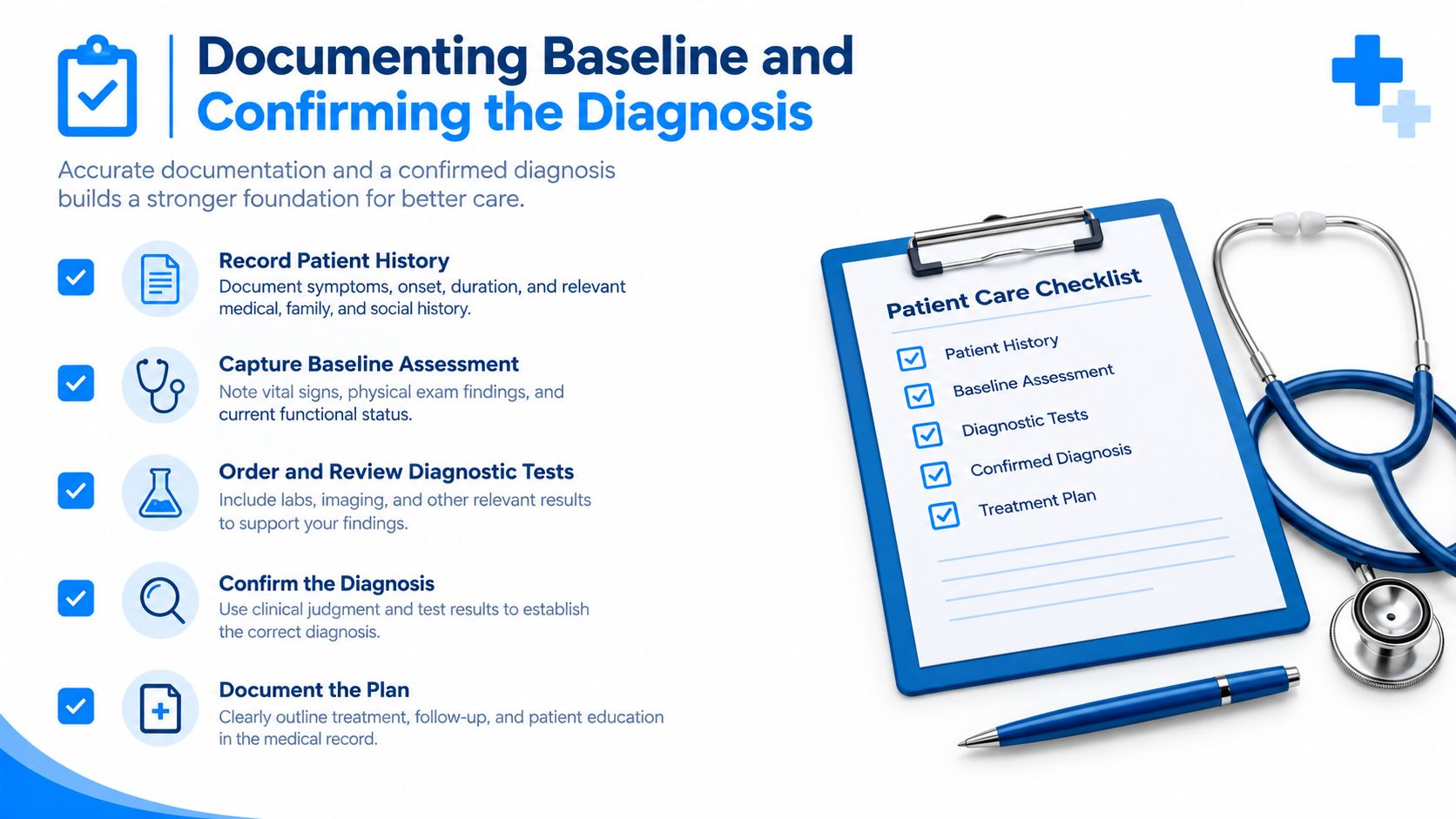
Before treatment, create a baseline that can be compared over time. Hair can look thinner when it is wet, parted differently, or photographed under brighter light, so casual snapshots are not a reliable way to judge change.
Make photographs comparable
Take clear photographs of the front hairline, both temples, the top of the scalp, and the crown. Use the same lighting, distance, camera angle, hair length, and parting each time. Record the date and whether the hair is dry or damp. Avoid harsh overhead lighting in one set and soft window light in another, because the difference can make stable hair look worse or apparent improvement look larger than it is.
If available, a clinician can use trichoscopy to examine scalp and hair features and measure density. Photographs show the broad pattern; trichoscopy can help assess follicle miniaturization and support clinical decision-making. For a remote appointment, these images and a short written history are more useful than a single close-up.
Check whether the pattern fits
Gradual recession at the temples or thinning at the crown can fit androgenetic alopecia. Sudden shedding, patchy bald spots, scalp inflammation, scarring, or rapid loss deserve medical assessment because they may point to another cause, such as telogen effluvium, alopecia areata, a scarring condition, or a medication-related trigger.
Bring a record of recent illness or stress, diet and weight changes, medications, scalp symptoms, and when shedding began. If the appearance changes substantially between wet and dry hair, a guide to why hair looks thin when wet can help explain why consistent photo conditions matter. Self-monitoring makes sense only when loss is gradual and the scalp is otherwise healthy. If the pattern is sudden, patchy, inflamed, or fast-moving, seek a clinician's evaluation rather than relying on a photo comparison alone.
Comparing the Main Evidence-Based Treatments
Hair-loss treatment is about protecting vulnerable follicles and maintaining results, not making hair grow faster. The best-supported options work differently, and the choice should reflect the diagnosis, health history, and treatment risks. A 2023 systematic review and network meta-analysis estimated improvements in terminal hair count versus placebo of 13.13 hairs/cm² for topical minoxidil 5%, 12.38 hairs/cm² for oral finasteride 1 mg, 18.37 hairs/cm² for dutasteride 0.5 mg, and 18.75 hairs/cm² for low-level laser therapy. These are study-level estimates, not promises of visible results for an individual.
Understand what each option does
Finasteride reduces conversion of testosterone to dihydrotestosterone, or DHT, which contributes to progressive follicle miniaturization in men with androgenetic alopecia. The AAD treatment guidance reports that it slows further hair loss in approximately 80%–90% of men who take it. It is commonly prescribed at 1 mg daily for eligible men. Before starting, have a clinician review potential sexual and mood effects, fertility considerations, other medications, and pregnancy-exposure precautions.
Minoxidil supports follicular activity and extends the growth phase. It can reduce hair loss, stimulate growth, and strengthen existing strands, but it doesn't block DHT. That makes it a useful option for supporting growth, while finasteride addresses a major hormonal driver of ongoing loss. A clinician can help decide whether one treatment or a combination fits your situation.
Dutasteride also inhibits 5-alpha-reductase, but it isn't interchangeable with finasteride. It requires clinician-directed assessment of benefits and risks. Low-level laser therapy avoids medication, yet its comparative hair-count estimate does not make it the right choice for every man. Hair-loss treatment works only while it is maintained, so weigh the expected benefit, practical routine, and tolerability before committing.
For a practical overview of hair-loss products for men, distinguish treatments with evidence for follicle retention from products that mainly improve styling or appearance. Men considering in-person options can also review hair restoration at Spa Black as a resource for discussing available approaches.
A 12-Month Treatment Protocol With Realistic Timelines
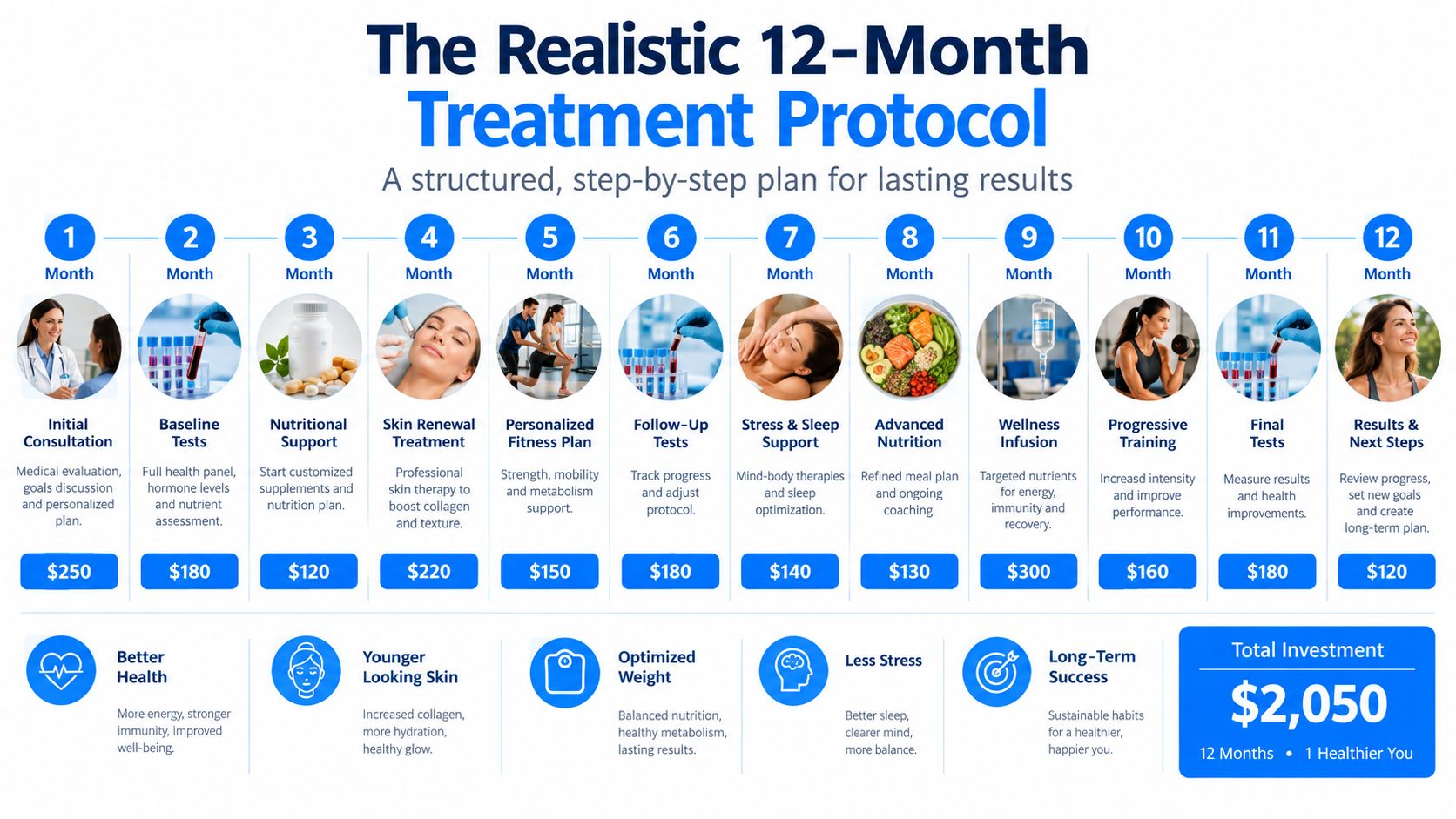
Hair treatment is maintenance, not a race for faster growth. Set a diagnosis and baseline first, then follow a clinician-selected regimen consistently. Switching products every few weeks makes it harder to tell whether treatment is working.
Set the regimen with a clinician
For appropriate adult men, a clinician may discuss finasteride 1 mg daily, topical minoxidil 5%, or both. Topical minoxidil 2% solution twice daily is another option when appropriate. Apply minoxidil as directed to a dry, healthy scalp. Wet or irritated skin can increase absorption and irritation, while irregular use makes results difficult to assess.
Finasteride needs a separate safety discussion before treatment begins. Ask the prescriber to review possible sexual and mood effects, fertility considerations, other medications, and pregnancy-exposure precautions. Don't start or adjust prescription treatment without that review.
Judge progress on the right timeline
European S3 guidance recommends assessing response at 6 months, while visible benefit may take 12 months (clinical guidance review). Compare standardized photos and, when available, repeat trichoscopy. Check whether hair loss has stabilized, coverage has improved, and the regimen remains tolerable.
Early shedding can occur with minoxidil, but it doesn't prove the treatment is working. Record when it began, how substantial or persistent it is, and whether scalp symptoms, recent illness, or stressors may be involved. Severe or unusual shedding calls for reassessment. Discuss its timing and pattern with the prescriber before stopping treatment.
Consistency matters more than frequent product switching. Minoxidil and finasteride generally require ongoing use to maintain benefits, and stopping can allow treatment-related gains to fade over subsequent months (NIH clinical reference). Use scheduled follow-ups to assess the regimen rather than judging it in the mirror every few days.
Where Microneedling Fits as an Adjunct
Microneedling may add to minoxidil's effect, but it does not replace treatments that address androgenetic alopecia. Confirm the diagnosis and establish baseline density first. Then prioritize a consistent medication plan; consider needling only as a clinician-guided add-on. Sterile equipment and proper technique matter because the procedure punctures the skin barrier.
In a randomized trial of men, microneedling plus topical minoxidil increased hair count by 12.52 hairs per square inch, compared with 1.89 with minoxidil alone. Four men in the combination group reported 50% improvement, compared with none using minoxidil alone. The authors cautioned that this reported improvement was not necessarily cosmetically significant (microneedling study). Separately, a network meta-analysis estimated that microneedling with 5% minoxidil improved six-month hair density by 13 hairs/cm² more than minoxidil alone. Treat that estimate as evidence of a potential add-on effect, not a promise of visible restoration.
Protocols vary, and the evidence remains limited. A clinician should assess whether needling suits the scalp and treatment plan. Avoid it with active dermatitis, infection, scarring alopecia, or unexplained shedding.
Home devices used without sterile technique, excessive depth or pressure, and overly frequent sessions can cause bleeding, irritation, injury, or infection. Don't apply minoxidil immediately to freshly injured skin, since irritation and systemic absorption may increase. For procedural information, see Georgia Plastic & Reconstructive Surgery microneedling. Keep treatment decisions with a qualified clinician.
Hair Loss During GLP-1 and Tirzepatide Weight Loss
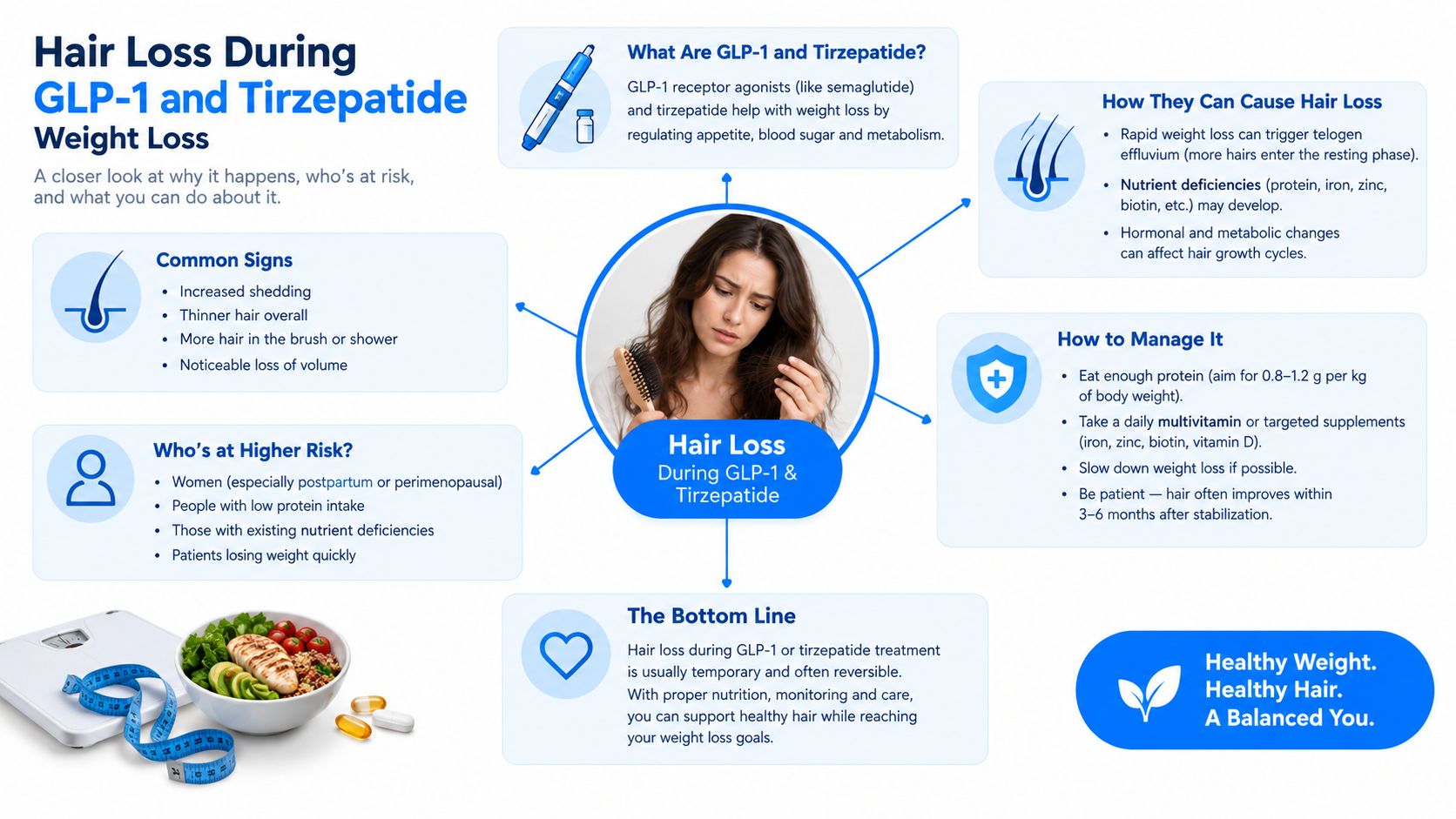
A man can have genetic thinning and a second reason for shedding at the same time. Rapid weight loss, calorie restriction, inadequate protein intake, dehydration, illness, or psychological stress can trigger telogen shedding, making established androgenetic alopecia appear to accelerate. That doesn't mean a weight-management medication has directly damaged follicles; it means the clinician should examine the timing, nutritional intake, rate of weight change, and hair-loss pattern.
In the SURMOUNT-5 comparison summarized by the American College of Cardiology, adults taking tirzepatide had a least-squares mean body-weight change of minus 20.2% at 72 weeks, compared with minus 13.7% for semaglutide. Weight loss was approximately 6% lower in men than in women in both treatment groups (American College of Cardiology trial summary). These results describe the trial population, not an expected outcome for every patient. Substantial weight reduction can create a physiological stress signal that contributes to shedding in susceptible people.
Gastrointestinal tolerability also matters. A meta-analysis of 10 tirzepatide trials involving 6,836 participants reported pooled gastrointestinal adverse-event rates of approximately 39% at 5 mg, 46% at 10 mg, and 49% at 15 mg (tirzepatide meta-analysis). Persistent nausea, vomiting, or difficulty eating and drinking can undermine hydration and adequate food intake.
Prioritize the trigger, not a supplement
Follow the prescribed titration schedule and tell the clinician about persistent gastrointestinal symptoms, dehydration, fatigue, or new diffuse shedding. Adequate protein and hydration should be part of the weight-management plan, while aggressive calorie restriction should be avoided. If shedding begins during treatment, review dietary adequacy, illness, medications, sleep, and the pace of weight change before assuming biotin is the answer.
For men who need help assessing a weight-loss plateau alongside changes in appetite or intake, this guide to why weight loss may stall on semaglutide offers related context. Supplements and oils aren't interchangeable with treatment for confirmed male-pattern loss or correction of a documented deficiency.
Red Flags That Require Physician Evaluation
Not every shedding pattern is male-pattern baldness, and reassurance can delay a necessary diagnosis. Sudden shedding, patchy bald spots, scalp inflammation, scarring, or rapid loss warrant medical assessment. These features can point to telogen effluvium, alopecia areata, a scalp disorder, medication effects, or another condition that needs a different evaluation and treatment approach.

Treat early shedding as a question, not a diagnosis
Initial shedding is commonly reported with minoxidil, but controlled finasteride trials haven't established a similarly predictable early-shedding pattern (finasteride drug-therapy overview). Persistent or substantial loss shouldn't be labeled a normal treatment phase without considering timing, severity, scalp symptoms, recent stressors, illness, and medications. A clinician can decide whether examination, laboratory testing, or another workup is warranted.
Before a consultation, prepare dated photographs, a timeline of shedding, a list of medications and supplements, recent weight and diet changes, and details about scalp symptoms. Ask whether the pattern fits androgenetic alopecia, whether another cause needs investigation, and when treatment response should be reassessed. For sudden or patchy loss, inflammation, or rapid progression, arrange prompt physician evaluation rather than waiting for a routine hair-treatment check-in.
A physician-directed plan can address hair retention alongside metabolic goals when appropriate. Vials + Vitals offers online clinical assessment, U.S.-licensed provider review, individualized therapy and titration decisions, and dispensing through accredited U.S. pharmacy partners. Patients can visit Vials + Vitals to learn whether its telehealth services are suitable for their needs.