How to Get Wavy Hair for Men: A Clinician's Guide
How to Get Wavy Hair for Men. Evidence-based steps for men on how to get wavy hair without damage, covering heat styling, scrunching, perms, and scalp-health
A man stands at the sink after a shower, hair damp, fingers scrunching hopefully at strands that looked wavy for five minutes and then fell flat. The product shelf already holds two creams, a salt spray, and a pomade bought for a different problem. The question behind How to Get Wavy Hair for Men isn't usually which jar to open next. It's whether the hair has a natural bend to work with, and whether the routine is protecting the fiber or damaging it.
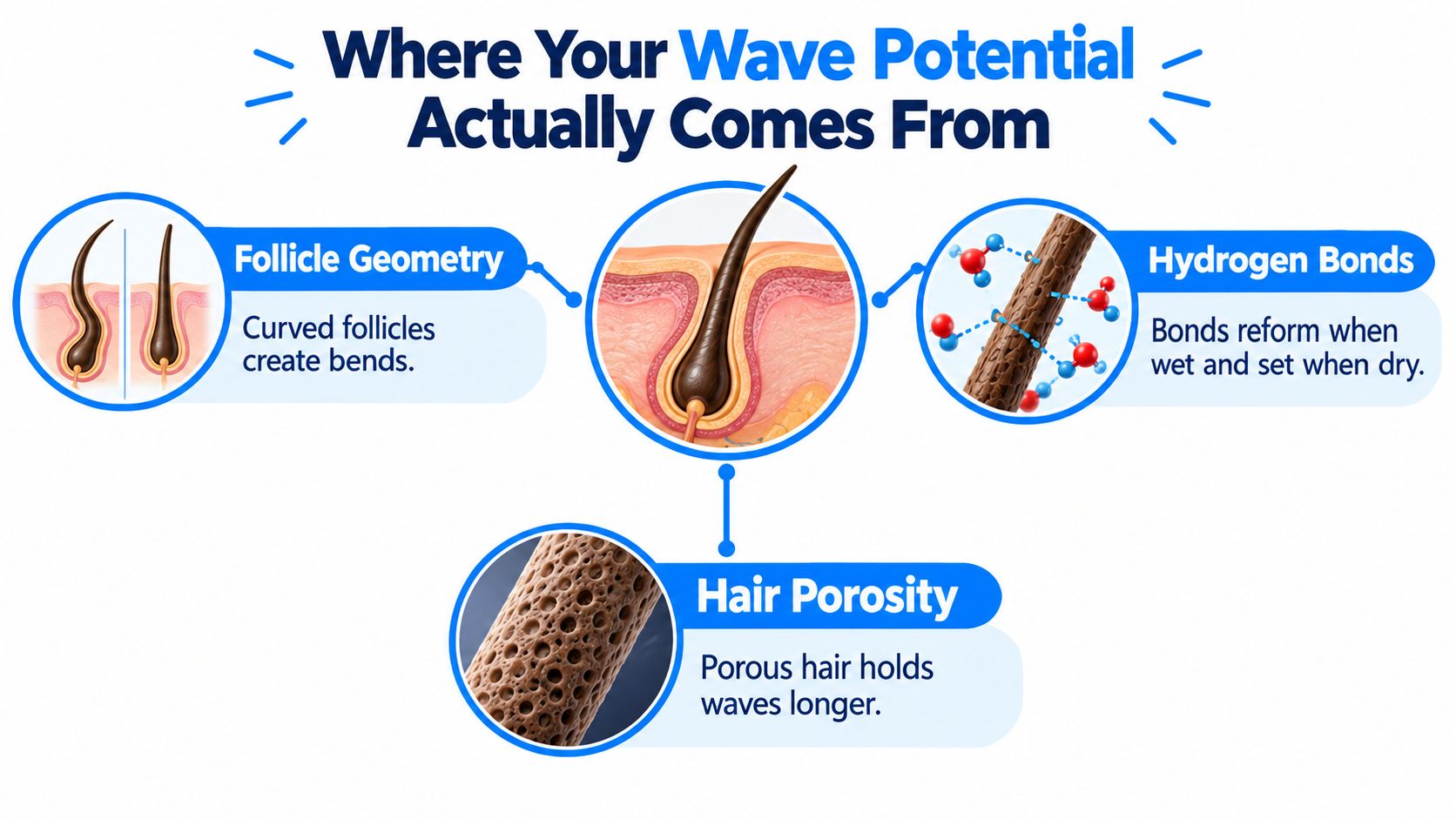
Where Your Wave Potential Actually Comes From
Consider a 28 year old with shoulder grazing, fine, mostly straight hair. Length suggests waves should be possible. Biology may disagree, and that distinction determines everything that follows.
Hair waviness is primarily biological, not something styling creates permanently. A multinational study of 19,461 people that classified 8,092 participants, or approximately 41.6%, as wavy haired also found 1,737 men, or 33.8% of the 5,138 man subgroup, in the wavy category in that same analysis. The same research reported straight or wavy hair in 58.84% of the total sample, with 86.6% in China and 84.3% in Japan, which underlines how strongly population background shapes texture.
Follicle Shape Sets the Starting Pattern
A curved follicle produces a shaft that bends as it grows. A straighter follicle produces a straighter shaft, regardless of product choice. Twin research cited in that multinational analysis estimated broad sense heritability of curliness at between 79% and 98% in European ancestry samples, so family texture is a useful predictor.
That doesn't mean straight hair can't hold a wave for an evening. It means the result is temporary by design. Men expecting a permanent pattern from a spray will keep buying heavier products and getting flatter results.
Hydrogen Bonds Versus Disulfide Bonds
Water and heat temporarily alter hydrogen bonds in the shaft. Hair shaped while damp keeps that shape as it dries or cools, then resets after washing. Scrunching, braiding, rollers, and diffusing all work through this mechanism, a distinction detailed in research on hair structure, shaft curvature, and styling response.
Chemical treatments work differently. They rearrange disulfide bonds for a longer lasting change, with greater risk of dryness, irritation, and breakage. Thermal styling doesn't change the follicle, and neither approach rewrites genetics.
Clinical takeaway: Enhance an existing bend first. Manufacture a temporary one only with clear expectations about wash out.
Conditioning matters because it reduces friction while those bonds reset, which is why comparing 2026 curly hair conditioner picks can help men choose lighter formulas suited to waves rather than heavy masks. Men also focused on length should separate styling goals from growth goals, since guidance on how to make hair grow faster for guys addresses a different biological process than wave formation.
Match Your Starting Point to the Right Method
A fast self assessment prevents the most common error, which is copying a routine built for a different fiber. Five variables matter before any tool is switched on.
- Natural bend when wet: Hair that forms an S shape soaking wet has usable wave potential.
- Length: Very short hair has little room to show a bend, even when texture exists.
- Density and fiber diameter: Fine, low density hair collapses under heavy creams. Coarse, dense hair tolerates more product.
- Porosity: Hair that absorbs water quickly often holds a set differently from hair that repels it.
- Recent heat or chemical history: Previously treated hair needs a gentler starting method.
Choosing a Wave Method by Starting Hair Texture
| Starting texture | Best first line method | Method to avoid as a starter | Watch for |
|---|---|---|---|
| Naturally wavy, undefined | Leave in conditioner, scrunch, air dry | Daily hot tools | Frizz from dry brushing |
| Slight bend, fine fiber | Lightweight mousse, scrunch, low heat diffuse | Heavy wax or oil before drying | Flattening from product weight |
| Mostly straight, medium length | Damp braids, twists, or rollers | Chemical perm as a first test | Uneven pattern, short longevity |
| Curly but stretched out | Wide tooth comb on damp hair, light cream | Brushing dry, high heat | Breakage and puffiness |
| Chemically treated or brittle | Heat free scrunch only | Perms and irons | Snapping, scalp irritation |
Men with a clear wet bend rarely need irons. Scrunching and air drying usually produce better definition with less damage, and added heat mainly speeds drying. Men with very straight hair need a mechanical set, such as loose braids or twists on damp hair, and should expect the pattern to last until the next wash.
Product weight deserves equal attention. Wavy hair generally needs lighter formulations and less intensive conditioning than tighter curls, yet many men default to curly hair routines that weigh waves down. Starting light and adding only if definition fails is the more disciplined approach.
Multi styler tools sit in the middle ground between air drying and a traditional iron, and men comparing heat options sometimes review lo la beauty Dyson Airwrap options to understand airflow based styling. Tool choice still doesn't override starting texture. A device can't create follicle curvature that isn't there.
A sudden change in shedding, scalp visibility, or texture isn't a styling problem to solve with a new method. That pattern warrants dermatology evaluation.
That safety rule applies before experimentation begins. If density has changed noticeably over a short period, documenting the change and seeking assessment takes priority over wave definition.
The Low-Damage Daily Routine Step by Step
The routine recommended most consistently is deliberately uncomplicated. It protects wet hair, which is more vulnerable to breakage, and it forms the pattern before drying begins rather than trying to rescue it afterward.
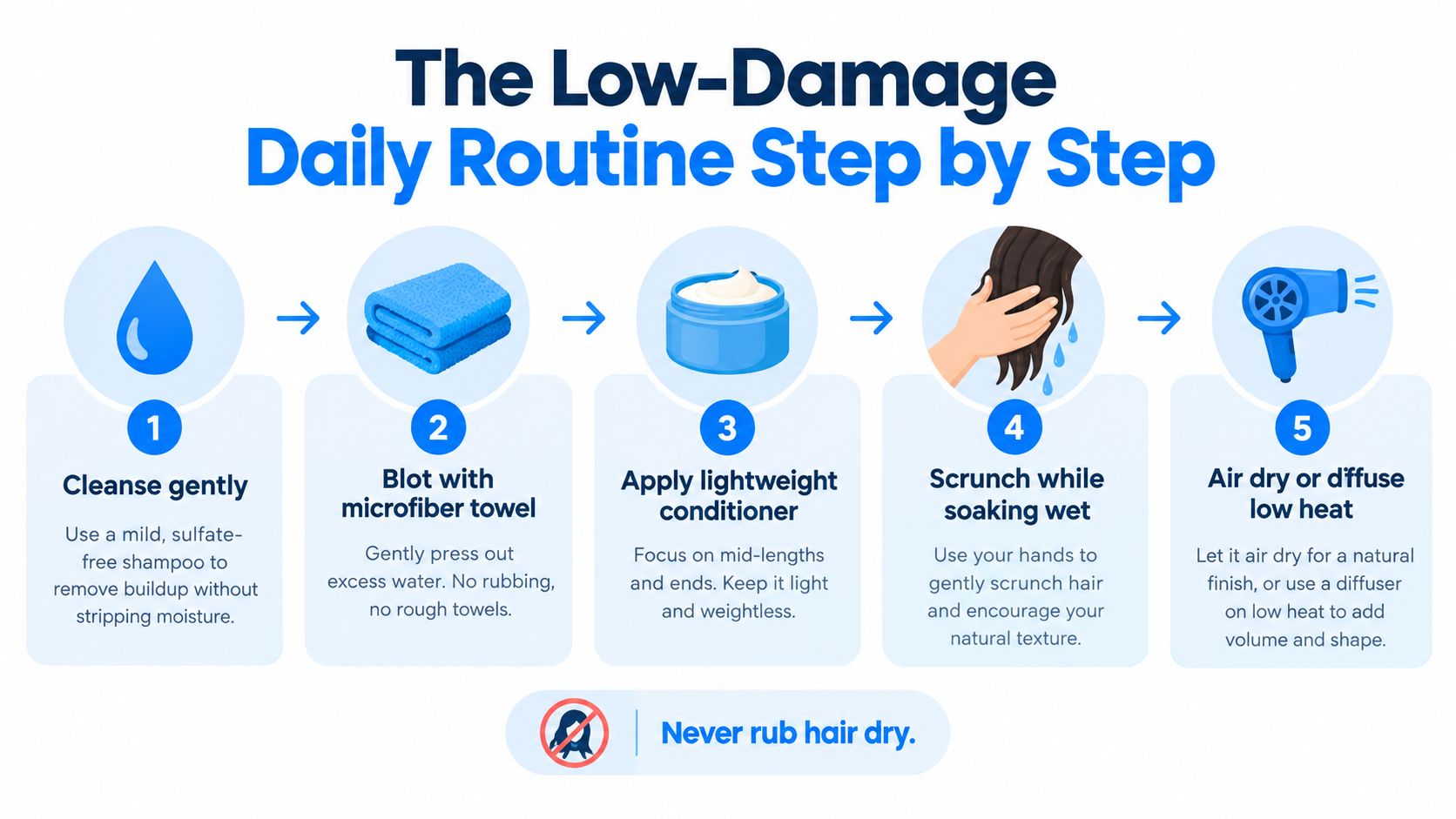
The Five Step Wash Day Sequence
- Cleanse gently: Wash without aggressive scrubbing, then condition to reduce friction during detangling.
- Blot, don't rub: Press a microfiber towel against the hair to remove excess water. Rubbing roughs the shaft and disrupts clumps before they form.
- Apply product to damp hair: Distribute a lightweight leave in conditioner or curl enhancing cream with a wide tooth comb while hair is still damp.
- Scrunch upward in sections: Cup the ends and lift toward the scalp. Twisting a few larger sections away from the face can help straighter areas match wavier ones.
- Dry with minimal disturbance: Air dry when time allows. Otherwise diffuse on low or medium heat and low airflow, holding hair in the diffuser bowl.
The American Academy of Dermatology guidance on styling and hair care advises air drying when possible, using low heat, limiting blow drying, and avoiding rough towel friction because excessive heat and mechanical stress can make hair brittle and prone to breakage. That guidance is the safety parameter for the entire routine, not an optional preference.
Why Timing Matters More Than Product Quantity
Product applied to partially dry hair creates uneven clumps and frizz. The pattern needs to form while hydrogen bonds are still resettable, which means damp hair and early scrunching. Once hair is fully dry, fingers should separate waves. A brush at that stage breaks the pattern into puff.
Heavy wax, oil, or pomade before drying is the other frequent mistake. Excess weight stretches fine or straight hair flat before the wave can set. A small amount of flexible hold product after drying preserves movement without erasing it.
Men whose main complaint is flatness at the roots often benefit from reviewing techniques for giving hair more volume alongside wave technique, since lift and bend are related but separate problems. Volume work targets the root. Wave work targets the mid lengths and ends.
Consistency over several wash cycles is the honest benchmark. Wave formation depends on fiber curvature, length, density, porosity, and product weight, so a single attempt doesn't prove a method has failed. Three or four controlled repetitions give a clearer answer.
Heat Styling and Chemical Perms Compared Honestly
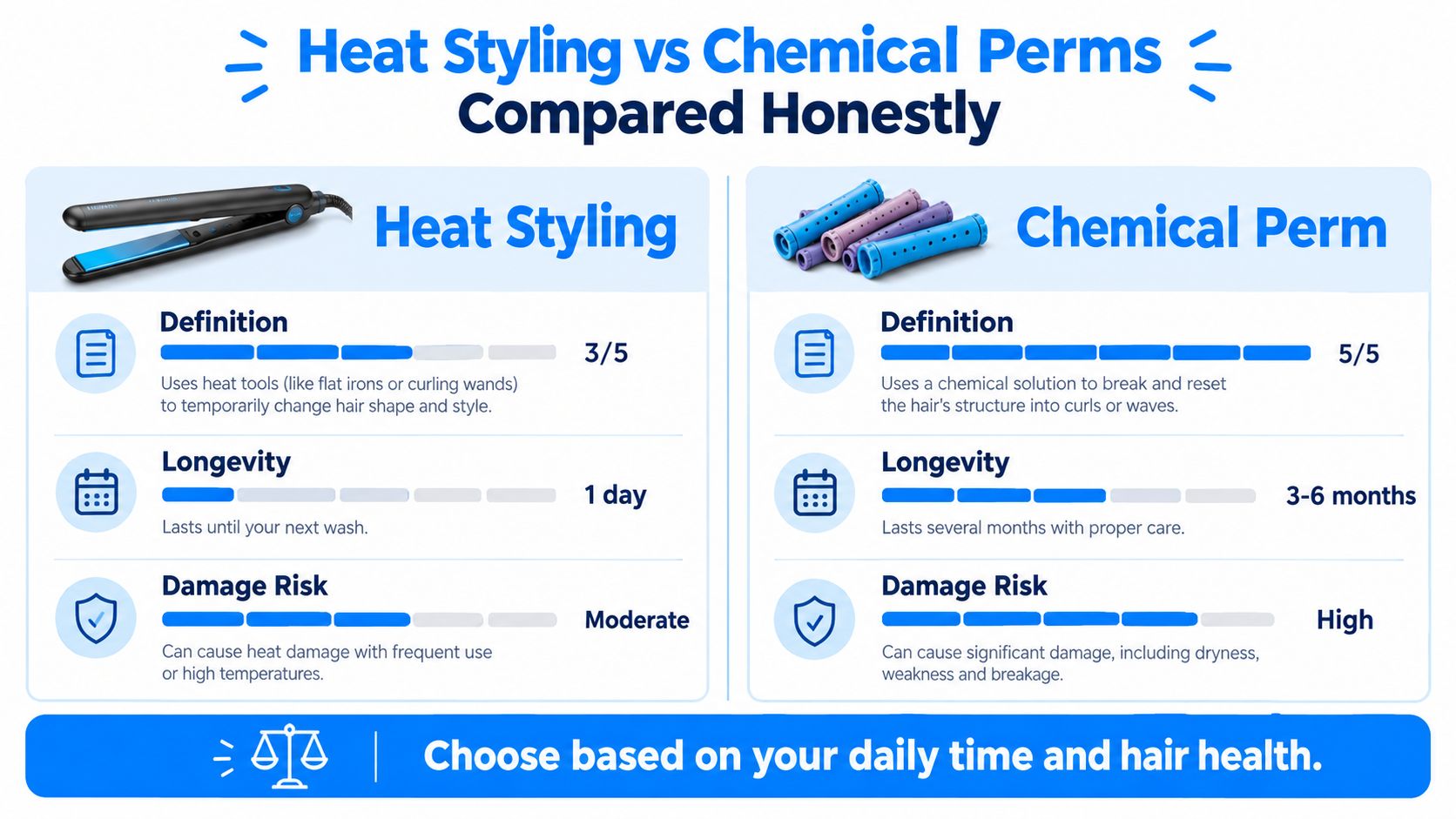
Temporary and long lasting methods should be judged on the same three axes. Definition, longevity, and damage risk move together, and pretending otherwise leads to poor decisions.
Heat Styling as a Controlled Tool
Diffusers, and occasionally irons used on dry hair, reshape hydrogen bonds for the day. Definition can be strong, particularly for men with some natural bend, but the result resets with water and humidity. Damage risk rises with temperature, frequency, and repeated passes over the same section.
Dermatology guidance on hair care and heat damage confirms that hairdryers, curling irons, and straighteners can damage hair and recommends minimizing heat, using cool or low settings, and never applying irons to wet hair. A thermal protectant, low setting, and dry hair are minimum requirements, not enhancements.
Heat makes sense for definition on a specific day. It doesn't make sense as a daily correction for a routine that hasn't been tested heat free first.
Chemical Perms as an Informed Choice
A perm rearranges disulfide bonds, so the pattern survives washing and lasts considerably longer. That longevity is the genuine advantage. The trade offs are dryness, breakage risk, uneven texture as new growth emerges, and scalp irritation in sensitive men.
- Definition: Strongest and most uniform of the available options.
- Longevity: Persists through washing until treated hair grows out or relaxes.
- Fiber risk: Highest, especially on previously bleached, brittle, or thinning hair.
- Scalp risk: Irritation possible, particularly with active dermatitis or sensitivity history.
Men with active scalp dermatitis, a history of contact sensitivity, or recent heavy shedding shouldn't pursue a perm until a clinician has assessed the scalp. Chemical services on an inflamed scalp convert a cosmetic decision into a medical problem. Patch testing and a strand test are basic precautions a reputable salon shouldn't skip.
Default position: Start heat free, add low heat diffusing second, reserve hot tools for occasional use, and treat perms as a considered commitment rather than an upgrade.
That ordering protects fiber health while still leaving stronger options available. Men who reverse it often end up managing damage instead of enjoying definition.
Build a Personal Wave Routine That Actually Fits
Most men's tutorials assume one universal wavy type. Real heads don't cooperate. Waves vary across the scalp, shift with humidity, and change as length passes the ears, which is why a borrowed product stack so often disappoints.
The Two Week Controlled Test
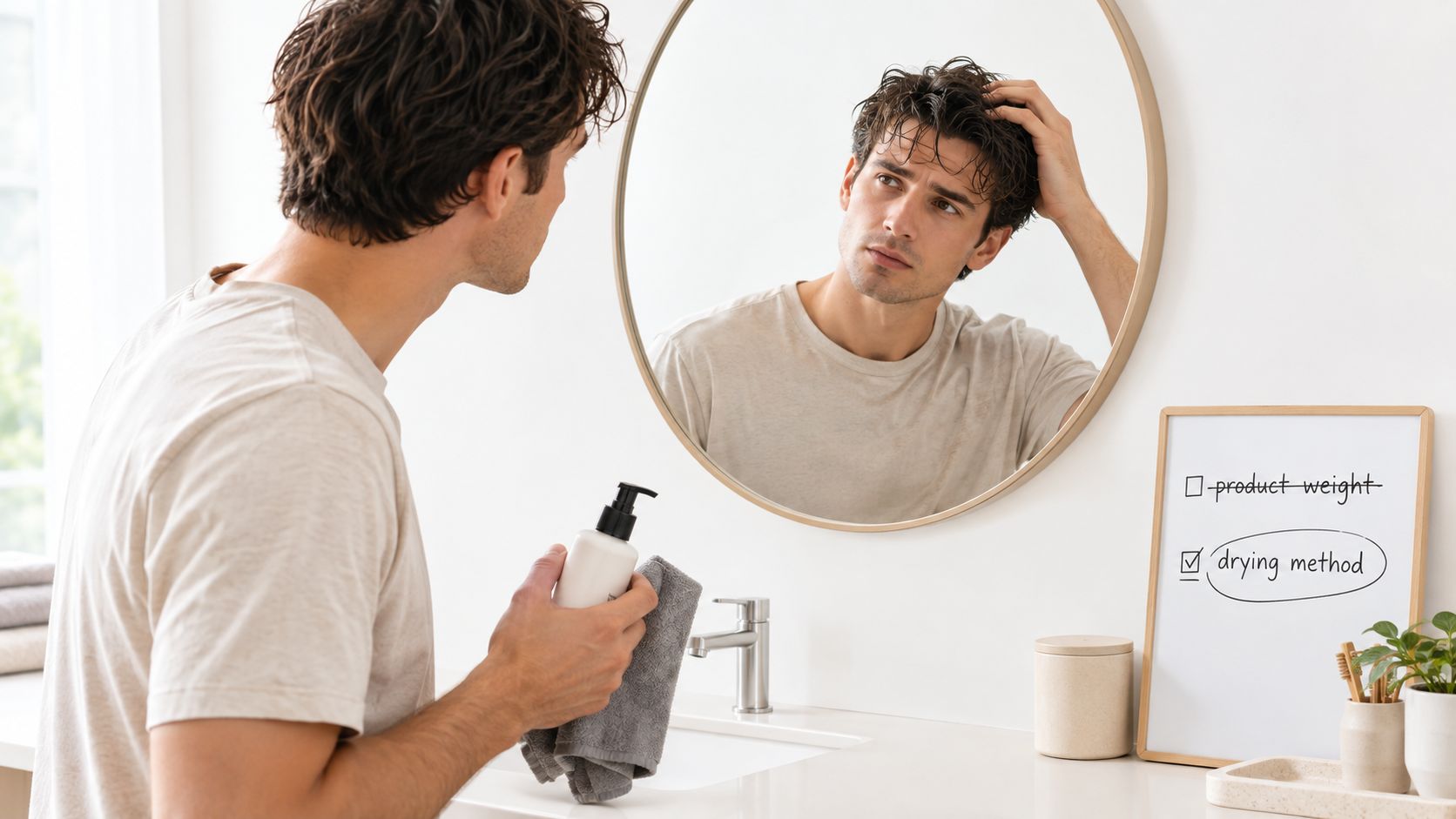
Change one variable at a time across successive wash days. Product weight, drying method, and scrunch intensity are the three variables worth isolating first. Changing all three at once makes the result impossible to interpret.
Score each wash day on a simple 1 to 5 scale for wave definition and scalp comfort. Note humidity and product amount alongside the score. After two weeks, the pattern usually identifies the winning combination without further purchases.
Men testing mousse as the single variable should apply it correctly before judging it, and guidance on how to apply volumizing mousse covers distribution technique that affects whether fine waves lift or collapse. Technique errors are frequently misread as product failures.
Reading Mixed Results Correctly
Crisp waves one day and flat hair the next usually points to a specific variable, not random failure. Humid days can increase frizz while improving bend. Dry indoor air can do the opposite. Heavier product on a low density section explains why the crown falls flat while the sides hold.
A 2025 multidisciplinary study of 123 people with naturally curly hair found greater hair care knowledge and time investment were associated with curlier hair, which supports the view that education and technique drive outcomes more reliably than buying additional products.
Adjustments should stay small. Reduce cream by half before abandoning it. Diffuse only the flattest section instead of the whole head. Add a second scrunch after product application rather than adding a second product.
The endpoint is a personal protocol, documented in plain terms. Amount, timing, drying method, and the humidity adjustment for bad days. That record is worth more than any generic routine, because it was built on the actual fiber it has to work on.
When Styling Looks Like a Hair-Health Problem
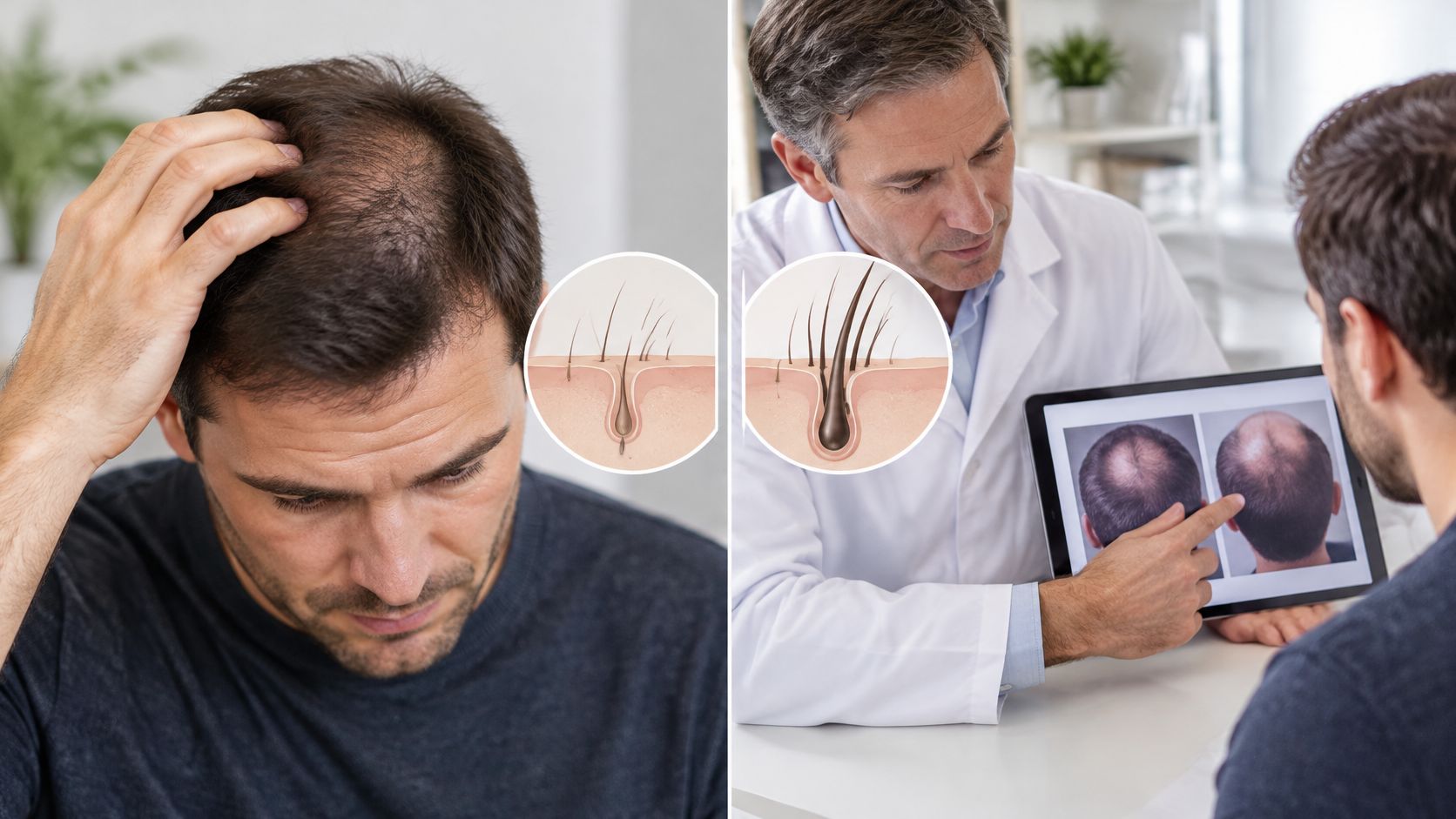
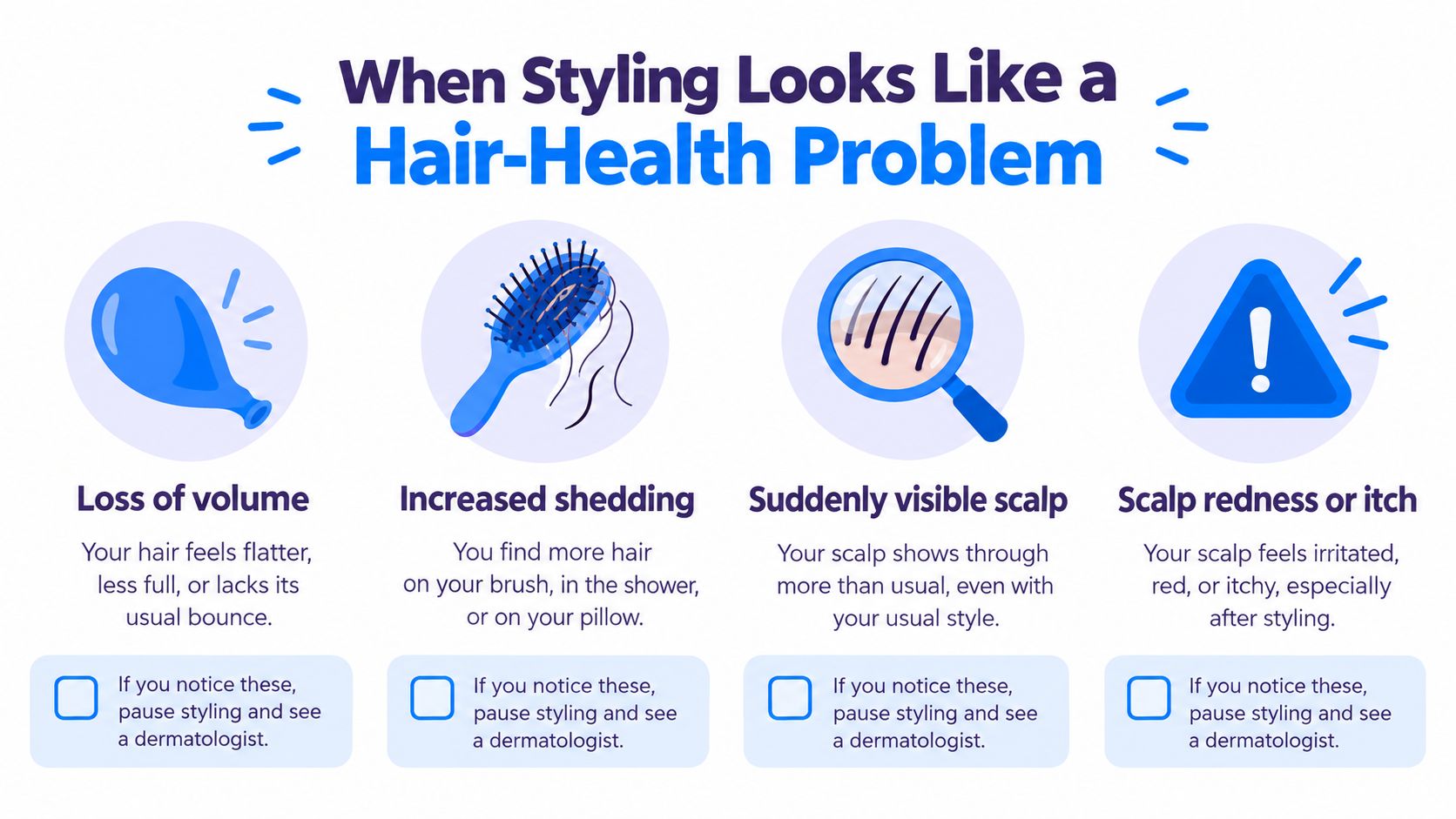
Some men searching for waves are noticing something else. Hair that won't hold volume, a part that looks wider, or more strands in the drain can be misread as a styling plateau. Treating those signs with stronger product delays appropriate care.
Distinguishing a Styling Plateau From Shedding
A styling problem changes with technique. Definition improves on some wash days and density looks consistent in photographs. A health problem persists regardless of product. Shedding increases, the scalp becomes more visible under the same lighting, or patches appear.
Telogen effluvium is one pattern clinicians consider when shedding rises after physiologic or metabolic stress. Scholarly reviews identify rapid, substantial weight loss and severe caloric restriction as the leading proposed mechanism behind GLP-1 associated shedding, rather than established direct follicle toxicity, as discussed in a review of GLP-1 receptor agonist associated hair changes. Shedding typically appears after a delay, which is why men often miss the trigger.
That context matters for men on metabolic therapy. In a randomized comparison showing least squares mean weight change at week 72 of 20.2% below baseline with tirzepatide and 13.7% with semaglutide, weight change of that magnitude supports gradual titration and monitoring. Rapid loss, inadequate protein, iron deficiency, thyroid disease, and pre existing androgenetic alopecia all belong in the assessment when shedding appears.
Reported rates require careful reading. A pharmacovigilance analysis of 626,894 GLP-1 users that identified 9,933 hair loss reports, equivalent to 1.6% can't establish causality because spontaneous reporting is affected by confounding and missing clinical detail. Monitoring baseline density and asking about shedding at follow up is the responsible response.
Men who notice wet hair looking markedly thinner than dry hair can compare that observation against explanations for why hair looks thin when wet, since wet clumping exaggerates scalp visibility even without true loss. Persistent change in dry hair is the more concerning signal.
Traction belongs in the same review. Tight braids used overnight for waves, tight caps, and repeated high heat all add mechanical or thermal stress. Loose braids only, and never as a nightly habit on already fragile hair.
Escalation rule: Sudden increased shedding, patchy loss, or persistent scalp pain, redness, or scaling warrants a clinician visit rather than a new product.
Putting It All Together on Wash Day
The full sequence fits on an index card. Assess the wet bend, then run the same order every wash day until the controlled test produces a personal version.
- Assess: Check bend, scalp comfort, and shedding before styling begins.
- Cleanse and condition: Gentle wash, lightweight conditioner, wide tooth comb on damp hair.
- Form the pattern: Leave in product or mousse on damp hair, scrunch upward, twist straighter sections.
- Dry and set: Air dry or diffuse on low heat and low airflow, then separate with fingers and add flexible hold only if needed.
Three guardrails override technique at every step. Stop if the scalp stings or burns. Stop and seek assessment if shedding increases noticeably. Simplify if the routine takes longer than ten minutes, because complexity is what kills consistency.
Men whose underlying goal turns out to be retention rather than texture need a different conversation with a qualified provider. Wave technique improves how existing hair looks. It doesn't treat thinning, and presenting it as treatment would be clinically irresponsible.
Men who want physician directed evaluation for hair retention or metabolic health, including monitored GLP-1 protocols and hair health assessment, can start a confidential online clinical assessment with Vials + Vitals. Licensed providers review eligibility, define individualized protocols, and coordinate discreet fulfillment through accredited United States pharmacies.