Cost of Flomax: Pricing, Insurance, and Generics
Understand the true cost of Flomax and generic tamsulosin. Learn how insurance, dosage, and pharmacy choices impact your out-of-pocket expenses.
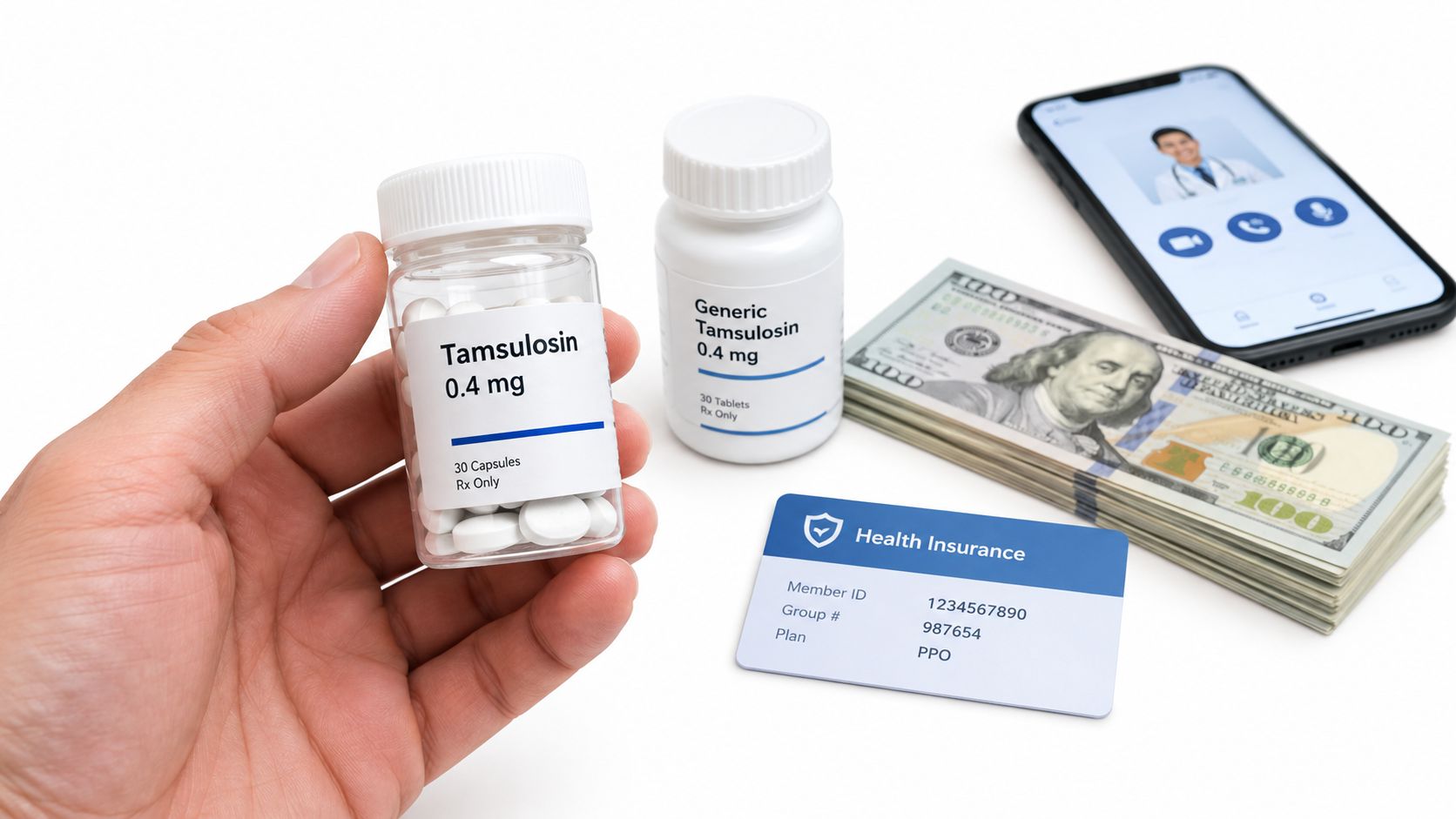
A 30-day supply of generic tamsulosin, the medication usually meant by “Flomax,” commonly costs about $7 to $15 with discounts, although an undiscounted retail price can exceed $75. The practical cost of Flomax is therefore usually determined by the pharmacy, insurance design, quantity, and discount channel, not by the original brand name.
The most popular advice is often incomplete: “Just use a coupon.” A discount card may lower today's bill, but it may not count toward an insurance deductible. Conversely, an insured copay may look higher at the register while contributing to the patient's annual benefit threshold. The right question isn't, “What does Flomax cost?” It's, “Which acquisition route produces the lowest legitimate total cost for this prescription and this coverage situation?”
The Reality of Brand Versus Generic Pricing
Flomax is the brand name for tamsulosin, an alpha-1 blocker used primarily to relieve urinary symptoms associated with benign prostatic hyperplasia, or BPH. The U.S. Food and Drug Administration approved tamsulosin under the Flomax brand on April 15, 1997, and U.S. patent protection expired in October 2009. The FDA approved generic versions in March 2010, changing the economics of the medication. These dates and the resulting generic transition are documented in the medication pricing history for Flomax.
That history matters because a new prescription is generally a prescription for the active ingredient, tamsulosin, rather than a meaningful request for the discontinued or rarely dispensed brand product. Once multiple manufacturers entered the market, competition pushed the cash price of generic tamsulosin far below the historical brand price.
Why one national price doesn't exist
A headline stating “Flomax costs X” can mislead patients unless it identifies several variables:
- Product identity: Brand Flomax and generic tamsulosin aren't interchangeable for pricing purposes.
- Strength and quantity: A 0.4 mg prescription for 30 capsules differs from a larger quantity or a regimen requiring more capsules.
- Pharmacy channel: Retail, mail order, independent, and chain pharmacies may apply different contracts and dispensing charges.
- Payment method: Insurance, cash, and discount pricing can produce separate quotes for the same prescription.
- Coverage status: A deductible, formulary tier, or preferred-pharmacy arrangement can change the patient's final amount.
One pricing reference lists brand-name Flomax 0.4 mg near $957.98 for 100 capsules, while generic tamsulosin listings include about $7.24 for 60 capsules and a discount price as low as $4.80. These figures are pharmacy- and date-dependent, but they demonstrate why the brand price isn't a useful budget assumption for most patients. The comparison appears in the Flomax price guide.
Practical rule: Ask for generic tamsulosin by name, then compare the final price at the pharmacy that will actually dispense it.
Why Pharmacy Prices Vary So Dramatically
The active ingredient may represent only a small part of the final retail transaction. One source reports generic tamsulosin acquisition pricing around $0.05 per 0.4 mg capsule, but the patient doesn't pay the acquisition cost alone. Dispensing fees, wholesaler contracts, pharmacy operating costs, benefit-manager negotiations, payer rules, and discount arrangements all influence the amount presented at checkout. The acquisition-price context is described in the generic tamsulosin pricing information.
A pharmacy can therefore quote a retail price that looks disconnected from the price available through a negotiated cash channel. That difference doesn't necessarily mean the medication has changed. It usually means the prescription is being processed through a different financial pathway.
The same prescription, different payment routes
For a 30-capsule supply of generic tamsulosin 0.4 mg, one price dataset lists an average cash price of $13.18 and a coupon-adjusted average of $9.90, or approximately $0.33 per daily dose. A separate listing shows a retail price of $75.34 and a coupon price of $15.50 for the same quantity. These examples are summarized in the tamsulosin cost explanation.
| Pricing channel | Estimated cost | Best for |
|---|---|---|
| Retail cash price | About $75.34 for 30 capsules in one listing | Patients who haven't compared alternatives |
| Discounted cash price | About $15.50 in the same listing | Uninsured patients or those whose coupon price beats insurance |
| Average cash price | $13.18 in one dataset | A general budgeting reference |
| Coupon-adjusted average | $9.90 in one dataset | Patients comparing immediate out-of-pocket options |
| Larger quantity | Prices beginning near $7.24 for 60 capsules in one listing | Patients with an appropriate prescription and lower per-capsule pricing |
These aren't fixed national prices. They're examples of how widely the quote can move based on pharmacy and acquisition channel. The most useful comparison is the final price for the exact quantity, not an online headline or a pharmacy's first retail quote.
Patients should also avoid assuming that a coupon is automatically superior. A coupon may reduce the immediate bill while leaving the insurance deductible unchanged. A preferred in-network copay may be financially better over the full coverage year, even if it costs more during one visit.
How Dosage Escalation Impacts Monthly Costs
The FDA-labeled pathway generally begins with tamsulosin 0.4 mg once daily. If the urinary response remains inadequate after 2 to 4 weeks, the prescriber may increase the dose to 0.8 mg once daily. The FDA labeling also specifies that tamsulosin should be taken approximately 30 minutes after the same meal each day and identifies the medication as a treatment for BPH symptoms, not hypertension. These instructions appear in the FDA-approved tamsulosin labeling.
Capsule utilization drives the monthly budget
At 0.4 mg daily, a 30-capsule prescription generally represents about 30 days of treatment. At 0.8 mg daily, patients commonly use two 0.4 mg capsules per day unless a suitable 0.8 mg product is dispensed. That can double capsule utilization and may substantially increase the monthly cash expense, even when the price per capsule stays unchanged.
A patient budgeting for treatment should ask the prescriber or pharmacist:
- Whether the prescription is for 0.4 mg or 0.8 mg.
- How many capsules the directions require each day.
- Whether the pharmacy can dispense an appropriate 0.8 mg product.
- Whether the quoted price applies to the actual number of capsules needed.
- Whether a 30-, 60-, or 90-day quantity is allowed.
The dose shouldn't be increased independently. The prescriber needs to reassess urinary response, dizziness or other blood-pressure symptoms, adverse effects, and interacting medicines before changing the regimen. A lower price per capsule doesn't justify an unsupervised dose change.
Safety point: Cost planning is appropriate. Self-escalation isn't. The dose decision belongs to the prescribing clinician.
Navigating Insurance Deductibles and Discount Cards
Insurance coverage doesn't guarantee a predictable low price. Generic tamsulosin is generally covered by many Medicare and commercial plans, but the patient may still pay the full negotiated cost before meeting a deductible, face different copays at preferred and non-preferred pharmacies, or encounter changing costs across Medicare Part D coverage stages.
A discount card creates a separate cash transaction. It can produce a lower immediate price, but the amount generally won't count toward an insurance deductible or other insurance spending threshold. That trade-off matters most for patients taking several chronic medicines who are close to meeting a deductible.
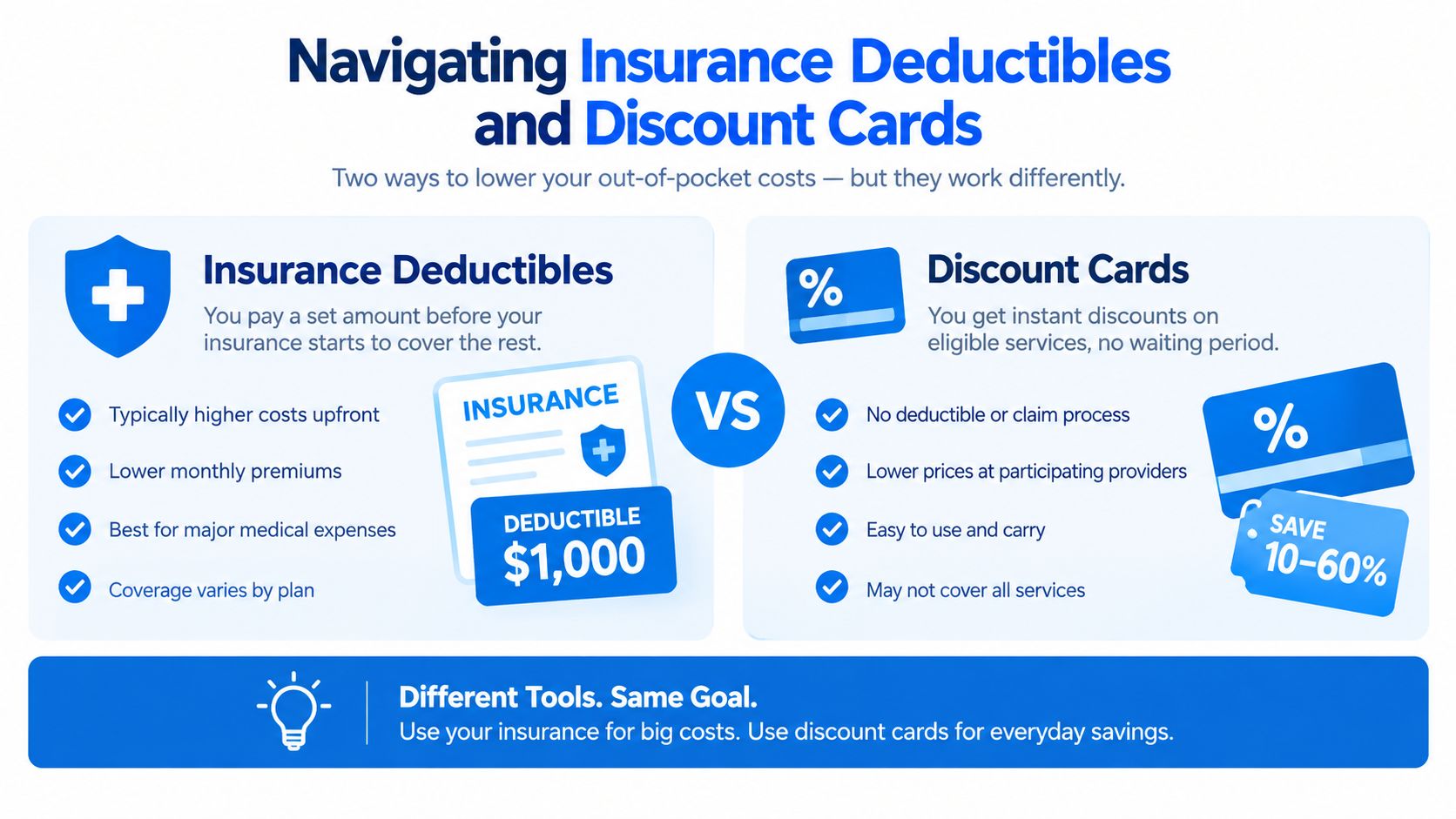
A three-quote comparison
Patients can compare the following options before filling the prescription:
- Insurance-network price: Ask for the copay at a preferred pharmacy and confirm whether the payment applies to the deductible or out-of-pocket maximum.
- Cash or coupon price: Request the exact price for generic tamsulosin 0.4 mg and confirm that the pharmacy will process it as a cash transaction.
- Longer-supply price: Ask whether a 90-day prescription or mail-order option changes the total cost and refill frequency.
The lowest price today isn't always the lowest total cost. A cash coupon may save money immediately, while an in-network claim may advance the patient toward a deductible that will affect several other prescriptions. The pharmacy should explain the price and deductible treatment before the prescription is processed.
Patients should record the quoted amount, quantity, payment route, and whether the payment counts toward insurance spending. That simple documentation prevents confusion when an online estimate differs from the pharmacy's actual transaction.
Telehealth and Remote Prescribing Workflows
Remote care can reduce the logistical burden of evaluating routine urinary symptoms, but it doesn't eliminate the need for clinical judgment. A legitimate telehealth assessment should review the symptom pattern, relevant medical history, current medicines, blood-pressure concerns, and potential alternatives before a clinician decides whether tamsulosin is appropriate.
For an established BPH diagnosis and a routine medication-management question, a physician-directed remote workflow may allow the patient to complete an online assessment, receive a clinical review, and have an approved prescription sent to a licensed U.S. pharmacy. The process can reduce travel, appointment friction, and the indirect costs associated with taking time away from work or caregiving.

What remote care should still address
Telehealth isn't appropriate as a shortcut around diagnostic safety. A clinician should determine whether symptoms fit BPH or suggest another problem requiring in-person assessment, testing, or urgent care. New urinary retention, blood in the urine, severe pain, fever, or concerning systemic symptoms shouldn't be handled solely as a price-shopping exercise.
The prescribing workflow should also clarify the formulation, dose, timing with meals, pharmacy destination, and follow-up plan. Patients should tell every clinician about tamsulosin use, including previous use, before cataract surgery because alpha-1 blockers can affect surgical planning. A remote prescription is clinically sound only when the assessment, prescribing decision, dispensing process, and follow-up responsibilities remain clear.
A Practical Framework for Securing the Best Price
Patients can use a structured comparison rather than accepting the first number shown online or quoted at the counter. The goal is to compare equivalent prescriptions through different payment channels while preserving the clinical instructions.
Nine checks before filling or refilling
Confirm the generic name. Ask whether the prescription is written for generic tamsulosin rather than brand Flomax when generic substitution is clinically appropriate.
Confirm the strength. Verify whether the prescription is for 0.4 mg or 0.8 mg and whether the directions require one capsule or two each day.
Confirm the quantity. Request quotes for 30-, 60-, and 90-day quantities only when those quantities match the prescriber's instructions and the pharmacy's dispensing rules.
Ask for the insurance price. Have the pharmacy run the prescription through insurance and identify the copay, deductible treatment, and pharmacy network status.
Ask for the cash price. Request the pharmacy's uninsured price for the exact product, strength, and quantity.
Check a legitimate discount route. Compare the coupon-adjusted price with both the insurance quote and the pharmacy's standard cash price.
Evaluate longer supplies. A 90-day or mail-order option may reduce refill friction, but it should be compared by total cost, not assumed to be cheaper.
Document the result. Record the pharmacy, quantity, price, payment route, and whether the transaction counts toward insurance spending.
Recheck after changes. Repeat the comparison when the dose changes, the insurance plan renews, the pharmacy changes, or the quoted price differs from the previous refill.
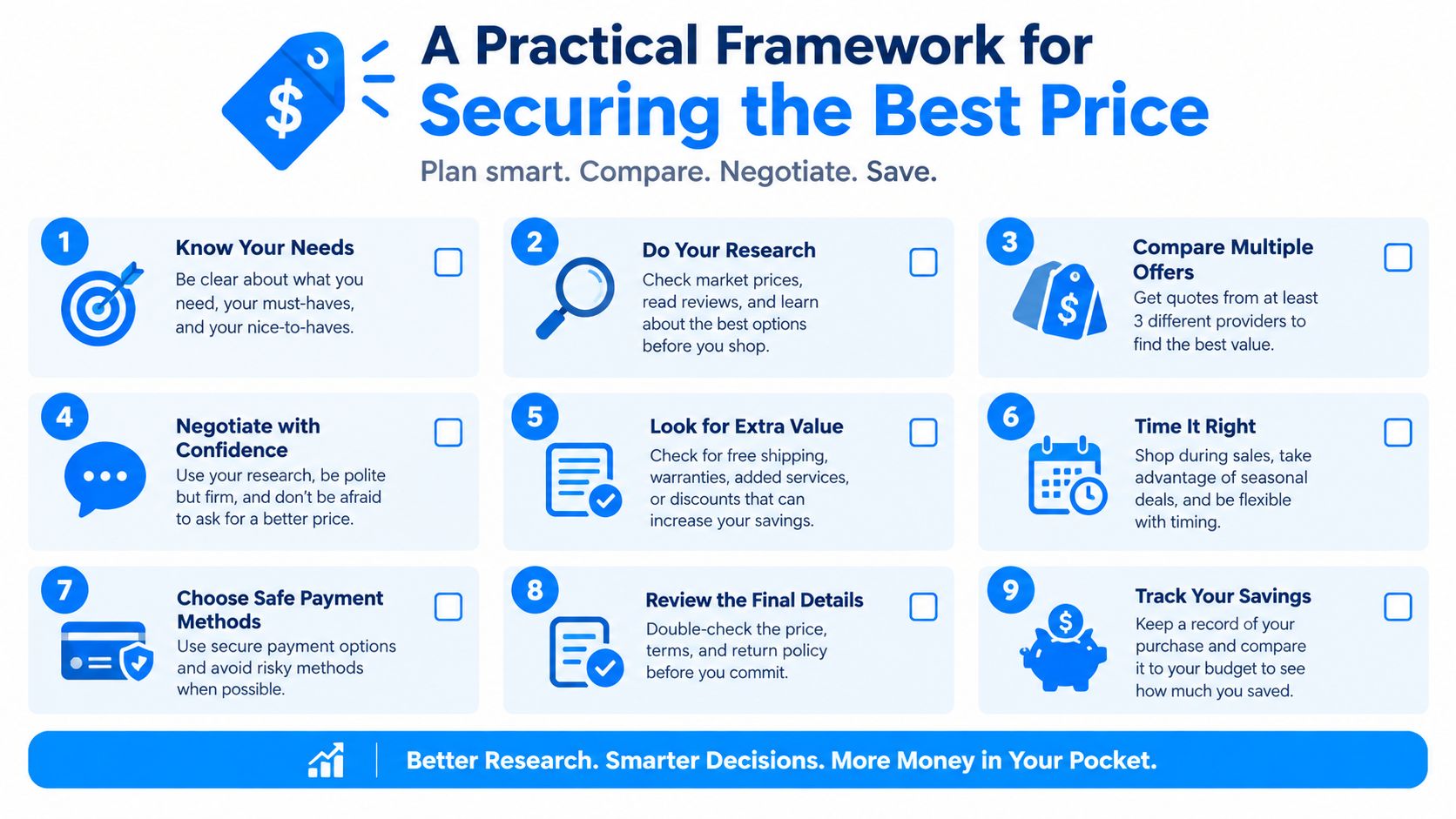
The practical target isn't the lowest advertised number in isolation. It's the lowest verified total cost for the correct generic, prescribed dose, appropriate quantity, and payment route that fits the patient's insurance strategy. Patients should contact the prescriber if the price problem is caused by dose confusion, an unavailable formulation, or a need to change the treatment plan.
Vials + Vitals offers physician-directed telehealth assessment, individualized treatment protocols, and licensed U.S. pharmacy fulfillment for eligible patients seeking medically supervised care. Patients can visit Vials + Vitals to learn how online clinical review and prescription coordination can make treatment access more structured and transparent.