Causes of Congestion in Chest and How to Tell
Learn the causes of congestion in chest, from bronchitis and asthma to heart failure, plus red flags, tests, and when to seek urgent care.
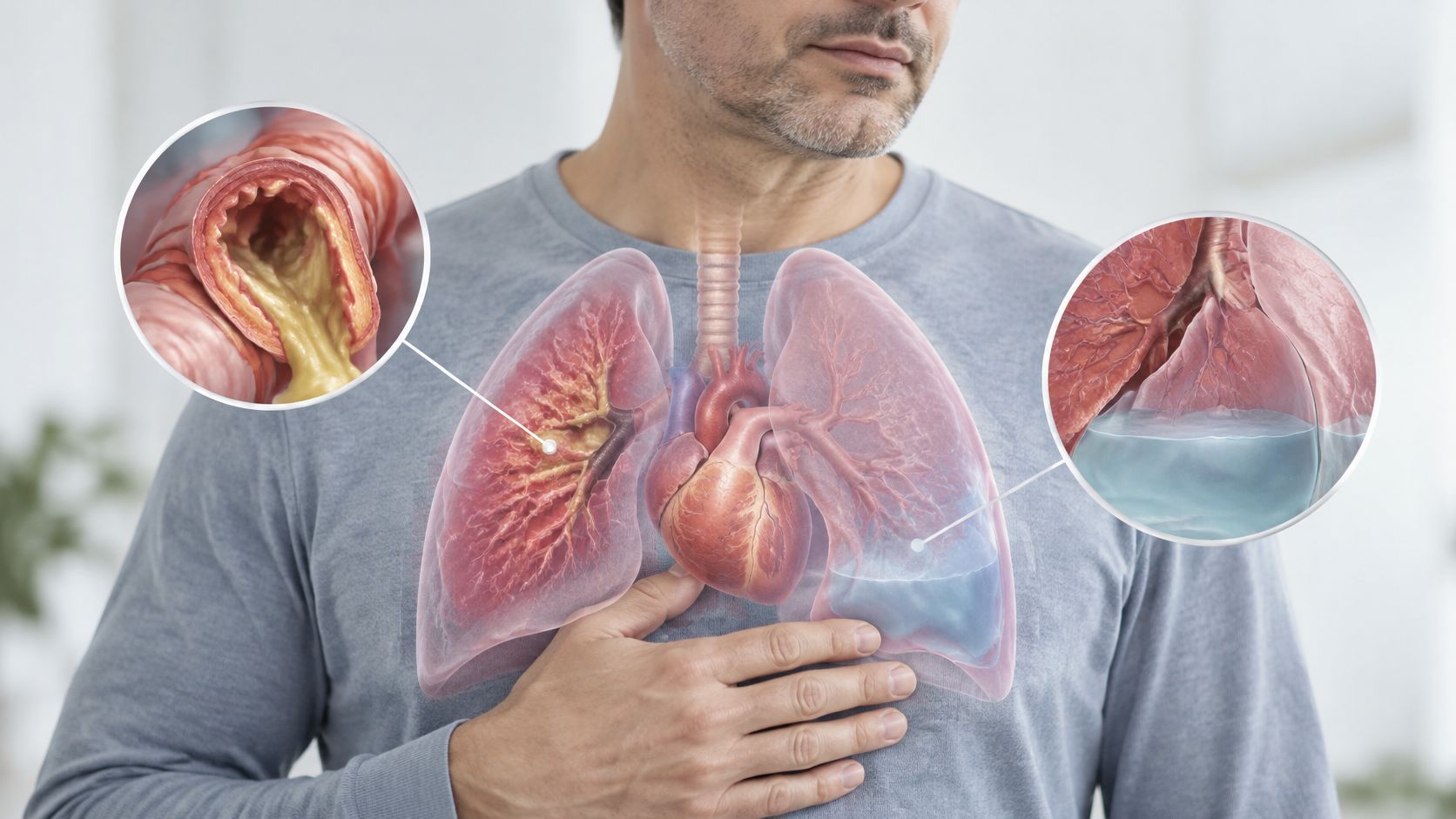
By evening, a heavy chest and a cough that won't clear can make an ordinary cold feel less ordinary. A person may notice rattling with each breath, thicker phlegm, or discomfort when lying down and wonder whether the problem is an infection or something involving the heart.
The causes of congestion in chest symptoms are easier to understand when the sensation is separated from its mechanism. Sticky mucus inside the airways and fluid entering the lungs from the circulation can feel surprisingly similar, but they require different evaluation and treatment.
Why Chest Congestion Has Two Causes
Chest congestion is a symptom, not a diagnosis. People use the term to describe fullness, rattling, tightness, or a sense that air isn't moving freely. Some cough up mucus; others feel congested without producing much at all.
The distinction starts with where the material is collecting. Airway congestion resembles a narrowed, sticky pipe. Heart-related congestion resembles a backed-up drain, with pressure forcing fluid into places normally reserved for air.

When mucus obstructs the airways
The airways normally produce mucus that traps inhaled particles. Tiny moving hairs, called cilia, help carry that mucus toward the throat so it can be cleared.
Infections can disrupt that system. Acute bronchitis, bronchiolitis, and pneumonia can inflame the airway lining, increase mucus production, and interfere with clearance, producing cough, wheeze, fullness, and reduced airflow, as described by Cleveland Clinic's chest congestion guide.
The combination matters more than mucus quantity alone. Swollen airway walls leave less room for airflow, while thicker secretions become harder to move. A person may cough repeatedly but still feel that something remains inside the chest.
Noninfectious inflammation can create a similar problem:
- Asthma: Muscles surrounding the airways tighten, the lining swells, and mucus can form plugs.
- Chronic obstructive pulmonary disease: Persistent mucus production and structural airway changes make breathing out more difficult.
- Inhaled irritants: Tobacco smoke, vaping aerosols, marijuana smoke, and occupational dust can aggravate airway inflammation.
- Reflux-related irritation: Small amounts of stomach contents entering the airway, called microaspiration, can contribute to cough and irritation.
These mechanisms can coexist. Someone with asthma may develop a respiratory infection that adds mucus to already-sensitive airways. Someone exposed to smoke may continue coughing after the infection itself has improved because the airway lining remains irritated.
A productive cough therefore describes what the body is doing, not why it's happening. It doesn't automatically establish infection, and it doesn't identify which treatment would help.
When pressure pushes fluid into the lungs
Heart-related congestion begins outside the airway tubes. When the left side of the heart cannot move blood forward effectively, pressure can rise behind it in the left atrium and the veins returning blood from the lungs.
That increased hydrostatic pressure, the force fluid exerts against a vessel wall, pushes liquid out of pulmonary capillaries. Fluid first enters the supporting lung tissue and, when the problem becomes severe, can enter the alveoli, the tiny air sacs where oxygen passes into the bloodstream.
The resulting symptoms can include breathlessness, cough, heaviness, crackling lung sounds, and difficulty lying flat. A person may wake at night gasping or need to sit upright to breathe comfortably. Pink, frothy sputum can occur, but its absence doesn't exclude pulmonary congestion.
This is why coughing harder doesn't necessarily relieve the sensation. The problem isn't a plug waiting to come out. Fluid has entered lung tissue or air spaces because of a circulation problem.
The household analogy has limits. Pneumonia can affect air sacs as well as airways, and heart failure isn't the only cause of lung fluid. Still, distinguishing mucus obstruction from pressure-driven congestion helps prevent an unsafe assumption that every heavy chest is a chest cold.
Why appearance cannot settle the diagnosis
Clear mucus isn't proof that an illness is harmless. Yellow or green mucus isn't proof that antibiotics are needed. Clinicians give more weight to breathing difficulty, chest pain, overall illness, oxygenation, and the direction symptoms are taking.
Clinical distinction: Chest congestion can reflect airway contents or vascular fluid. Treating one as the other can delay appropriate care, and sputum color alone cannot establish a bacterial infection or exclude a serious process.
Six Common Causes Matched to Clues
Common causes of chest congestion by pattern
| Cause | Typical pattern | Distinguishing clues | First sensible step |
|---|---|---|---|
| Acute bronchitis | Cough under 3 weeks, often after a cold | Clear or colored sputum; color does not prove bacteria | Supportive care; clinician review if worsening |
| Pneumonia | Infectious lower-airway illness | Fever, pain with breathing, marked breathlessness, feeling very ill | In-person assessment; sputum color alone is not enough |
| Asthma | Episodic tightness and wheeze | Allergen, exercise, or infection trigger; mucus plugging | Clinical review of inhaler plan and triggers |
| COPD | Chronic phlegm and limited expiratory flow | Smoking or irritant history; recurrent chest colds | Scheduled airway evaluation |
| Heart failure | Pressure-driven lung fluid | Breathlessness, leg swelling, frothy sputum | Emergency care if severe; targeted testing when breathless |
| Reflux | Cough and throat or airway irritation | Sour taste, heartburn | Clinician review if cough persists or recurs |
The table is a starting map, not a diagnostic checklist. A clue can fit more than one cause, and causes can overlap. In particular, sticky airway mucus and fluid backed up from the heart need different assessment and treatment.
Infection and airway disease can look alike
Acute bronchitis commonly follows a cold and is usually viral. A wet, deep-sounding cough can occur without pneumonia. Supportive care may include rest, avoiding smoke and other irritants, and choosing symptom relief with existing conditions and medications in mind.
Pneumonia is more concerning when congestion comes with substantial breathlessness, pain with breathing, or a generally ill appearance. Pleuritic pain is sharp pain that worsens with a deep breath or cough. Fever can add concern, but its absence does not safely rule pneumonia out.
Asthma involves episodes of airway narrowing. When tightness or wheezing occurs, mucus may also obstruct the airways. Assessment can help determine whether the current inhaler plan and trigger management need review. Do not borrow another person's inhaler.
COPD often causes persistent phlegm and difficulty breathing out, rather than a cough limited to one brief illness. In 2023, diagnosed COPD affected 3.8% of U.S. adults aged 18 and older, including 4.1% of women and 3.4% of men, according to the CDC National Center for Health Statistics. These population figures cannot diagnose an individual. They do underscore why chronic symptoms deserve evaluation instead of repeated treatment as isolated chest colds.
Match treatment to the suspected mechanism
A decongestant may be mismatched to pressure-driven lung fluid: it does not address fluid backing up from the heart. Likewise, choosing a medicine based only on how a cough sounds can miss the cause. When breathing is difficult or symptoms are worsening, clinical assessment can help identify the mechanism and guide the next step.
Everyday Patterns That Point to a Cause
A useful pattern includes what came first, when symptoms return, and what has changed in daily activity. A home note of cough timing, sleeping position, meals, and breathing during ordinary tasks can help a clinician distinguish sticky airway mucus from fluid backing up from the heart.
A cold followed by colored mucus
“My cough started with a cold, but I'm gradually feeling better.” When breathing remains comfortable and daily activity is manageable, gradual improvement can fit uncomplicated bronchitis, even if phlegm looks green. Mucus color alone does not establish the cause.
Track whether breathing and energy are improving along with the cough. A turn toward worsening symptoms deserves attention, even if the mucus looks unchanged.
Wheeze that returns with the season
In 2023, 27,807,000 people in the United States had current asthma, representing 8.4% of the population, according to the CDC's most recent asthma data. That figure describes the population, not an individual diagnosis.
When cough or tightness returns around the same season, a clinician may ask whether symptoms also wake you at night or limit usual activities. Recurring episodes tied to a familiar time of year can help guide an asthma assessment. No fever does not make serious breathing difficulty safe to ignore.
Morning phlegm that never fully clears
For someone with a long smoking history, daily morning mucus that never fully clears may point to chronic airway disease. A useful question is whether walking across a room or doing a familiar chore now takes more effort than before. A change in that baseline can matter even when the cough itself feels familiar.
If ordinary activity becomes harder, mention the change during a clinical review.
Cough after meals or when reclining
A clinician may ask, “Does the cough follow meals, or begin after you lie down?” Cough that repeatedly follows a large meal, especially with a sour taste, can fit reflux-related irritation. Keeping a simple record of meal and symptom timing can show whether the pattern recurs.
Heartburn does not account for every chest symptom. New wheeze, substantial breathlessness, or chest pain calls for consideration beyond reflux, even when indigestion is present.
Nighttime gasping with ankle swelling
A new inability to lie flat, waking gasping, and ankle swelling together need urgent assessment for possible fluid backing up from the heart. Frothy sputum is not required for concern. These signs may reflect a different process from mucus produced by irritated airways.
Patterns can overlap. A respiratory infection may trigger asthma or bring previously less obvious heart failure to attention, so an examination and targeted tests may be needed to sort out the cause.
How Long Chest Congestion Should Last
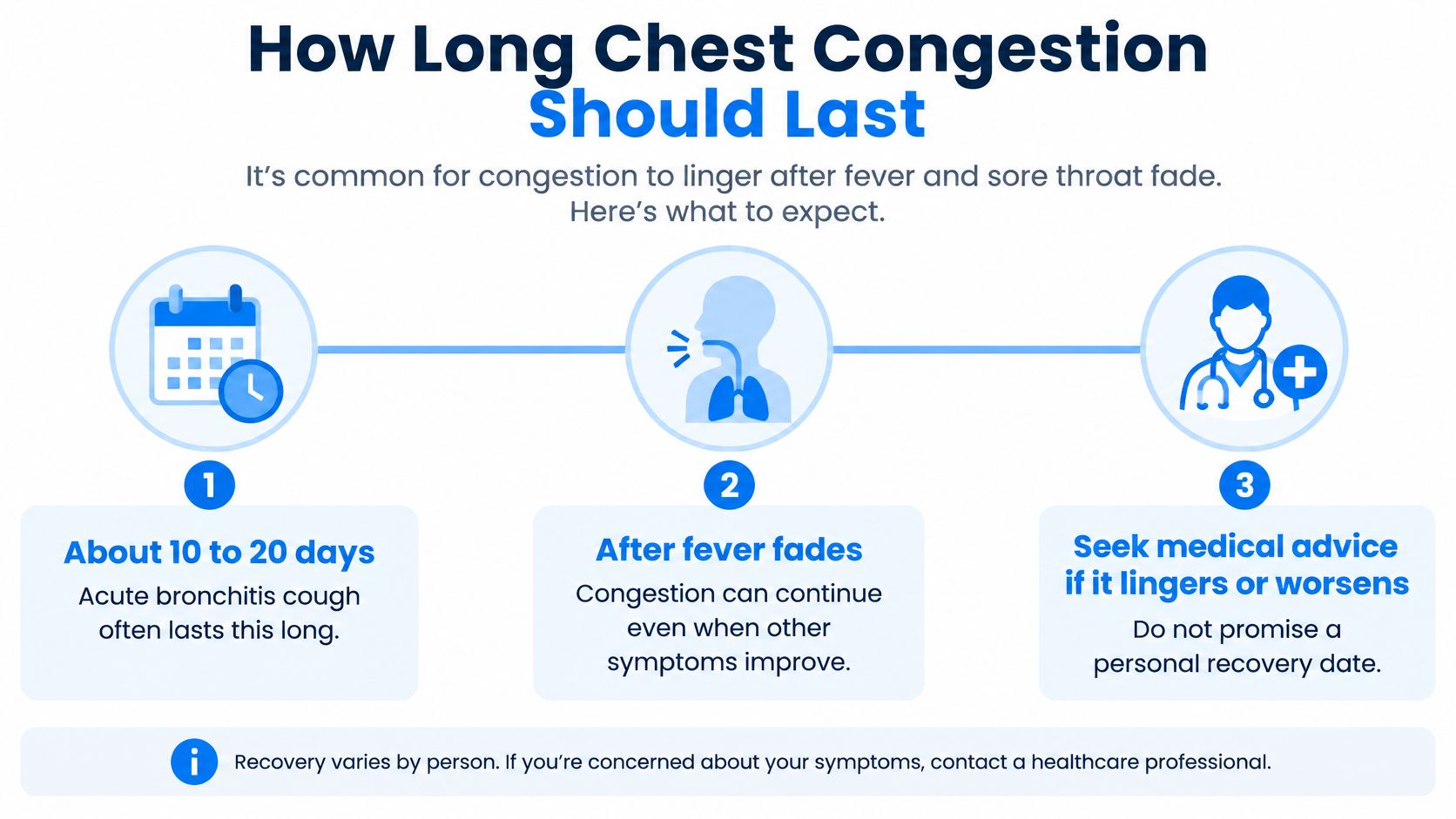
A cough after acute bronchitis often lasts 10 to 20 days, with a reported median of 18 days. The NCBI Bookshelf review of acute bronchitis reports that symptoms resolve within two weeks in about 80% of patients, while roughly 20% cough for as long as eight weeks. These are group patterns, not individual deadlines.
Duration is only one part of the picture. A cough that is gradually easing may fit recovery, while worsening breathing needs attention even if the cough began recently.
Interpret the direction as well as the duration
Airway inflammation can persist after fever, sore throat, and fatigue improve. Secretions may also thicken or change color as symptoms ease; that change alone does not establish a bacterial infection.
Cough duration and what it may suggest
| Cough pattern | What it usually suggests | Next step |
|---|---|---|
| Under 3 weeks, steadily improving | Acute bronchitis; the NCBI review reports a median cough duration of 18 days | Supportive care and monitoring |
| About 2 weeks | Symptoms resolve by this point in about 80% of patients, according to the NCBI review | Continue monitoring; seek review if not improving |
| Up to 8 weeks, without worsening | The NCBI review reports that roughly 20% cough for as long as eight weeks | Track symptoms and seek reassessment if the pattern changes |
| Worsening after initial improvement | Possible pneumonia or asthma exacerbation | Same-day clinical review |
| Beyond 8 weeks | Persistent cough may need further assessment; clinicians may consider imaging based on the overall symptoms | Arrange clinician evaluation |
A lingering cough can reflect several causes, and postinfectious cough is only one. Asthma, COPD, reflux, smoking-related irritation, and upper-airway cough syndrome can also sustain symptoms. Heart failure or, less commonly, pulmonary embolism may need consideration when other symptoms fit.
Respiratory illnesses can involve influenza, RSV, other common viruses, human metapneumovirus, or Mycoplasma pneumoniae. The likely cause varies with region and season. A viral-versus-bacterial label alone does not determine what care is appropriate, particularly for older adults and people with chronic disease or weakened immunity.
Know when monitoring should stop
The CDC's acute bronchitis guidance explains that a routine chest cold usually improves without antibiotics. Finding or suspecting bacteria in airway secretions does not, by itself, show that antibiotics will help.
Repeated similar flares, a return of symptoms after improvement, or new breathlessness are reasons to seek clinical review rather than repeat self-treatment. A normal temperature does not rule out meaningful respiratory illness.
A home record can help clarify the pattern:
- Onset and trend: When the cough began and whether daily function is improving.
- Temperature and secretions: Fever pattern, sputum changes, and any blood.
- Breathing and position: Activity tolerance and ability to lie flat.
- Associated changes: New swelling, chest pain, faintness, or nighttime gasping.
Monitoring rule: An expected recovery window never overrides a new warning sign.
Tests Clinicians Use to Sort the Cause
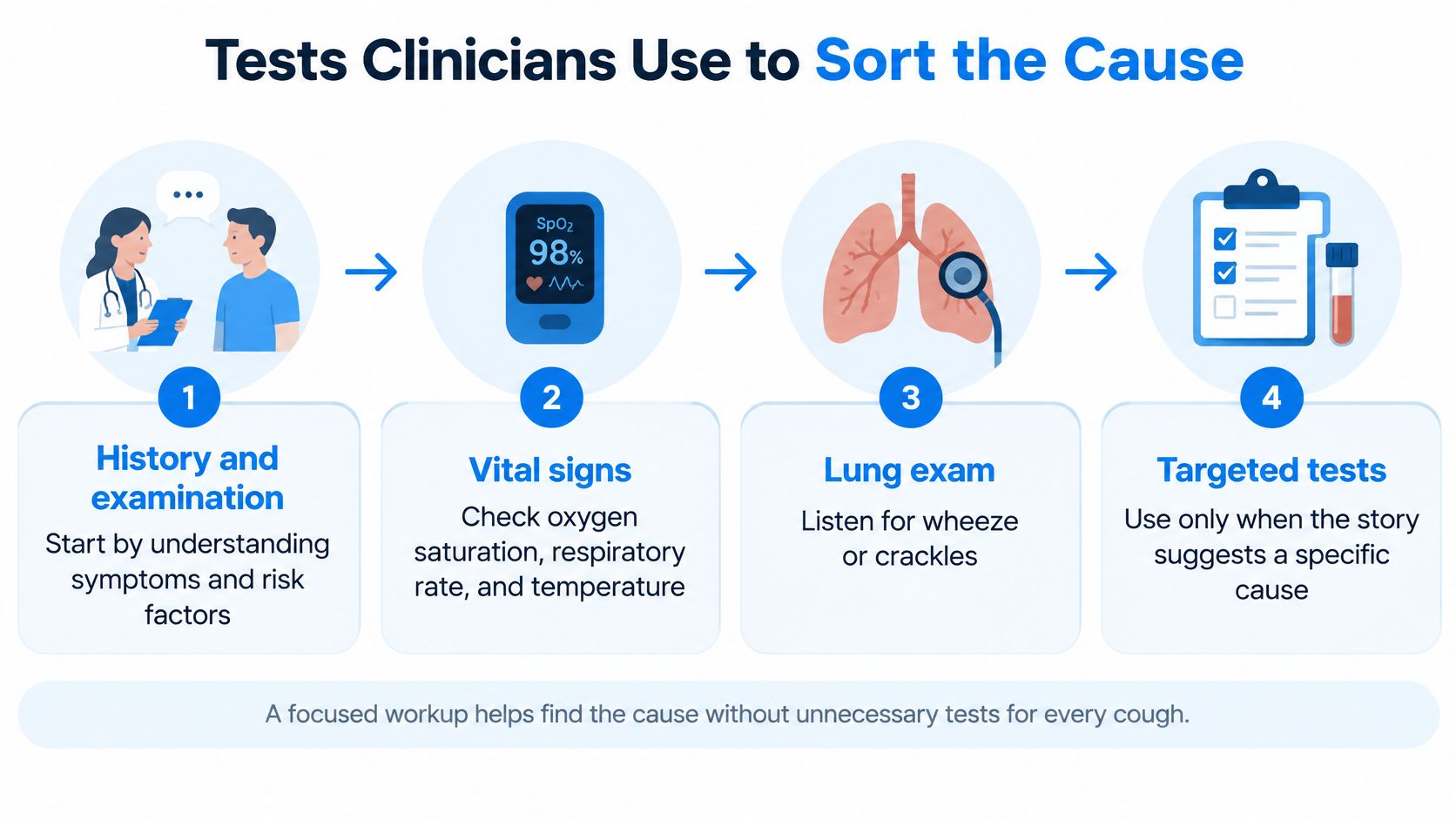
A cough with sticky airway mucus and fluid backed up from the heart can sound similar, but the clues and tests differ. Clinicians begin with the history and examination, then choose tests based on what they need to clarify. They ask when symptoms began, what triggers them, whether smoking or vaping is involved, whether medications have changed, and how symptoms affect walking and sleep.
Pulse oximetry, respiratory rate, and temperature help assess how unwell someone is. Lung sounds may reveal wheezing or crackles. Heart findings and leg swelling can point toward a need for cardiac testing.
Match testing to the clinical question
A chest X-ray can show a focal area that suggests pneumonia, fluid congestion, an enlarged heart, or another lung change. An electrocardiogram may be useful when chest symptoms, fainting, or an irregular pulse raise concern about the heart.
For breathlessness when heart failure is a possibility, the heart-failure management guideline supports BNP or NT-proBNP testing. In an acute presentation, BNP at least 100 pg/mL or NT-proBNP at least 300 pg/mL are commonly cited thresholds. Age, kidney disease, obesity, atrial fibrillation, and chronic heart failure can affect interpretation. These proteins reflect stress on the heart's walls. A natriuretic peptide result must be read alongside the clinical picture.
How common findings guide the working diagnosis
| Finding | Points toward | Interpretation caveat |
|---|---|---|
| Focal infiltrate on chest radiography | Pneumonia | Interpret alongside symptoms and examination |
| Pulmonary congestion or cardiac enlargement on chest radiography | Heart failure | Consider natriuretic peptide results and the clinical picture |
| BNP at least 100 pg/mL or NT-proBNP at least 300 pg/mL in an acute presentation, as described in the heart-failure management guideline | Supports heart failure | Age, kidney disease, obesity, atrial fibrillation, and chronic heart failure affect interpretation |
| Low oxygen saturation on pulse oximetry | Greater illness severity | Consider respiratory rate and symptoms |
| Green or yellow sputum alone | Provides limited information about the cause | Color alone does not establish bacterial infection or predict antibiotic benefit |
Use results to change the plan
A focal infiltrate can steer evaluation toward pneumonia. Airflow testing that shows reversible obstruction supports an asthma assessment, while persistent obstruction may prompt evaluation for COPD. Lung congestion together with increased natriuretic peptides shifts attention toward heart failure.
Sputum color alone, an antibiotic prescribed just in case, or repeated imaging without a clinical reason cannot replace reassessment. Sudden breathlessness, pain with breathing, or low oxygen can also raise concern for pulmonary embolism or another serious condition and may need in-person evaluation.
Prescription medicines are selected by a licensed U.S. clinician after an individual assessment. Each test should answer a clinical question that can help guide care.
Choose Emergency Care or a Clinical Review
Rapidly worsening breathlessness requires emergency care, not a routine telehealth appointment. Inability to lie flat, gasping with new leg swelling, blue or gray lips, confusion, fainting, chest pain, or frothy or bloody sputum can indicate an unstable heart or lung problem.
Severe pneumonia, pulmonary edema, and pulmonary embolism cannot be safely excluded through symptom descriptions alone. Emergency services are appropriate when breathing is severely impaired or travel cannot be managed safely.
Where chest congestion should be evaluated
| What is noticed | How urgent | Where to go |
|---|---|---|
| Gasping, inability to lie flat, blue or gray lips, fainting, chest pain, frothy or bloody sputum | Immediate | Emergency department |
| High fever, pleuritic pain, worsening after improvement, cough beyond about 8 weeks, high-risk health history | Same day | In-person clinician |
| Mild post-viral cough inside the expected window and no red flags | Routine | Primary care or telehealth review |
| New chest symptoms while taking oral minoxidil or an erectile-dysfunction medicine | Prompt to urgent, according to severity | Emergency care if unstable; otherwise the prescribing clinician |
Medication history belongs in triage
Oral minoxidil can lower blood pressure, cause fluid retention, and increase heart rate. Chest pain, shortness of breath, fainting, or rapid unexplained weight gain require prompt medical attention during treatment.
Vials + Vitals's Quatro can cause headache, flushing, indigestion, nasal congestion, and dizziness. Nasal stuffiness shouldn't be confused with new chest congestion or breathing difficulty; customers should seek urgent help for an erection lasting more than four hours, sudden loss of vision or hearing, fainting, or chest pain.
Reserve telehealth for stable symptoms
Same-day in-person review is appropriate for concerning symptoms or a high-risk medical history, with emergency escalation if breathing or alertness deteriorates. A mild, steadily improving post-viral cough without warning signs can be reviewed through primary care or telehealth.
Prescription treatments and compounded formulations are prescribed strictly at the clinical discretion of licensed U.S. healthcare providers following an individualized telehealth intake and consultation. A virtual assessment may lead to referral for examination or testing rather than a prescription.
Informational purposes only. Compounded medications are evaluated by a licensed provider for individual suitability and are fulfilled by state-licensed partner compounding pharmacies.
Vials + Vitals offers physician-directed telehealth assessment and individualized protocols for metabolic health, hair health, sexual wellness, hormonal health, and longevity. Adults with stable symptoms who need to discuss how current treatment fits their health history can visit Vials + Vitals to begin a confidential clinical assessment; chest pain or significant breathing difficulty requires urgent in-person care instead.