Best Hair Loss Products for Men: A Clinical Comparison Guide
Compare the best hair loss products for men across topicals, prescriptions, and procedures. Evidence-based guidance from the Vials + Vitals Medical Board.

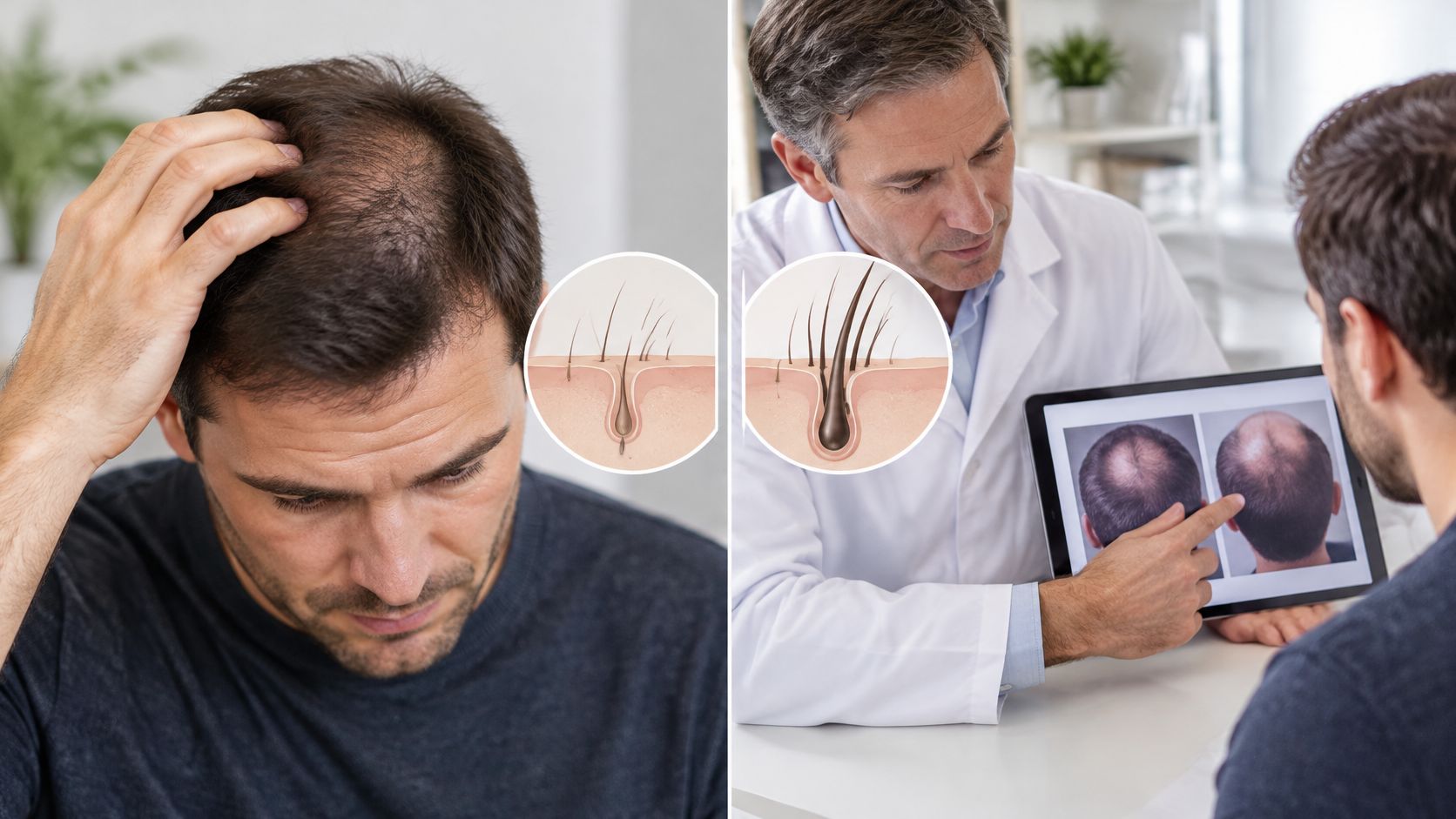
A man notices more hair in the shower, a wider part at the crown, or a hairline that looks different in photographs. Within minutes, he's comparing foams, capsules, laser devices, supplements, and subscription plans marketed as the best hair loss products for men. The problem is that hair loss isn't a single condition, and a product can be reasonable for one pattern while delaying appropriate care for another.
The clinically useful question is narrower: What pattern is present, how quickly is it changing, and which treatment category fits the patient's risk profile? The comparison below focuses on topical treatments, oral prescription drugs, compounded and combination regimens, in-office procedures, and the metabolic context affecting men who use semaglutide or tirzepatide.
Why Product Rankings Miss the Real Decision
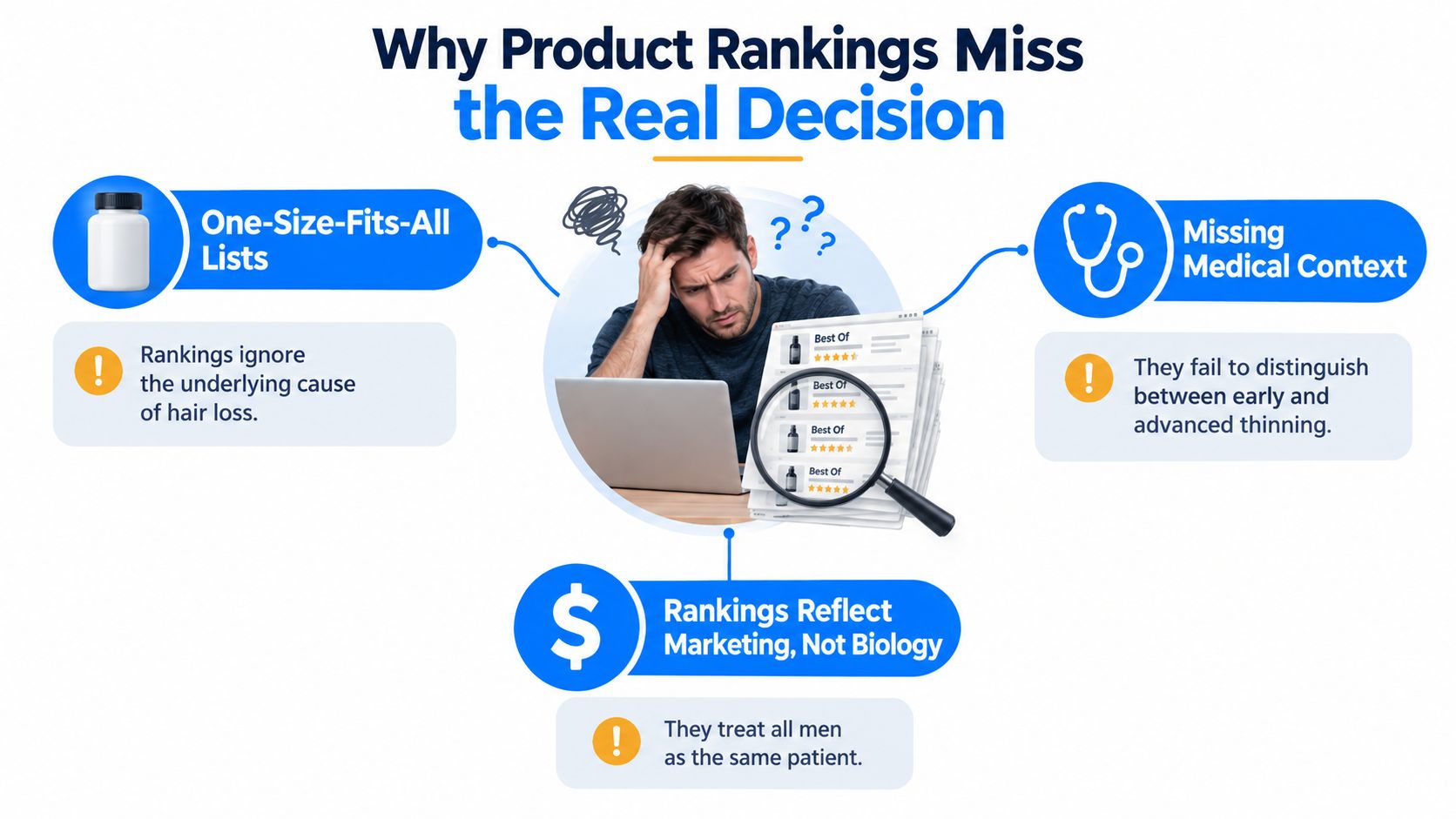
A man with gradual temple recession may receive very different advice from a man who suddenly sheds across the entire scalp after substantial weight loss. Yet most product rankings place both readers in the same funnel. They assume the diagnosis is already confirmed, treat early and advanced thinning as equivalent, and imply that side-effect tolerance is identical from patient to patient.
That shortcut creates two clinical problems. First, it can encourage self-treatment when sudden shedding, scalp inflammation, focal patches, or scarring require evaluation. Second, it frames success as visible regrowth alone, even though preserving existing hair may be the more realistic and valuable outcome.
Four categories deserve separate consideration
Topical therapies are often practical starting points when the pattern is compatible with androgenetic alopecia and the patient can maintain regular scalp application. Oral prescription drugs may offer stronger systemic treatment, but they require screening for contraindications, reproductive considerations, and adverse effects.
Compounded or combination regimens belong in clinician-directed care, particularly when standard options are ineffective, poorly tolerated, or inconvenient. In-office procedures involve a different set of decisions, including candidacy, clinic quality, recovery, and whether the procedure complements medical treatment.
The metabolic overlap adds another layer. Men using semaglutide or tirzepatide may develop diffuse shedding during a period of rapid weight reduction. That pattern shouldn't automatically be labeled progressive male-pattern baldness, and it shouldn't automatically be blamed on the medication either. The treatment decision depends on distinguishing the underlying causes.
Clinical orientation: The right category is determined by diagnosis, timeline, expected benefit, adherence, and risk tolerance, not by a universal ranking.
Identifying the Pattern Before Choosing a Therapy
Pattern recognition comes before product selection. Androgenetic alopecia usually develops gradually, with recession at the temples, thinning at the vertex, or progressive miniaturization of individual hairs. The scalp may remain healthy-looking while affected hairs become shorter and finer over time.
Telogen effluvium looks different. Shedding is typically diffuse, with more hair appearing on a pillow, in a drain, or during shampooing. A recent metabolic stressor, illness, major dietary restriction, or substantial weight reduction can shift follicles prematurely into a resting phase. This is usually nonscarring, but the trigger and nutritional context still need review.
Four clues to check
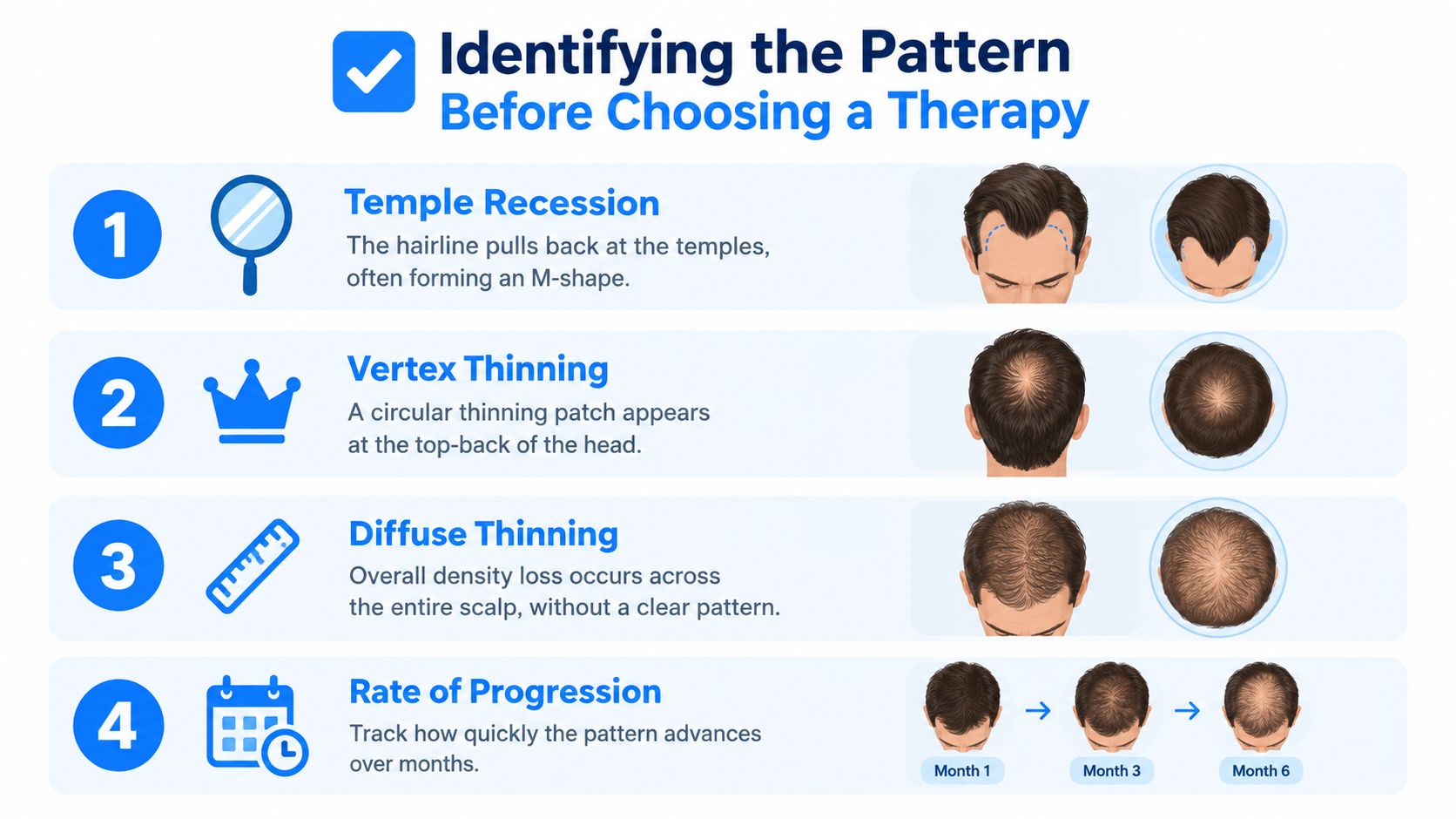
- Temple recession: A gradually retreating hairline with an M-shaped contour is compatible with androgenetic alopecia.
- Vertex thinning: A widening circular area at the crown often points toward patterned miniaturization.
- Diffuse shedding: Overall density loss without a clear temple or vertex pattern suggests a broader evaluation, particularly after metabolic stress.
- Inflammation or focal loss: Smooth patches may indicate alopecia areata, while pain, scaling, redness, or shiny areas can signal an inflammatory or scarring process.
The rate of change matters. Treatment tends to be more useful when patterned loss is addressed soon after it becomes noticeable, because miniaturized follicles may have greater capacity to produce stronger hairs than areas where follicles have been inactive for a long period. Sudden acceleration, scalp pain, scaling, or focal patches shouldn't be managed solely with an online product list.
For men uncertain whether their hair only looks thin when wet, consistent photographs taken when the hair is dry can help distinguish a true density change from a styling or lighting effect. The hair looks thin when wet guide offers a practical way to approach that observation without treating it as a diagnosis.
Decision aid: Confirm the pattern, then choose the therapy.
Male-pattern hair loss is commonly treated with topical minoxidil or oral finasteride, but these treatments are intended for continued use rather than as cures, and the diagnosis underlying the loss should be confirmed before therapy is selected. Clinical guidance on male-pattern hair loss supports that category-led approach.
Topicals and Oral Prescription Drugs Compared
Topical minoxidil and oral finasteride remain the foundational comparison for men with confirmed androgenetic alopecia. Minoxidil is generally growth-focused, while finasteride is particularly useful for reducing the hormonal process that drives follicular miniaturization. Neither option should be judged by a short trial or by a single photograph.
| Criterion | Topical Minoxidil | Oral Finasteride |
|---|---|---|
| Primary role | Supports growth and may strengthen miniaturized strands | Helps stabilize androgenetic hair loss by reducing DHT formation |
| Access | Commonly available without a prescription | Prescription-only |
| Best fit | Men who prefer a localized, nonhormonal starting option | Men prioritizing preservation and willing to accept systemic considerations |
| Time to assess | Noticeable effects may require approximately six months | Noticeable effects may require approximately six months |
| Main adherence issue | Regular scalp application and possible irritation | Daily use and ongoing medical monitoring |
| Important trade-off | It can cause local irritation, and gains may be lost after stopping | Sexual or mood-related adverse effects can occur in some patients |
Minoxidil favors localized treatment
Topical minoxidil may suit a man with early crown thinning who wants to avoid a systemic prescription. Its practical weakness is adherence. Scalp application can become inconvenient, and irritation may make continued use difficult. It also doesn't correct every cause of shedding, so increasing use won't compensate for an incorrect diagnosis.
Finasteride favors preservation
Finasteride is often most valuable when the clinical goal is to slow or prevent additional loss, not to promise complete restoration. In a 24-month trial summarized by the American Academy of Family Physicians, 17% of men taking finasteride experienced hair-loss progression, compared with 72% receiving placebo. The trial summary is available here.
That finding changes how treatment should be evaluated. A stable hairline or crown can represent a successful response even when dramatic regrowth isn't visible. Finasteride is prescription-only, and clinicians should review sexual function, mood, reproductive plans, concurrent medicines, and relevant medical history before prescribing.
Both treatments require patience. Noticeable effects may require approximately six months, and continued use is generally necessary to maintain gains. Men comparing options should also separate medication cost from consultation, monitoring, procedure, and maintenance costs. A general overview of hair regrowth treatment costs can help frame the categories without treating a quoted price as a universal clinical recommendation.
Higher-Potency, Compounded, and Combination Options
Escalation makes sense when the diagnosis is secure, adherence is adequate, baseline photographs show meaningful progression, and the expected benefit justifies additional risk. It doesn't make sense merely because a stronger-sounding ingredient appears higher on a marketing page.
Dutasteride requires a deliberate escalation decision
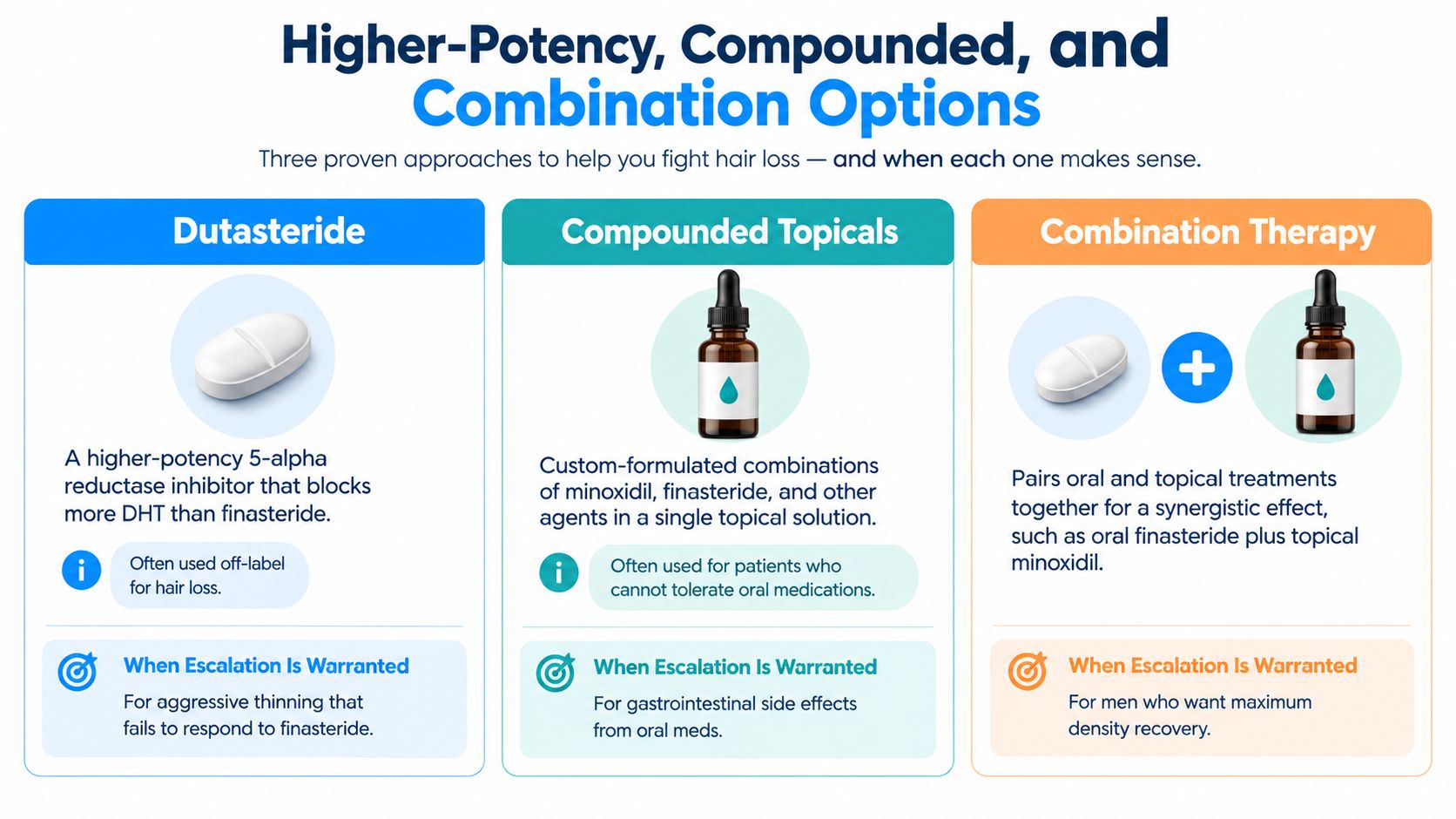
Dutasteride inhibits more of the 5-alpha-reductase pathway than finasteride and is a higher-potency benchmark. Its use for male-pattern hair loss is more dependent on jurisdiction and clinical judgment. A meta-analysis of three randomized controlled trials involving 576 men found a mean total-hair-count advantage of 28.57 hairs over finasteride, with a 95% confidence interval of 18.75 to 38.39 and P<0.00001. The meta-analysis is published here.
That result doesn't mean dutasteride is appropriate for every patient. Total hair count isn't identical to terminal-hair density, photographic improvement, or patient satisfaction. A clinician should document baseline density, prior treatment exposure, adverse effects, reproductive considerations, and the reason for escalation.
Newer topical dutasteride research is promising, including a 24-week phase II trial of 135 men in which 0.05% topical dutasteride improved vertex target-area hair count compared with 1 mg oral finasteride. That evidence supports further clinical consideration, not unsupervised compounding or automatic substitution.
Oral minoxidil and compounded formulas
Oral minoxidil is an emerging option, but optimal dosing for hair loss isn't established, and its side-effect profile is poorer than topical minoxidil. Cardiovascular effects, fluid retention, and unwanted hair growth require clinician screening and follow-up.
Compounded topicals can be useful when a patient cannot tolerate a standard vehicle or needs a clinician-designed combination. They aren't automatically safer because they are applied to the scalp. Absorption, ingredient selection, quality controls, and the possibility of systemic exposure still matter.
Combination therapy may produce greater regrowth than either monotherapy in some comparisons, but added efficacy must be weighed against added adverse-effect risk. The sensible question is whether the patient needs the extra complexity and can sustain it.
In-Office Procedures and Adjunct Modalities
Procedures should be evaluated as a separate category from medications. They involve provider technique, candidacy, recovery, maintenance, and financial planning. For many men, they complement medical therapy rather than replace it.
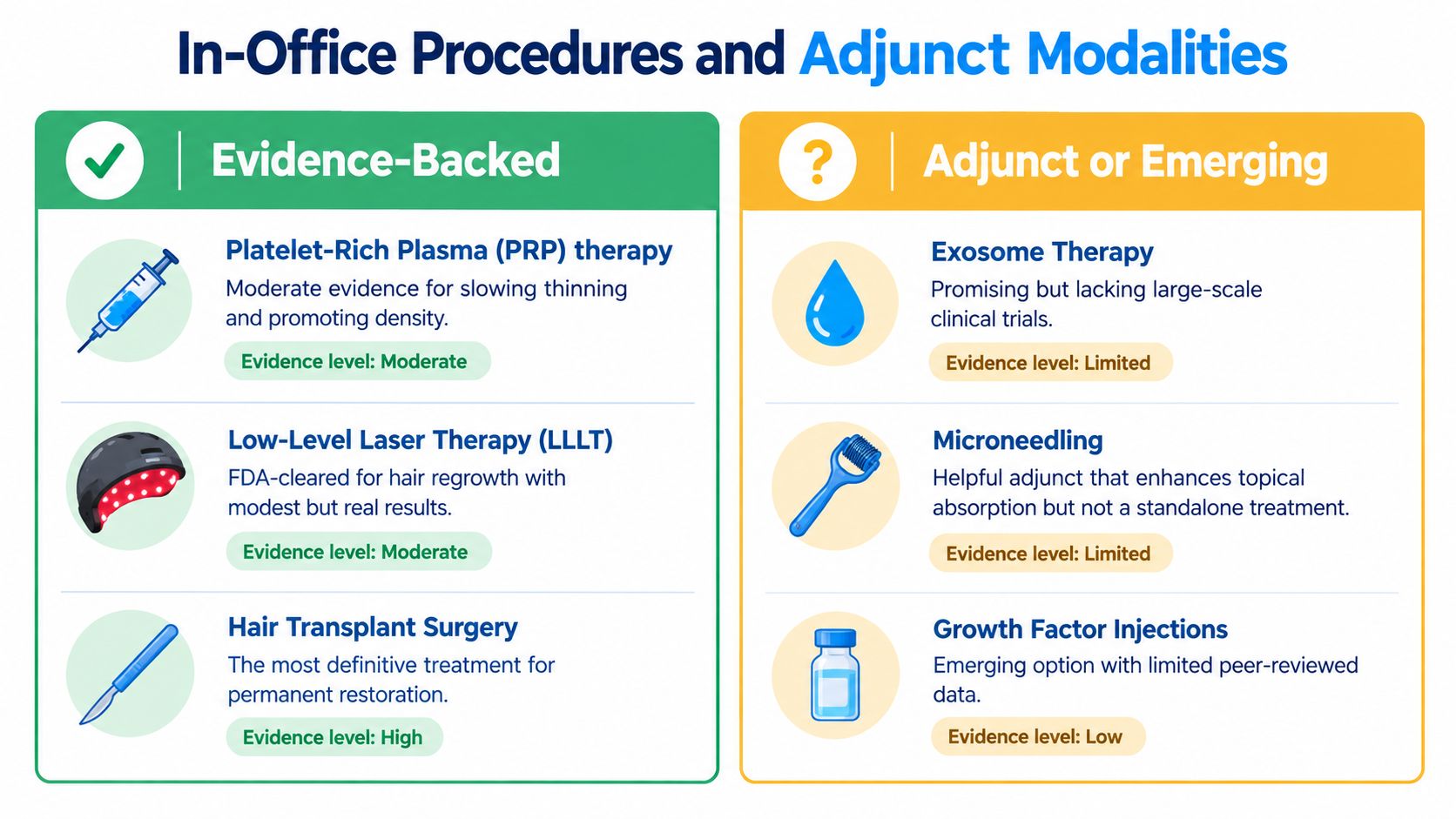
How the options differ
Platelet-rich plasma uses a patient's own blood components and may be considered for men with ongoing thinning who want a procedural adjunct. Results depend on patient selection, protocol, and maintenance planning. A patient evaluating the category can review how PRP injections for hair restoration are typically described before discussing candidacy with a qualified clinician.
Microneedling may help as an adjunct to topical therapy, but it shouldn't be treated as a standalone answer for an unconfirmed diagnosis. Technique, sterile practice, depth, and timing relative to topical application matter.
Low-level laser therapy includes FDA-cleared devices and may provide a modest supportive option for men who prefer a noninvasive home-based modality. Device consistency and long-term adherence remain central to its value.
Hair transplantation redistributes existing donor follicles into areas of loss. It can create durable coverage in appropriate candidates, but it doesn't create new follicles, stop ongoing miniaturization elsewhere, or eliminate the need for a long-term medical strategy.
A clinic should explain the evidence, expected limitations, maintenance requirements, and total financial commitment before treatment begins. Procedures marketed as replacements for diagnosis or foundational therapy deserve caution.
The Metabolic Overlap With GLP-1 Era Hair Shedding
Men using semaglutide or tirzepatide may notice diffuse shedding during a period of rapid weight reduction. Telogen effluvium is a typically nonscarring process in which follicles shift prematurely from the anagen growth phase into the telogen resting phase. The trigger may involve rapid weight loss, reduced caloric intake, insufficient protein or micronutrients, or another overlapping medical factor.
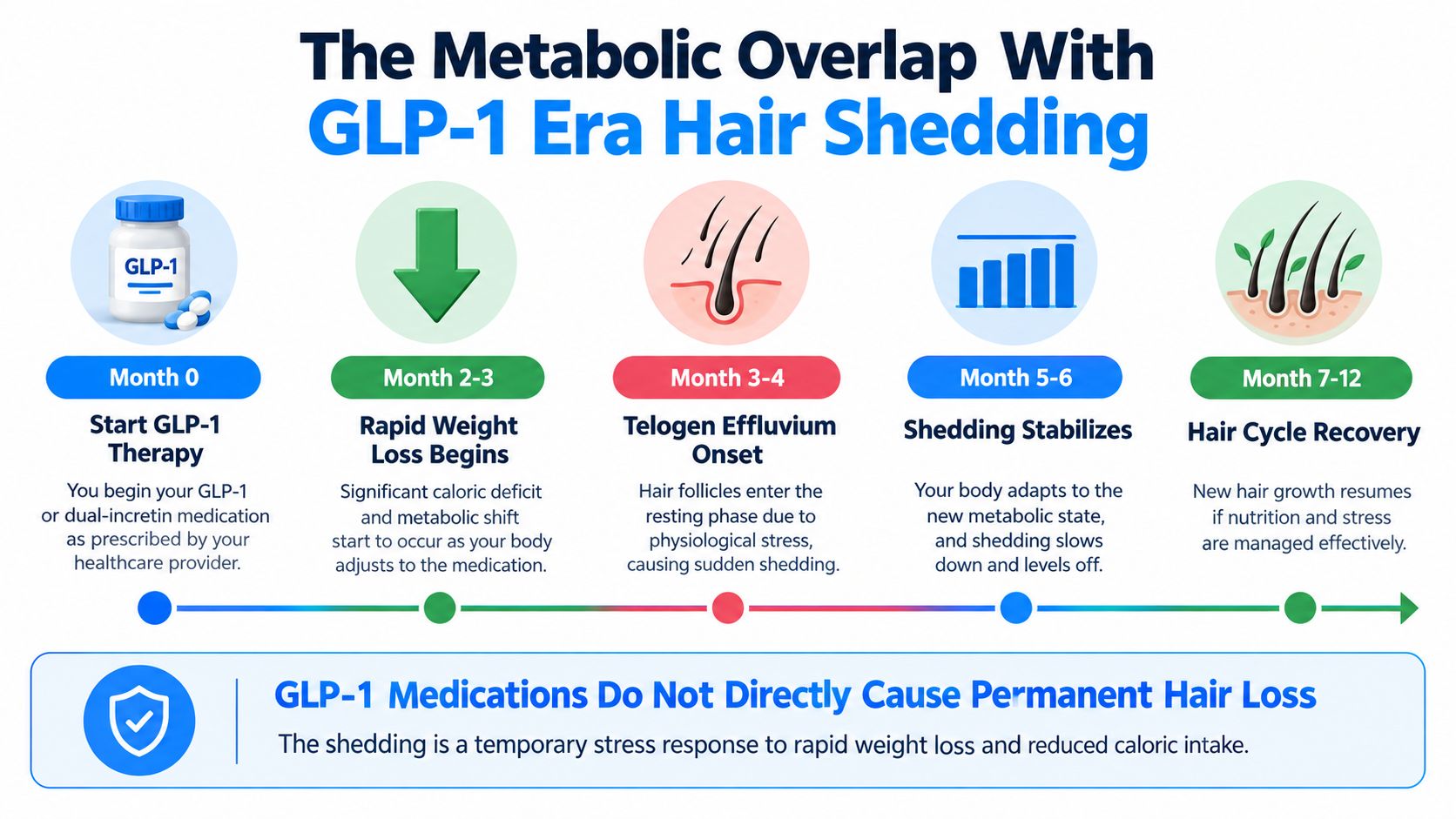
Timing and treatment context matter
Patients using GLP-1 receptor agonists for approximately 3 to 6 months were more likely to experience hair loss, coinciding with the interval in which weight reduction may be most pronounced. The observational report is available here.
A 72-week head-to-head trial in adults with overweight or obesity without diabetes found average weight reduction of 20.2% with tirzepatide versus 13.7% with semaglutide. Approximately 32% of participants receiving tirzepatide achieved at least 25% weight loss, compared with 16% receiving semaglutide. Nausea occurred in about 44% of participants in each group, and abdominal pain occurred in approximately 25%. These findings provide metabolic context for individualized monitoring.
These figures don't prove that either medicine directly causes permanent hair loss. A systematic review identified semaglutide and tirzepatide as the GLP-1-related agents most frequently associated with reported hair-loss signals, with telogen effluvium and androgenetic alopecia among the predominant reported subtypes. The review is indexed here.
A clinician should review weight-change velocity, protein and micronutrient intake, thyroid disease, iron status, and baseline miniaturization. Men planning their PRP investment should first determine whether the shedding represents a procedural target or a reversible metabolic stress response. Broader metabolic treatment context is also addressed in the metabolic reset review.
How to Choose a Starting Therapy Without Overstepping
A safe starting plan is risk-stratified. The clinician should consider the pattern, duration, age, rate of progression, reproductive plans, cardiovascular history, concurrent medications, and willingness to maintain treatment. A man with gradual vertex thinning and no contraindication may reasonably discuss foundational therapy. A man with sudden diffuse shedding after rapid weight loss may need evaluation of the trigger before adding a DHT-targeted medication.
A clinician-grade telehealth intake should collect more than a symptom checkbox. Standardized photographs should show the frontal hairline, temples, mid-scalp, crown, and comparable lighting. The history should cover onset, progression, family pattern, scalp symptoms, recent illness, dietary restriction, weight change, GLP-1 use, supplements, reproductive considerations, sexual health, mood, and cardiovascular factors.
A safer digital pathway
- Confirm the visual pattern. The photographs should be reviewed for miniaturization, diffuse shedding, focal patches, inflammation, and scarring.
- Screen for contraindications. Prescription selection should account for relevant medical history, current medicines, pregnancy exposure concerns in the household, and adverse-effect susceptibility.
- Match intensity to need. A higher-potency or off-label option shouldn't be the default when a lower-risk category may be adequate.
- Set objective checkpoints. Consistent photographs at six to twelve months are more useful than daily mirror checks or memory.
Self-prescribing compounded or higher-potency products bypasses the steps that determine whether the diagnosis is correct and whether the treatment is safe. The literature on GLP-1-associated shedding remains limited and conflicting, so men experiencing hair loss during treatment shouldn't stop or change a metabolic medication without discussing the broader treatment plan with the prescribing clinician.
The same discipline applies to any online care pathway. A review of cost of Flomax illustrates why medication cost questions belong within a broader clinical discussion rather than a standalone product search.
Situational Recommendations and Reader FAQs
| Patient situation | Reasonable starting category |
|---|---|
| Early temple or vertex pattern with gradual progression | Topical minoxidil or a discussion of oral finasteride |
| Established vertex thinning seeking preservation and possible regrowth | Medical therapy, with finasteride considered when clinically appropriate |
| Diffuse shedding during semaglutide or tirzepatide treatment | Review weight change, nutrition, medical triggers, and the shedding pattern before escalation |
| Intolerance of daily topical application | Discuss prescription alternatives or clinician-directed compounded options |
A five-year clinical-trial summary reported 48% of men experienced increased hair growth, 42% experienced no further hair loss, and 10% continued to lose hair with finasteride, compared with 6%, 19%, and 75%, respectively, with placebo. The American Academy of Dermatology summary provides the comparison. The figures reinforce that stabilization is a meaningful treatment outcome.
Common questions
Can a receding hairline be reversed? Some miniaturized follicles may improve, but advanced loss is less predictable. Early assessment generally creates more treatment options.
How soon should results be assessed? Noticeable change may require approximately six months. Photographs taken consistently are more reliable than day-to-day impressions.
What if shedding accelerates after treatment begins? Contact the prescribing clinician, document the timing, and assess for telogen effluvium, irritation, nutritional issues, or another diagnosis rather than escalating automatically.
Are compounded formulations evidence-based? Individual ingredients may have clinical evidence, but a compounded combination isn't automatically validated as a finished product. Formulation, dosing, absorption, quality testing, and clinician oversight all matter.
Vials + Vitals provides physician-directed telehealth assessment for individualized hair-health and metabolic-health protocols, including clinical review before prescription decisions. Men experiencing patterned thinning or shedding during GLP-1 treatment can visit Vials + Vitals to begin a structured evaluation rather than choosing a product from a generic ranking.